Dublin, Ireland

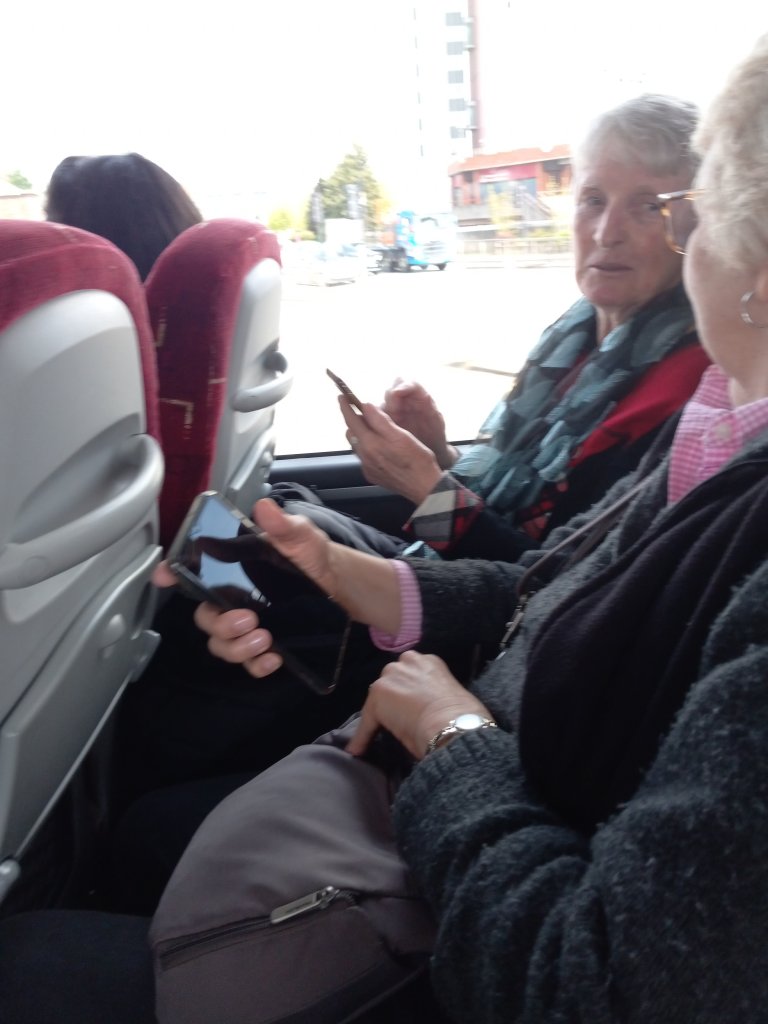
Because our preferred airline for our Scotland trips is Aer Lingus, we always connect through Dublin. We discovered on an earlier trip that it is nice to spend a day or two in Dublin on our way home. Our departure from Glasgow to Dublin was scheduled for noon. On our last night in Glasgow, we enjoyed another lovely visit with our charming hostess Aisling and she shared her insights about travel and suggested a nice place just on the corner we could get a wee breakfast before we fly.

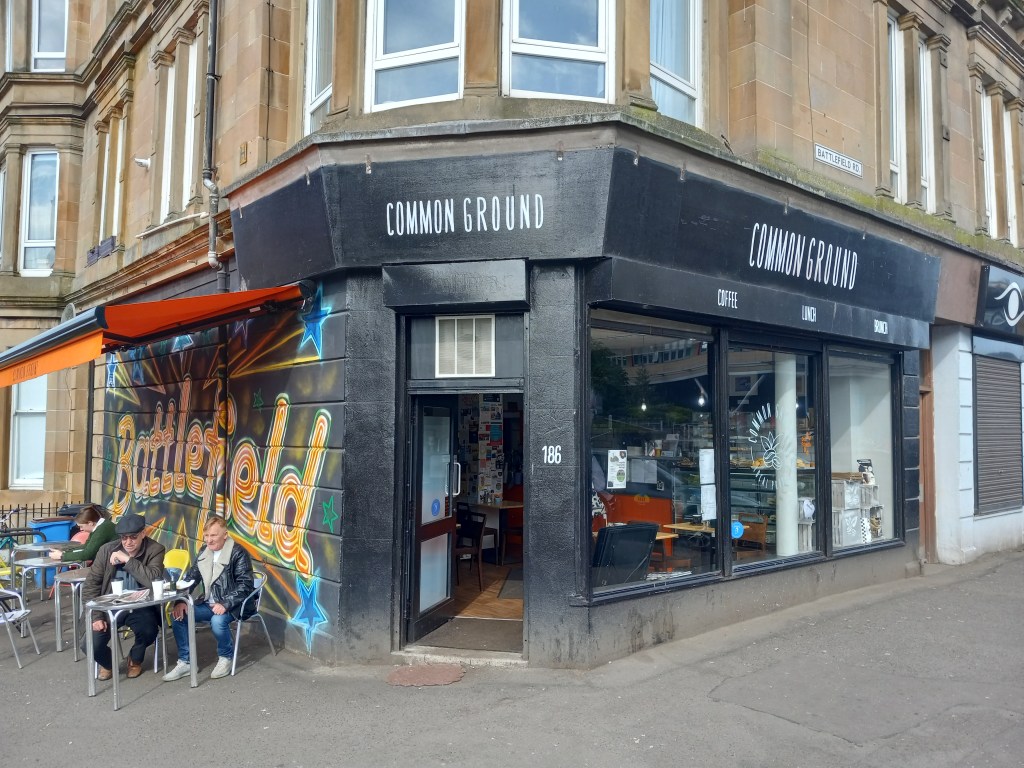
The flight to Dublin is short so landing in Dublin at 1:15, we will have a full afternoon and the next morning to enjoy the city.

The twofold purpose of the blog is to share our adventures with our friends and as a record of the trip for our memories as we look back in years to come. This will be our final post for 2023, as the the joys and trials of the multiple flights we took to travel from Dublin back to Tulsa are neither exciting nor inspirational.

St. Patrick’s Cathedral

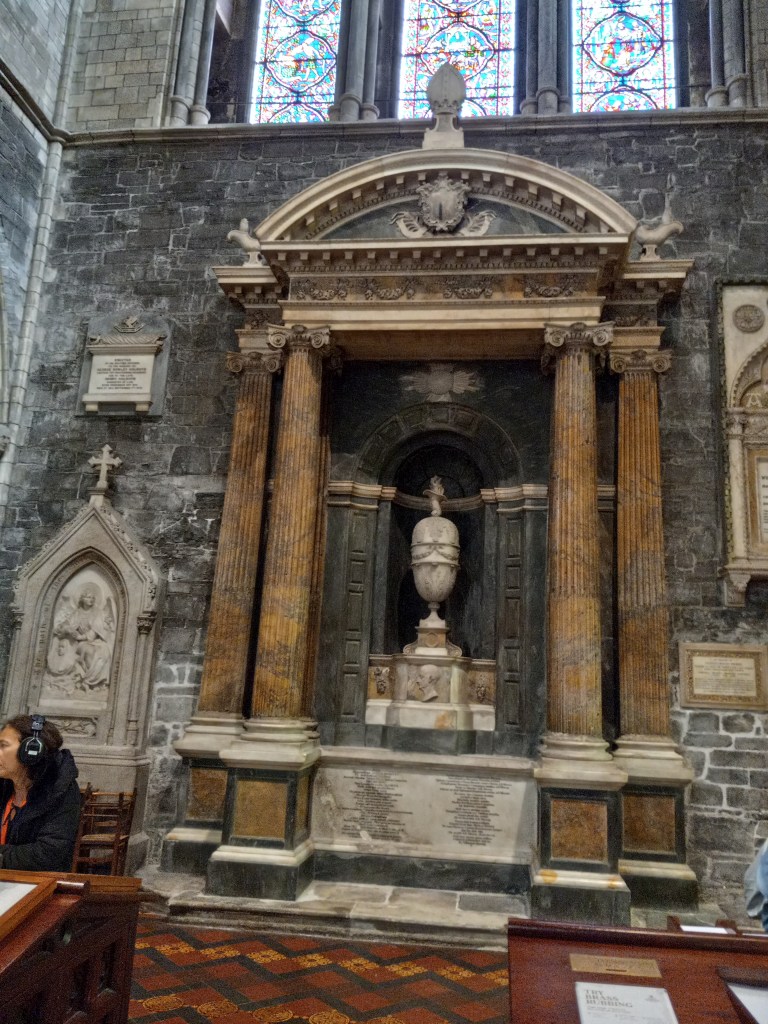
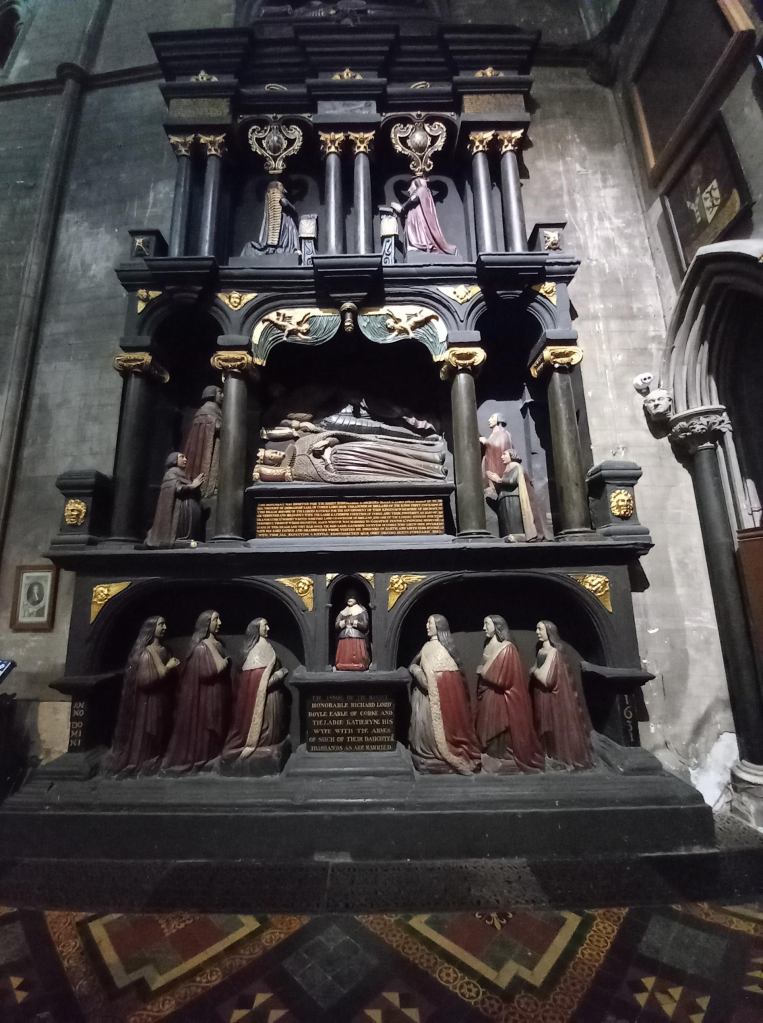
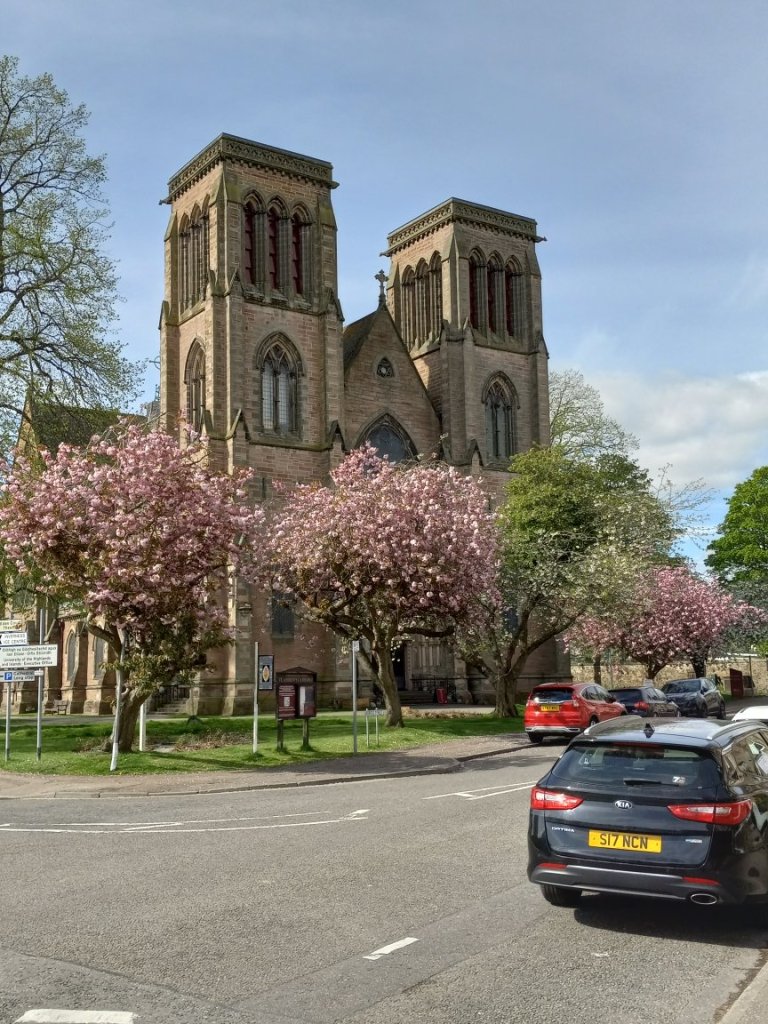
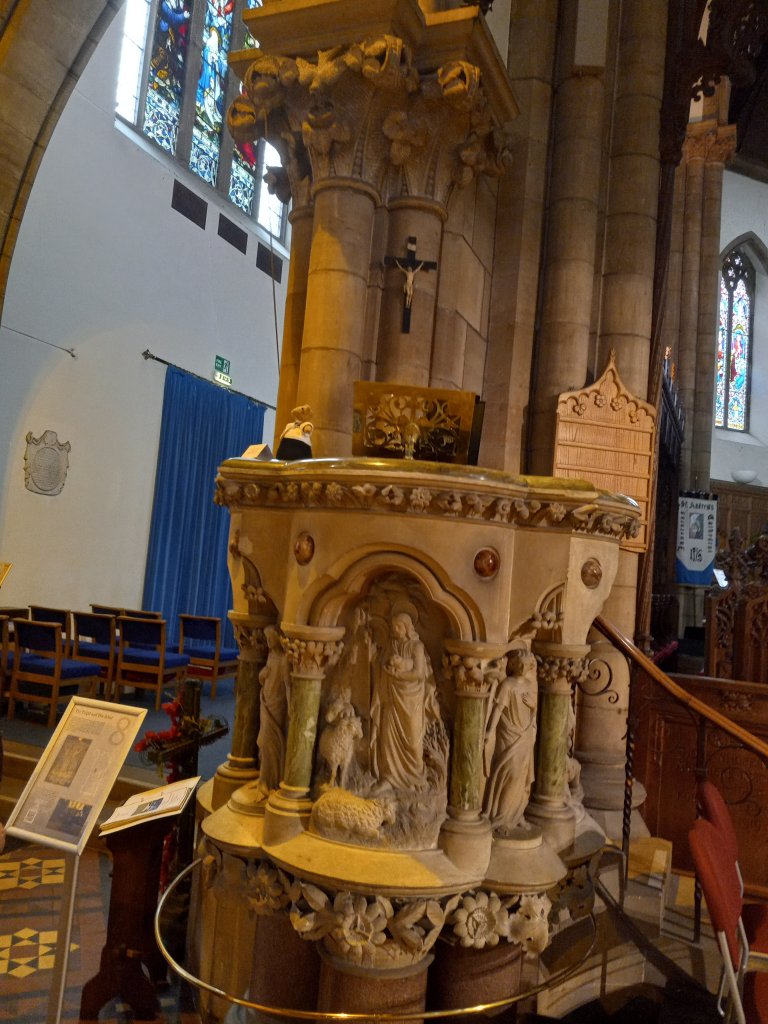
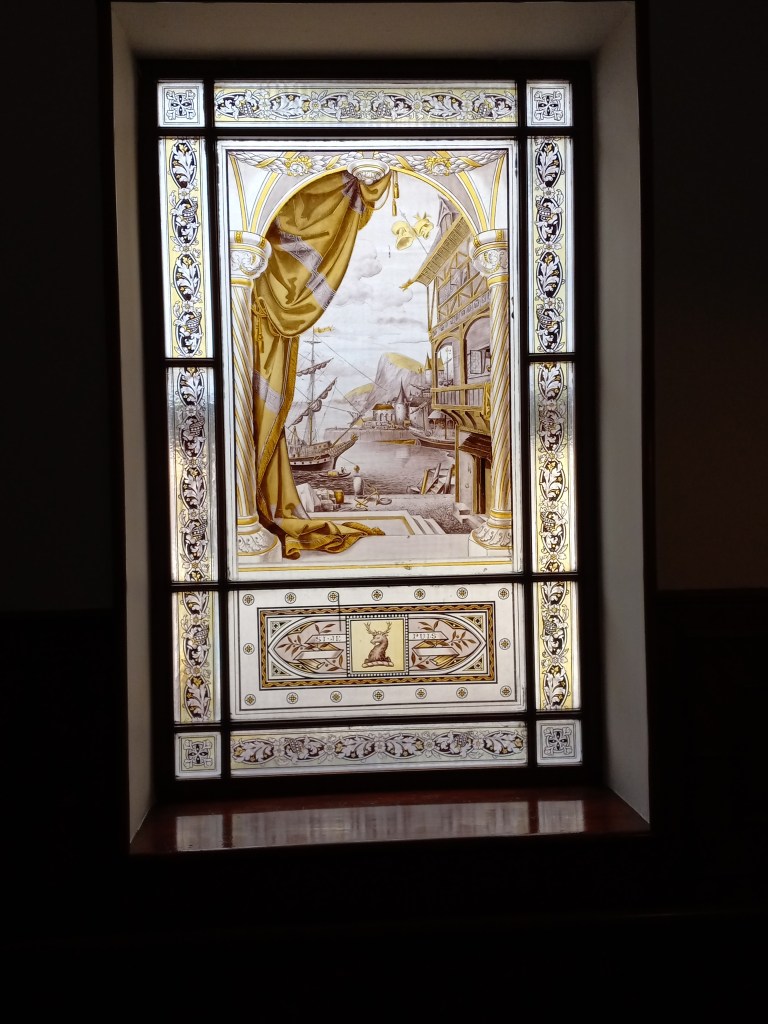
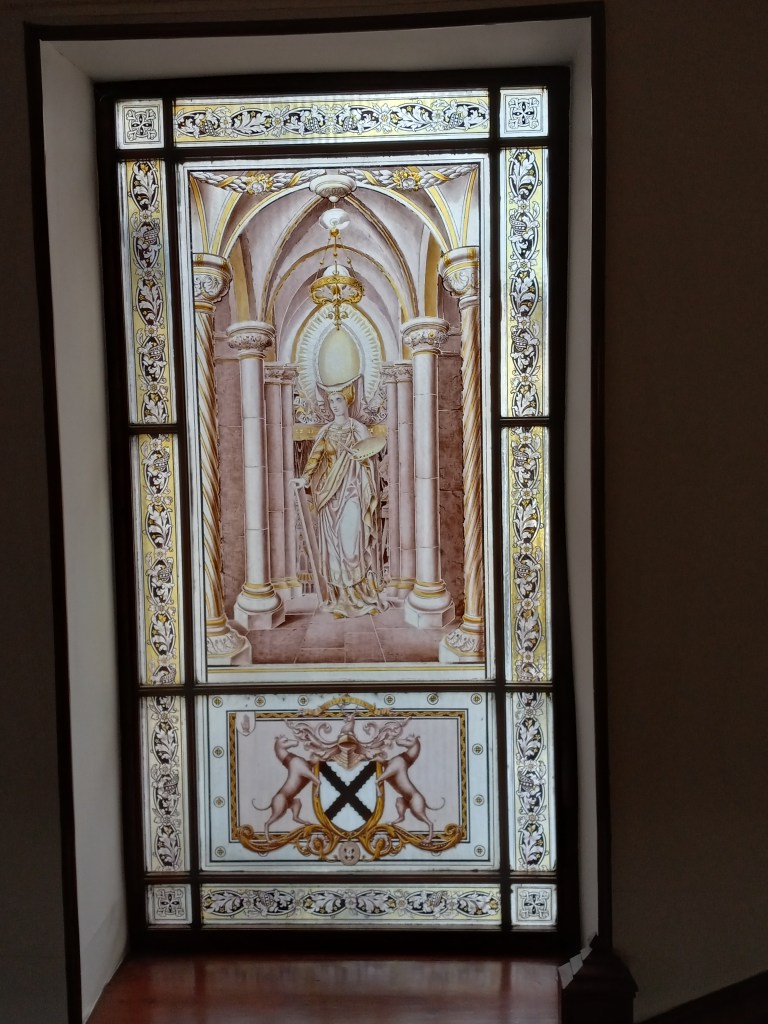
Dublin is a lovely town to walk around in and we have enjoyed exploring it on prior visits. One important site we have not experienced in depth was St. Patrick’s Cathedral. As you may know by now, we have visited many amazing cathedrals on this and previous trips. I’m sure I have overused the superlatives of magnificent, amazing, inspiring, etc. None-the-less St. Patrick’s Cathedral in Dublin is all these things and much more.

One aspect of these sites that always stirs me is their age. We are proud of our 100 year old church in Tulsa, but St. Patrick’s dates back to the 12th century. They say cathedrals like this are designed in such a way that your eyes, then your heart, and then your soul will be lifted to God as you enter and move down the aisle toward the altar. Well for this simple Methodist couple from Tulsa, that is exactly what we experienced.
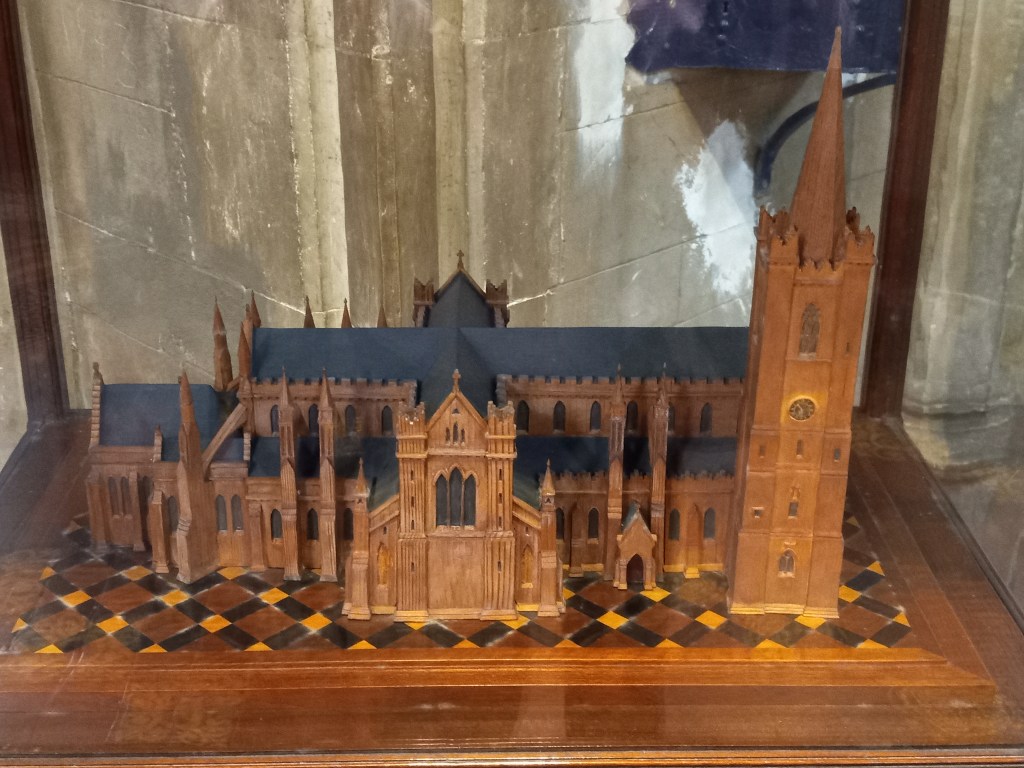
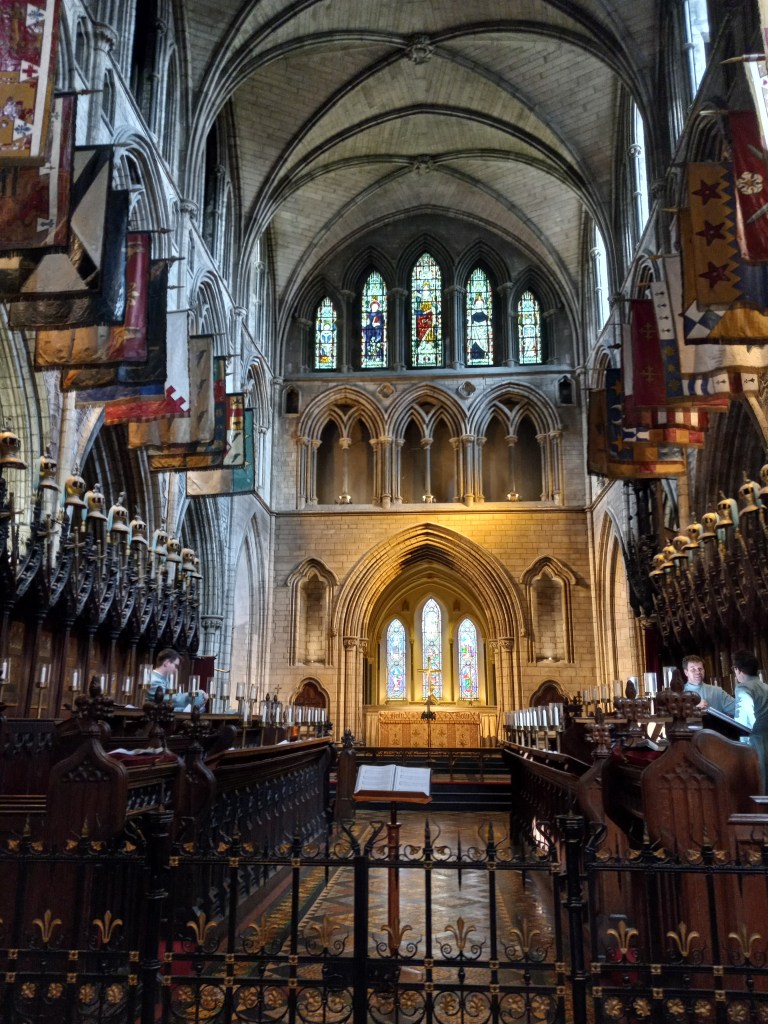
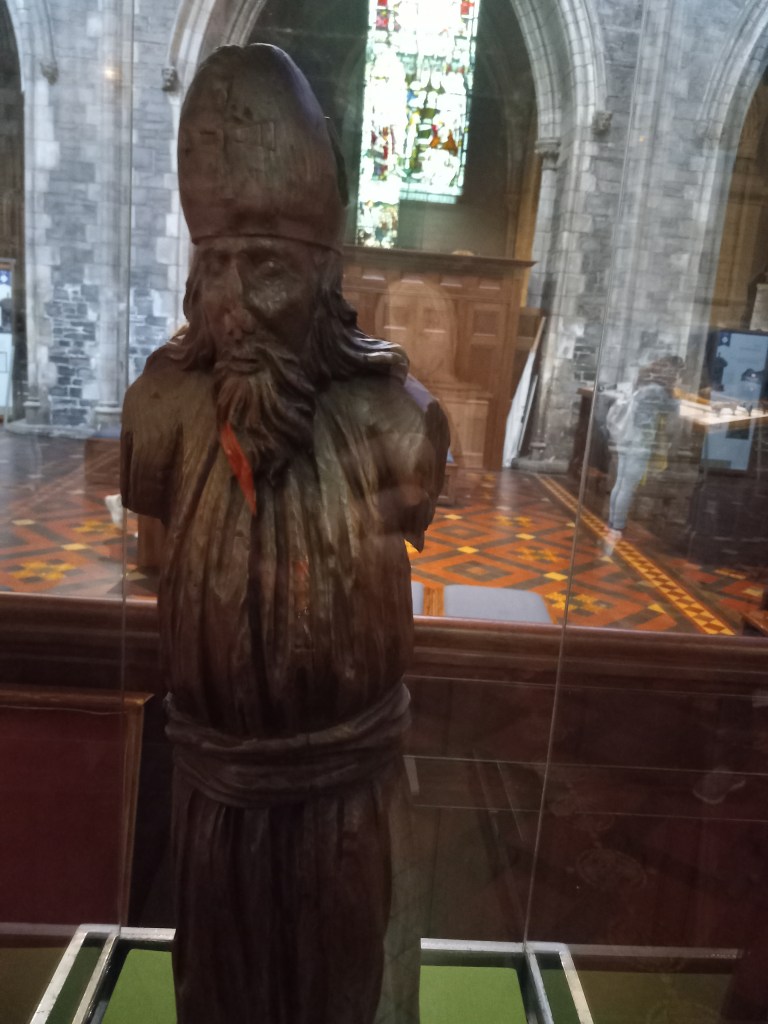
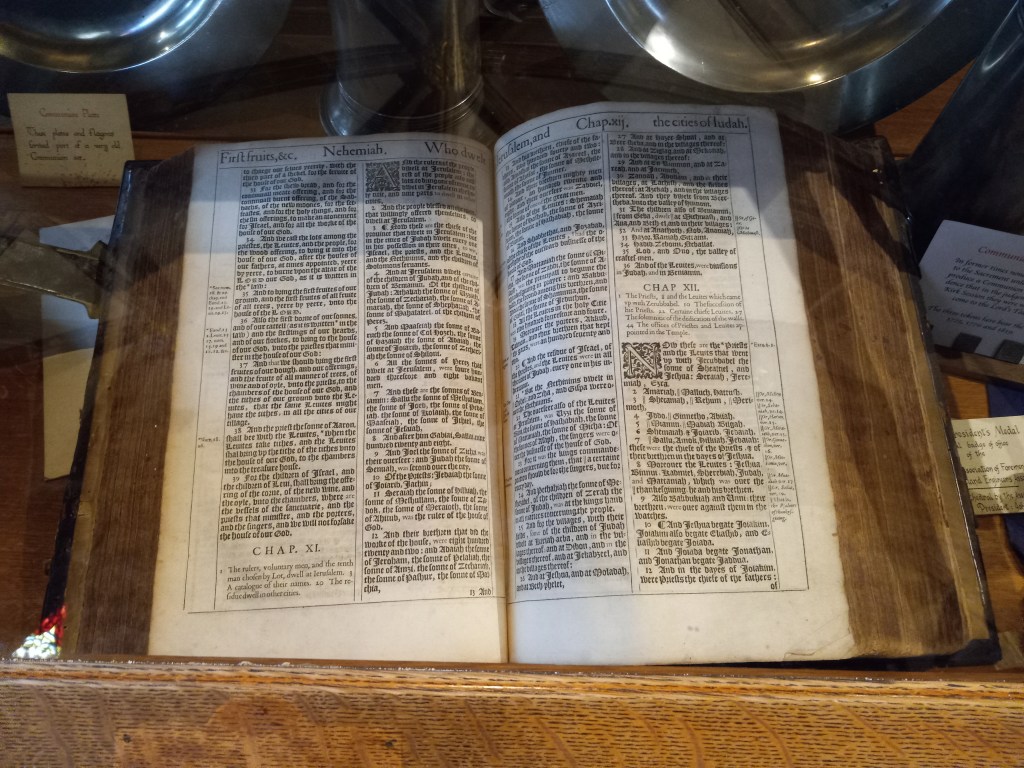
In addition to the inspiration of the cathedral itself, a wealth of stories come out of being an important part of Irish history for so many centuries. One I found fun was a phrase called “to chance your arm. Here are the details.
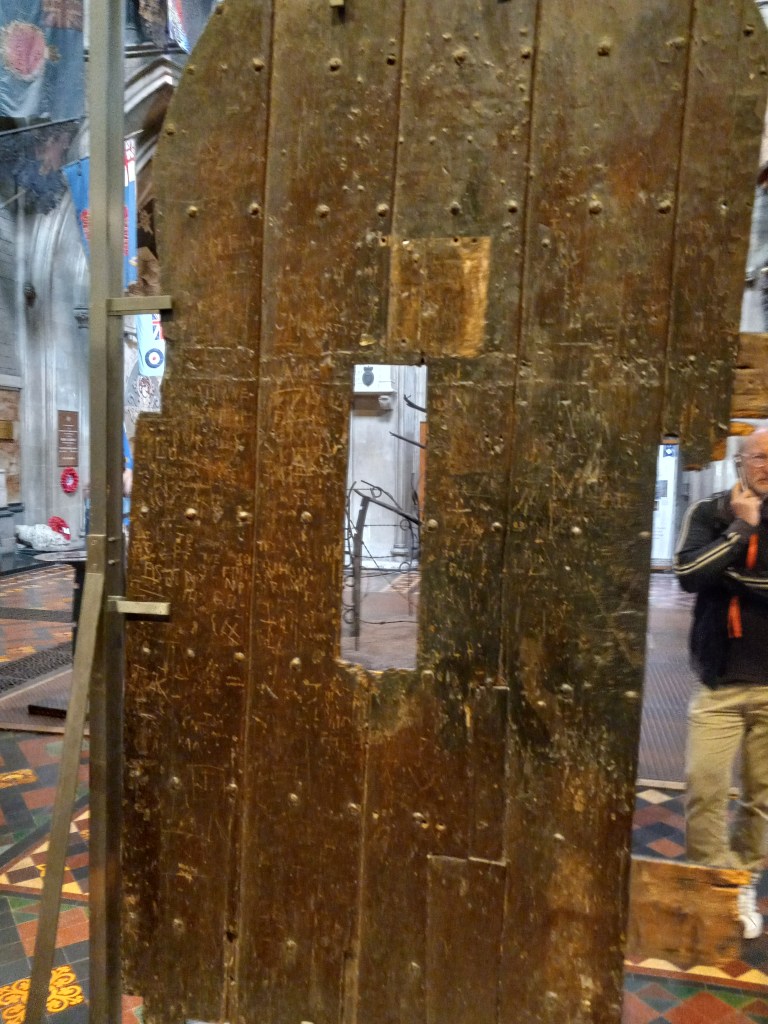
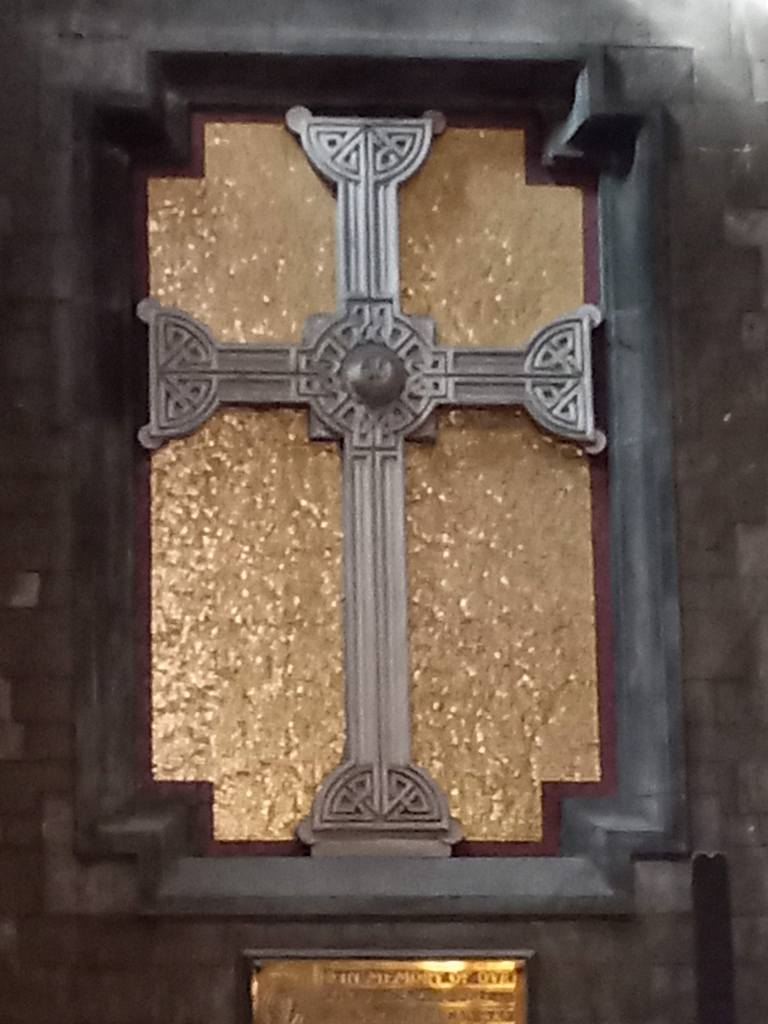
I know I had not used that phrase before but after hearing this story, it may begin to creep into my vocabulary. We allowed ourselves a few hours to explore this holy place and we used every bit of it. In addition to the breathtaking architecture, there were so many small touches of exquisite ornamentation to discover.
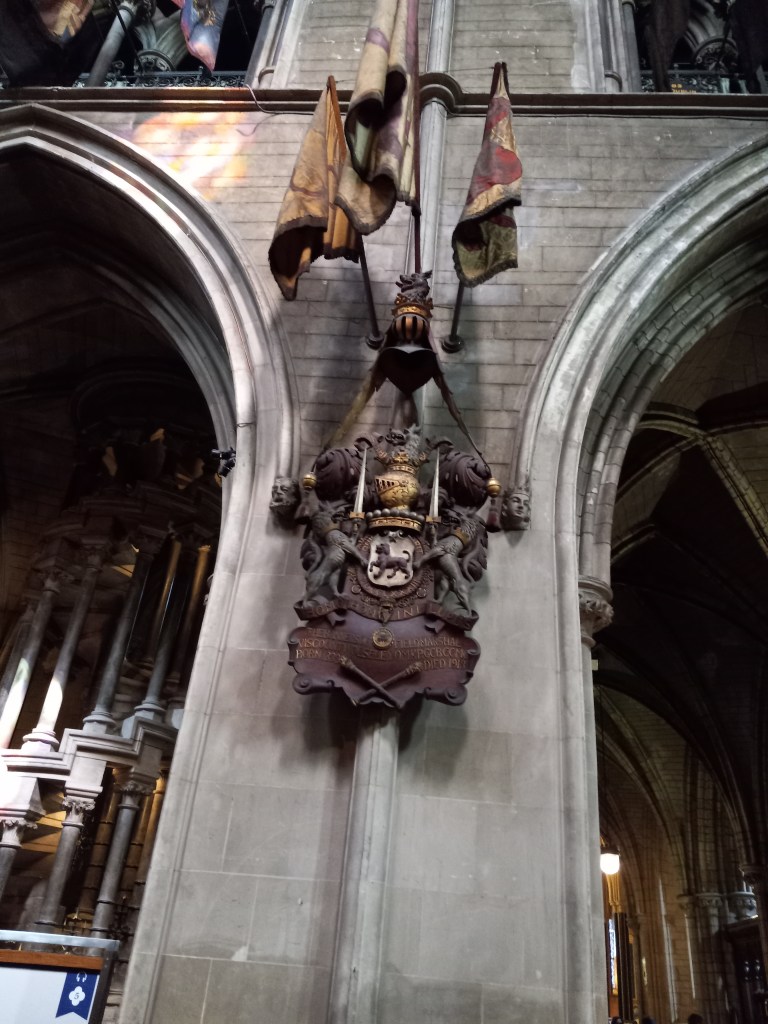
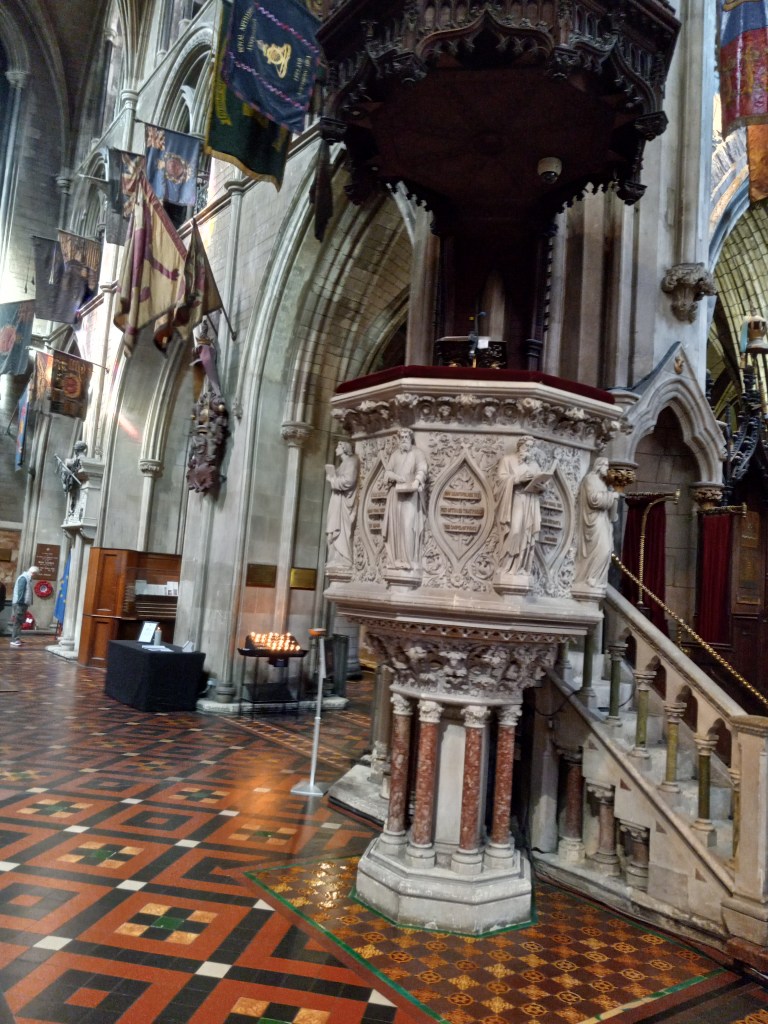
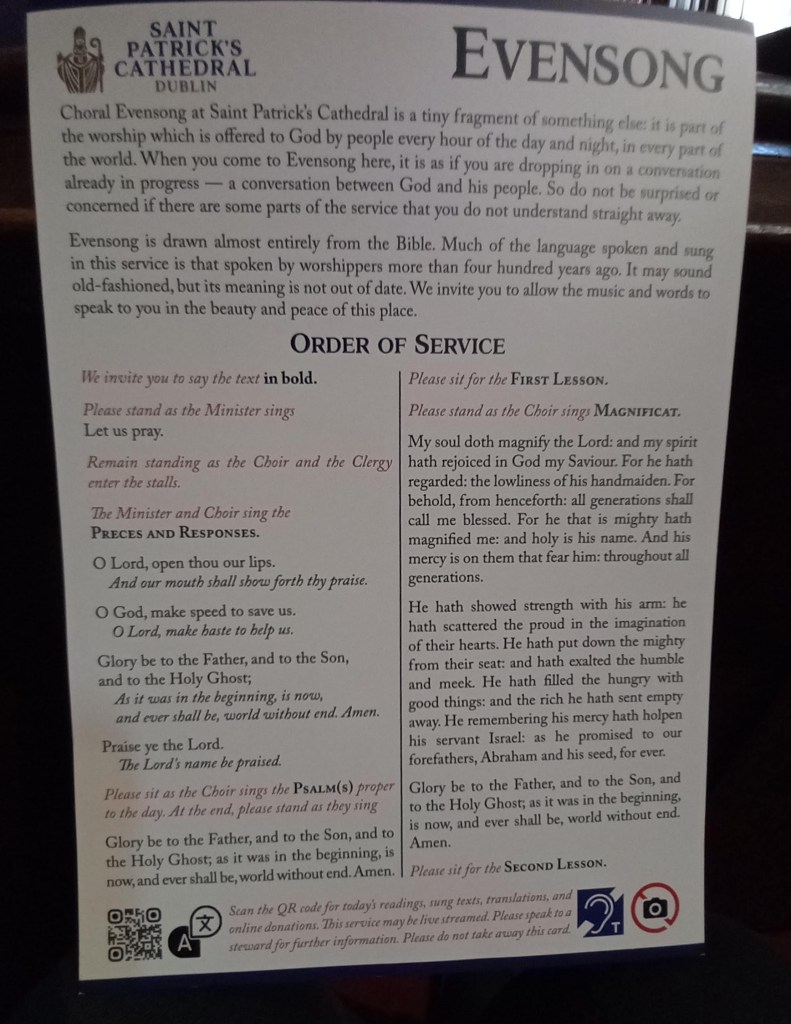
To make our visit to this extraordinary Irish cathedral perfect, we learned that we were there in time for the evensong worship service to which all who wished to worship were invited. This was our third worship opportunity on this trip. Each service was unique, and this one was particularly beautiful and memorable. We were shown seats in the middle of the vast cathedral and provided with the order of service.
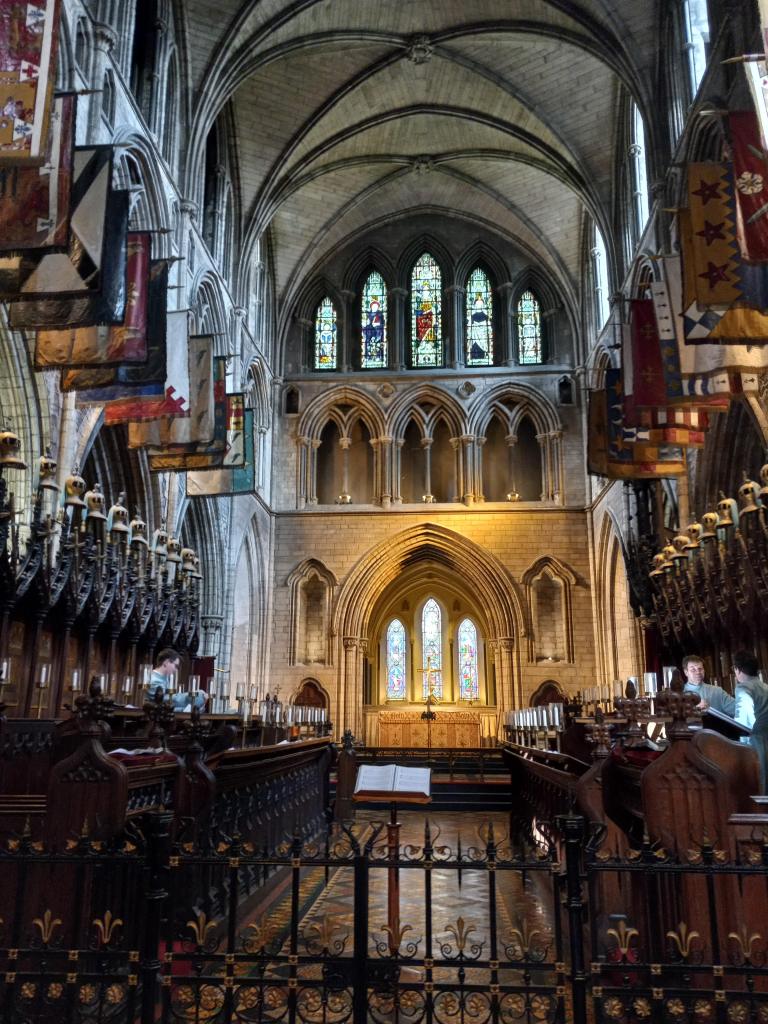
The all-male choir entered silently in rows, and what we heard was as heavenly as anything I have heard. Their voices lifted up to the perfect acoustics and I confess I was overwhelmed at hearing almost monastic worship being lifted up and being able to worship in this sacred place. There are many moments in this trip that vie for attention as a favorite and this one is in the top 10 for sure.

There were signs placed about that we were not to take photos or videos of the service. Of course we would never have done anything to disrupt the spiritual moments we were be blessed with. However, I did capture a small audio recording. I started a recording at the beginning of the Magnificat and captured the audio only. I laid the phone next to me on the pew. Here is what I captured.

As often happens, this final blog post was not finalized until almost a month after our return. I love being the blog master but Jane made tremendous contributions as well this year. It is tricky to blog while enjoying the vacation, as writing on the phone while traveling by bus or train is tricky. But as a chronicle of this years trip, it was worth staying at it.

Since we have returned home, we have received many kind words about this blog. If you have been able to “walk along” with us through this amazing 2.5 weeks in the UK then we are thrilled you enjoyed it too. I will retire my blogging mantle until next year. At that point if the money, health, and time are available, our fifth trip to Scotland will take us to the southern region of Scotland to what is known as “the borderlands.” I am excited already.
Surprises in Glasgow Southside

Glasgow Southside, the location of our new accommodations, had a different vibe and style than the neighborhood on the north side where we stayed earlier in our trip. It is comprised of several villages that were annexed into Glasgow in the late 19th century.
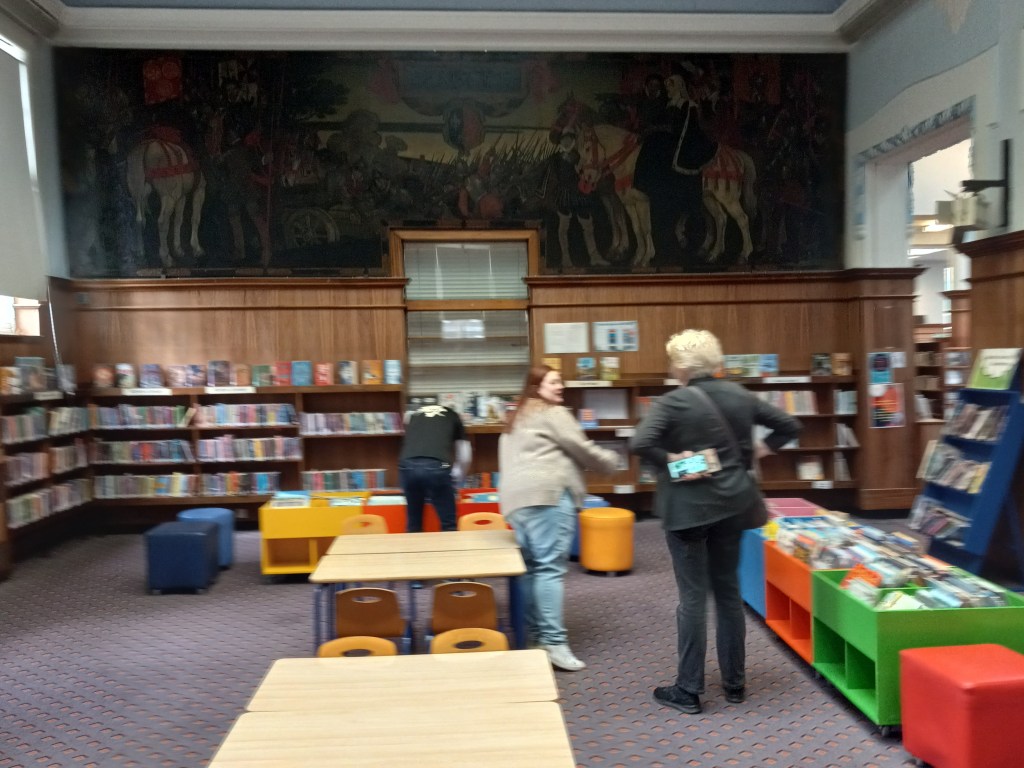
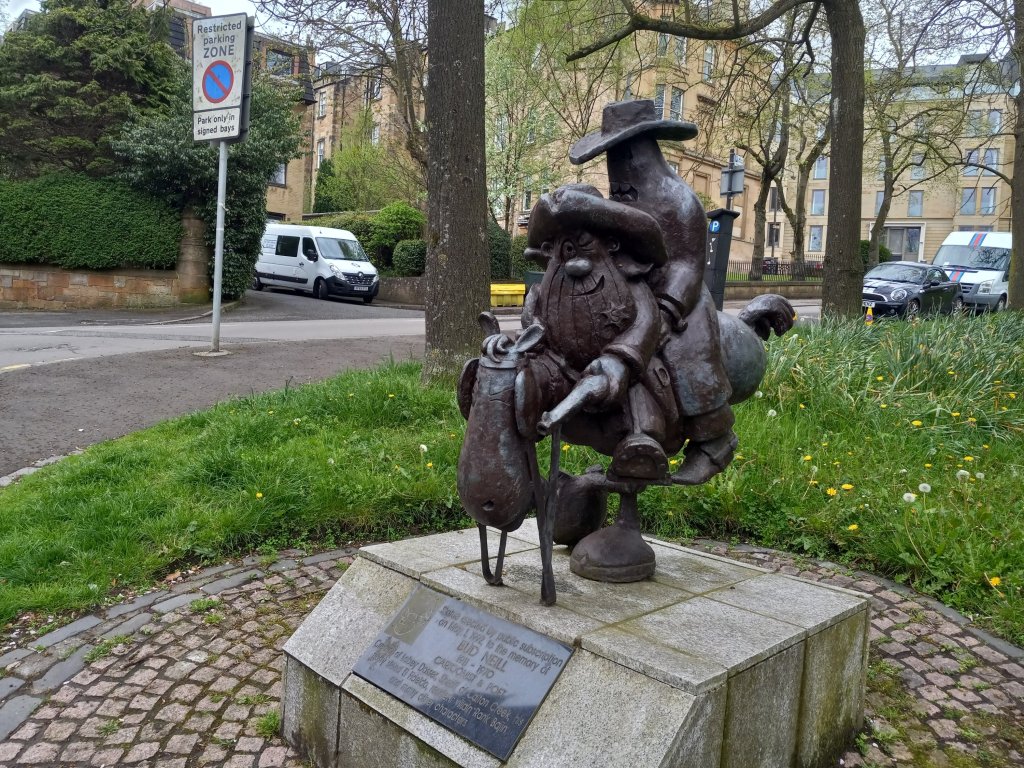
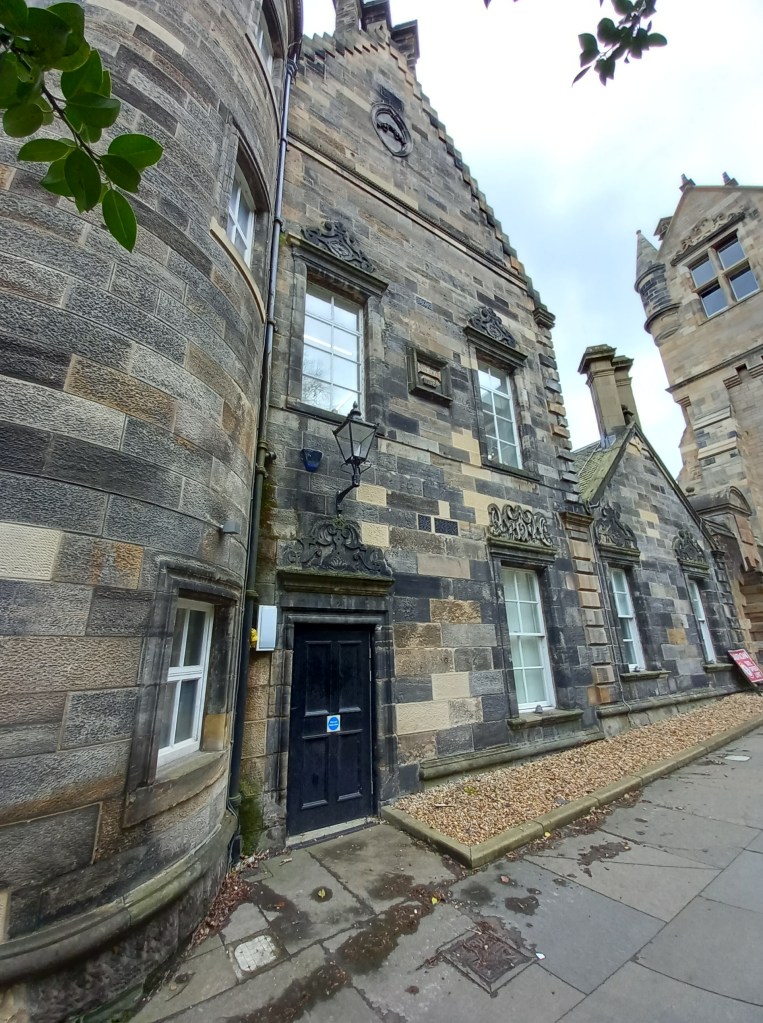
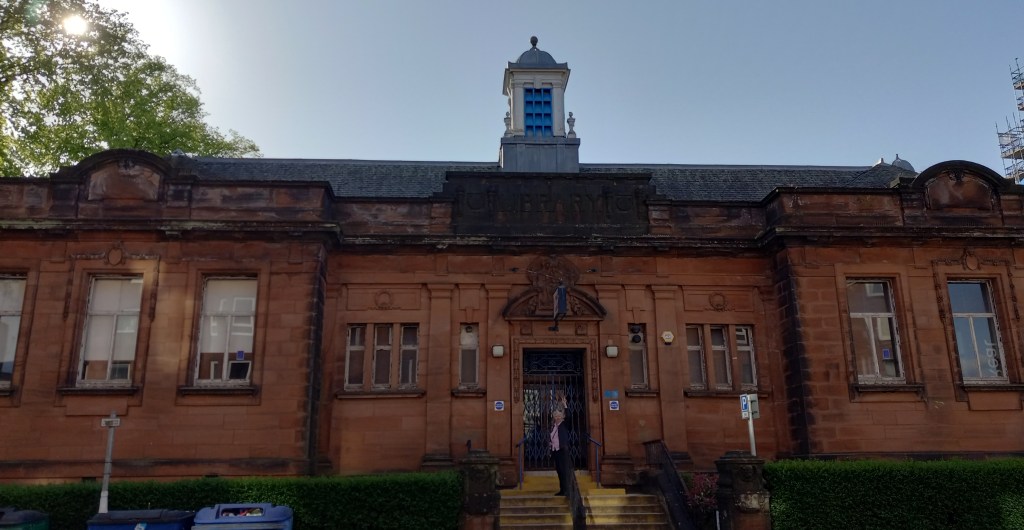
Today’s objective was Pollok Country Park. Our hostess gave us directions so we set out. Before long we saw a library, which of course is an automatic diversion for a photo op.
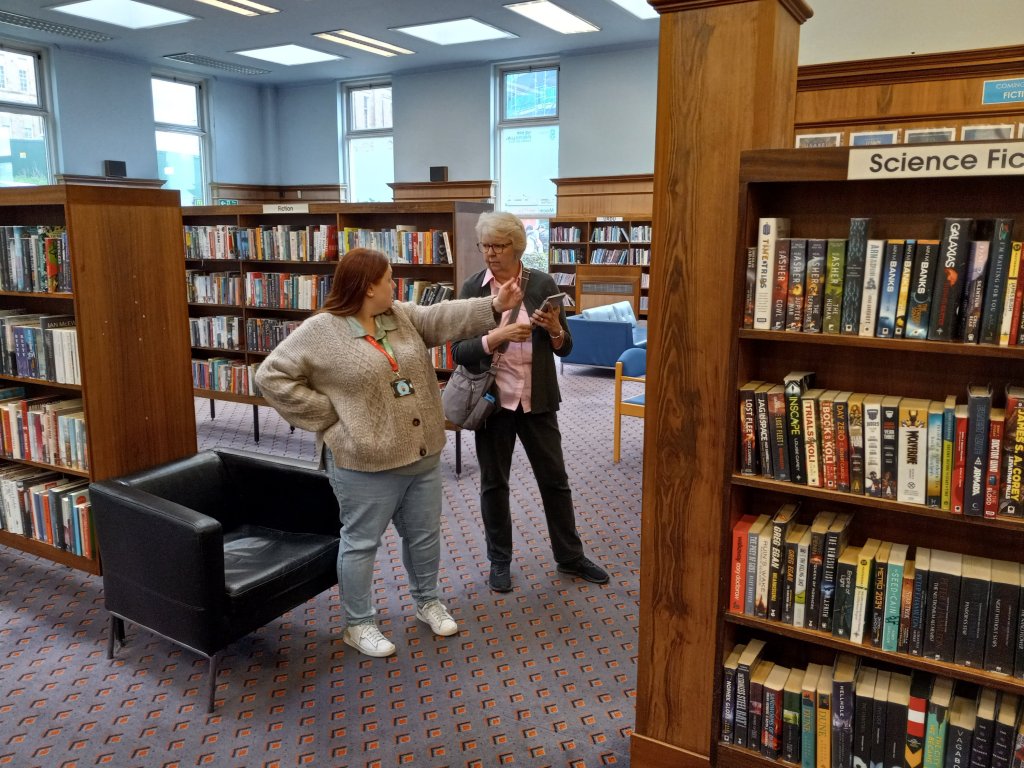
We don’t usually go inside the libraries we capture for Jane’s collection, but she decided to take a peek inside and waved me in to see something of interest.  Jane asked a young lady behind the front desk a question about it which resulted in a rich conversation about the history of this library and the neighborhood it serves.

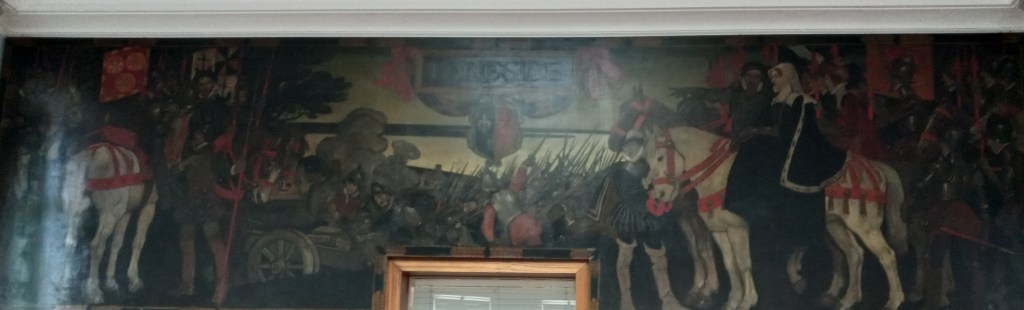
We learned that Langside library is a neighborhood branch in the Glasgow public library system. It is one of many libraries in Scotland and the US endowed by Andrew Carnegie. When it opened in 1915 it was the first in Glasgow to allow patrons to browse the shelves and select their own books. The feature that attracted Jane’s attention was this mural. It is a bit dark, due to its age (painted in 1920), but we understand that it will undergo restoration soon.

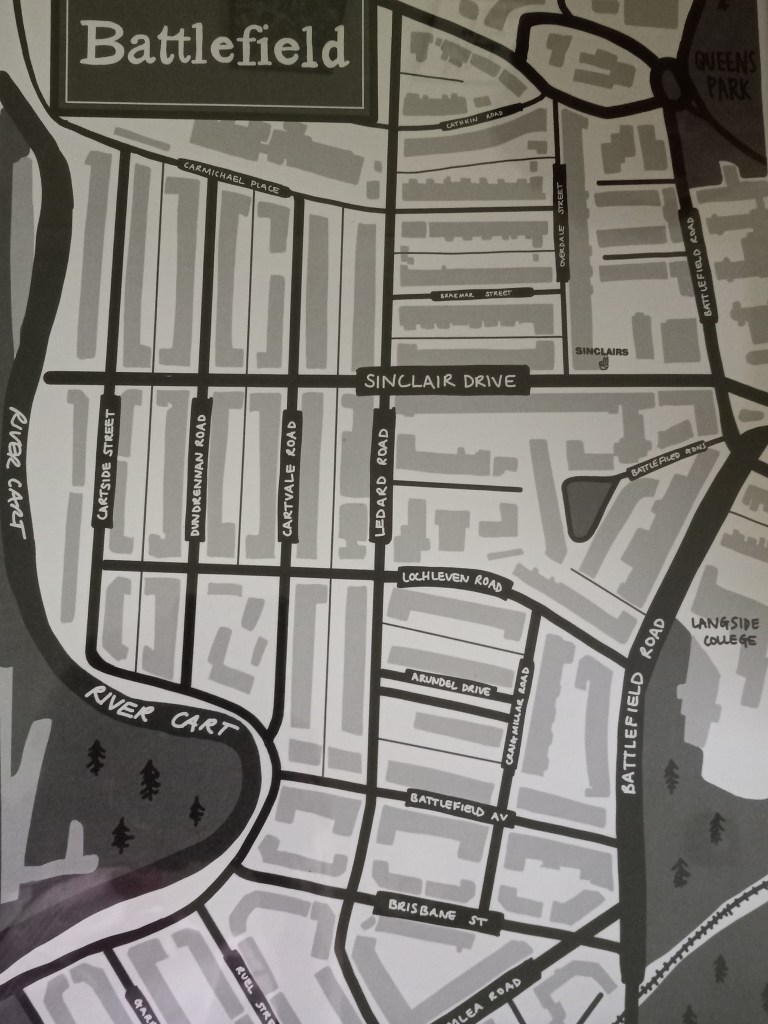
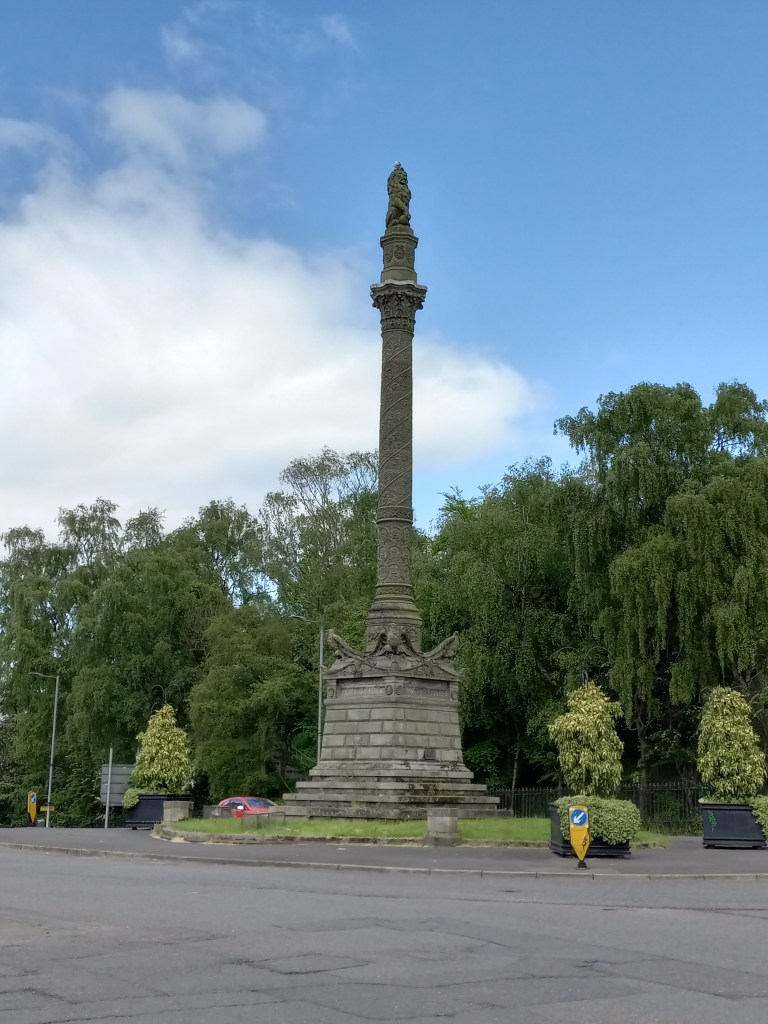
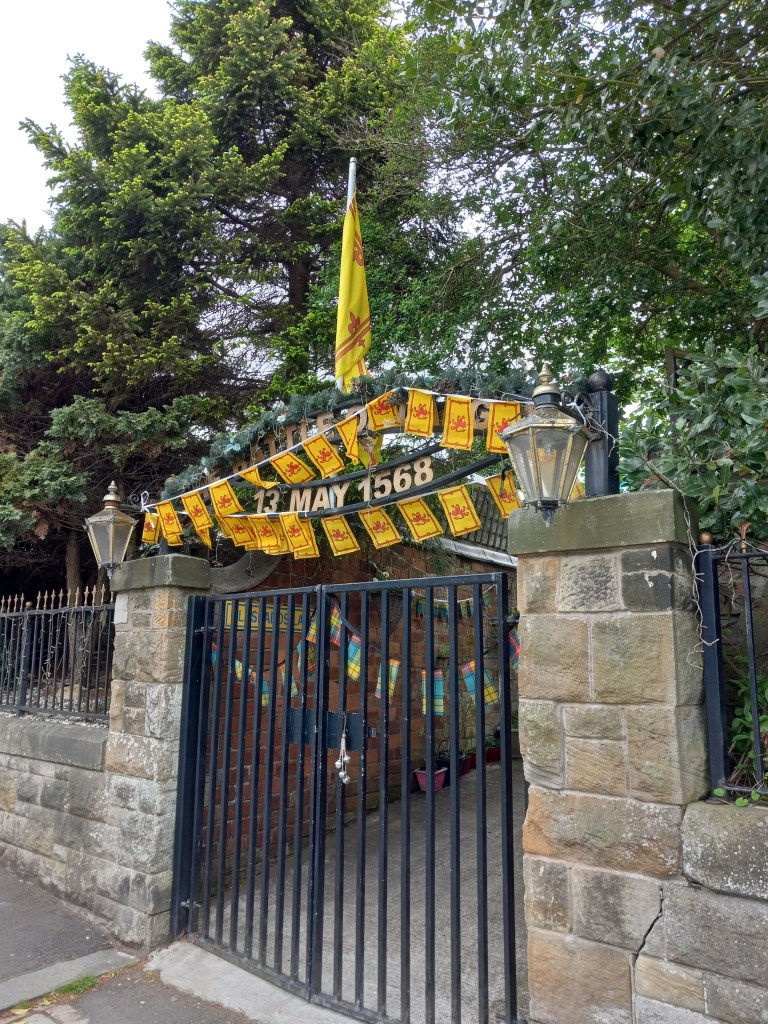
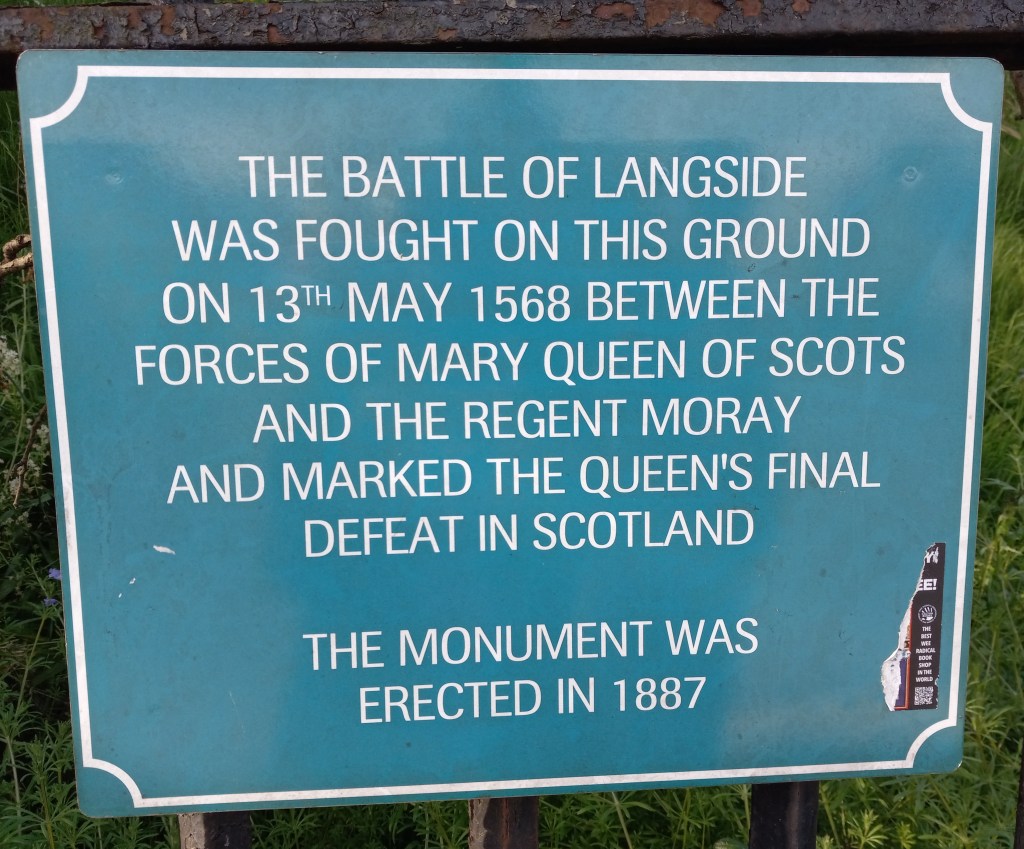
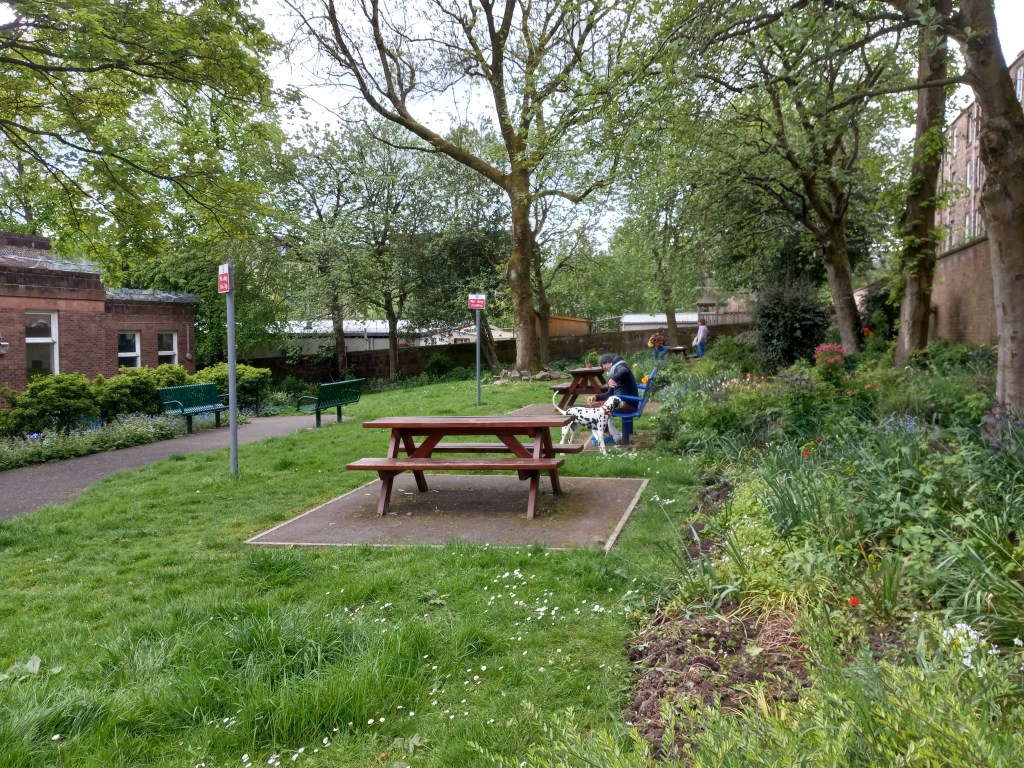
This lovely young lady, Megan, was eager to tell us all about it. It depicts the Battle of Langside, fought on May 13, 1568 between supporters of Mary Queen of Scots and her opponents who had forced her to abdicate in favor of her son. The loss of this battle made her a fugitive until she was ultimately imprisoned and executed in England. It now became clear to us why the street we had been walking on is called Battlefield Road. It was the path the soldiers marched to begin this historic battle. After a very informative visit, we exited the library by way of a beautiful, quiet garden behind the building, maintained by volunteers.

Since our first visit to Scotland when we found some locations significant to the Malcolm family history, Jane has been hoping to find the location of my grandfather’s birthplace. She had an address but we didn’t know if it would be practical to find it on this visit.

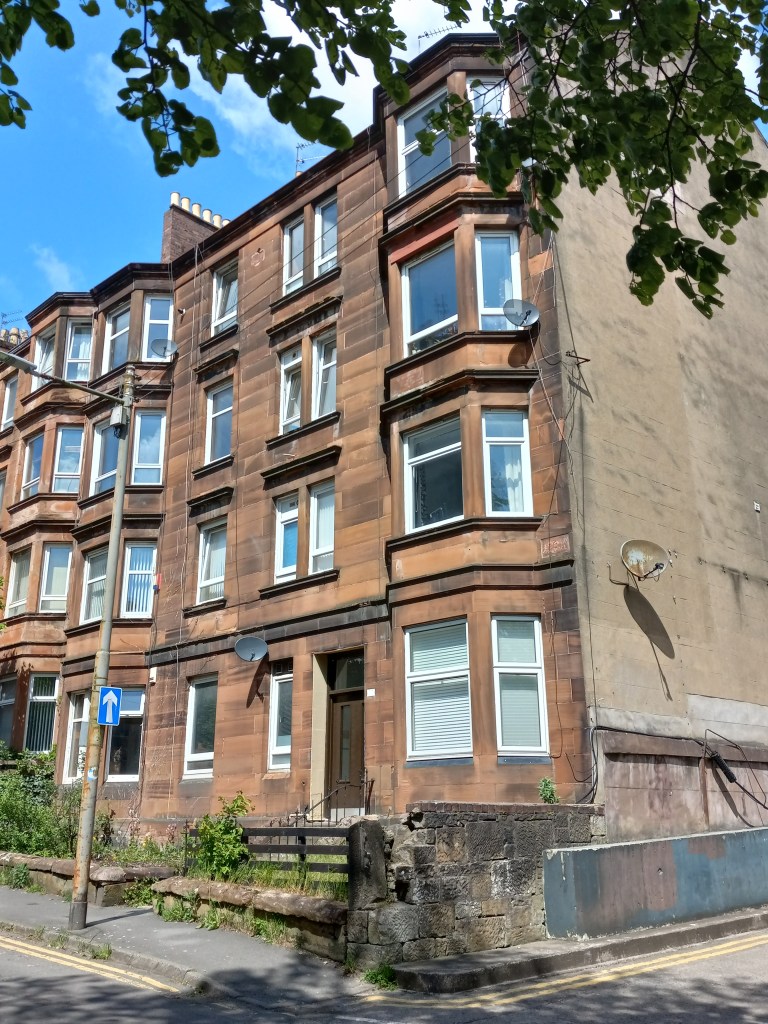
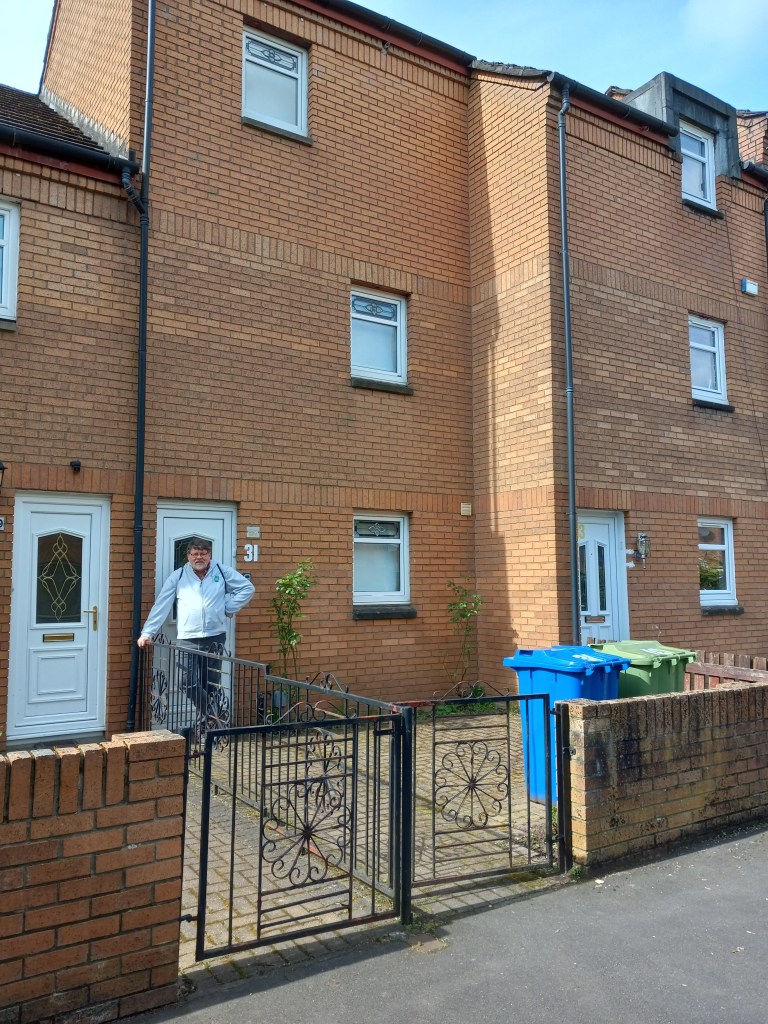
As we walked toward our destination for today’s outing, one of the street names prompted Jane’s memory and she excitedly informed me that without really trying, we had stumbled upon the address where my  grandfather’s family lived in 1899, the year he was born. This was established by a record she found recently through Ancestry.com. We don’t know if the building currently standing there was built prior to 1899, but it may be the very building where they lived. Jane plans to look into it, but in any case, it was very satisfying to find the location.


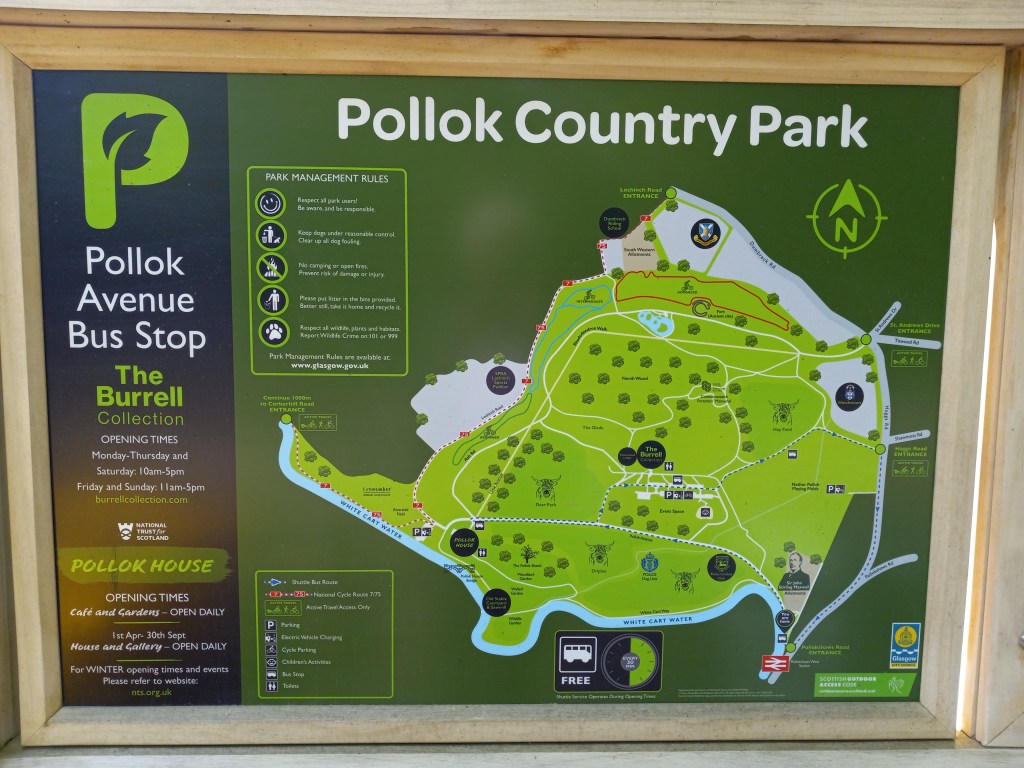
Pollok Country Park is what remains of a country estate held by Maxwell and his ancestors for seven centuries. Nothing remains of the three castles built and torn down over the centuries.

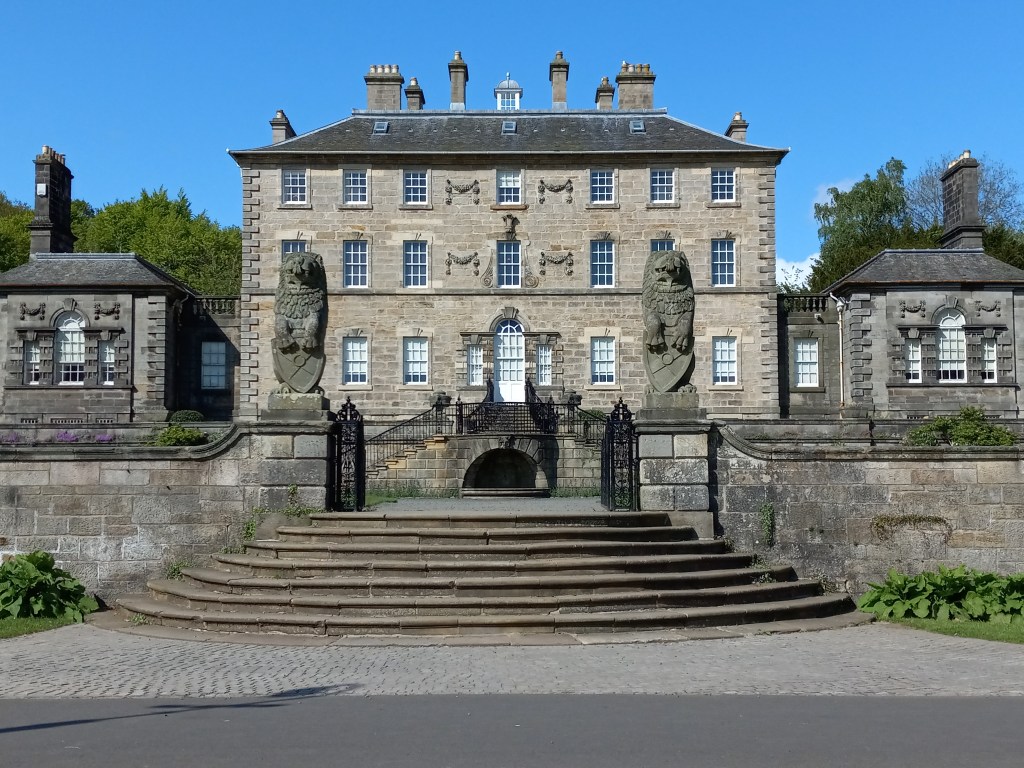
In 1752 the magnificent Pollok House was commissioned by Sir John Maxwell, reusing some of the stone from earlier castles. Today Pollok House is home to a collection of Spanish art.

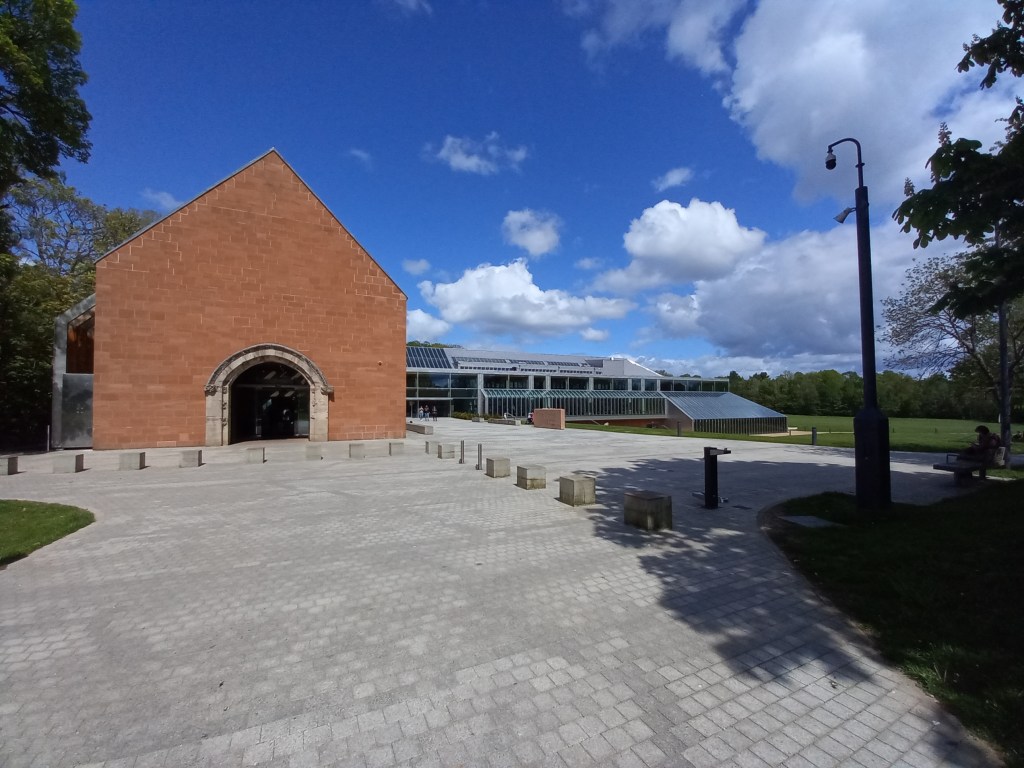
The day we visited, no tickets were available, but we had already concluded that another museum on the grounds of the park with a wonderful collection of art from many periods and cultures would satisfy our needs, so we were happy to turn our attention to the Burrell Collection.

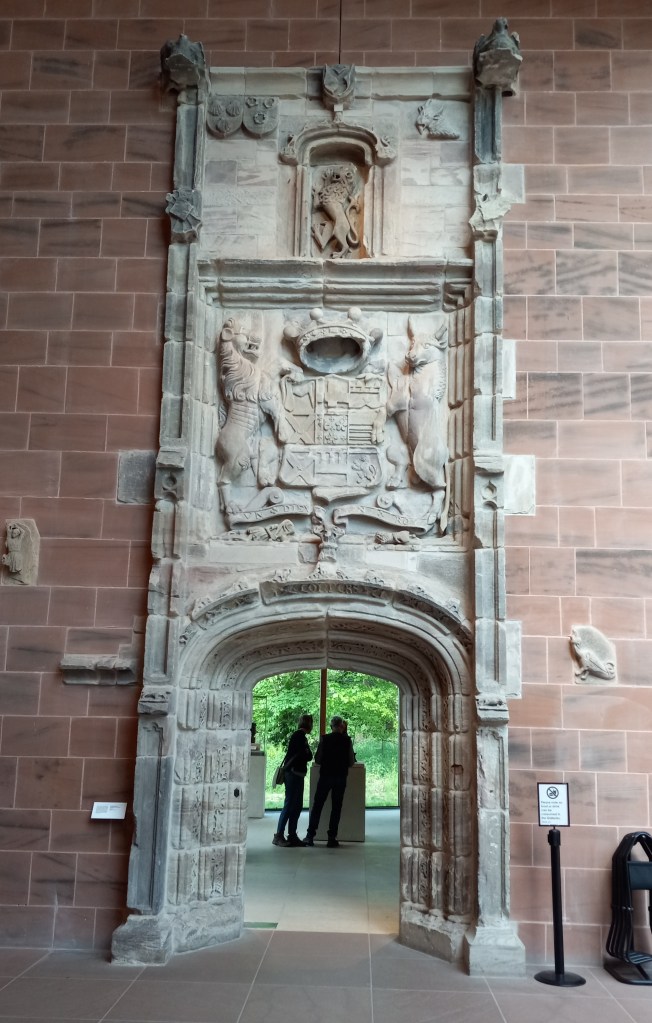
One of the things that people most often refer to as the great hidden treasures of Glasgow are her wonderful museums. As we have mentioned in earlier posts, we have enjoyed several that could only be described as world class museums. The Burrell Collection takes its place among them and I was so glad we had the time to linger over the many stunning artworks within its walls.

I often have a tendency to “get lost” in a collection like this and my poor camera was gasping, as it seemed I wanted to take home an image of almost everything I saw in the Burrell. This is why Jane and I like to be self-driven in our exploration of Scotland. When one or both of us wants to linger somewhere, we indulge that whim as often as it visits.

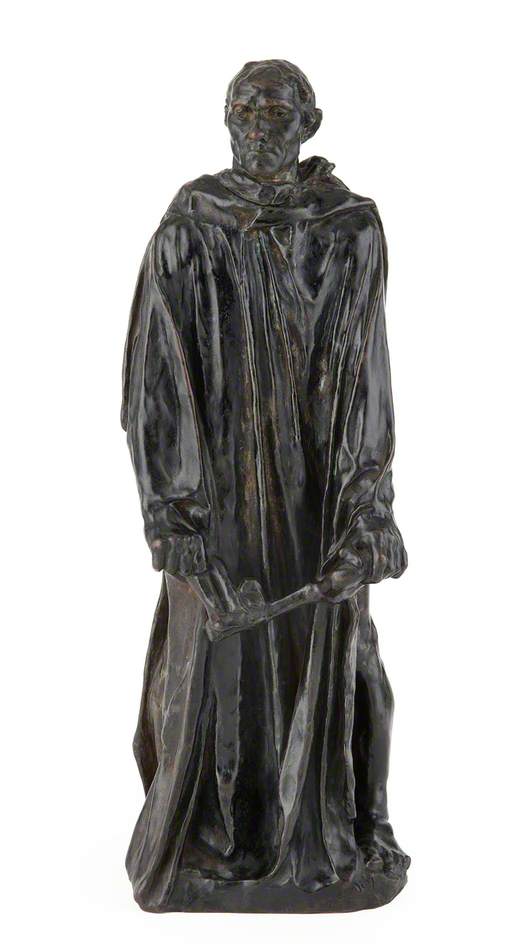
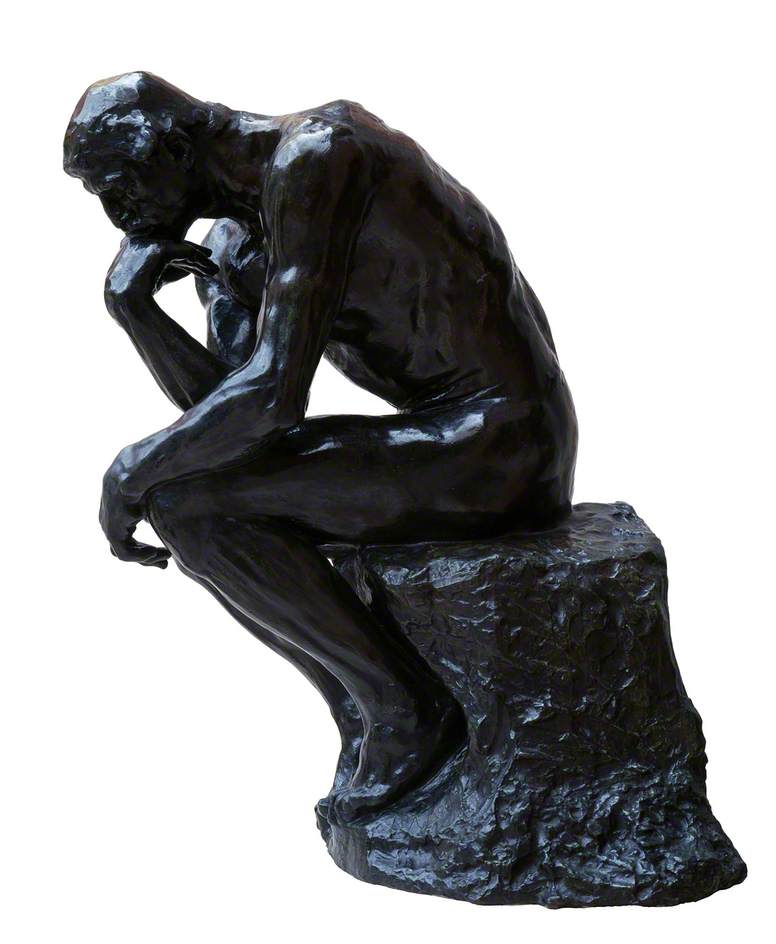
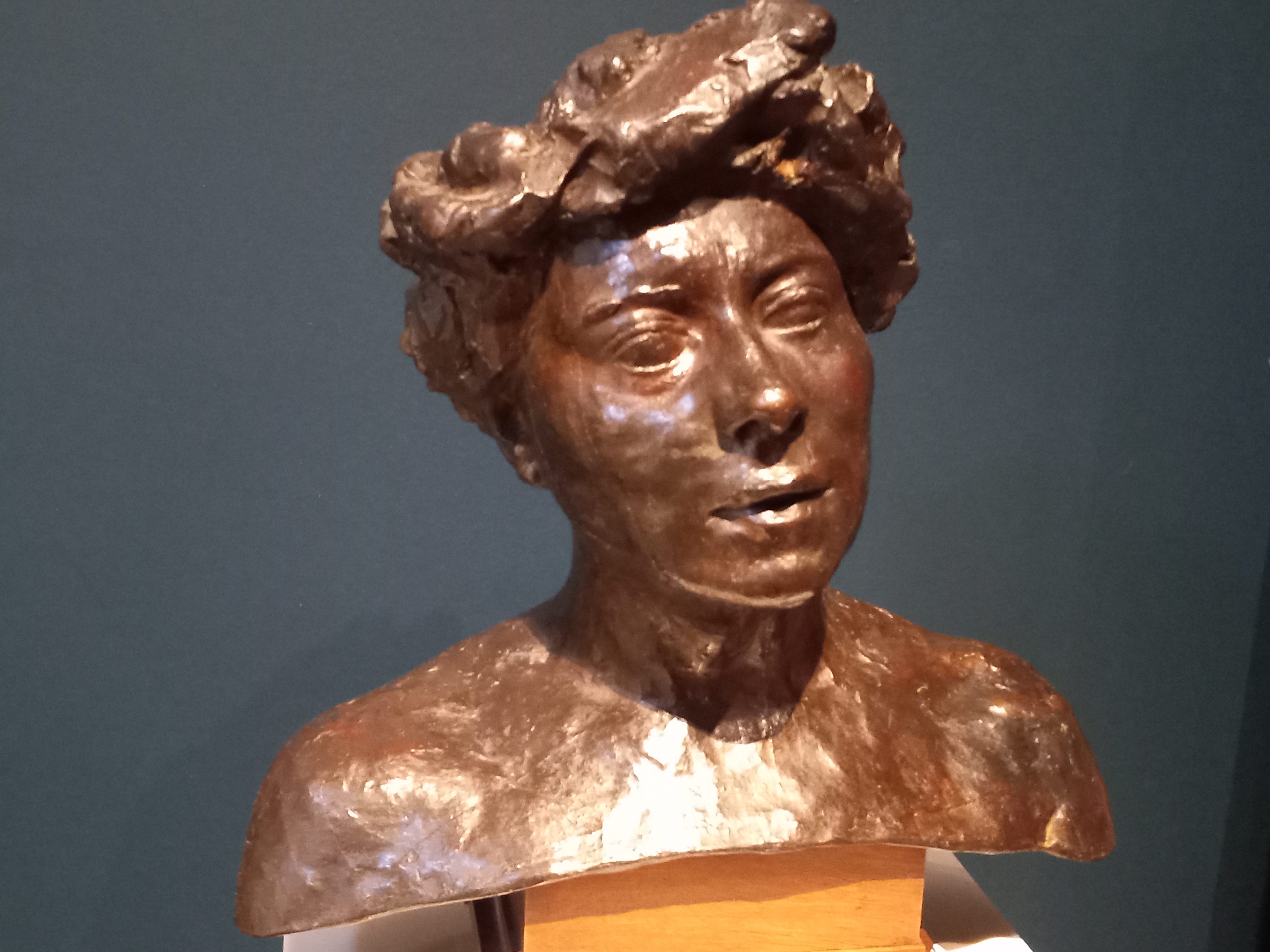
Two specific areas that grabbed me were the number of sculptures by Rodin and the striking way many of the artists depicted religious images. I have been blessed to be able to see Rodin artwork in many great museums in my life and the ones in the Burrell were just as fascinating to enjoy. The depth of detail Rodin captures in his art is endlessly fascinating to me (note: I didn’t get all the photos I intended to, so I have legally used two images from the ArtUK website).
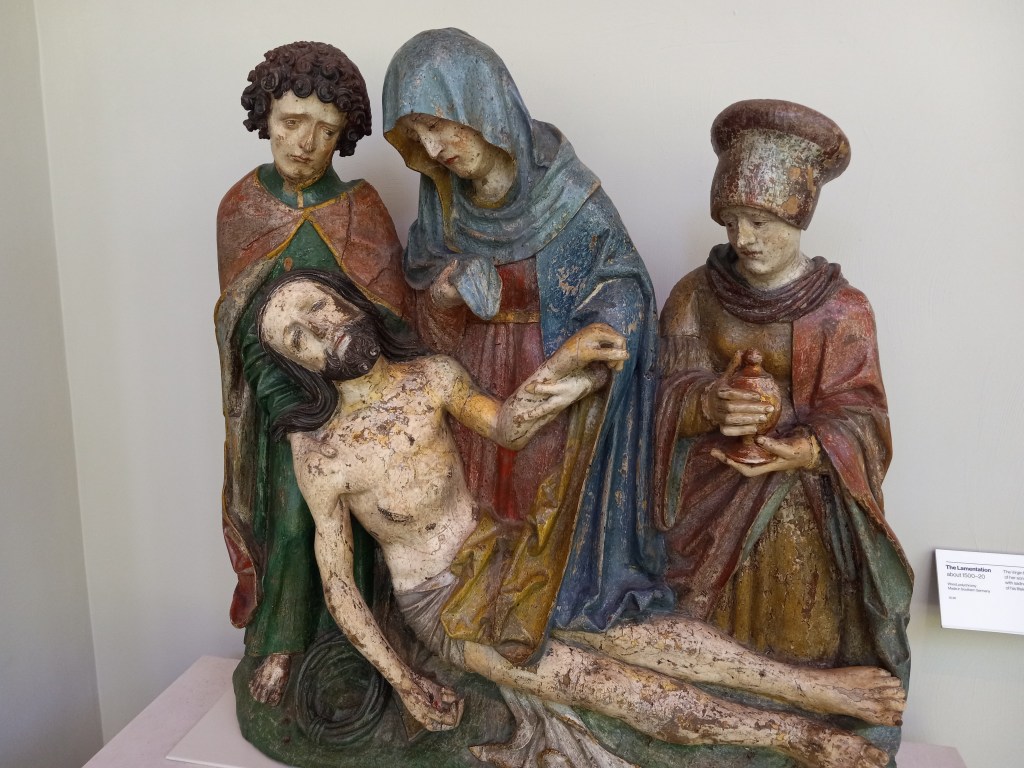
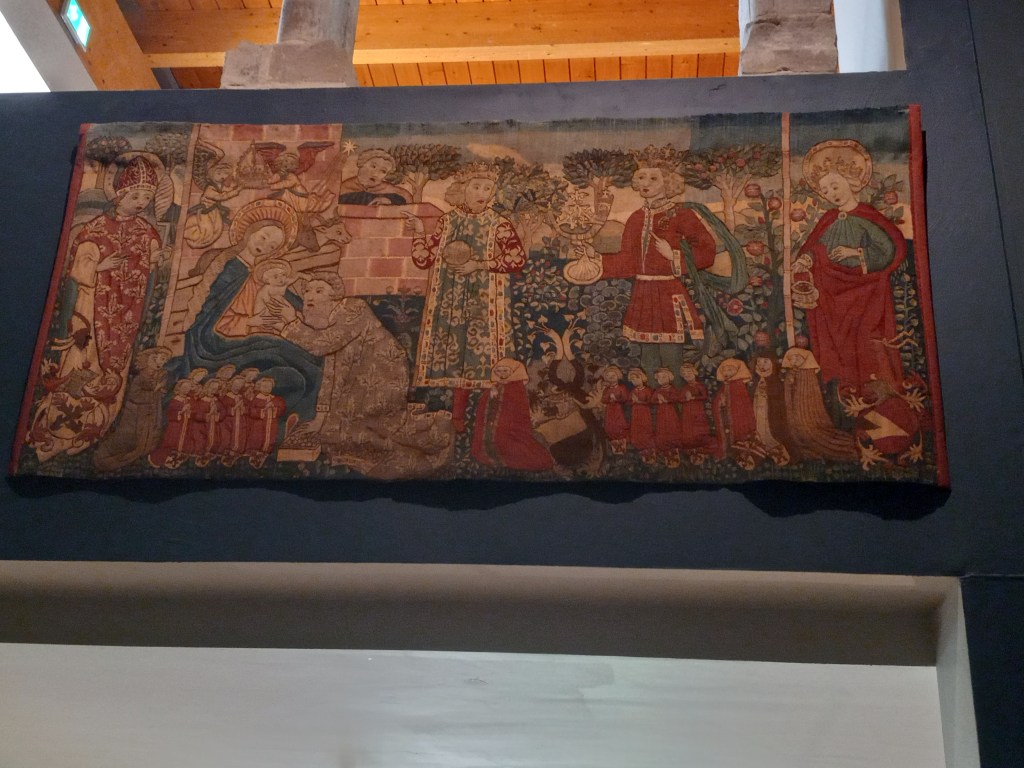
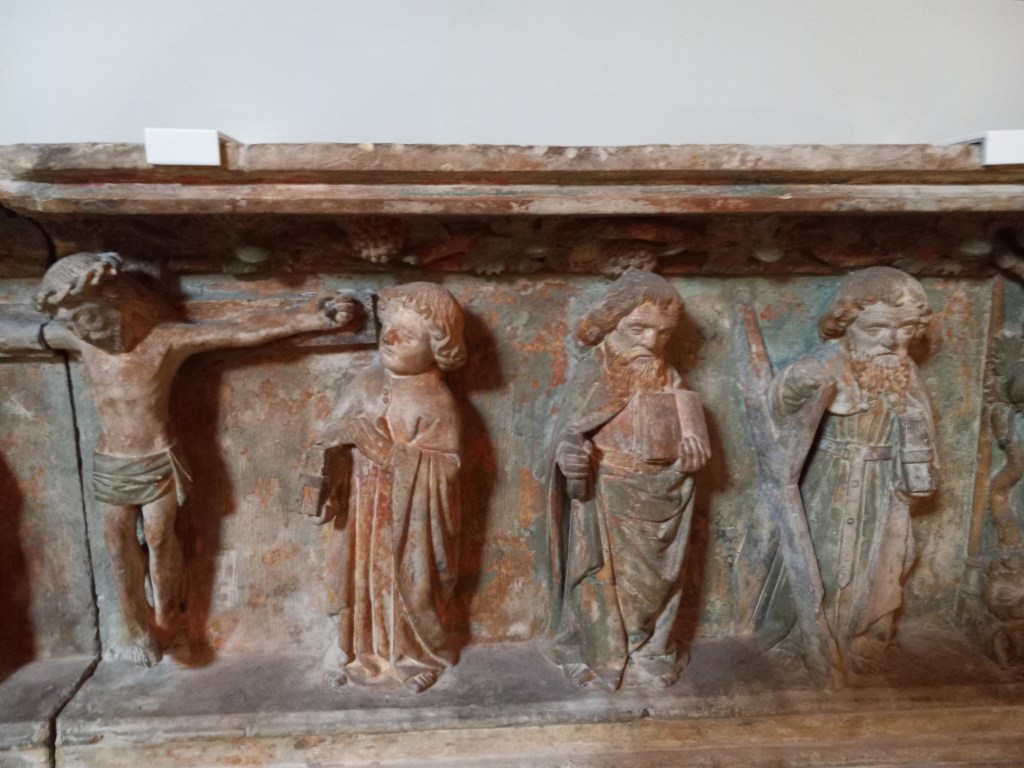
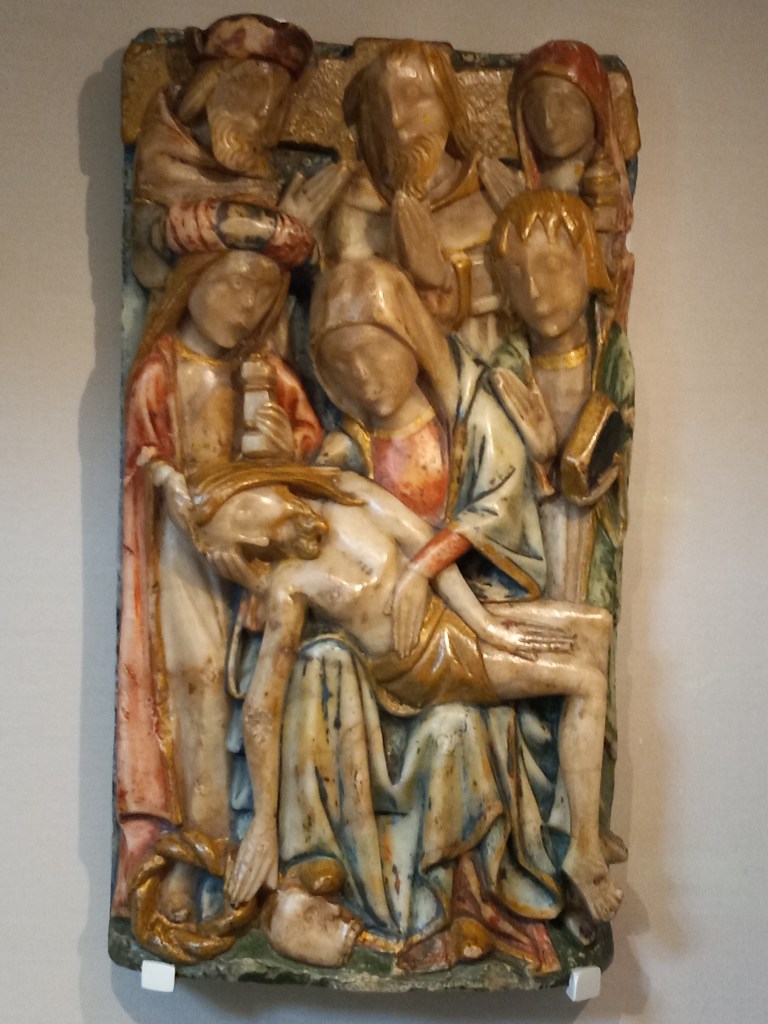
It was both inspiring and interesting to see religious imagery in artwork from earlier centuries and glimpse back deep into the past to see how artists rendered biblical characters and events. By reading the descriptions, we learned that many of these works are as much as 500 years old. This collector used his wealth to preserve these precious pieces of art so a philistine like me could gaze on them while on vacation.

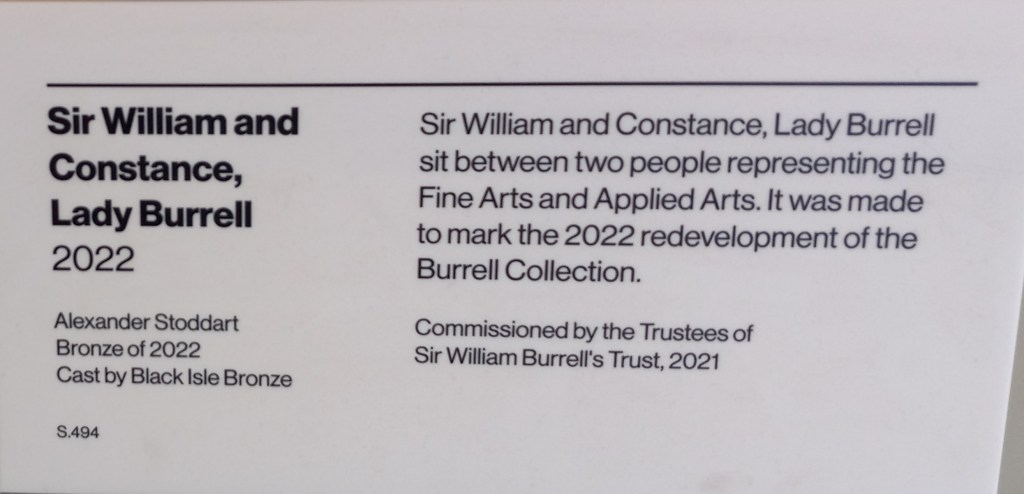
It was appropriate after such a satisfying time of enjoying art that there was one display that honored the family who preserved and made it possible for art lovers to to enjoy this great artwork for generations to come.

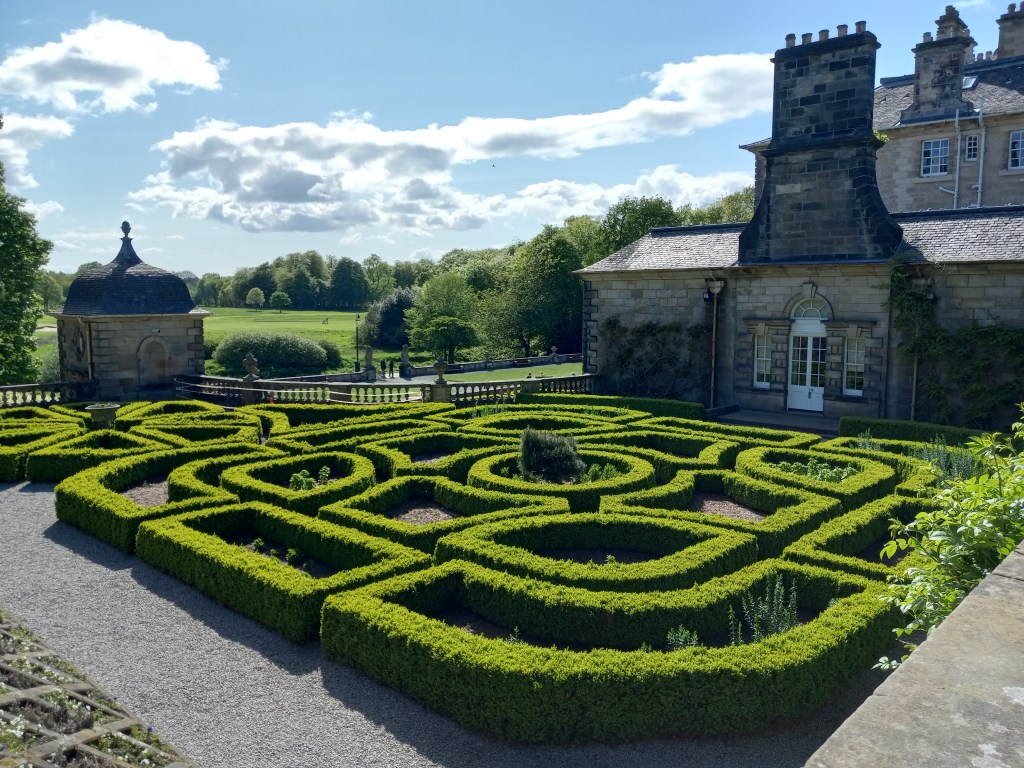
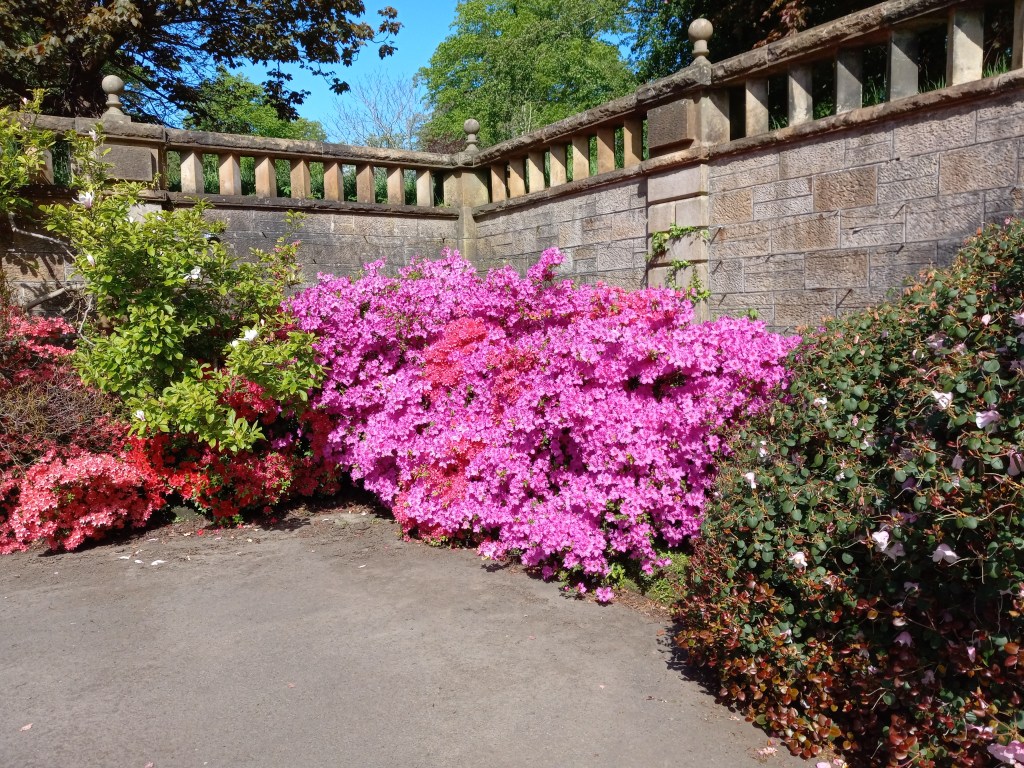
After our visit to the Burrell Collection, we enjoyed a lovely stroll through the magnificent gardens of Pollok House. We were there at the perfect time, because lots of beautiful flowers were in full bloom, including an impressive collection of over 1,000 rhododendrons, apparently a passion of one of the recent Maxwells.

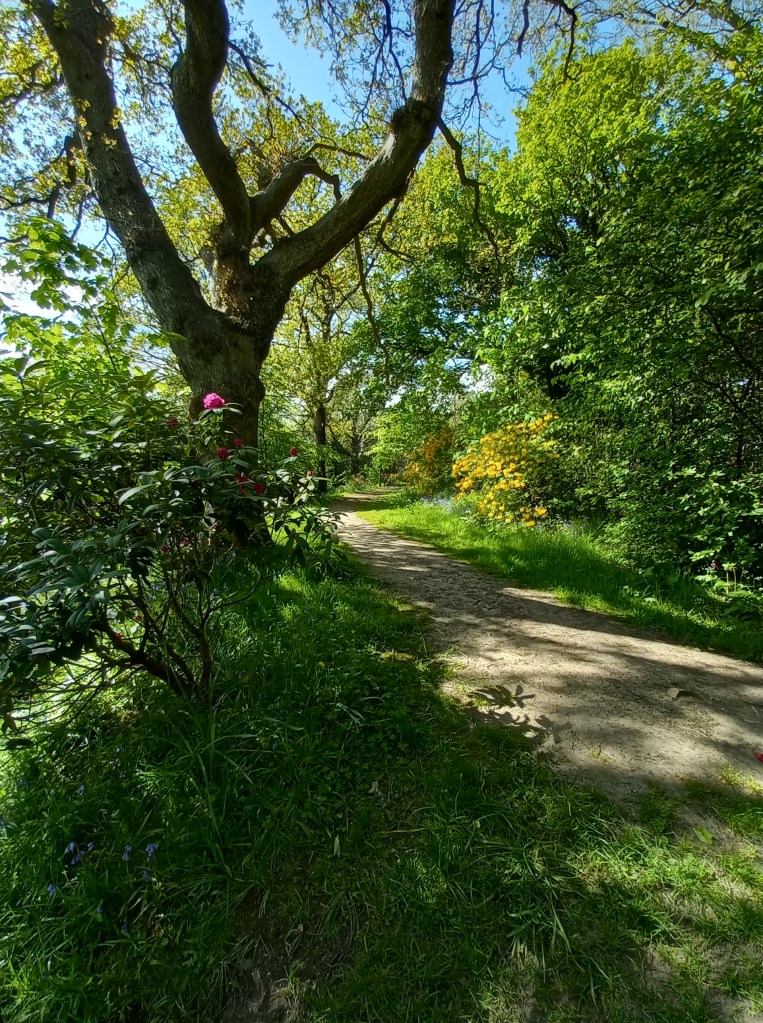
The surrounding grounds made a beautiful place to walk and soak up some nature. On our way out of the park, we got close enough to some resident hairy coos to get a snapshot.

Treasure Hunt in Glasgow

There was a method to our madness when we designed this year’s trip. For Inverness, the goals were easy. Because we had never been there, and with the NC500 tour booked, the goal was to just let the city and this part of Scotland happen to us.

Glasgow was a different story. We spent a couple days here on a previous trip but not enough to get to know the city. Glasgow has the largest population of any city on Scotland and it does come off as a big, bustling, ugly urban setting.

Our goal for our visit to Glasgow this year is to dig deeper and see some of the hidden treasures of the city. And boy did he hit the jackpot! The train ride from Inverness to Glasgow was enjoyable as we again admired the beauty of the highlands from the comfort of the train.

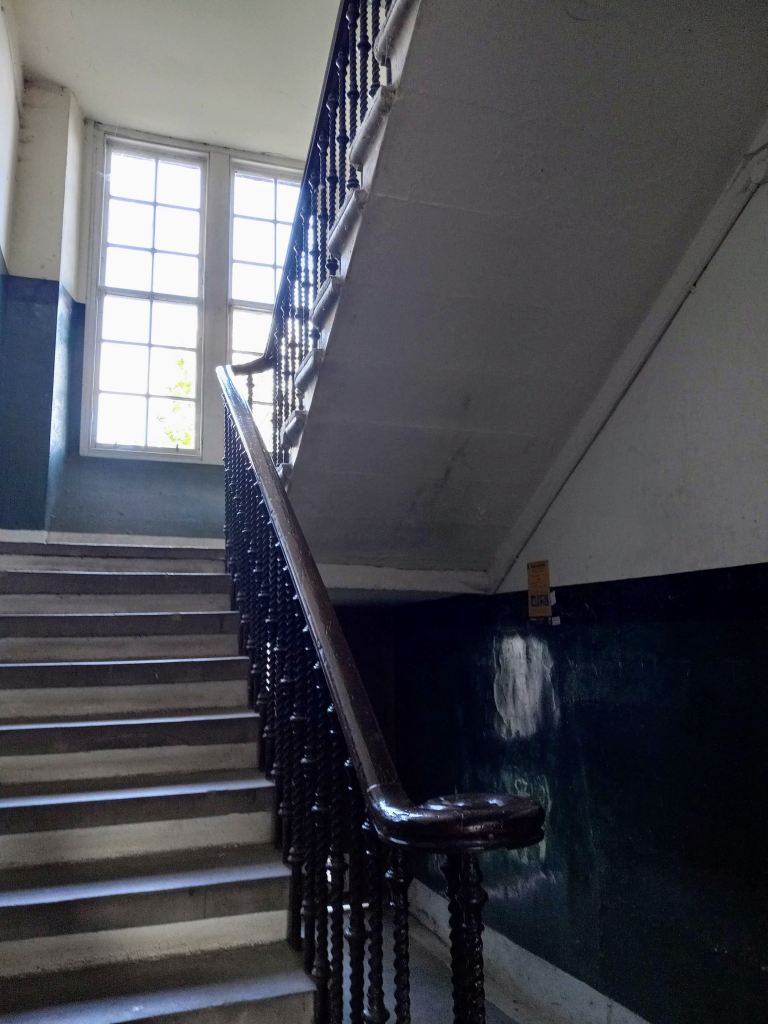
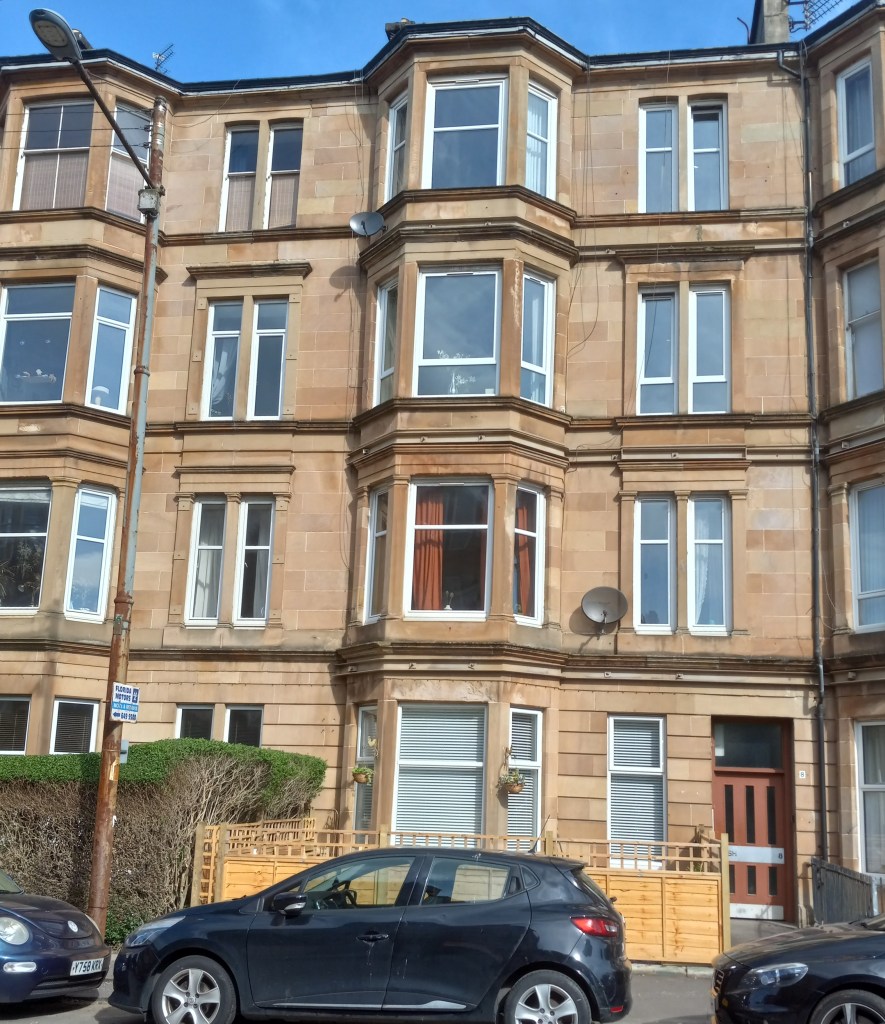
For our second stay in Glasgow on this trip, we booked accommodations in a different part of the city, known as Glasgow Southside (very logically located south of the Clyde River). During the taxi ride to our Airbnb, we were a little concerned as we passed through neighborhoods that seemed a bit “run down.” We arrived at a nice looking older building and found that the apartment we had booked was on the 3rd floor, with a daunting set of stairs for two tired old travelers to take on. We had known it was not on the ground floor, but had forgotten that in Europe they call the second floor the 1st floor, the third floor the 2nd floor, and so on (the ground floor being called the ground floor, you see). We were glad we packed light and could manage our own luggage, even when (lots of) stairs are involved.

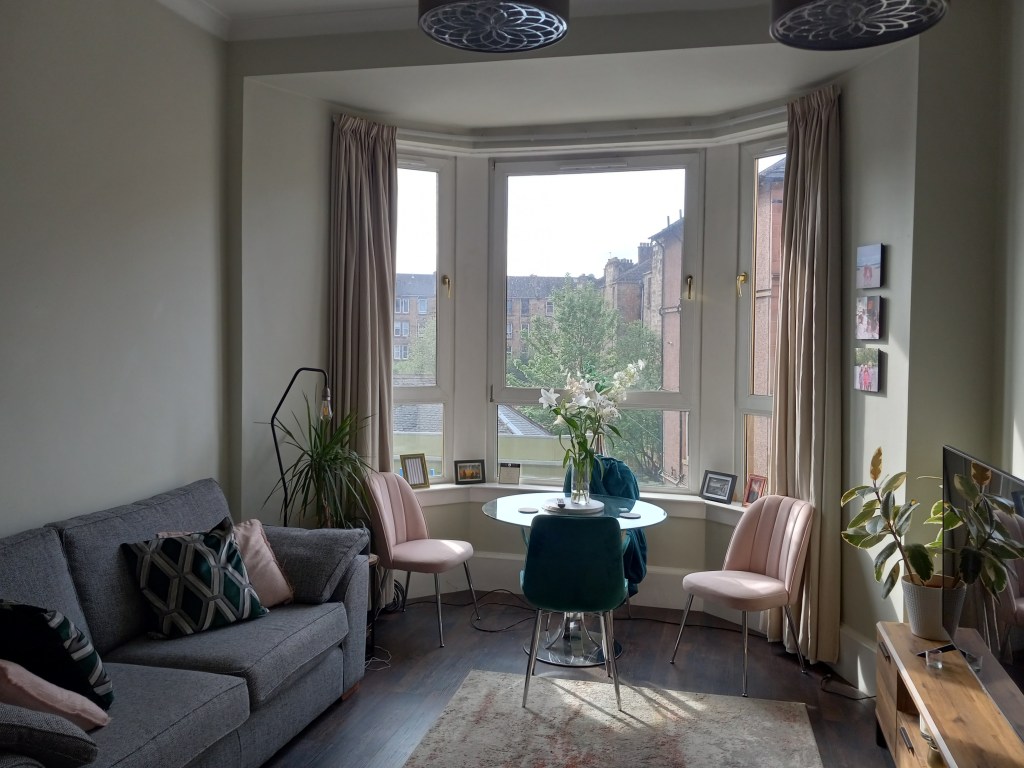
On the top story of this 120+ year old building and behind two doors with very impressive locks, we walked into a great flat that was a beautiful and comfortable as can be. The high ceilings, wood floors, modern fixtures, and very tasteful decor won us over immediately. We instantly fell in love with it and and knew this would be the perfect spot for our last exploration of Glasgow for this trip. Our hostess for this time who shared a room with a private bath in her home was the very definition of gracious and welcoming. We really enjoyed getting to know Aisling (pronounced Ashling).

The People’s Palace

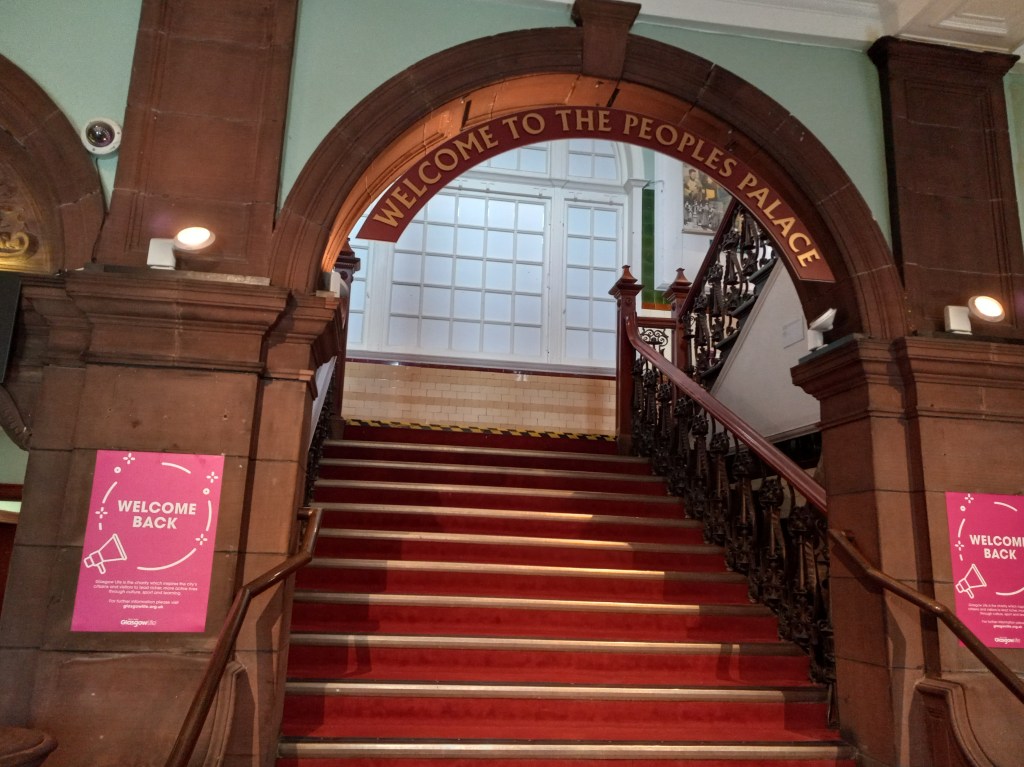
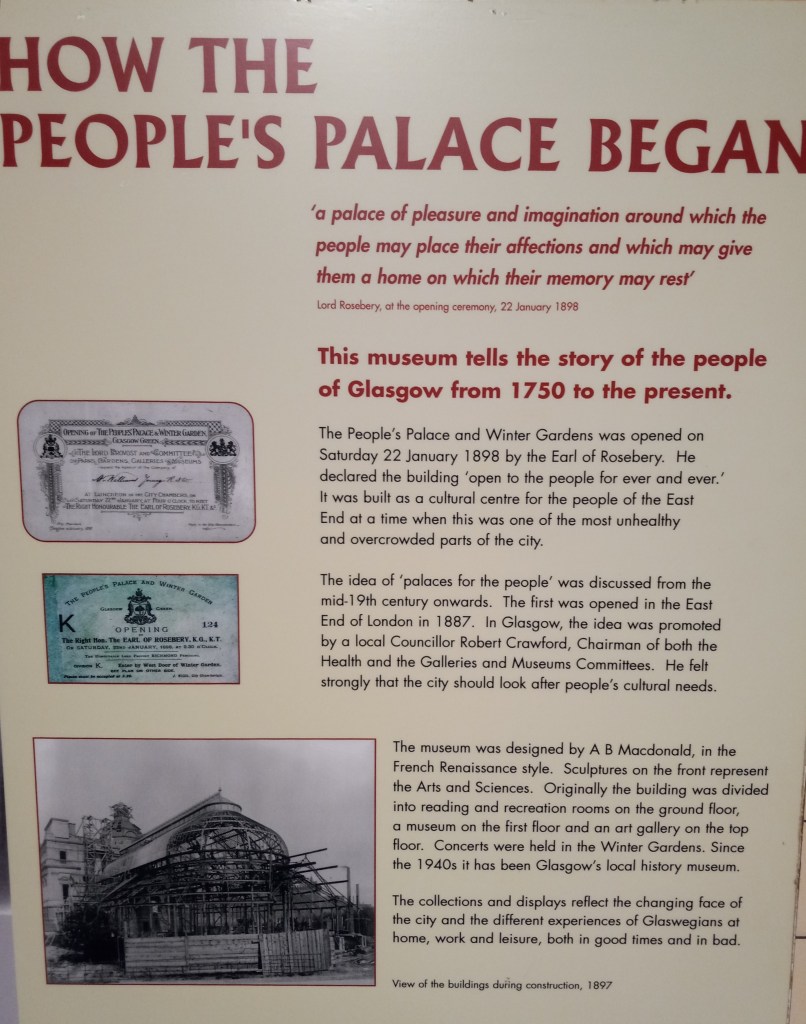
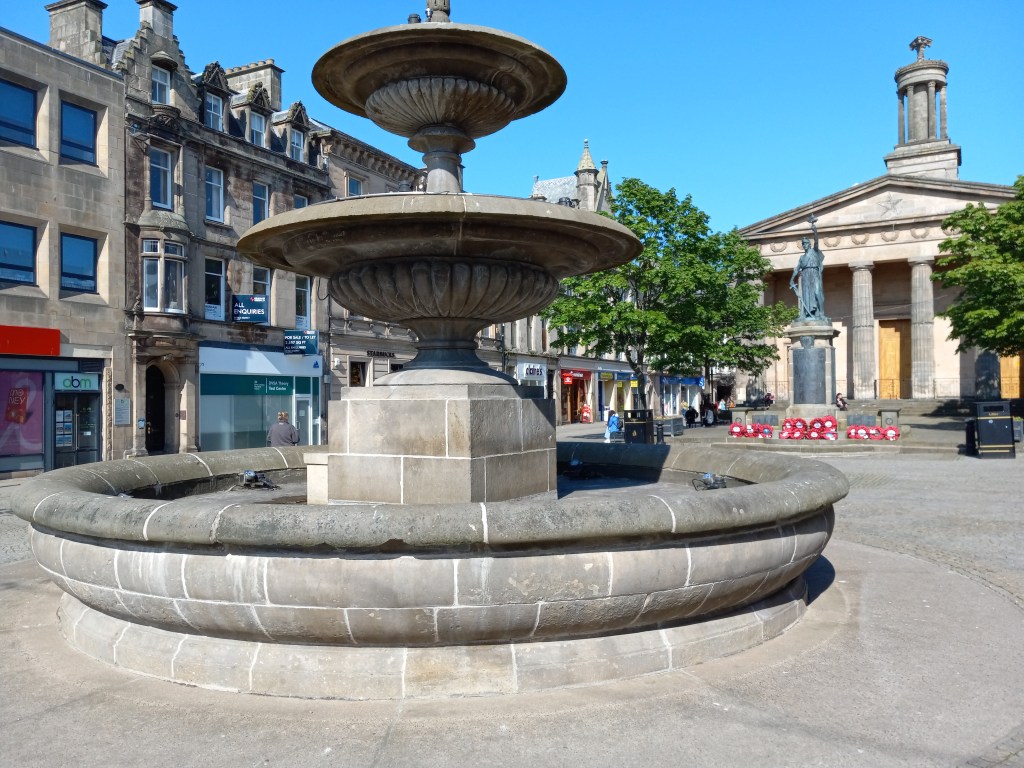
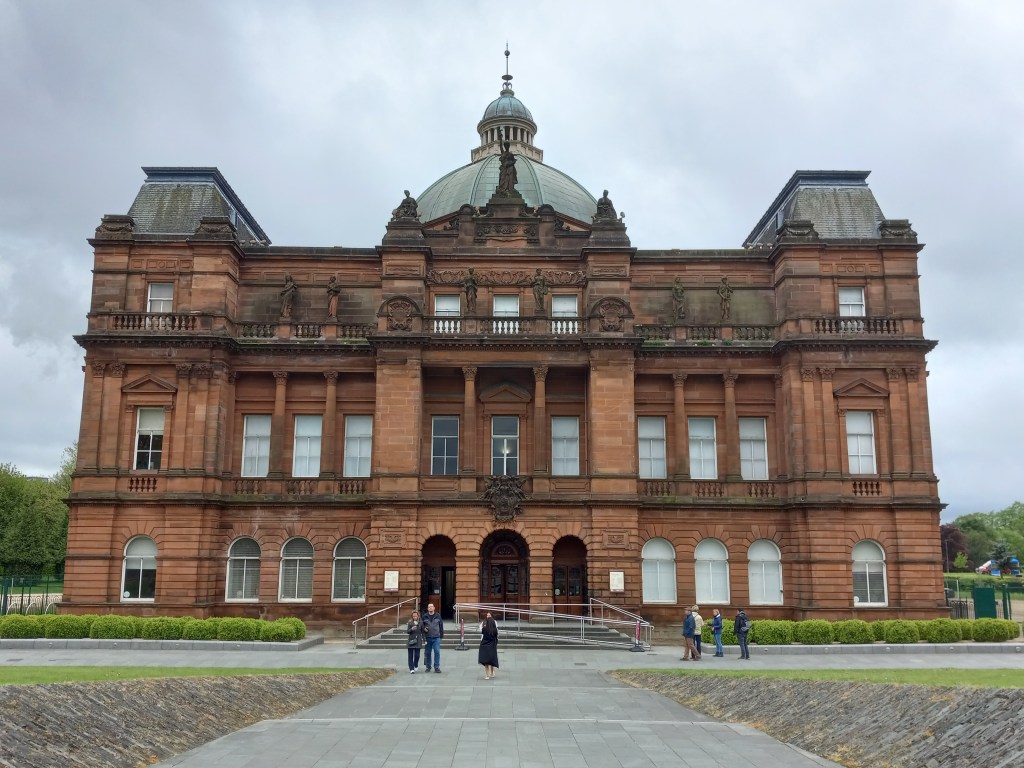
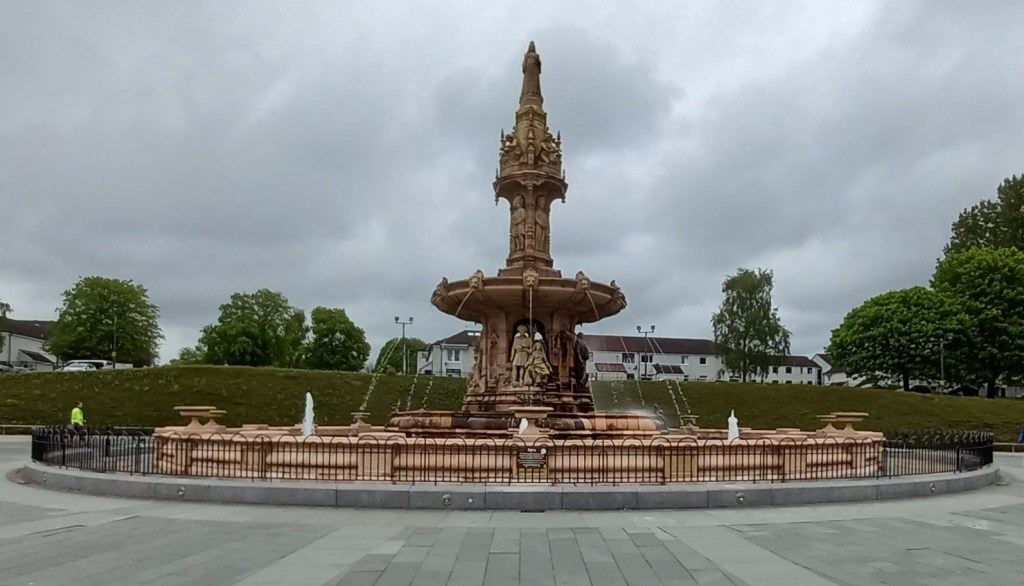
Our first chosen destination was one of the most unique museums I have encountered. The People’s Palace is an gorgeous, elegant building housing a museum devoted to documenting the very long and often harsh history of this important Scottish city. As we approached it, we found the building and the fountain out front were as impressive as any museum I have seen.

This museum was a visual history of the city through two wars and many times when things were hard for the residents. You have to admire the city leaders going to the effort to preserve the important artifacts and images of Glasgow through the decades. It was all pretty overwhelming so I did not take photos of the exhibits as is my habit. But is was a stop worth lingering over and I am glad we did.

Glasgow Cathedral

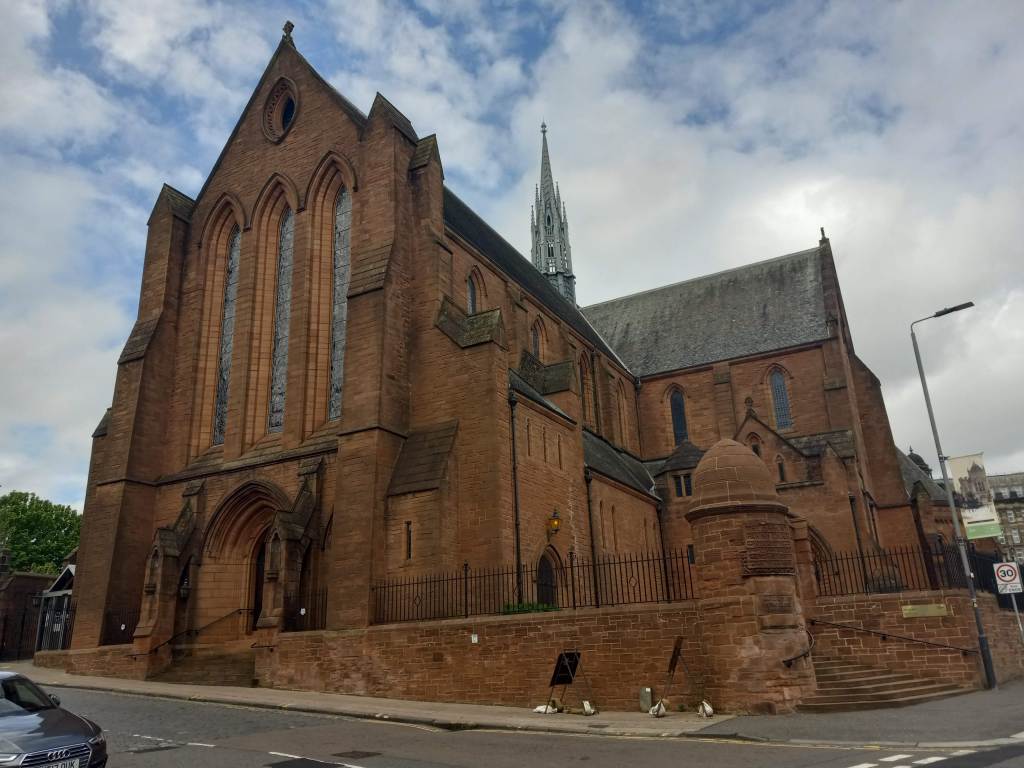
Being Sunday, next perfect stop was Glasgow Cathedral. We had tried to give this beautiful cathedral time earlier in this trip but it didn’t work out. So after a fine lunch (fish and chips) we headed there to really explore it at our leisure as is our way.

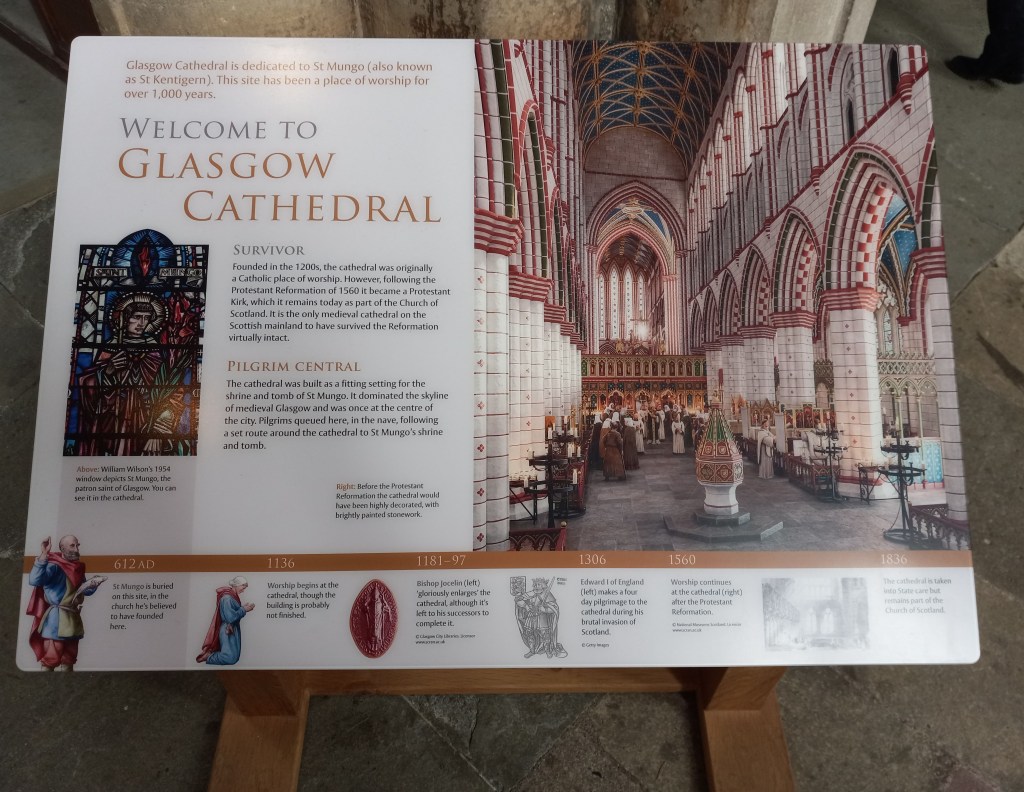
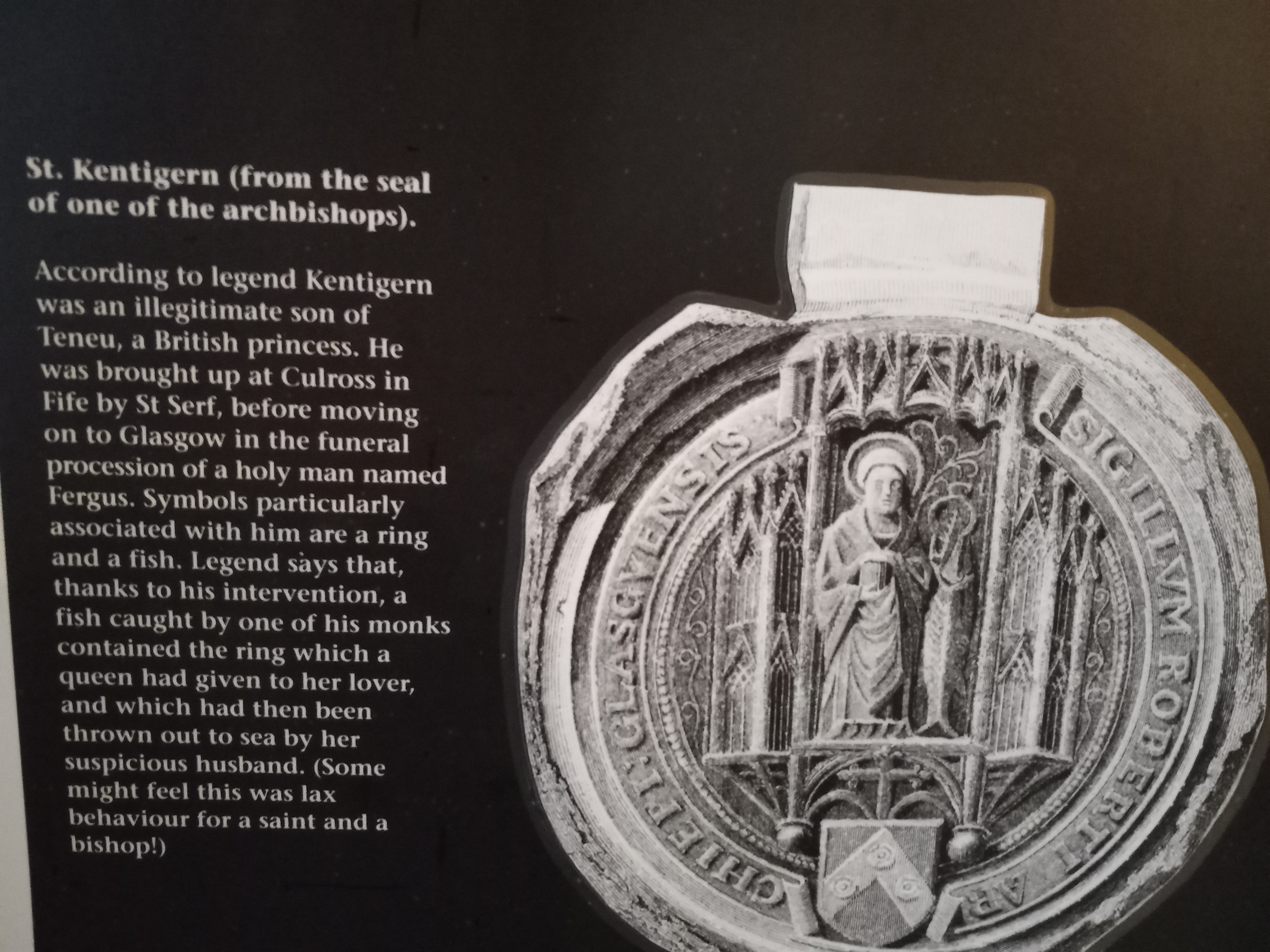
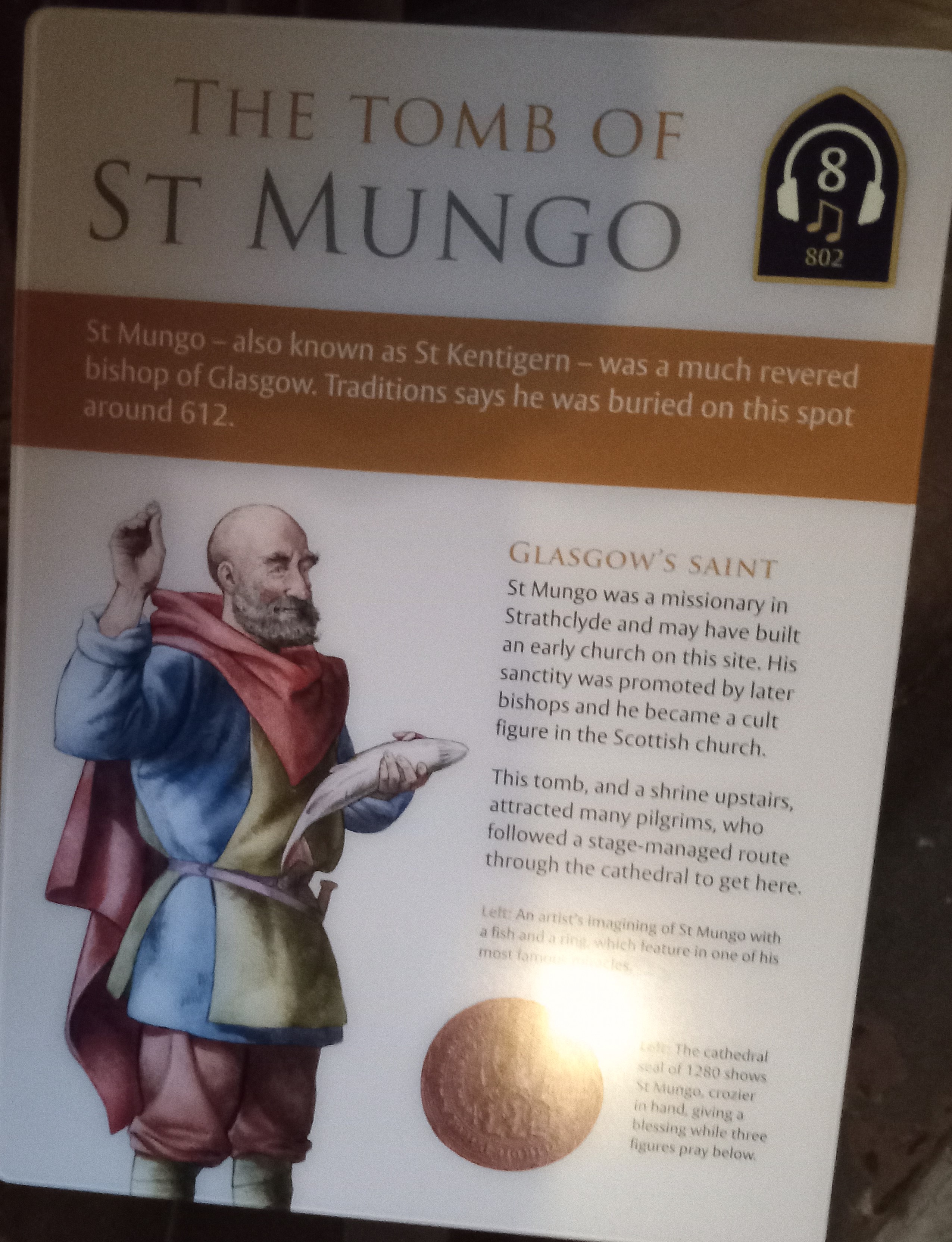
Three years ago when we were in Glasgow as part of our trip to Scotland’s eastern coast, we were able to enjoy an evensong service here, but we had not allowed time to see the cathedral itself. This cathedral was founded in the late 6th century by a missionary monk by the name of Saint Kentigern, often also referred to as Saint Mungo (meaning: “dear one”). He was the bishop of the region who came to be well known for the miracles that surrounded his service. The cathedral building dates to the 13th century, but parts of the crypt are believed to date back to the time of Saint Mungo.

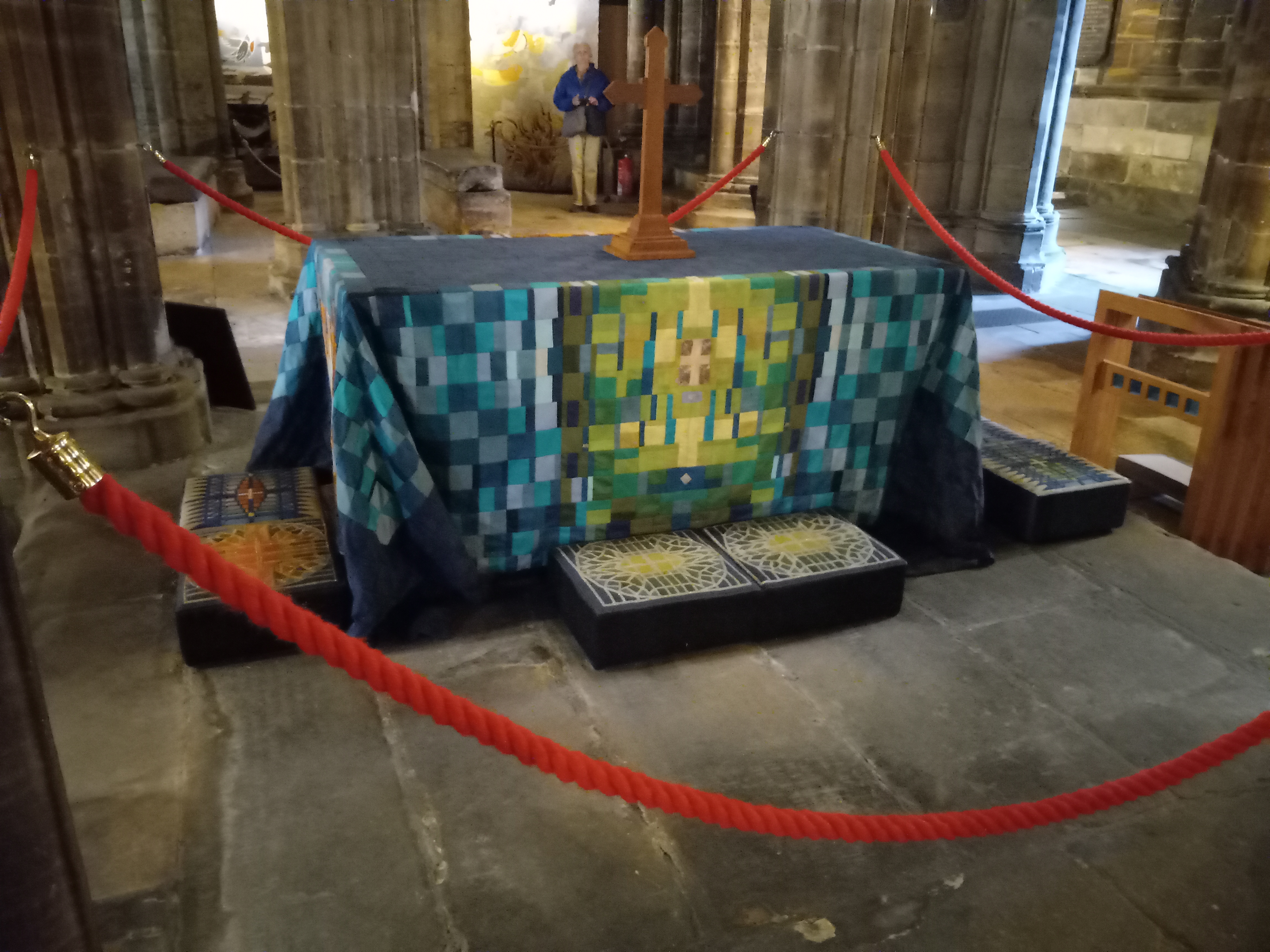
We did take a moment to pay respects at the spot in the crypt that was identified as the tomb of the Saint. We lingered on the many details of this ancient house of worship. When we felt satisfied, we asked about the evensong service. We were saddened to learn that Glasgow Cathedral no longer held evensong services.

We were saddened but intrepid. Jane used her research skills and found an evensong service across town at a St. Mary’s Cathedral. Uber served us well and off we went to be blessed by a beautiful service that ended the day perfectly. Enjoyed a fine dinner in a well known restaurant that had a wee bit of live Scottish music and that put a nice ending to a good day of exploring Glasgow.

St Mary’s Cathedral -Evensong

Urquhart castle on Loch Ness

(Note – due to a snaffu with WordPress, this post is out of order. We went to Urquhart the day after we finished the NC500. I got the post restored but it appears out of sequence with the trip)

After our big adventure on the NC500, we had a couple more days planned in Inverness to explore the city and day trips. A must see that was on our list was Urquhart Castle which was about 45 minutes outside of Inverness by bus.

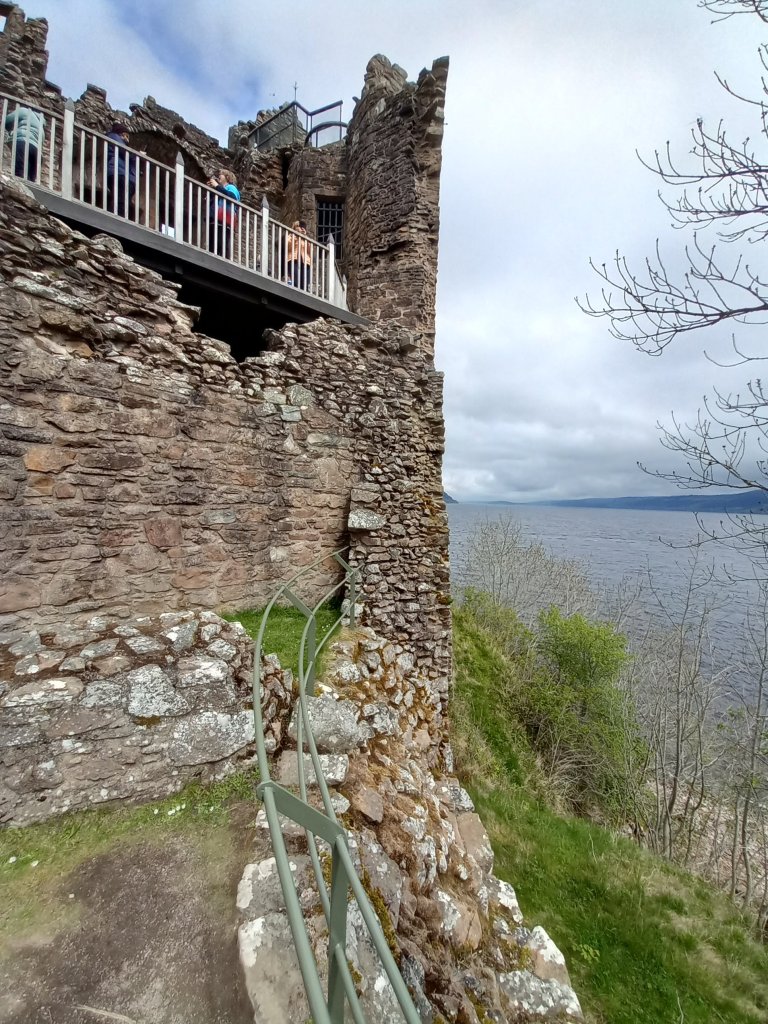
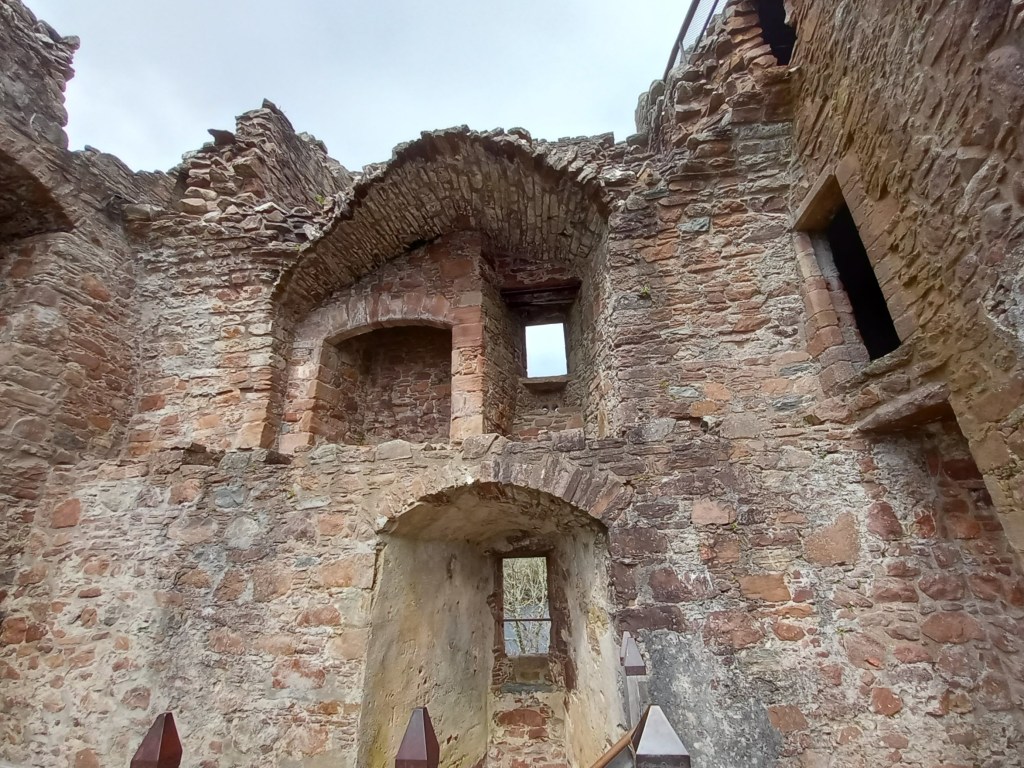
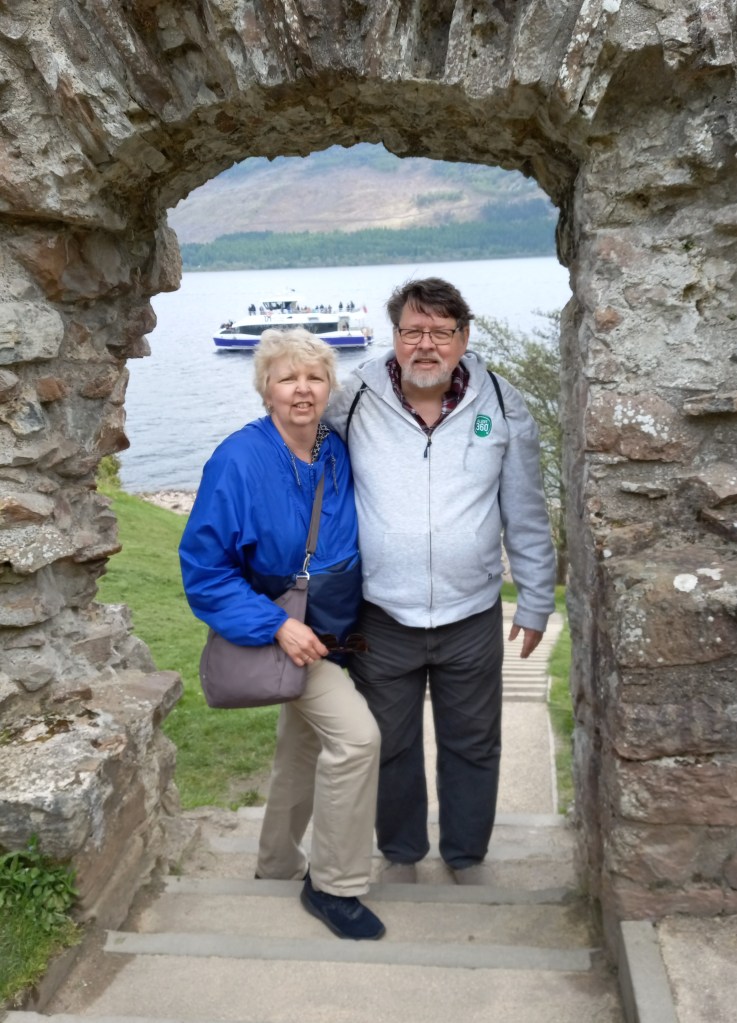
Now, we have learned that traveling bus in Scotland can be a hit or miss affair but they got us to the castle in fine time. For a castle in ruins, this was a fun castle to explore. Lore aside, Loch Ness is gorgeous.

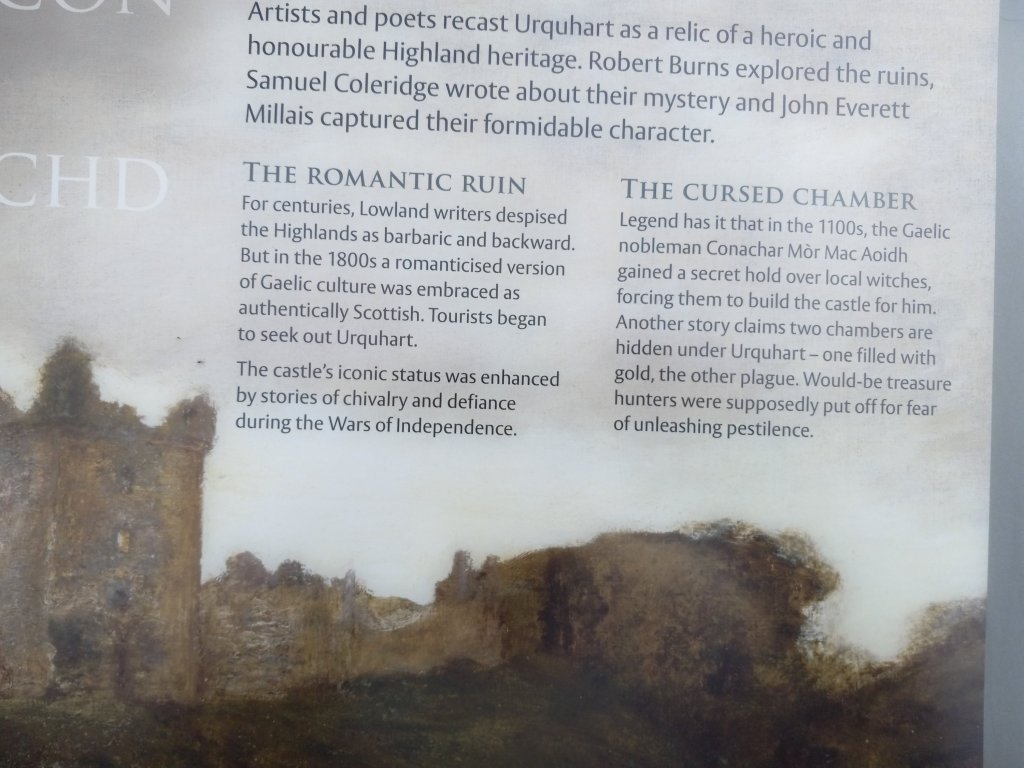
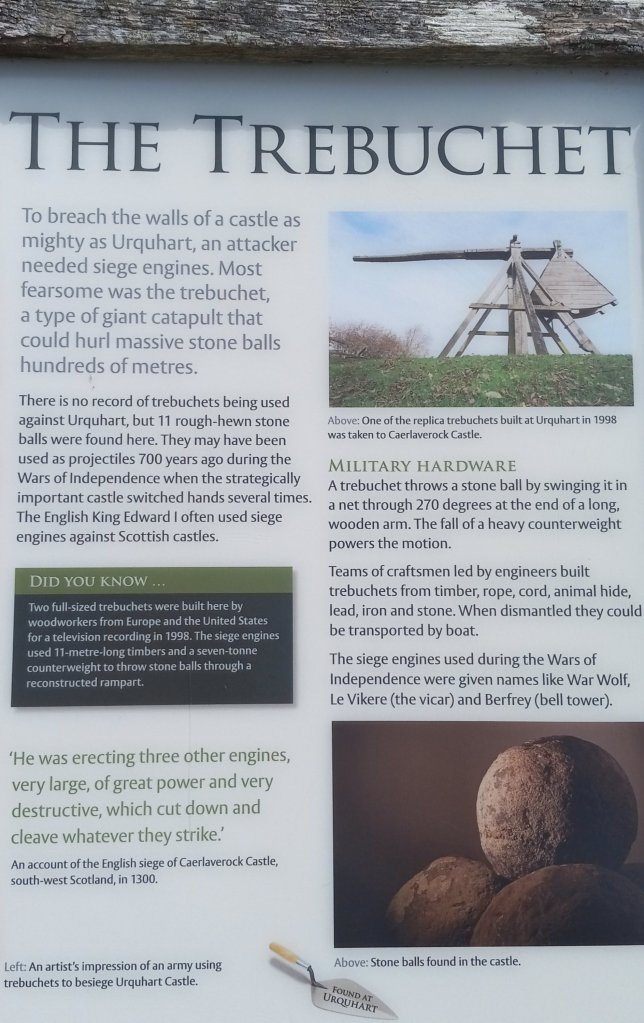
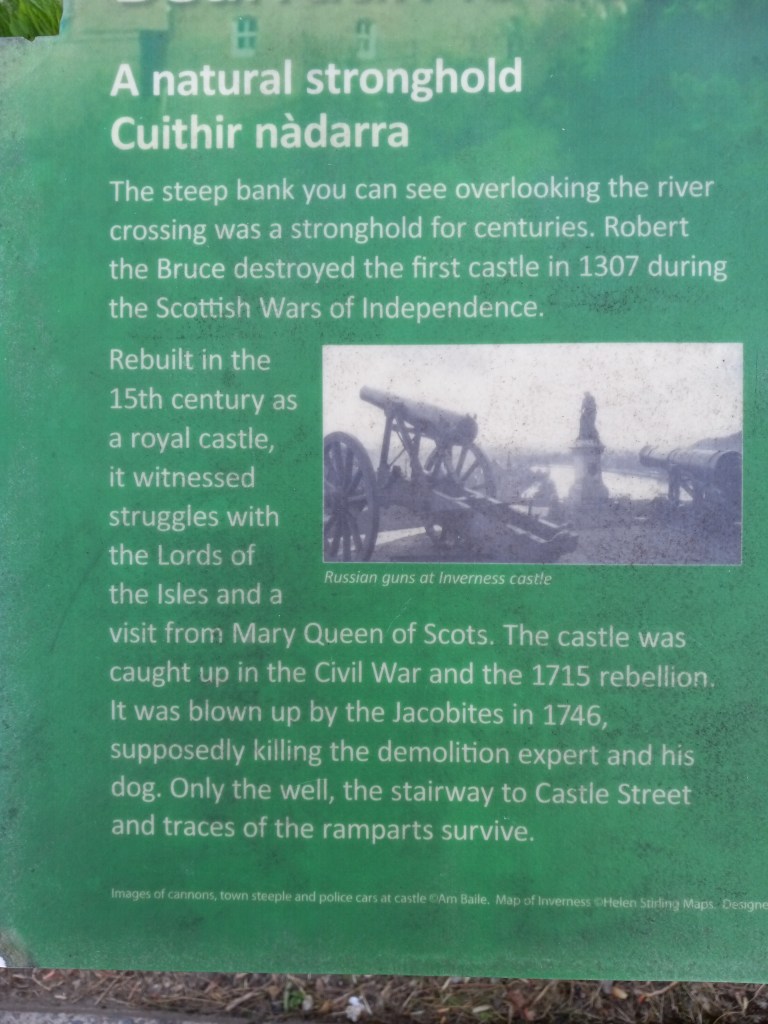
The above summary of the castle’s history helps us understand its significance. You can almost envision the people who lived there, the conflicts and wars.

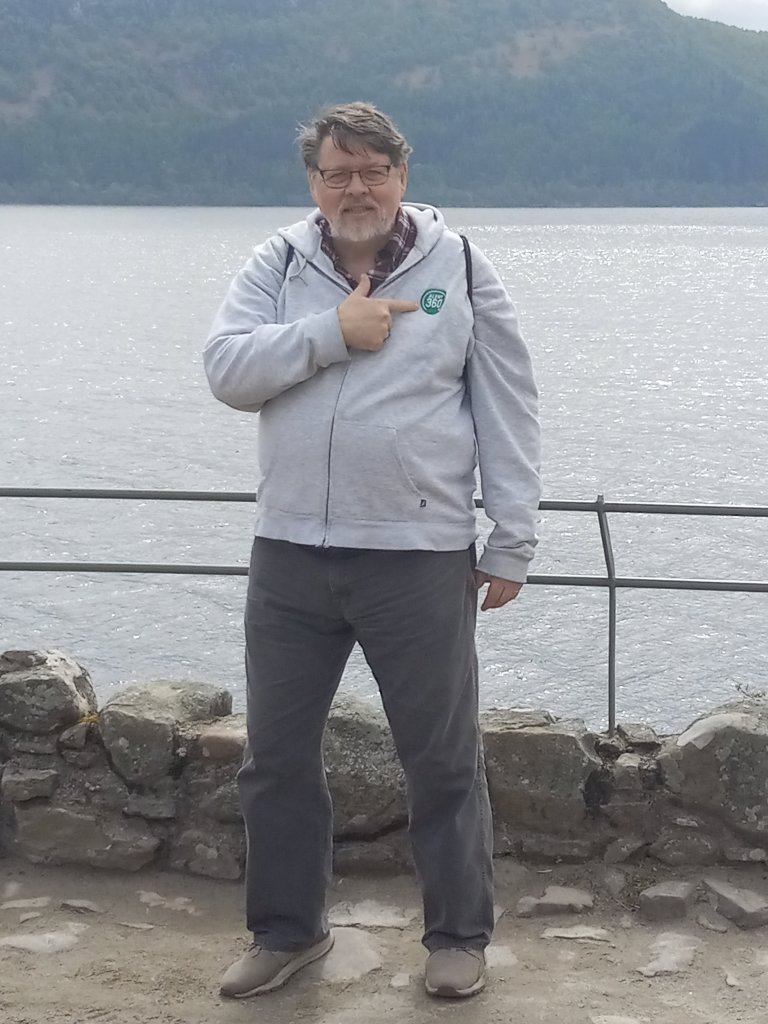
A quick note to my friends at my workplace. I am sure you noticed I wore my Alert360 hoodie all over Scotland promoting the brand. We can work out my compensation with the marketing department when I get home.

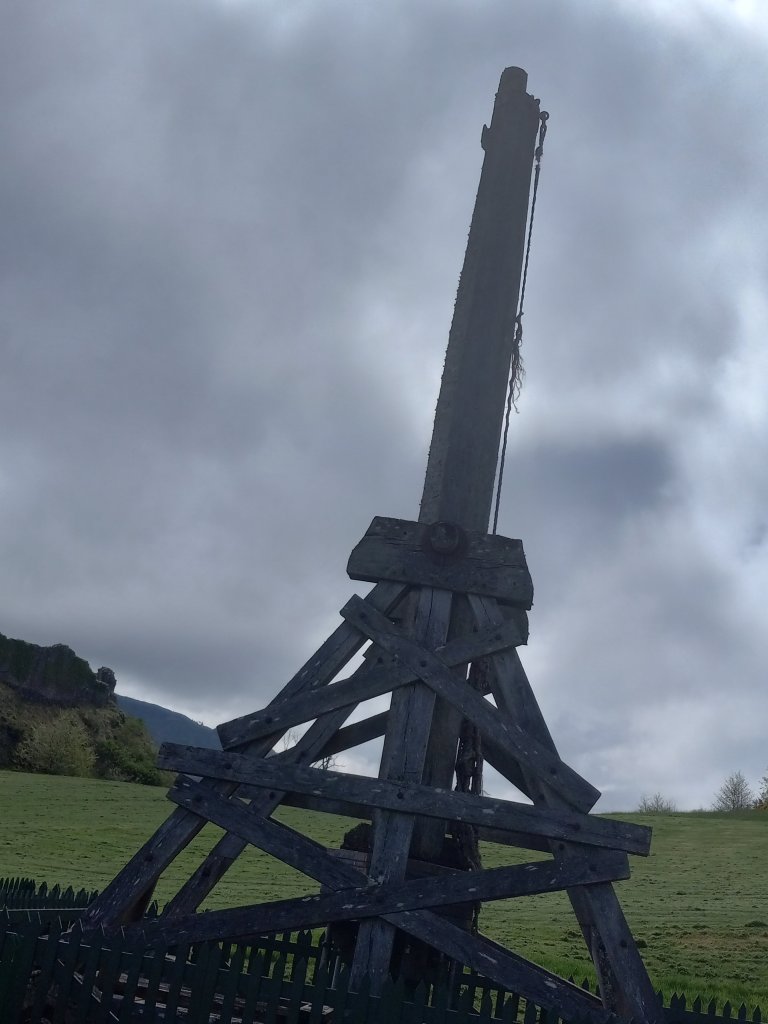
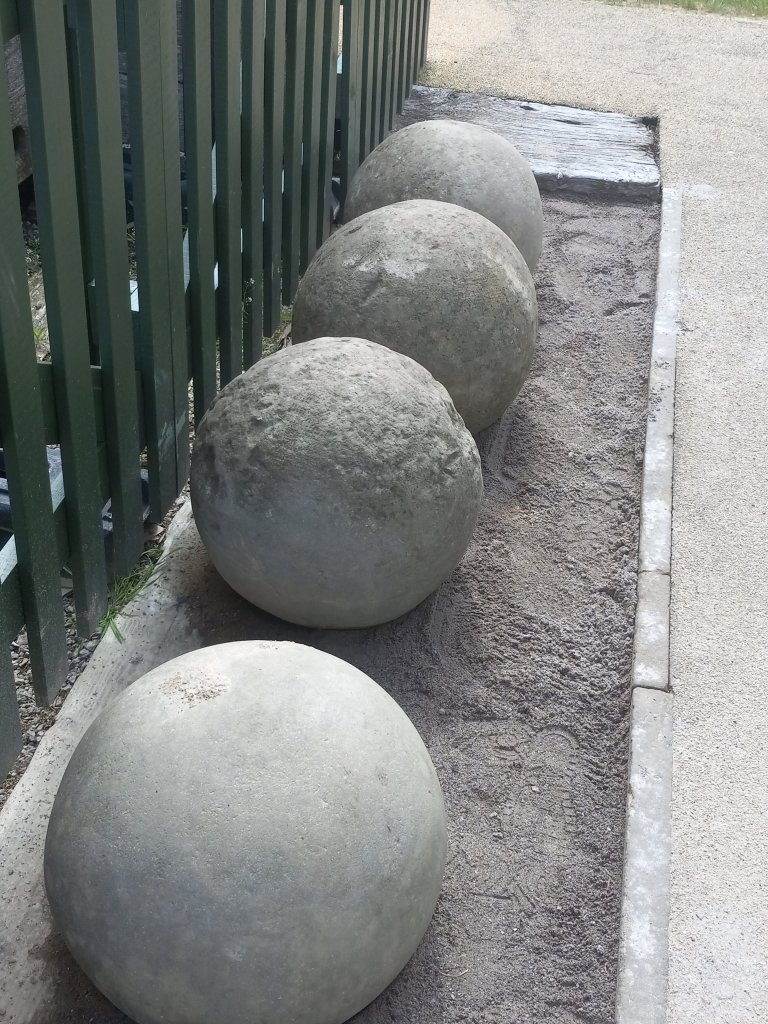
On the path to the castle we encountered a huge replica of a weapon used to attack a well fortified castle like Urquhart. It was called a trebuchet and the stones they hurled to destroy castle walls were massive.

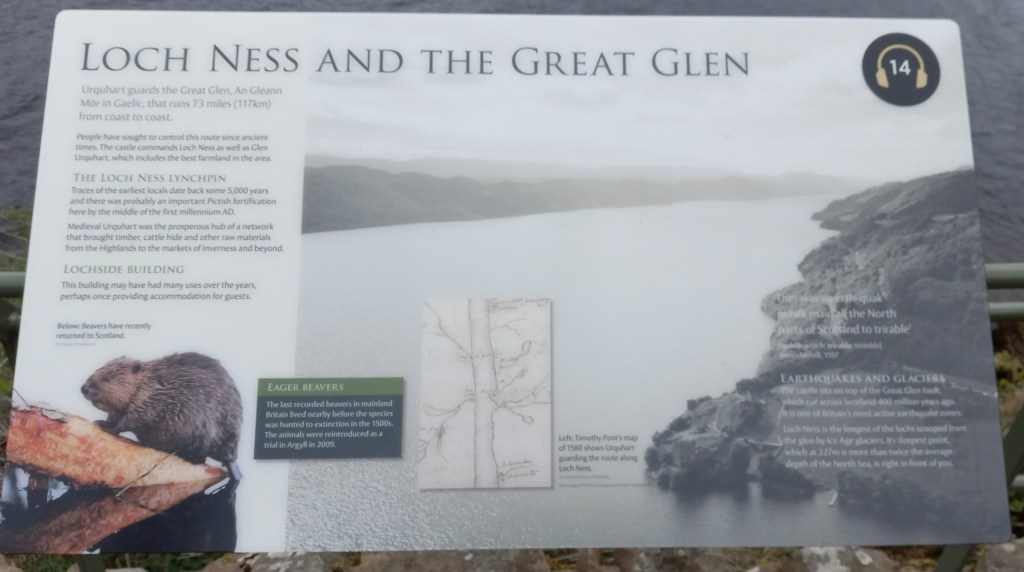
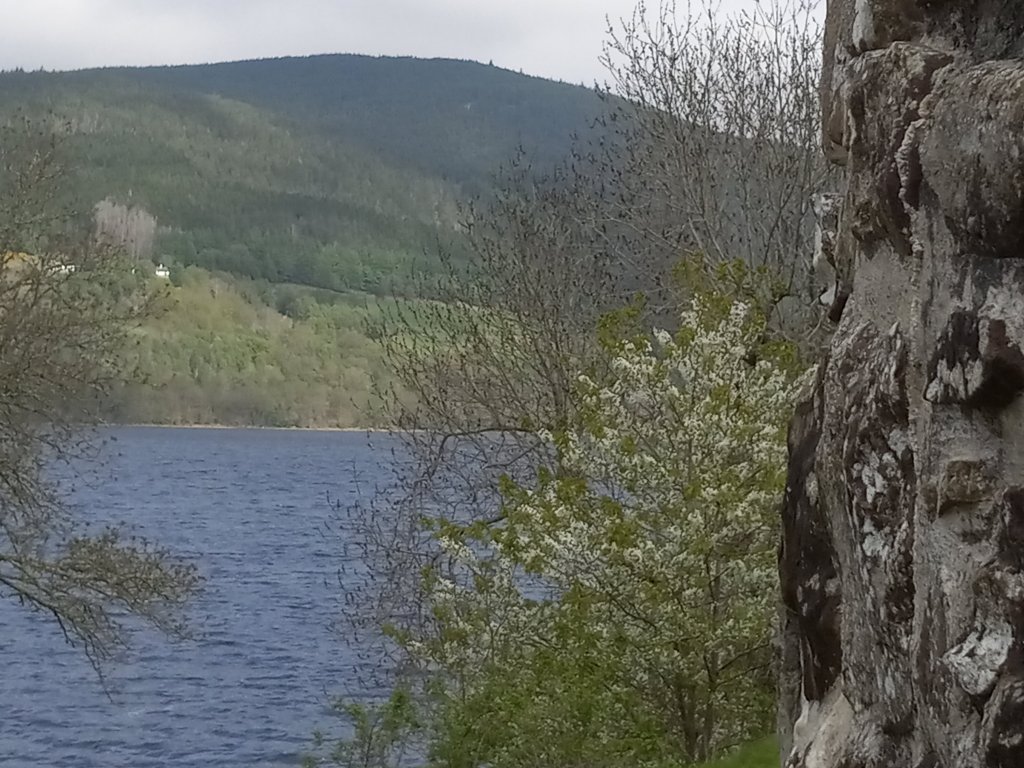
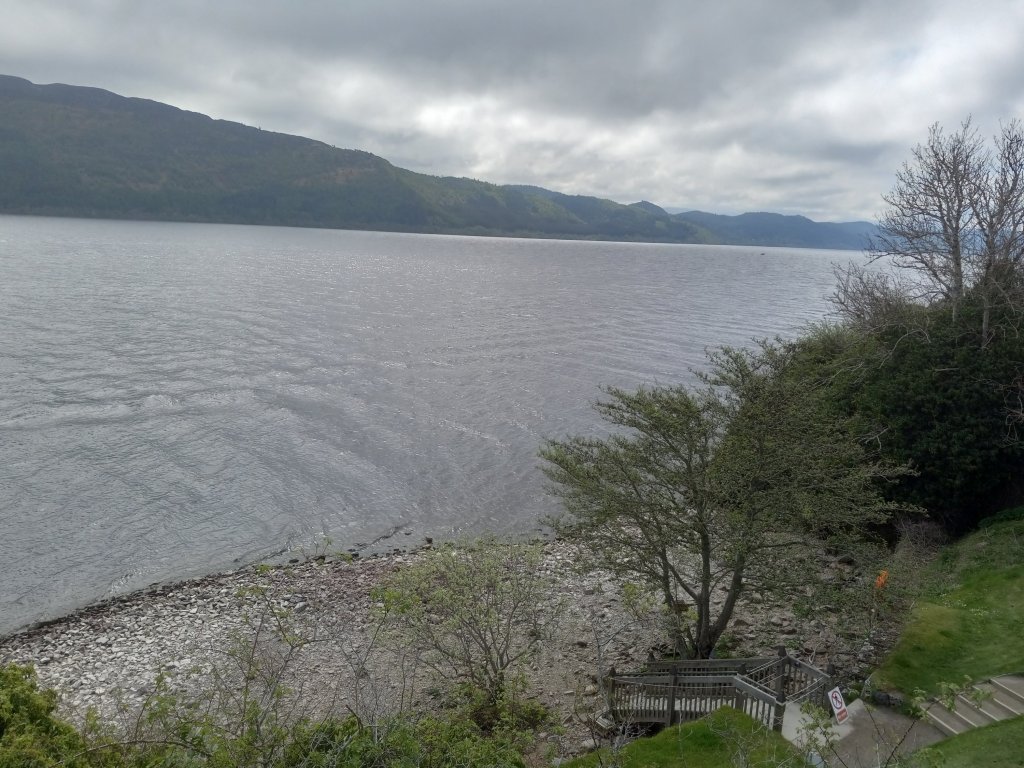
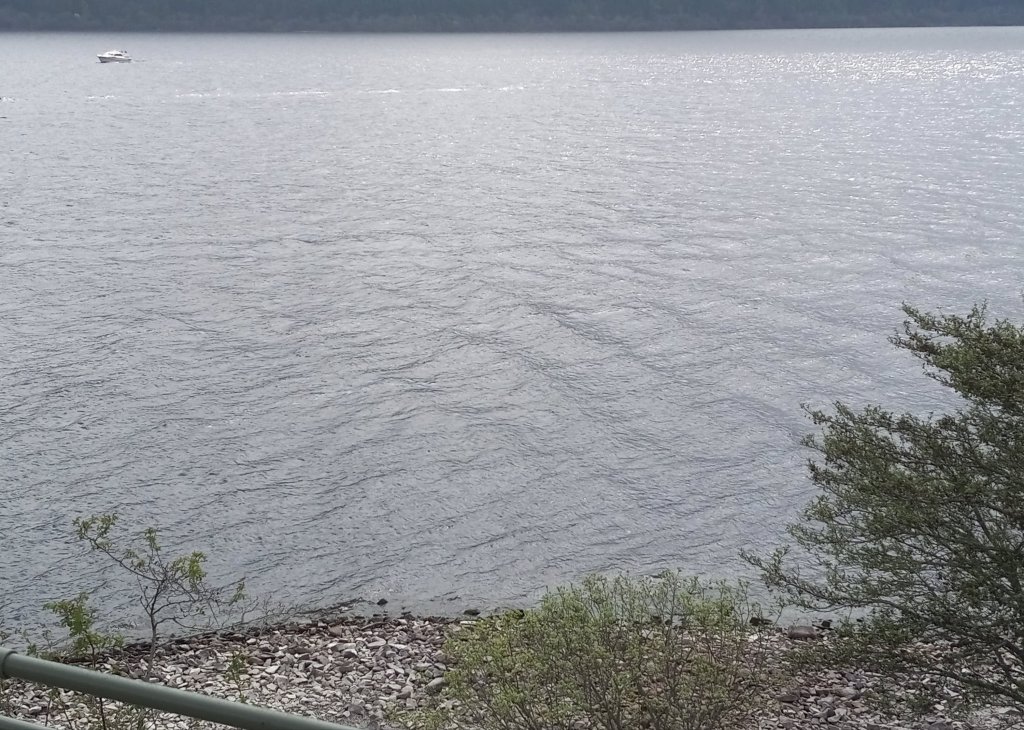
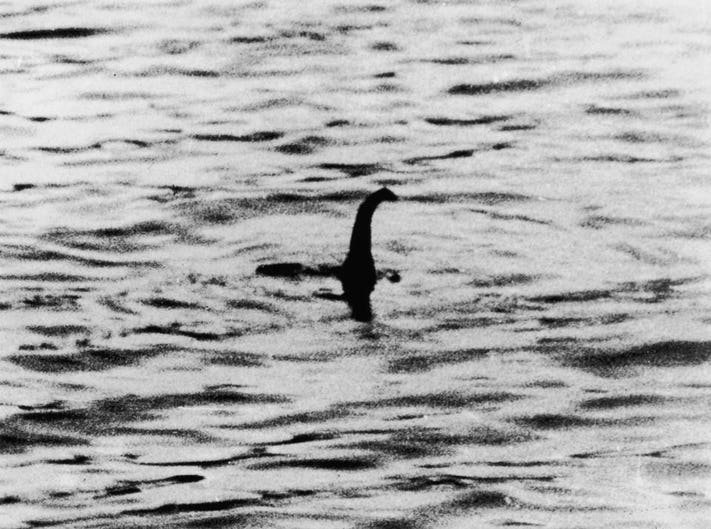
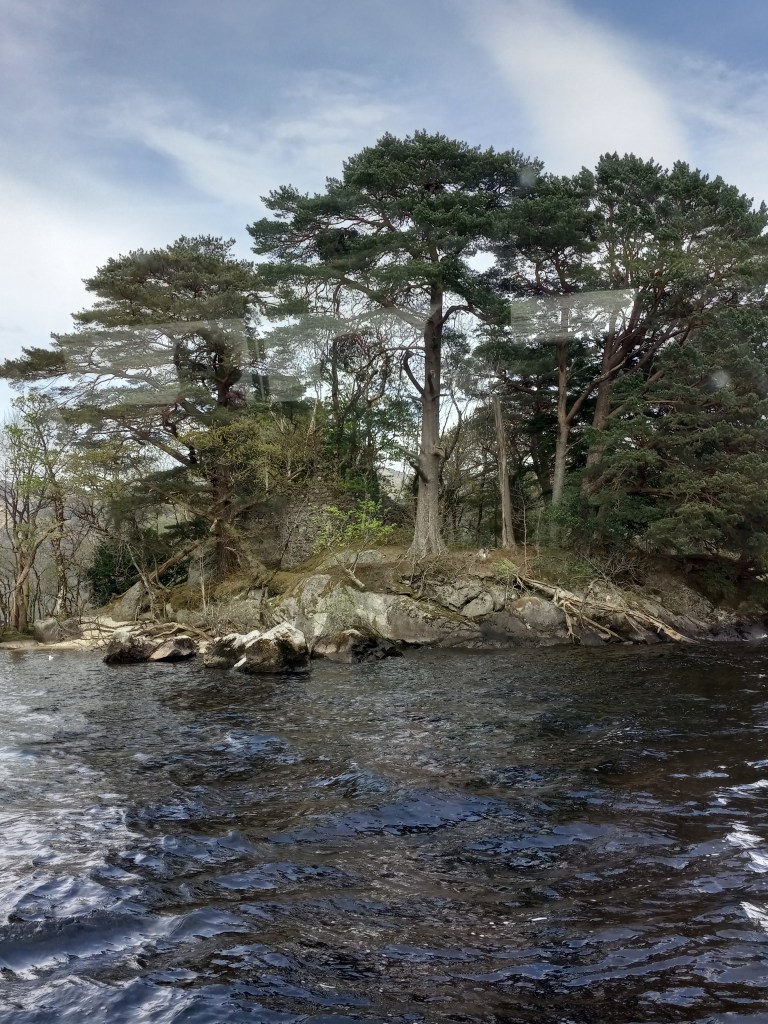
While the castle was fascinating, it was impossible not to turn a head and be swept up in the beauty of Loch Ness itself. A couple of times I noticed disturbance in the water. Now this part of my report is not just me being goofy, I called Jane over to look at it.

You can make out the disturbances barely in the pictures. As we watched, black objects appeared within the disturbances and went back down. Yes we dismissed the phenomenon as underwater rocks or some other disruption. But then it moved. We saw it in different areas of the loch and the black objects seem to move within the disturbances.

We left it unexplained and turned to leave until, just after Jane turned and looked away, 2 eyes appeared, one winked at me and it was gone.

Our bus back to Inverness was an hour and a half late. Yes we were put out and more than a little nervous. Ordinarily I would not blog such a routine travel setback except for a hidden blessing that came of it.

As we waited, we were joined at the bus shelter by a family from France who had missed their tour bus for their return to Inverness. They had hoped to use the public bus but were as concerned as we were about the delay.

The language barrier was part of the fun of visiting with them. They were likeable and interesting to talk to. In fact, when they reconnected with their tour bus, they talked the driver into taking us back to Inverness too!

Say what you want about the French, these people were great. Then we had a great time visiting with the pure Scottish bus driver!

The moral of the story is don’t jump to conclusions when a bad thing may be happening. It might turn into something terrific. Or as Kurt Vonnigut put it, “strange travel plans are the hand of God”.

Inverness Museum

Earlier in this adventure when we had become fatigued walking all over Glasgow, I mentioned that I thought it might be nice to just stay in Inverness for the rest of this trip.  We stuck with our pre-planned plans but as we prepared to leave Inverness,  I would love more time there.

What a great town! We enjoyed loud, boisterous Scottish music over dinner and met many delightful people, both locals and visitors from around the world. One night the bagpiper asked each person in the room to tell where they are from. Before we left, a couple from Kansas came over to meet us because one of them grew up in Hennessy, which isn’t far from Jane’s home town (Watonga).

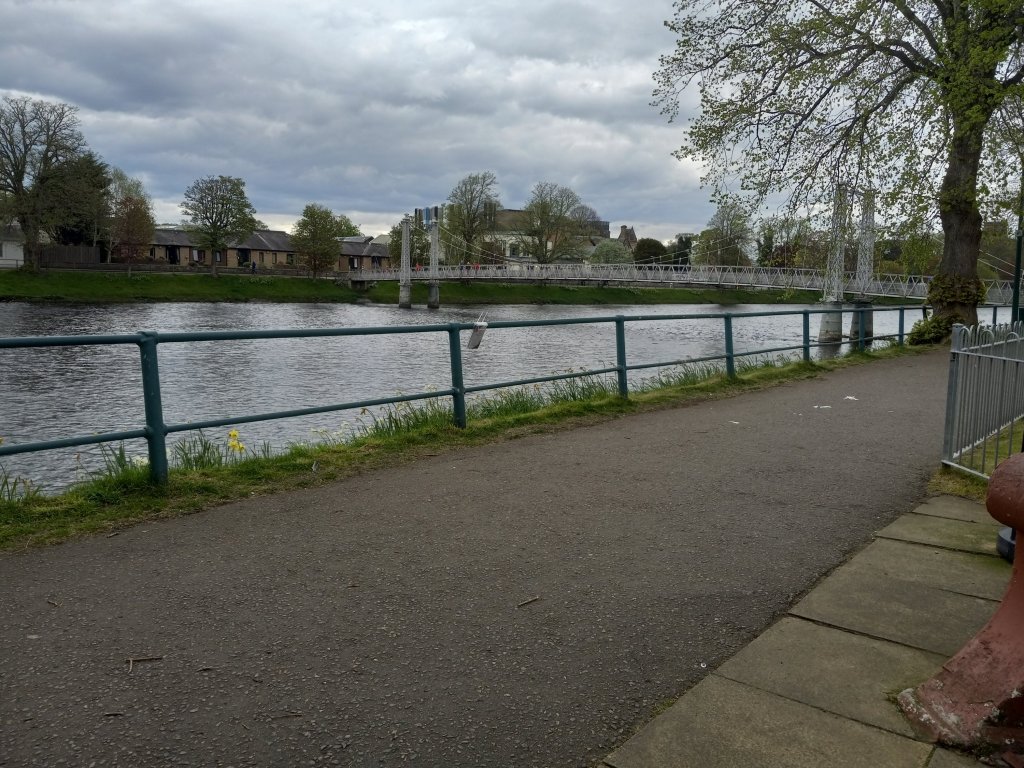
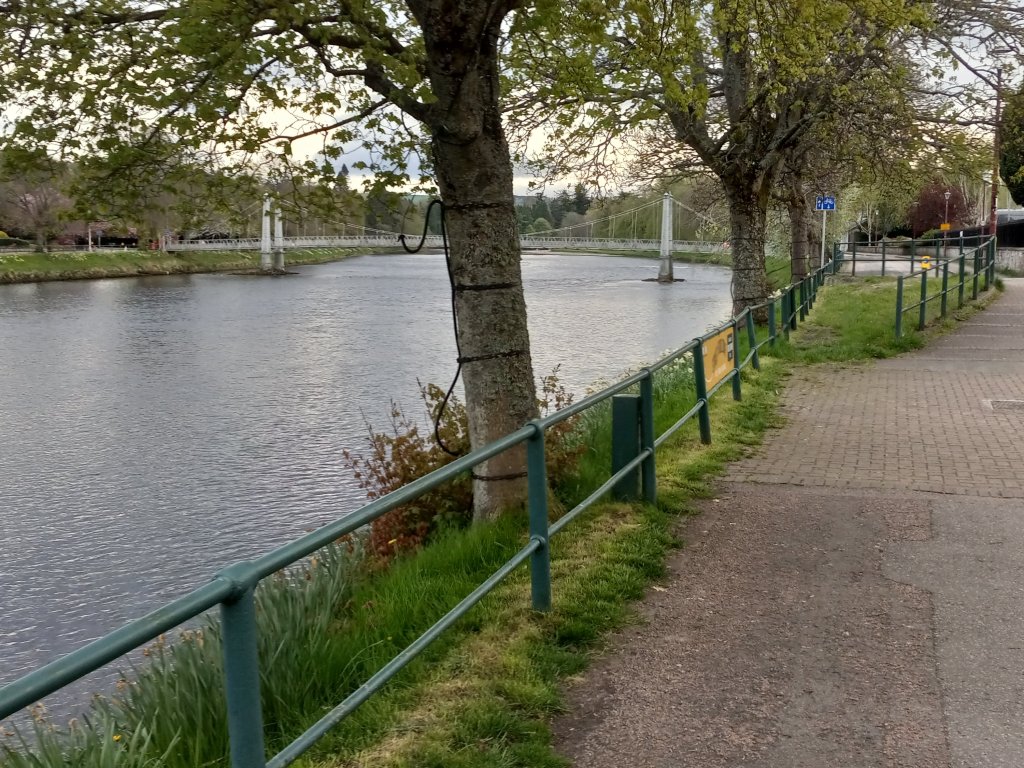
We had a goodly amount of time that Saturday morning before our train to Glasgow. The weather was beautiful, so we strolled along the banks of the Ness after breakfast.

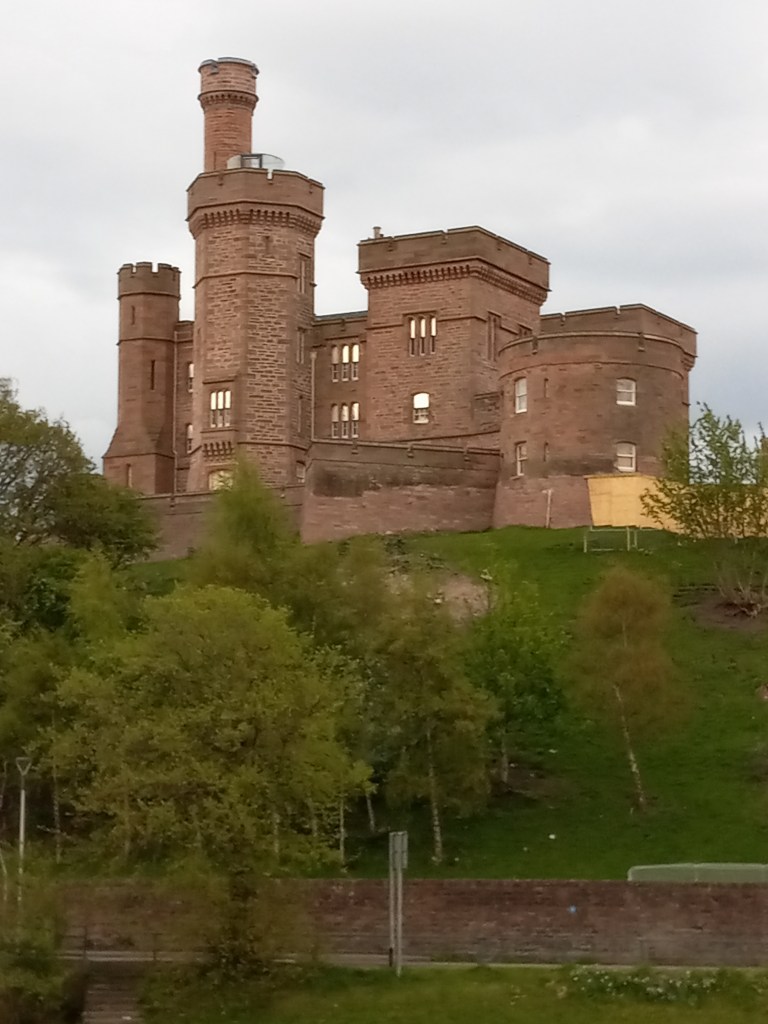
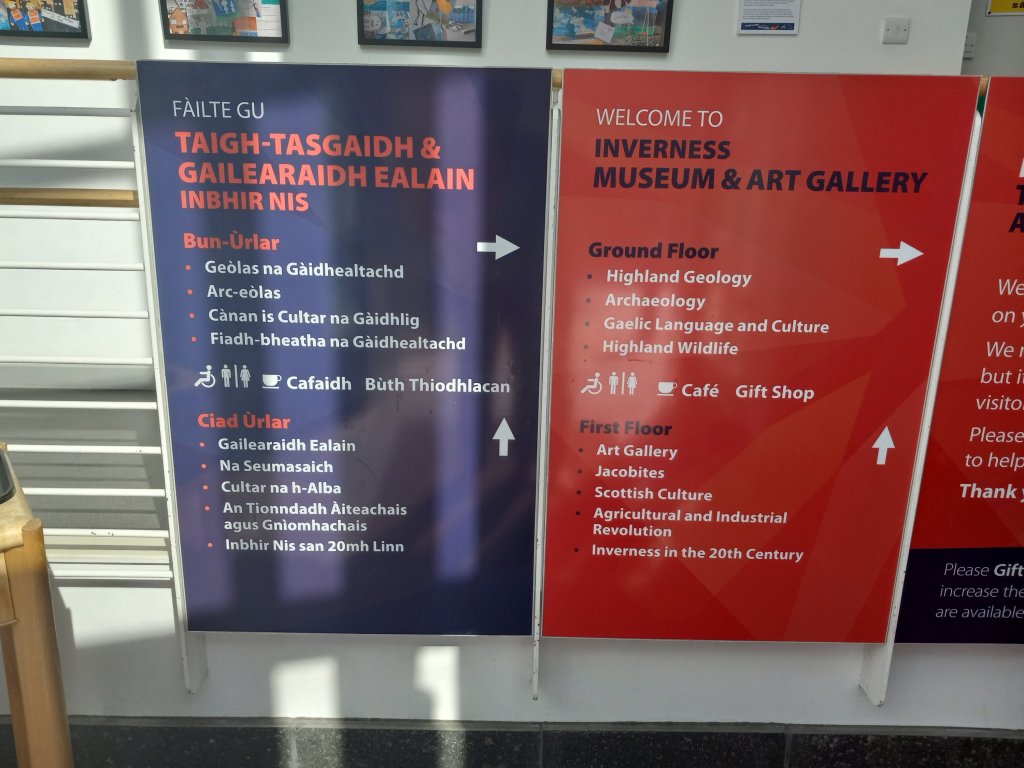
One final objective remained, so we turned our attentions to the Inverness Museum and Art Gallery.

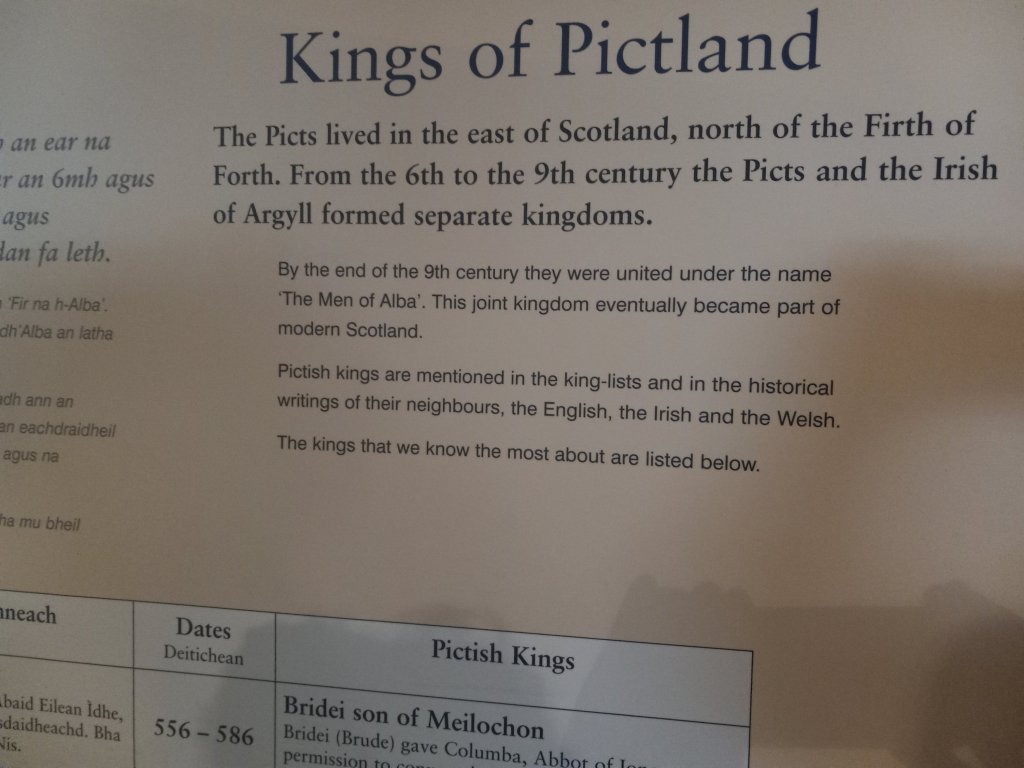
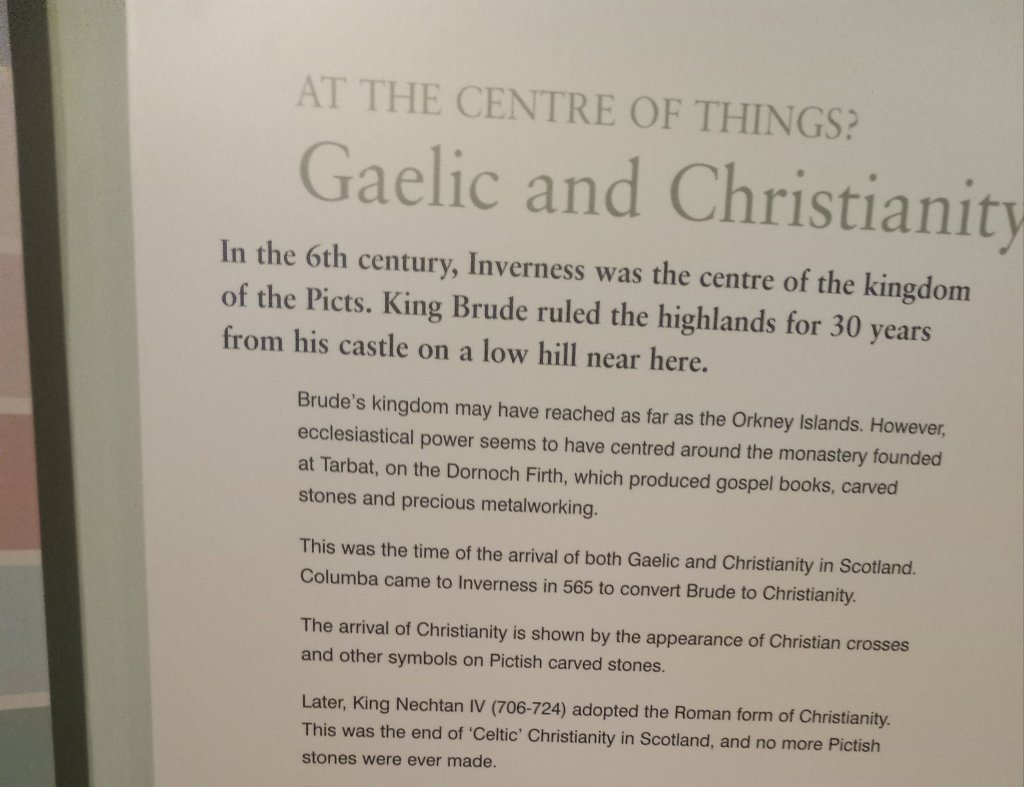
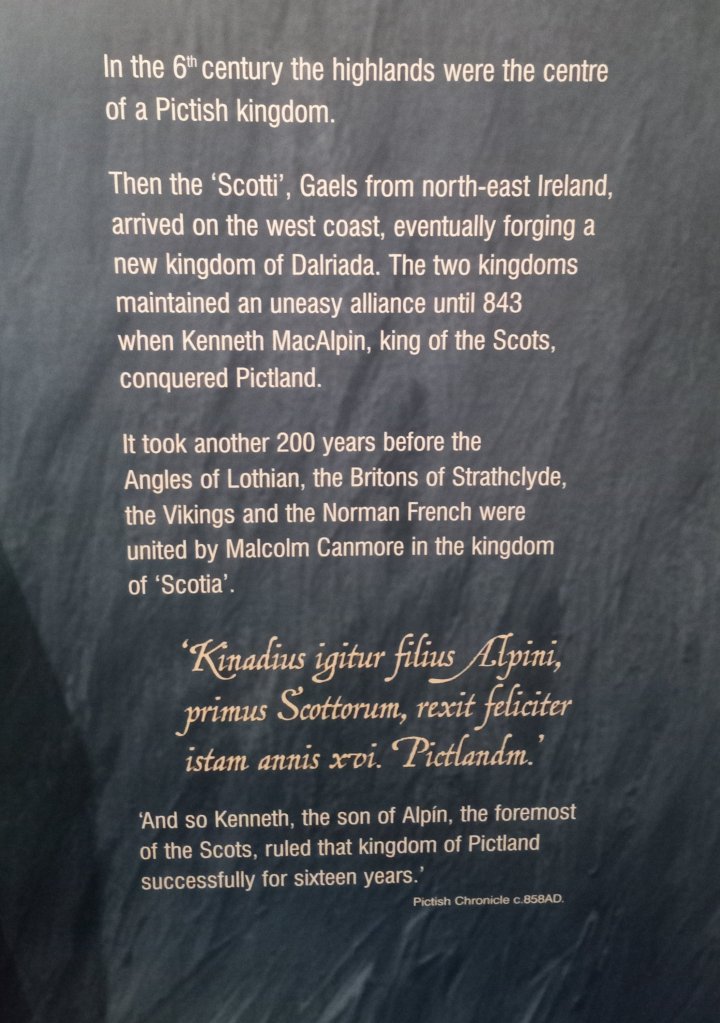
The displays in the museum filled in lot of gaps in my sketchy knowledge of Scottish history.  Each era was explained beautifully. My current interest is in the ancient times of the Picts, Celts, Vikings, and Scots who all had a part to play in the early history of Scotland.

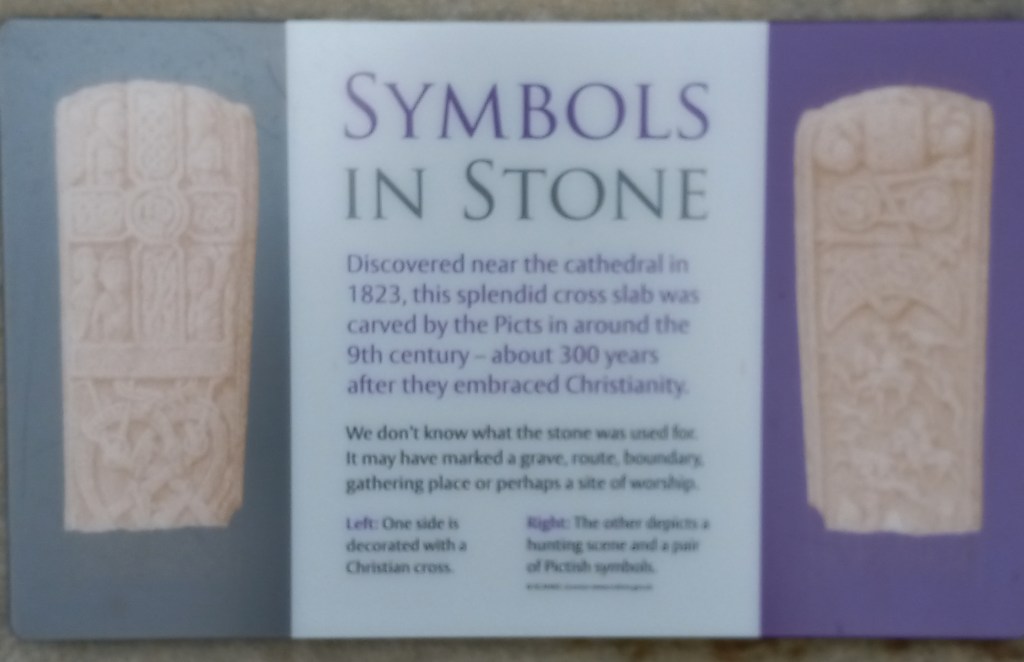
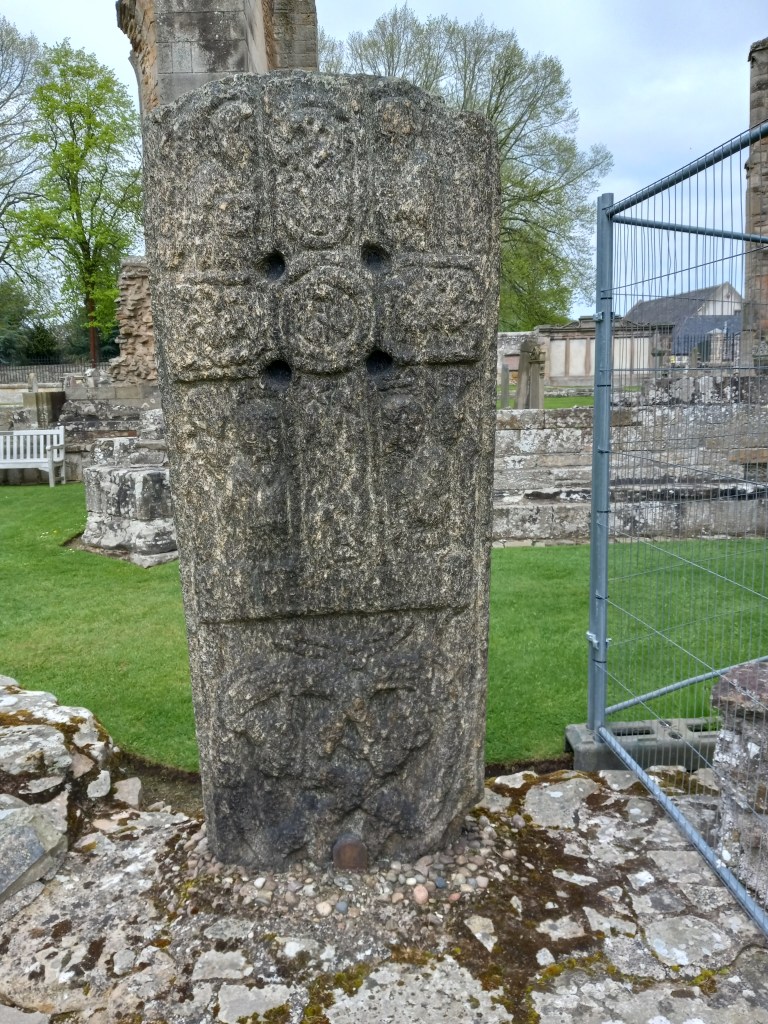
I got to wondering about the Pictish cross on display here. We have seen them in different ancient cathedral grounds. The Picts were reputed to be barbaric, pagan warriors by all accounts and more or less the “wild men” of Scottish history.  Their conversion to Christianity seems like a bit of a long shot, but it broadens our thinking as well. Credit Columba and his fellow missionaries for facing down a tough mission field in a hostile culture. They brought Light into a dark place and changed the course of history.

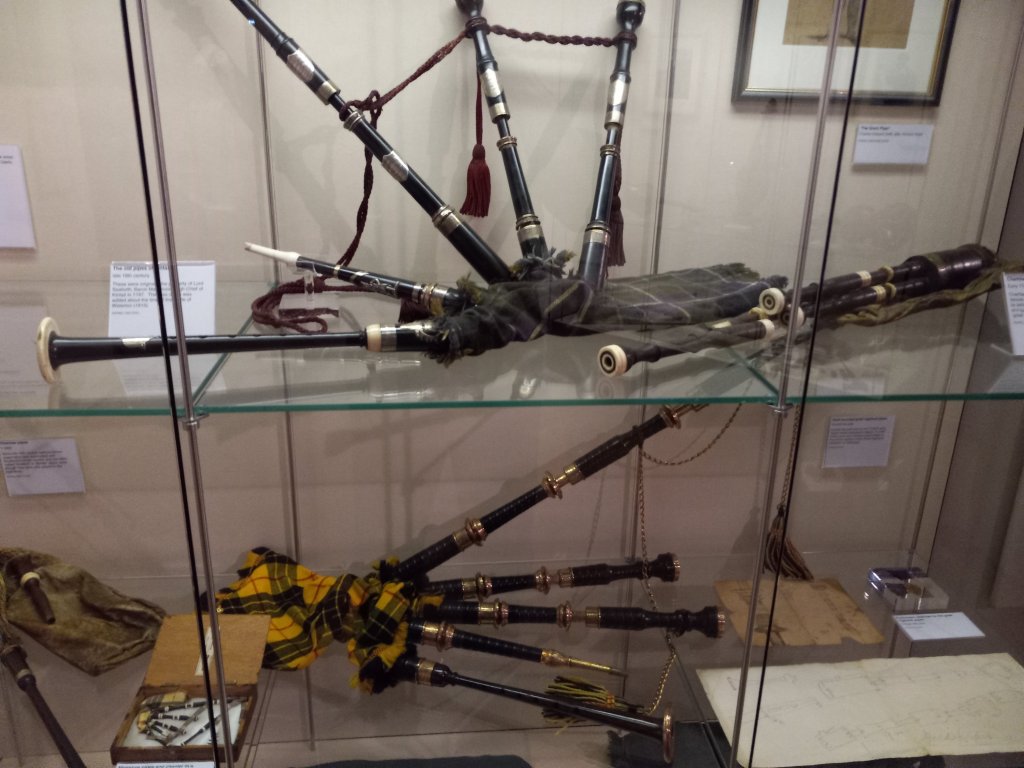
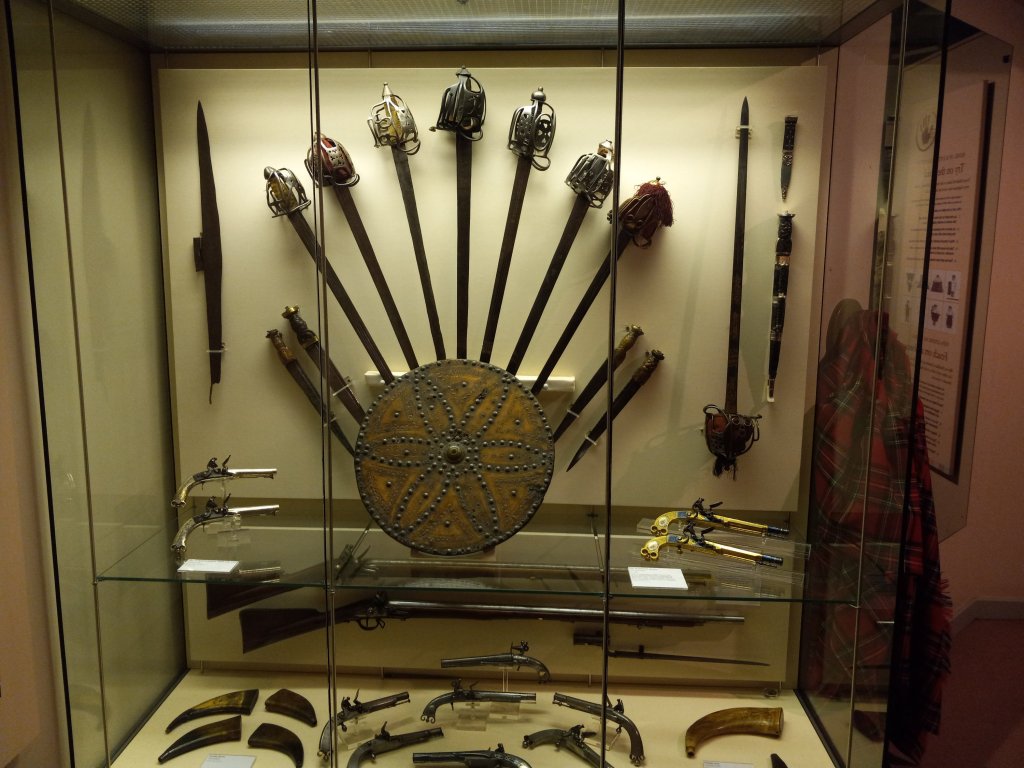
The museum also had numerous objects peculiar to Scotland culture and history.  I took a liking to bagpipes and swords.

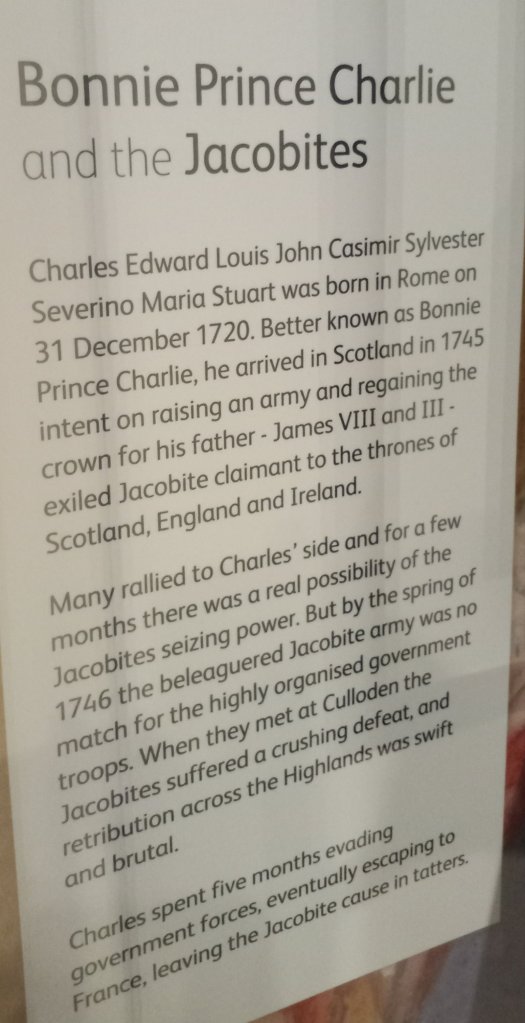
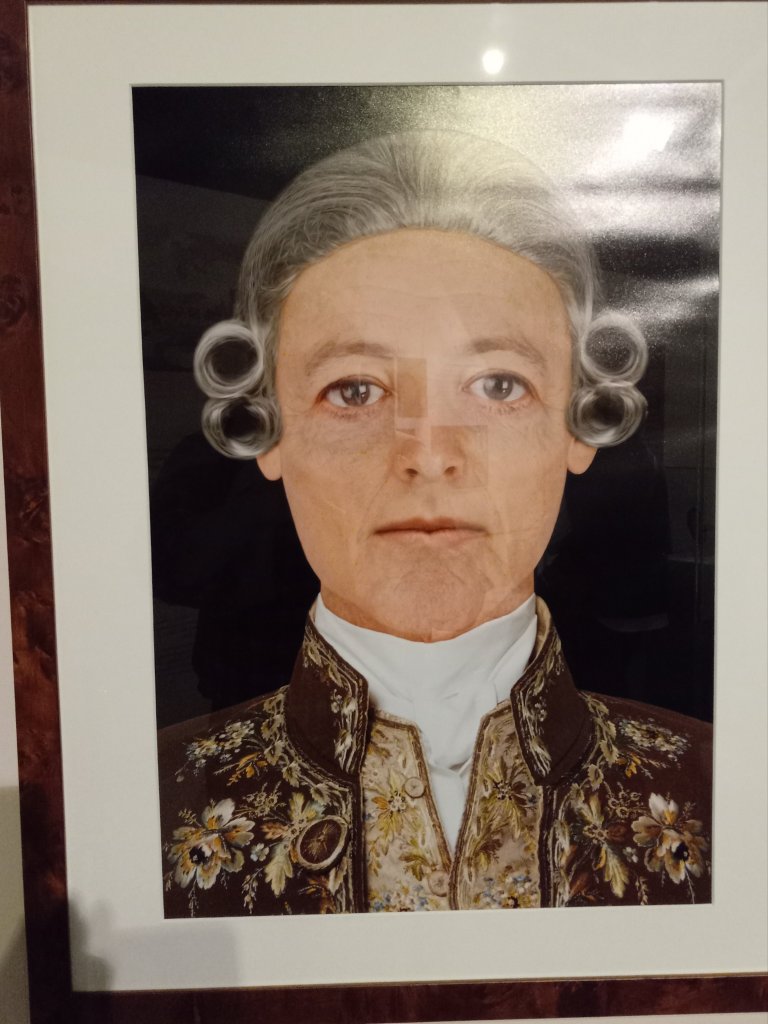
A fair amount of the museum was devoted to the Jacobite uprising, Bonny Price Charlie,  the tragic loss at Culloden and the Highland Clearances that altered Scotland forever.

In our travels, it comes up in conversations with Scots, and deeply held views come to the surface. 

The events before, during, and after Culloden have filled books and museums. I have read about it after previous trips to try to understand it. For that reason, I will not comment any further on it in this blog.

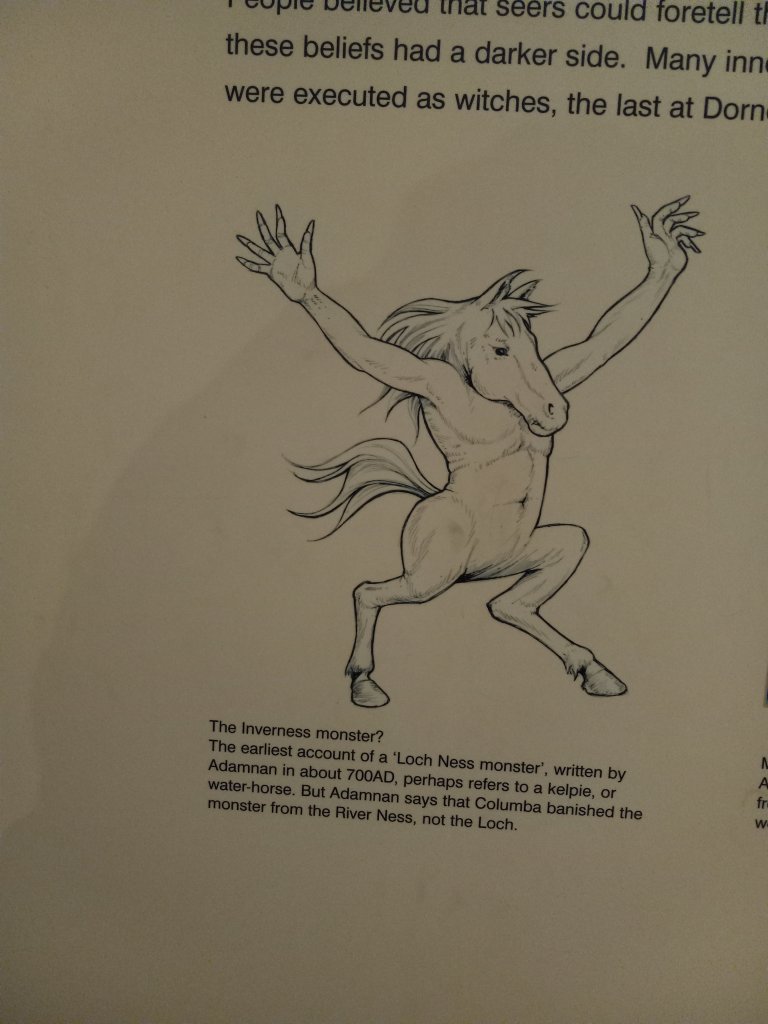
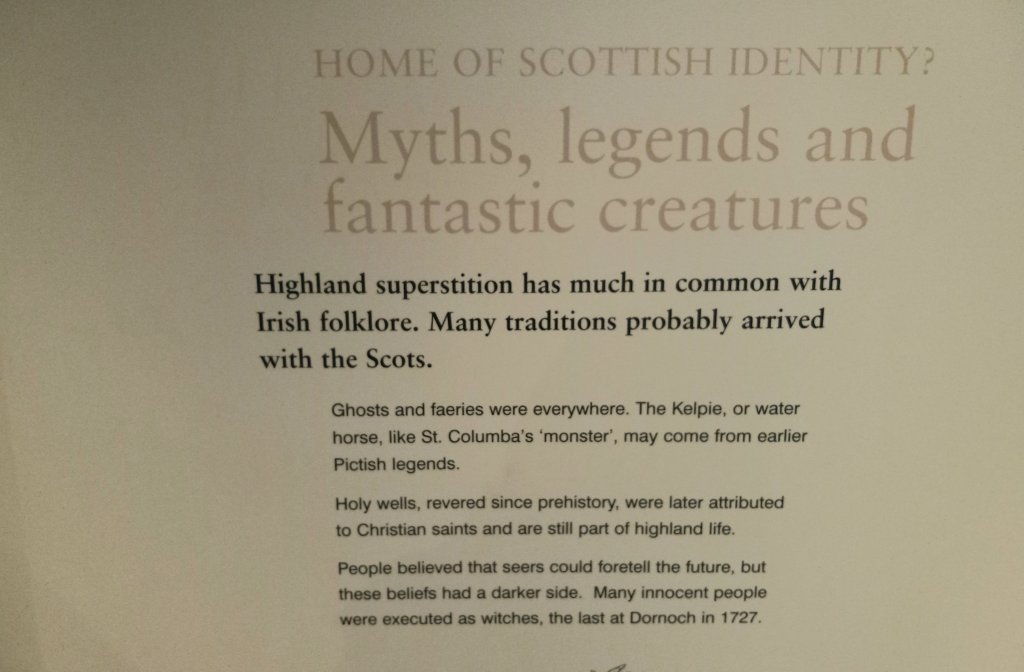
Before leaving I enjoyed presentations about the myths and legends of Scotland. From Kelpies to fairies to a monster on the loch, this side of the Scottish history and culture of this delightful country.

As has been our habit, we enjoyed wonderful Scottish music with our dinner.

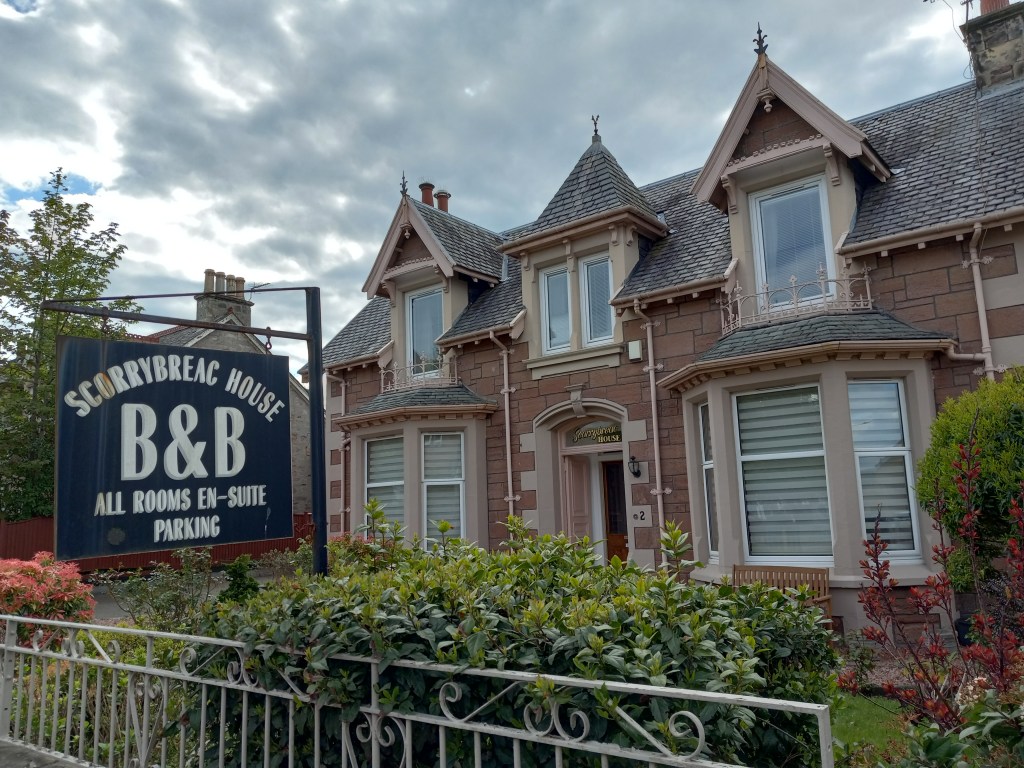
We returned to our very comfortable Inverness B&B. With joy combined with reluctance to leave, we said fond farewells to our hosts Elaine and Matthew and set off on the last phase of our trip back to Glasgow.

As we walked to the train station, this lone piper stood by the River Ness to ensure that we will always remember Inverness.

Off the Beaten Path – Elgin

This is becoming a pattern for our travels. We went at it pretty hard the last 10 days with adventures that were demanding but tremendously rewarding.  But these adventures were a wee bit tiring for a couple of old people.

So this next phase consists of most small day trips. This second day trip was to a small Scottish town called Elgin that had many hidden treasures.

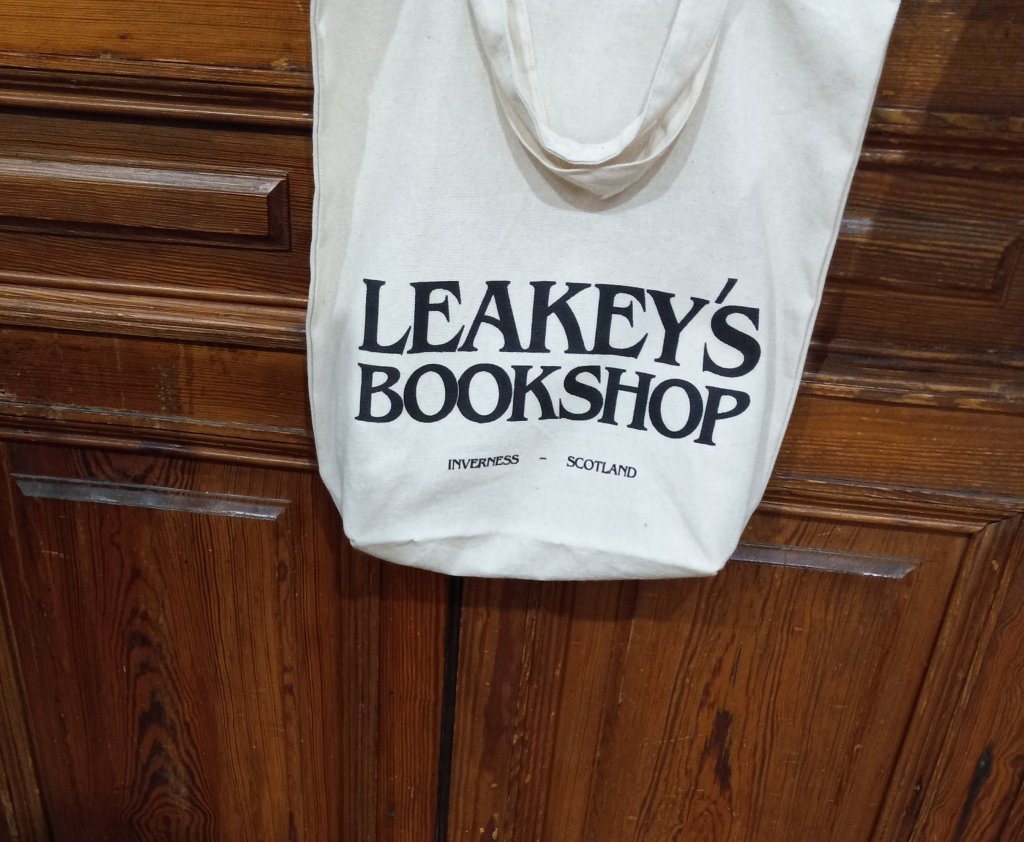
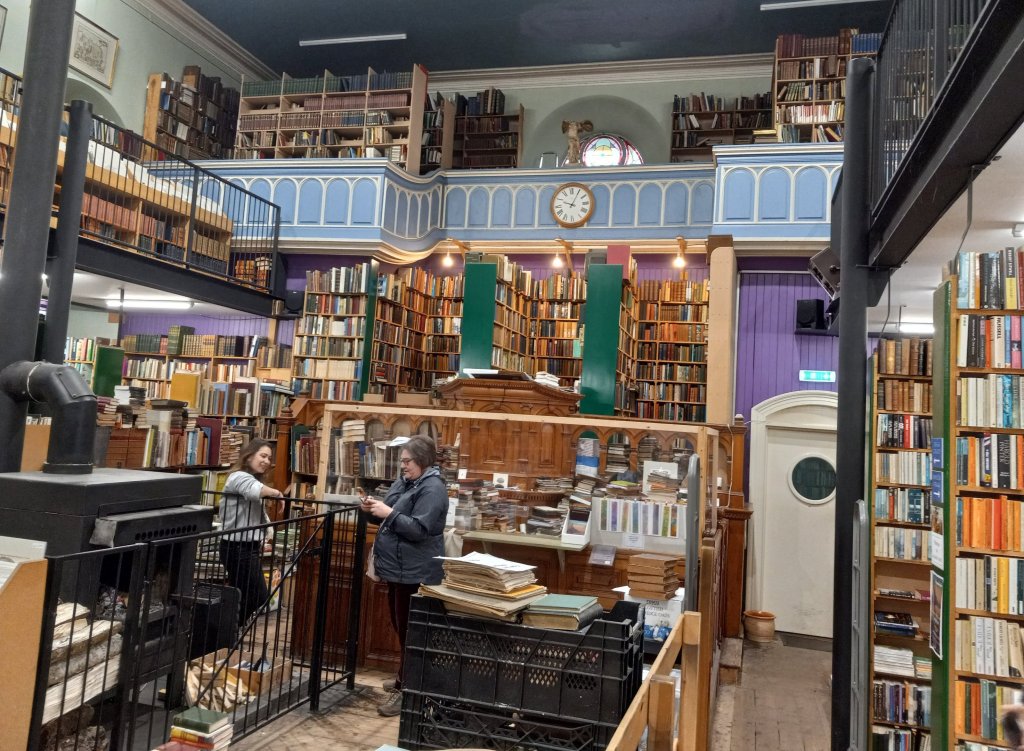
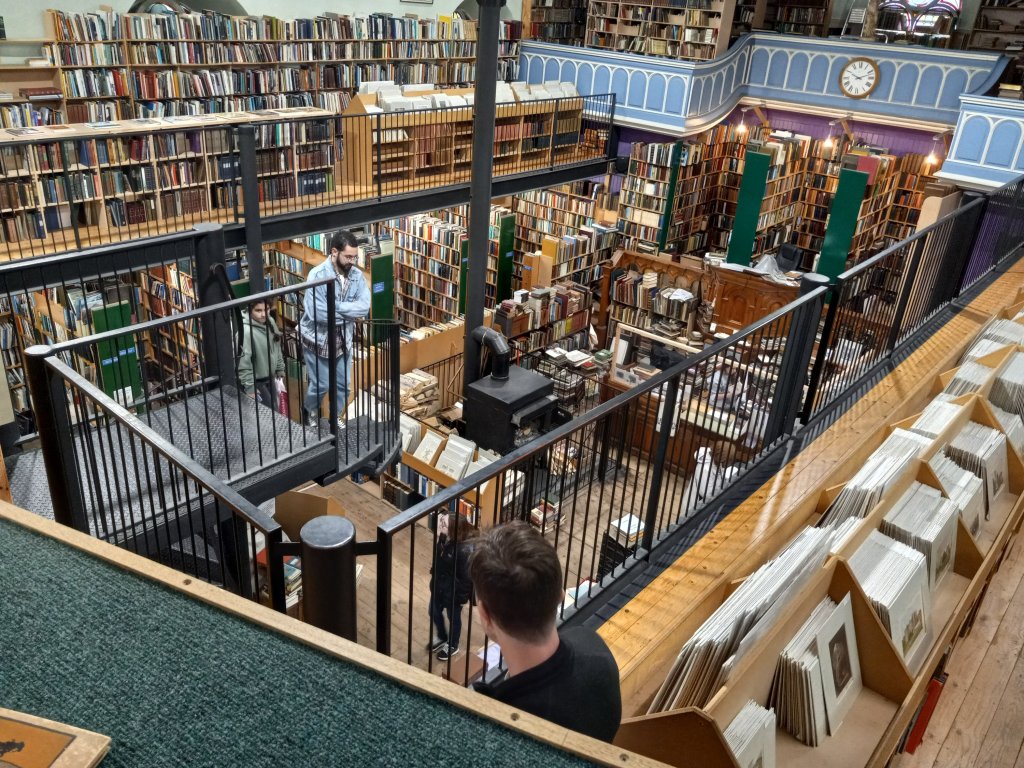
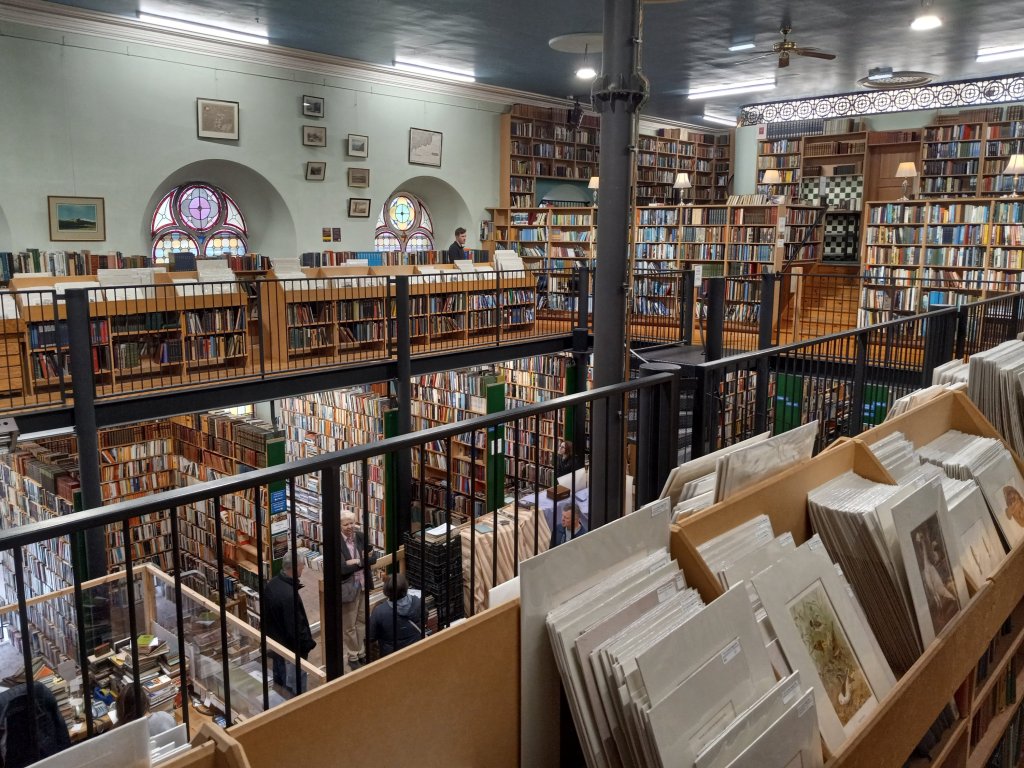
We had a little time before our train to Elgin so we checked out a the renowned Leaky’s Bookstore. Stepping into it was like time travel. It was so charming and quaint that you almost expect to see C.S. Lewis sitting in a puffy chair smoking his pipe.

It was hard to resist the temptation to just hang out in the fellowship of the literary treasures of the ages.  Richard Rankin, one of the actors from Outlander said he often spent time at Leaky’s to “soak up the magic”. After spending a half hour there, we felt that magic.

After enjoying a browse in the cool bookstore, we were off to our next destination to explore.

Elgin is east of Inverness about half way to Aberdeen. In light of our previous experience with potential bus unreliability (that’s right.  I went there) we took the train there. SUCH a more relaxing and enjoyable experience.

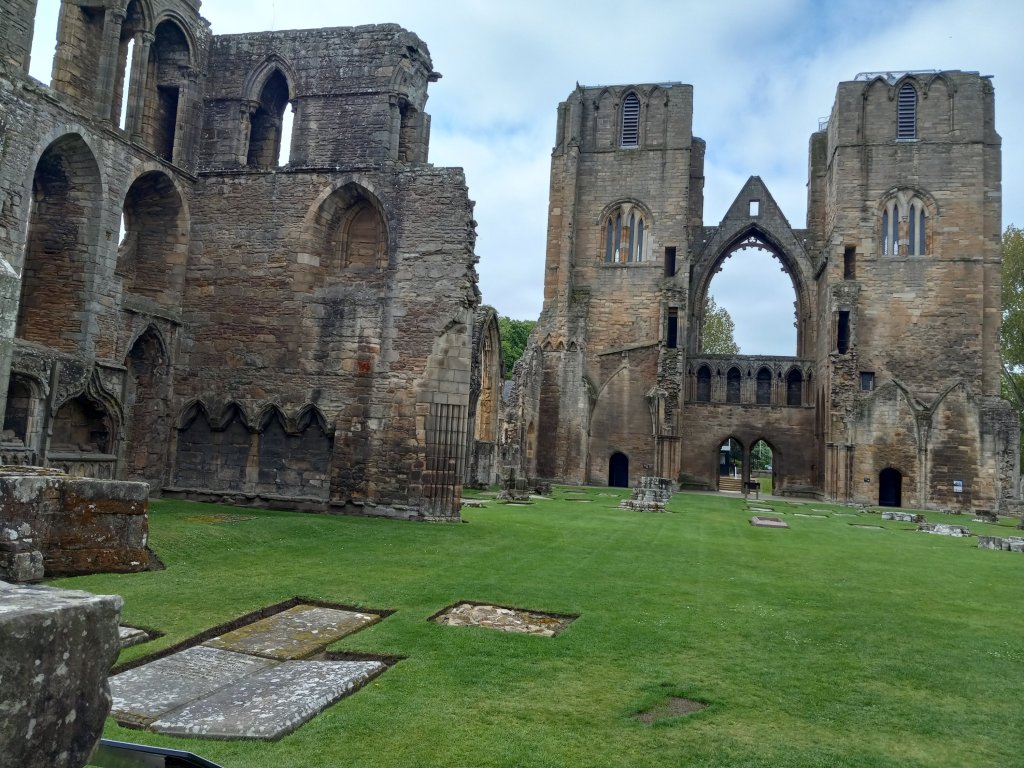
Like many of the smaller villages not on most tourist itineraries, Elgin turned out to be interesting to explore and well worth our time. Based on archeological finds, Christians were in this area centuries before Elgin was established as a market town in the 12th century. Not much is left of the castle, but the town shows evidence of a thriving economy in later centuries.

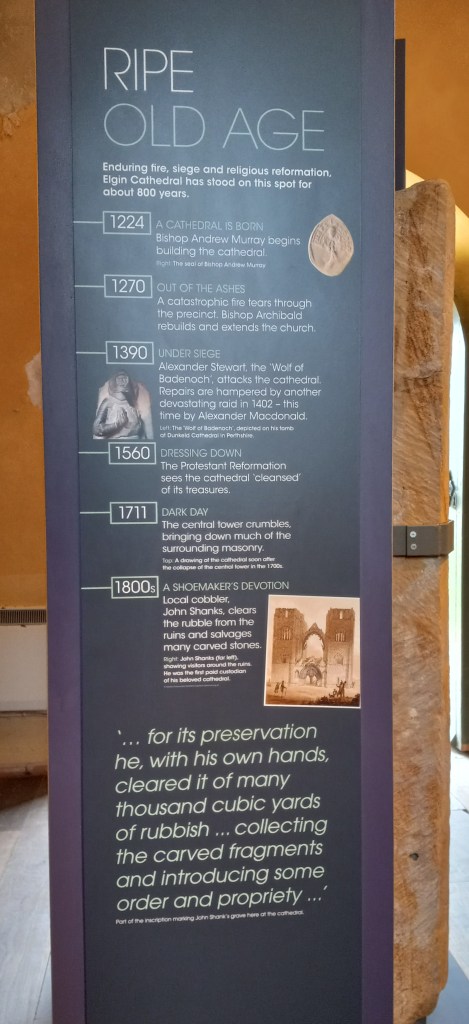
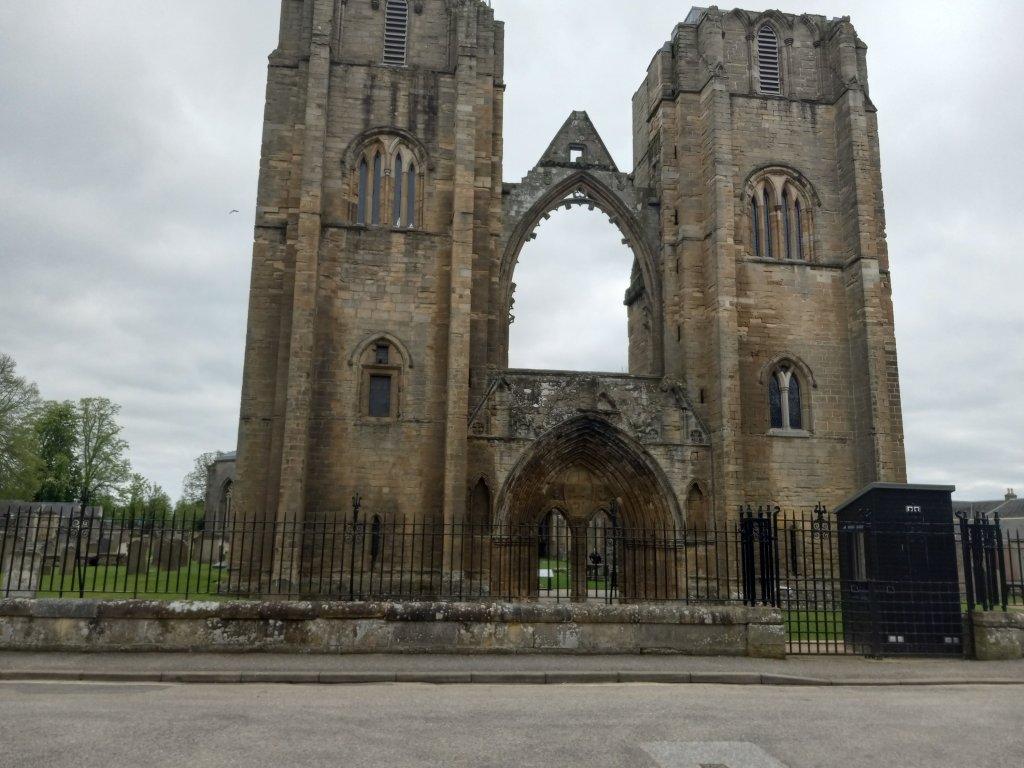
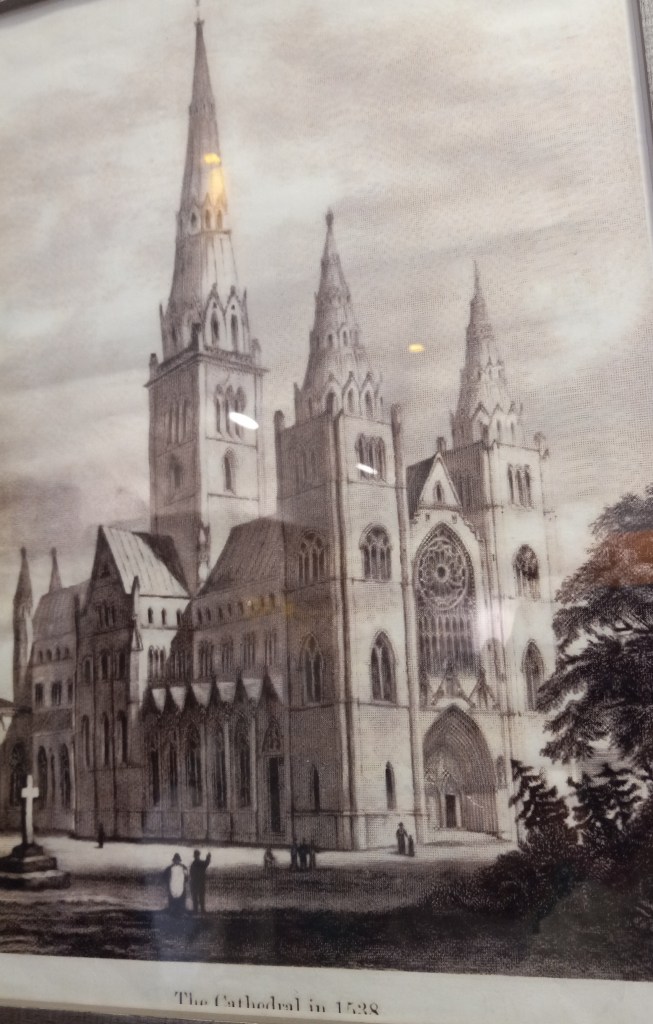
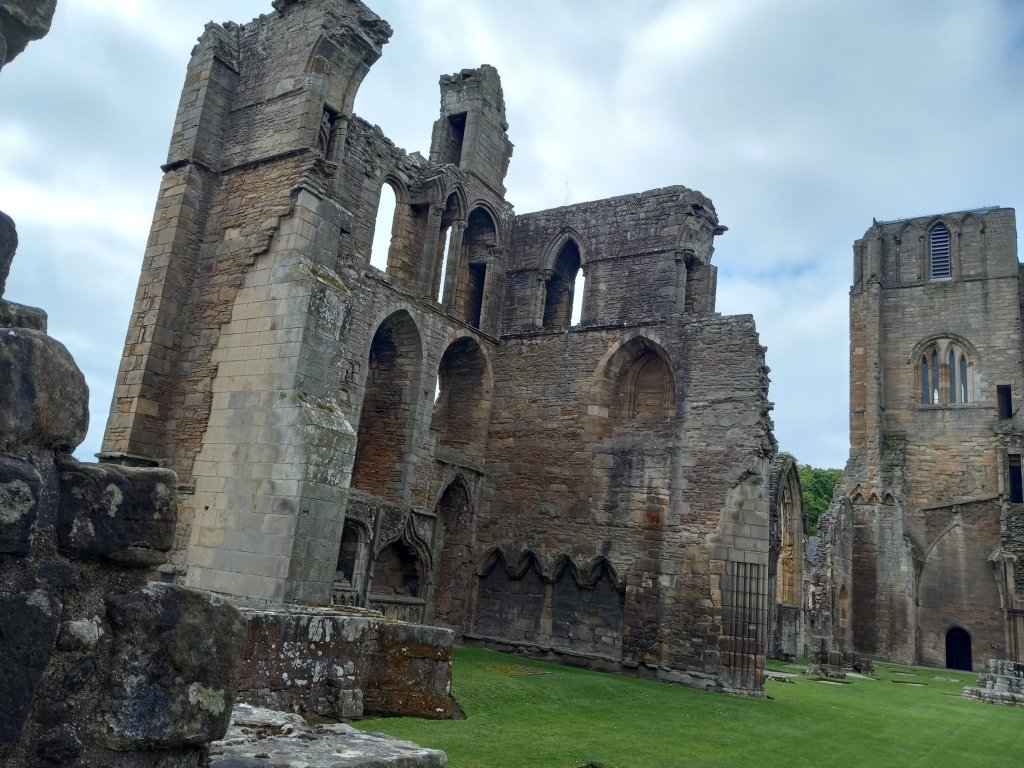
Our first stop was a Cathedral with a history going back to the 1200s.  And like so many magnificent ancient castles and cathedrals, its history was tumultuous.

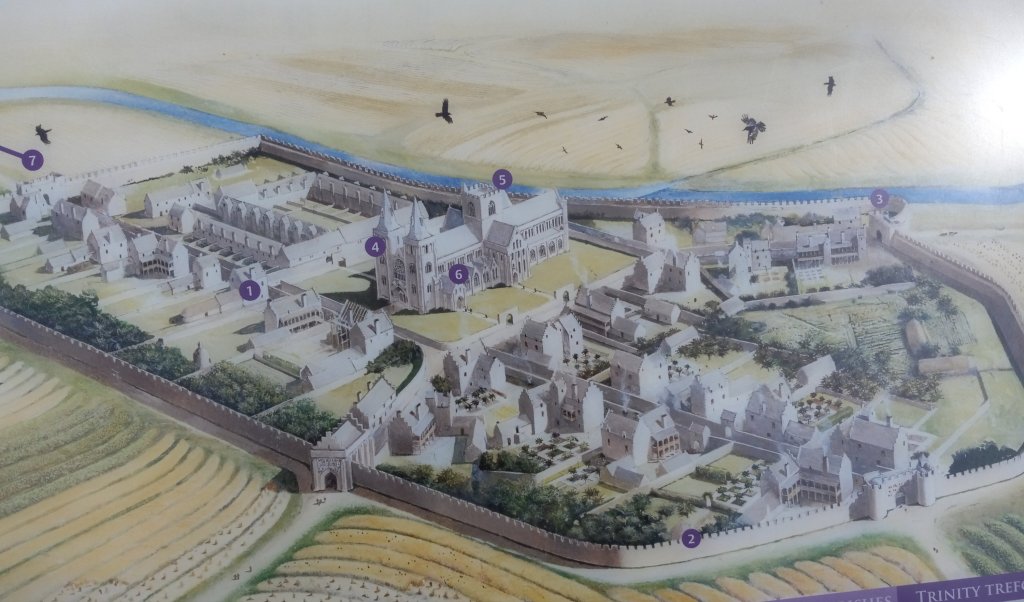
There is enough left of the Cathedral to see what it looked like before it fell into ruin after the Reformation. There is something about viewing a 800 year-old Cathedral that, even in ruins, is awe inspiring.

The Scots are meticulous in preserving their history and talking to natives of Elgin as we walked around, you sense their pride.

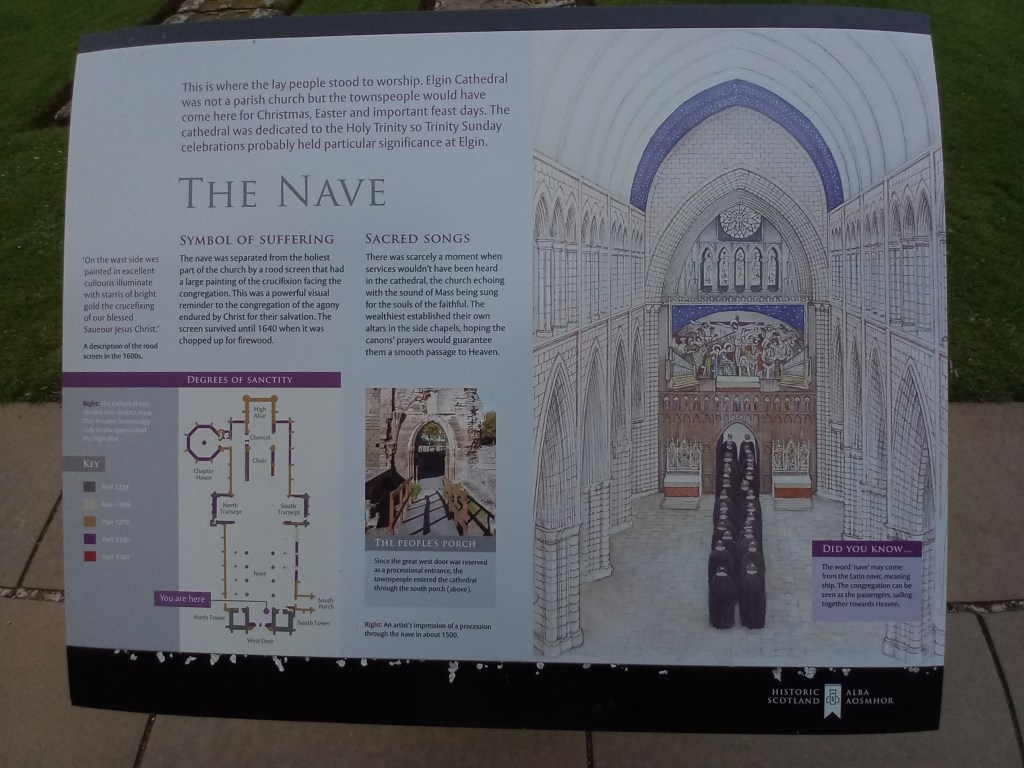
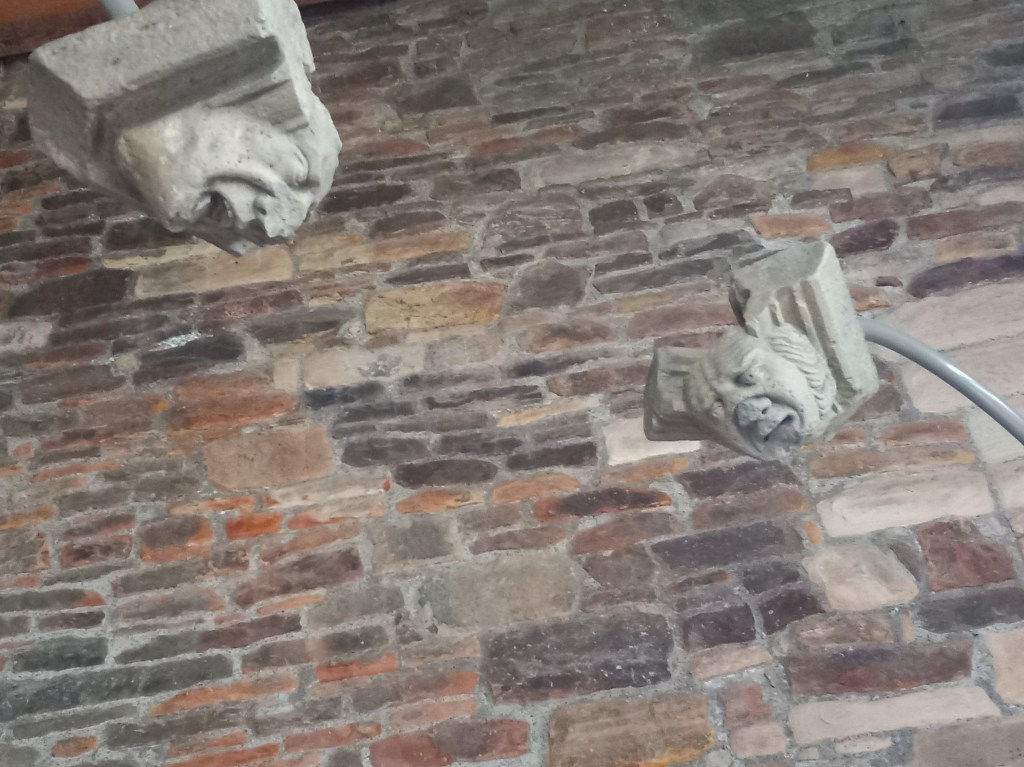
You also see that attention to detail in exhibits posted around the grounds of the Cathedral.  One detail that stood out was the faces in many of the accents to the rooms.

As we left we looked at some artist rendering of what the Cathedral looked like at its zenith. It was quite striking.

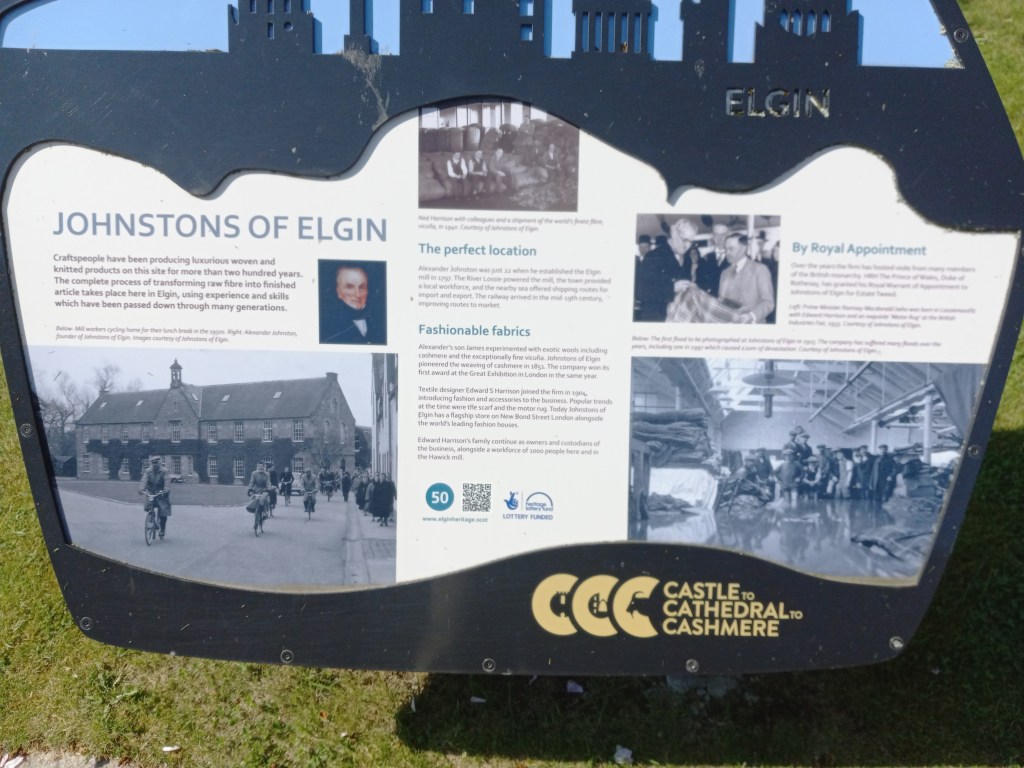
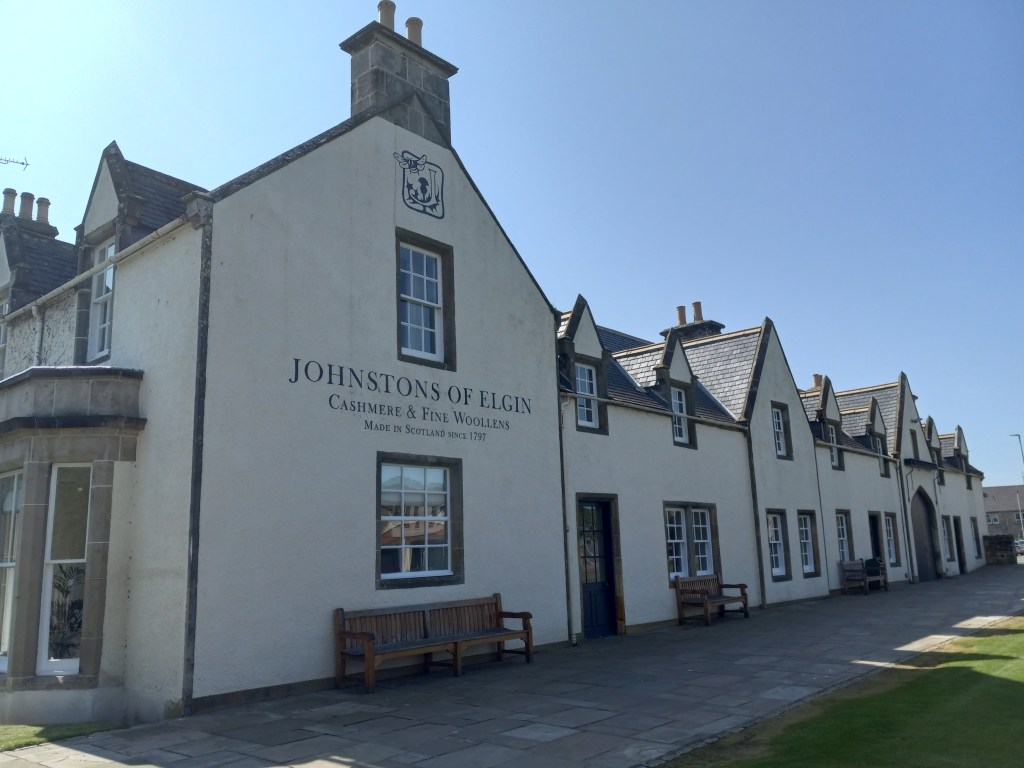
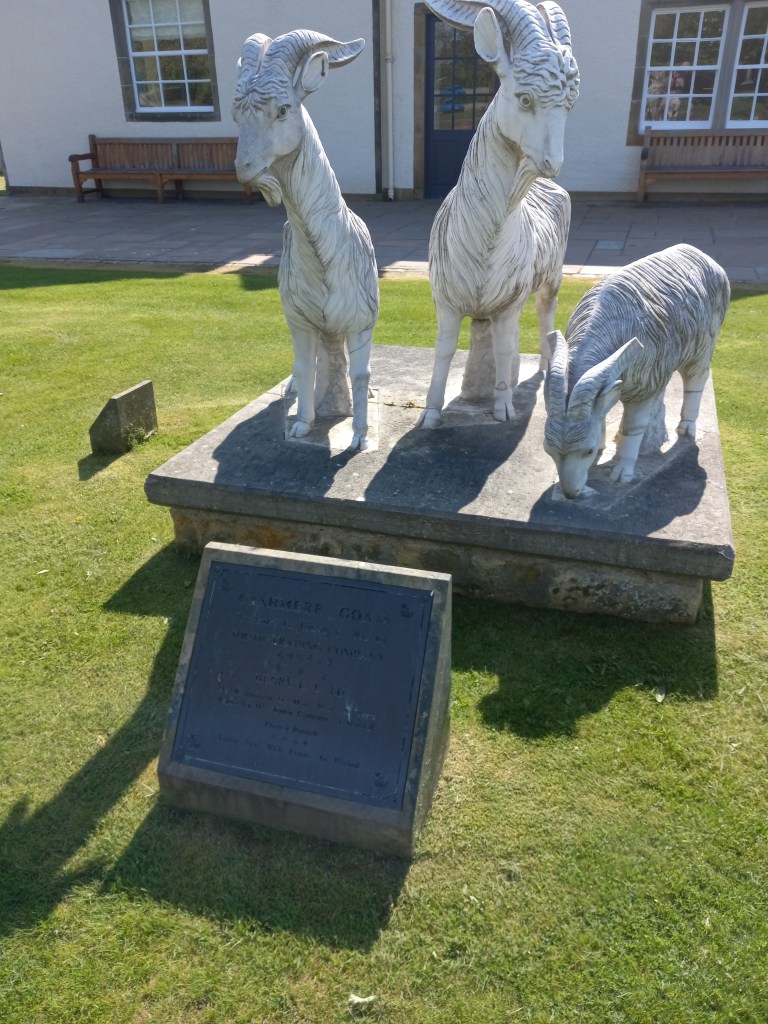
We had been told that the cashmere mill had a lovely tea room, so we enjoyed some tea and scones there before returning to the train station and heading back to Inverness.

To John O’Groats and beyond!

The third morning of our tour began in a dense fog that dominated the drive for a while.  This made us especially grateful to be in the care of a skilled tour bus driver to wrestle with that fog and those impossibly narrow roads.

For context, Orkney is one of two large groups of islands north of Scotland.  The other is Shetland.  These islands have remnants of human life in Scotland that dates back 5,000 years.  We have no plans to visit them in the next few years but one never knows.

My curiosity was high about the name John O’Groats.  The John in question ran a ferry to Orkney. One must ask, “what’s a groat?” Mustn’t one?  Turns out the name meant John the Great but not in the qualitative sense. Willie told us that a better interpretation of the name is John the Massive.  Now that is a name I can take ownership of and suggested that from this day forward, I shall be known as Jerry O’Groats.

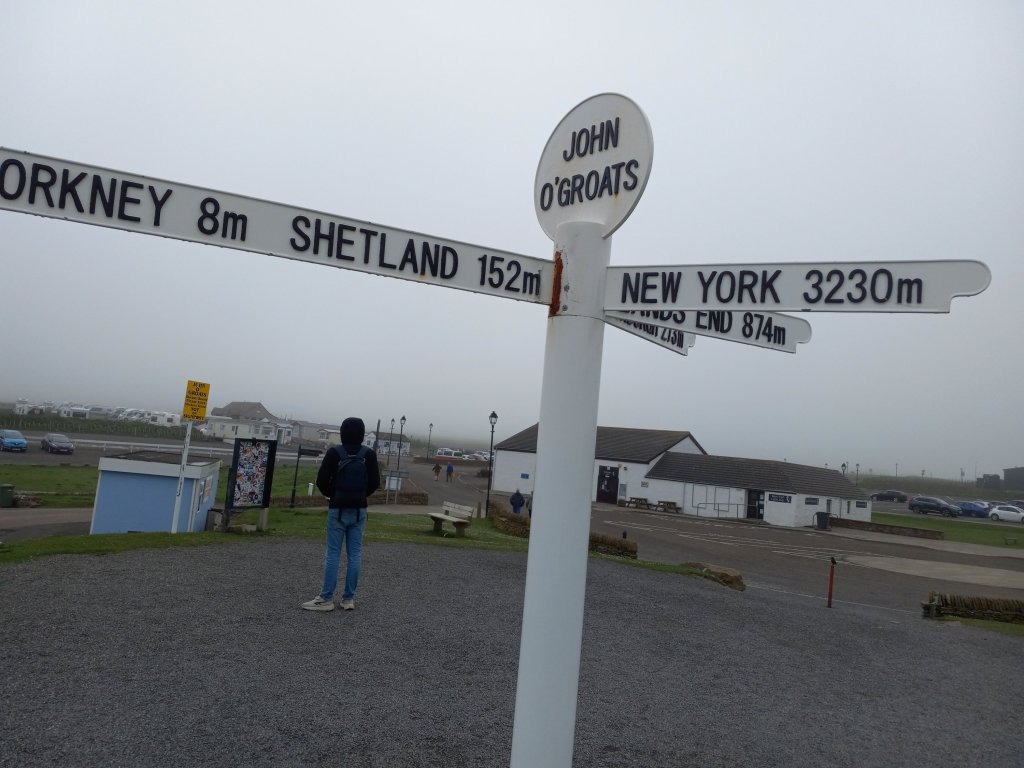
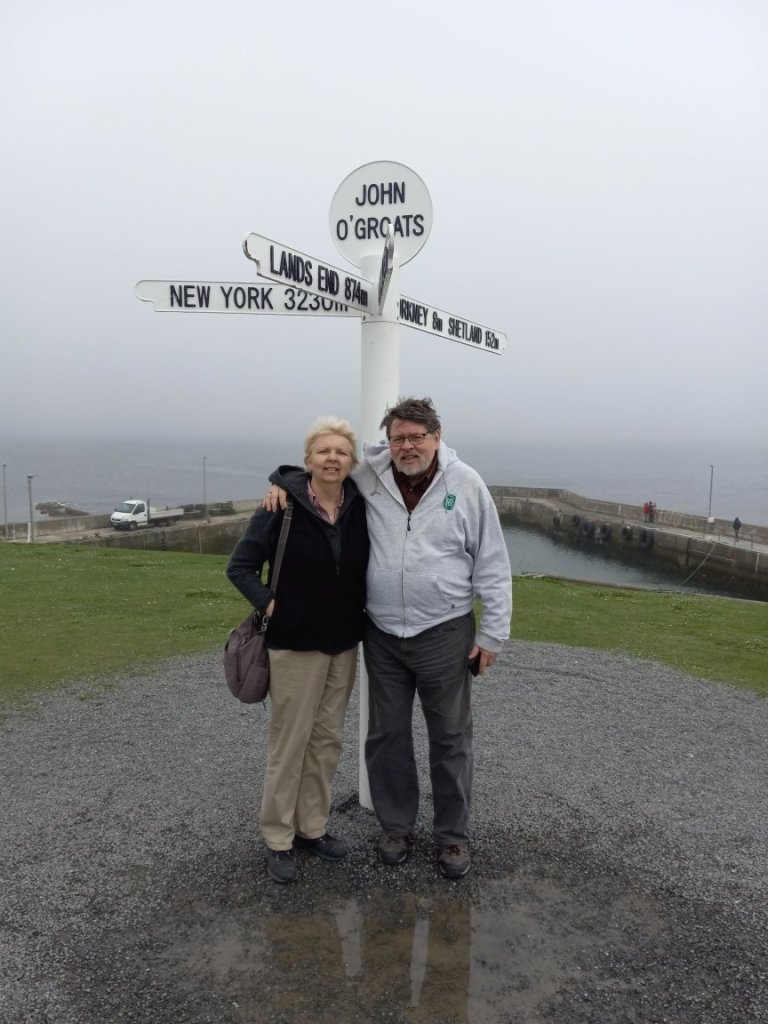
John O’Groats is the most northern inhabited place on the British mainland. The distances from other spots on the globe is significant so there is a signpost with that information. Land’s End is the western-most tip of Cornwall. We would like to visit there some day.

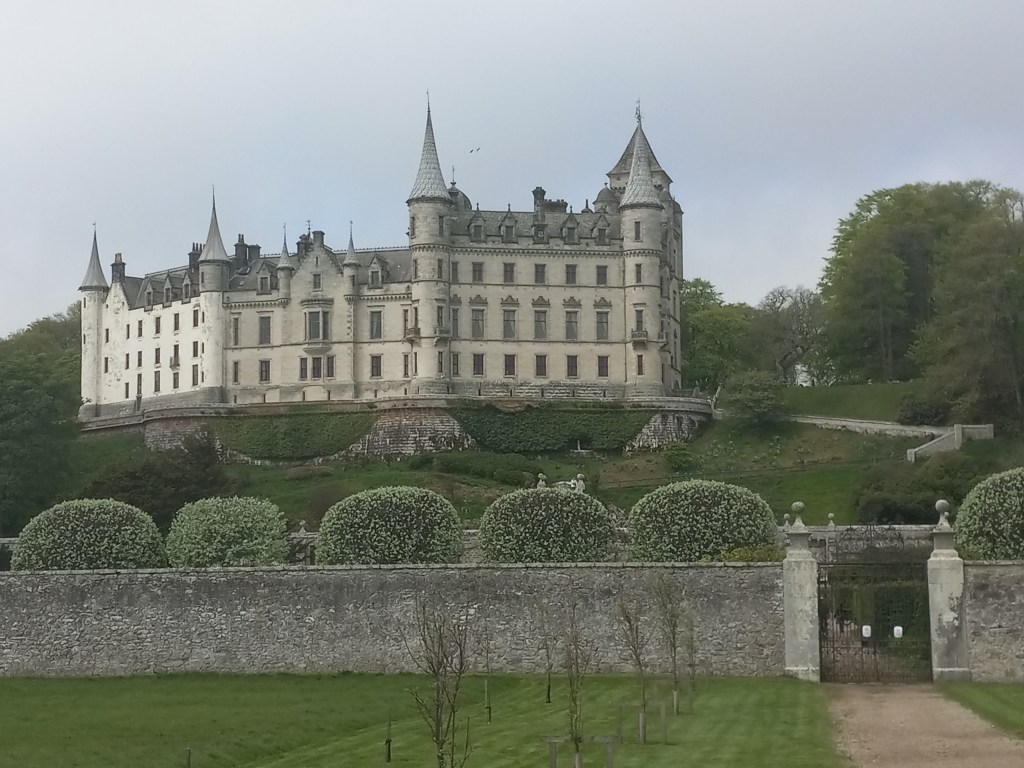
Before our tour of the highlands could end, a few more significant stops remained for us to explore. Dunrobin castle is an elegant castle in the French style, with beautiful formal gardens. Our driver, Willie did not conceal his negative view of Dunrobin because it was part of the vast Sutherland family holdings.

In brief, the Sutherlands were given vast holdings in the Highlands by the English crown. To increase income from these lands, the highlanders whose families had farmed there for centuries were cruelly evicted and their homes and belongings burned. I will include more about that later in a blog post focusing entirely on Scottish history.

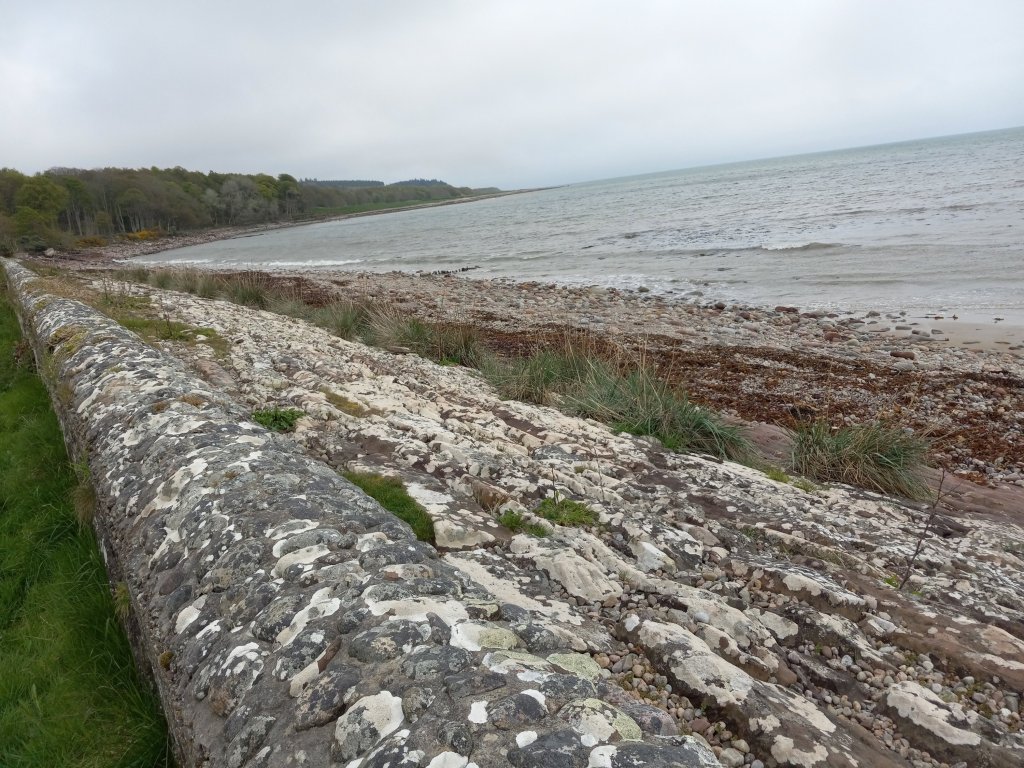
Back to our day on the tour, Willie advised that our next stop at Dornoch was a far richer experience.  So we disembarked for a very brief stop at Dunrobin to view the exterior and the garden. I took a few moments to bond with the sea and Jane got pictures of the mansion and gardens from both front and back

The last stop of the day was the village of Dornoch, which was fun to explore. Willie cut us loose for more than an hour to explore the museum and Cathedral.  After finding the Dornoch library for that requisite photo op, we spent some time in the town’s history museum.

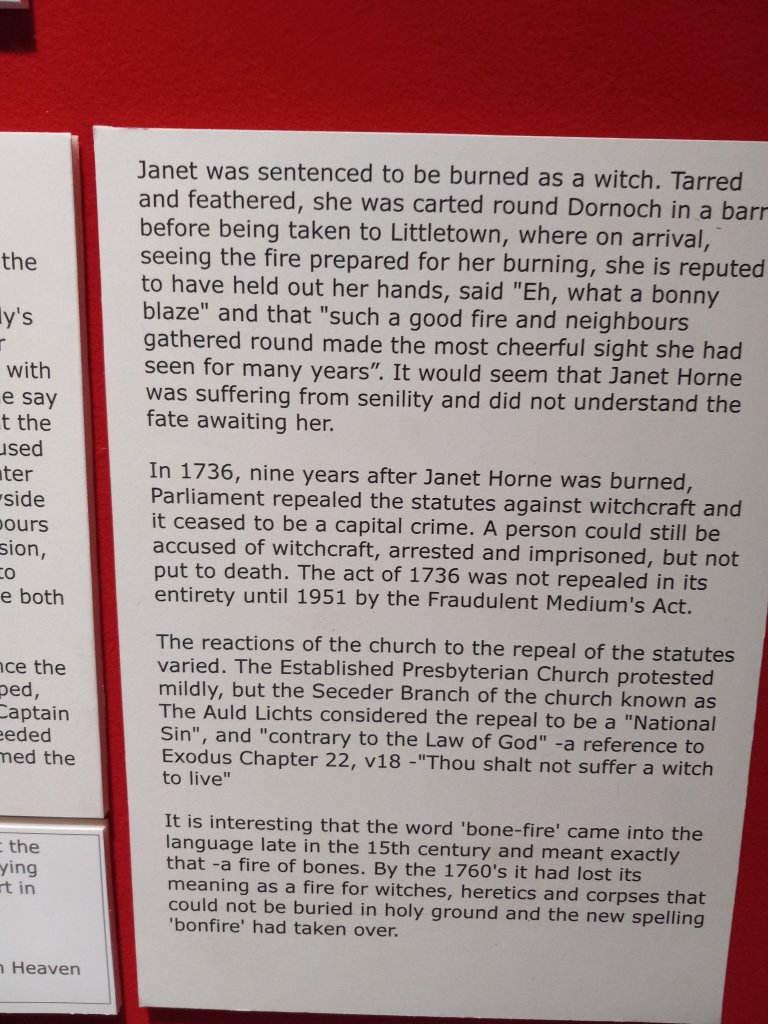
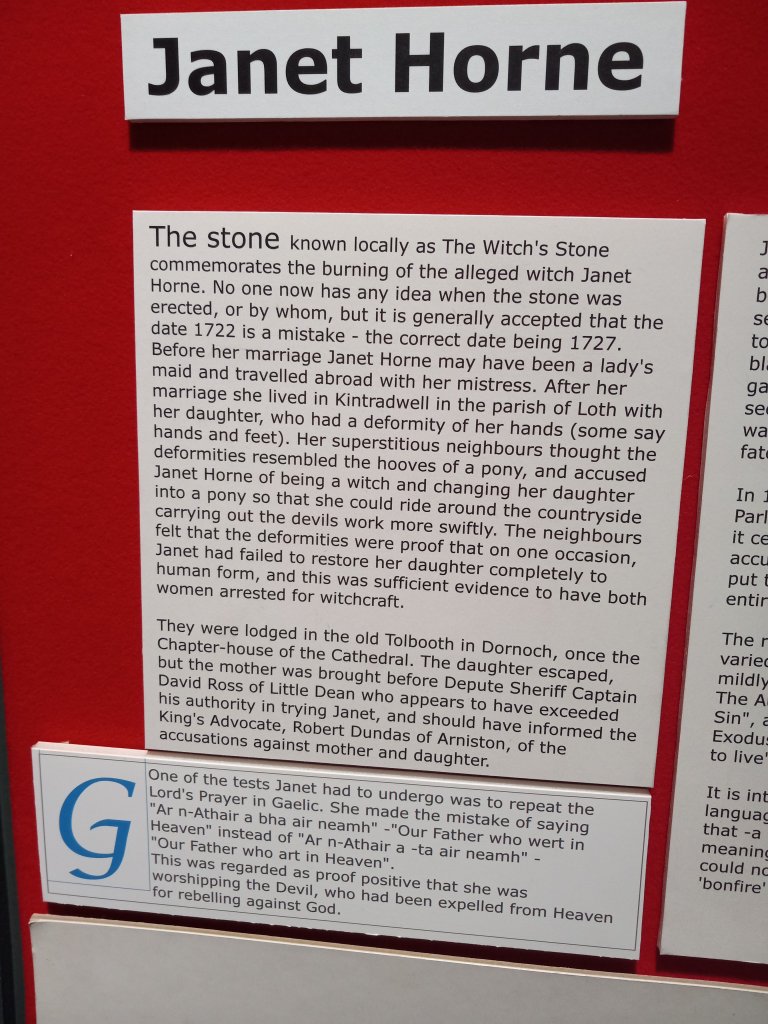
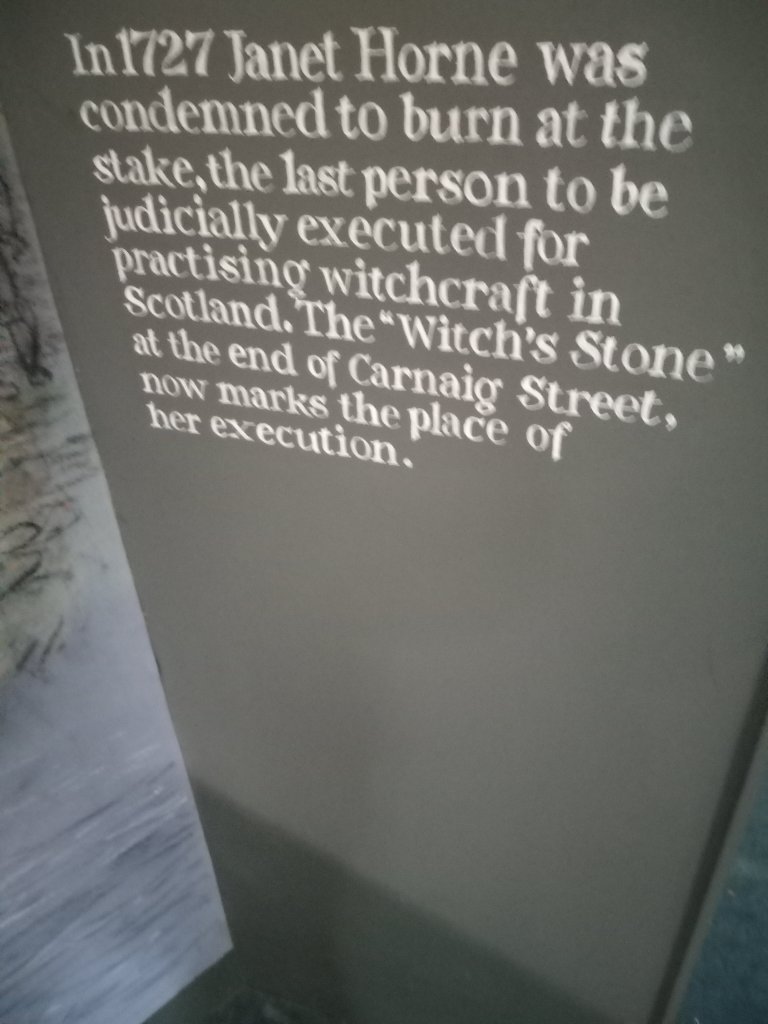
This museum was very small and I never seen such an efficient use of space.  Every piece in there contributed to the story of the city.  This too was also a great source of lore. Apparently Dornoch had the distinction of  being the site of the last witch burning.

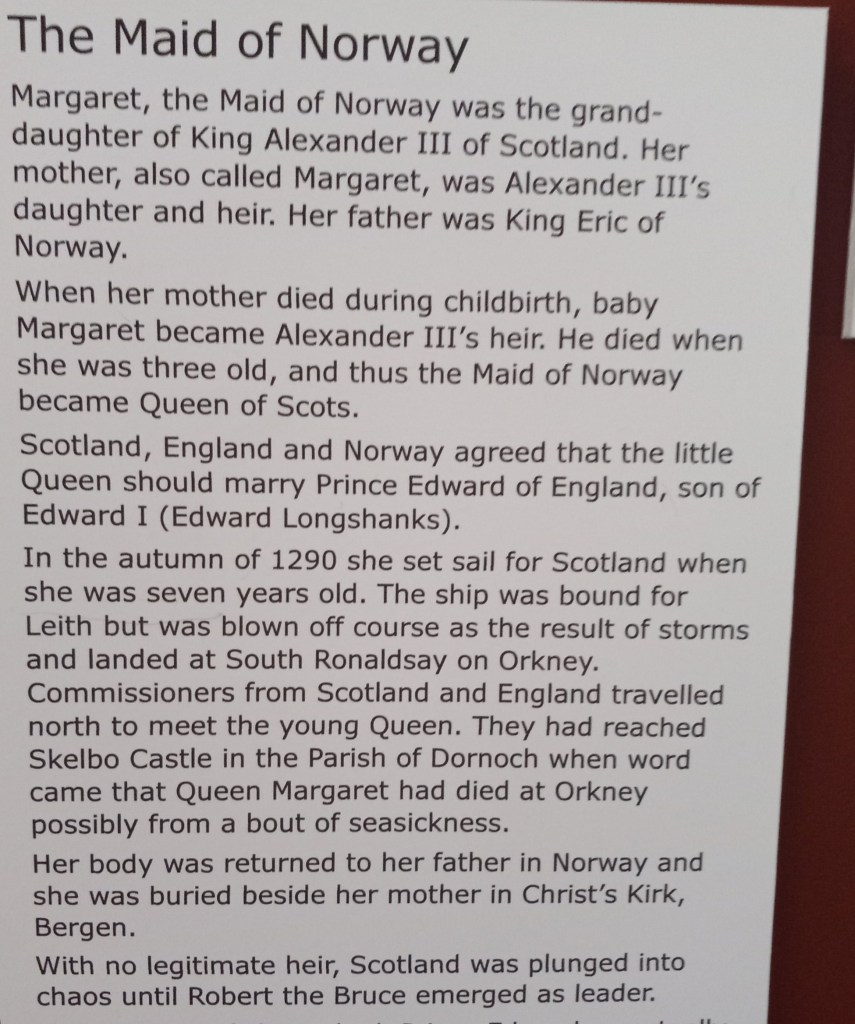
I love to find quirky stories like this. Another story that is of great significance to Scottish history was hard to connect to Dornoch until you read a little closer.

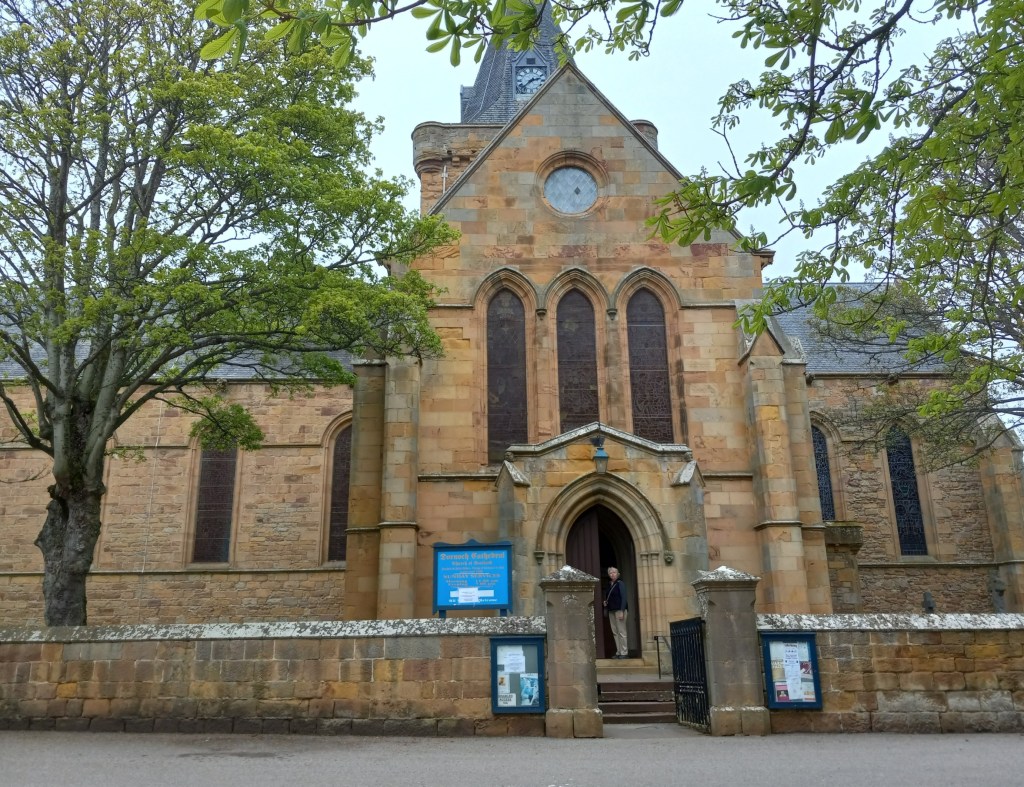
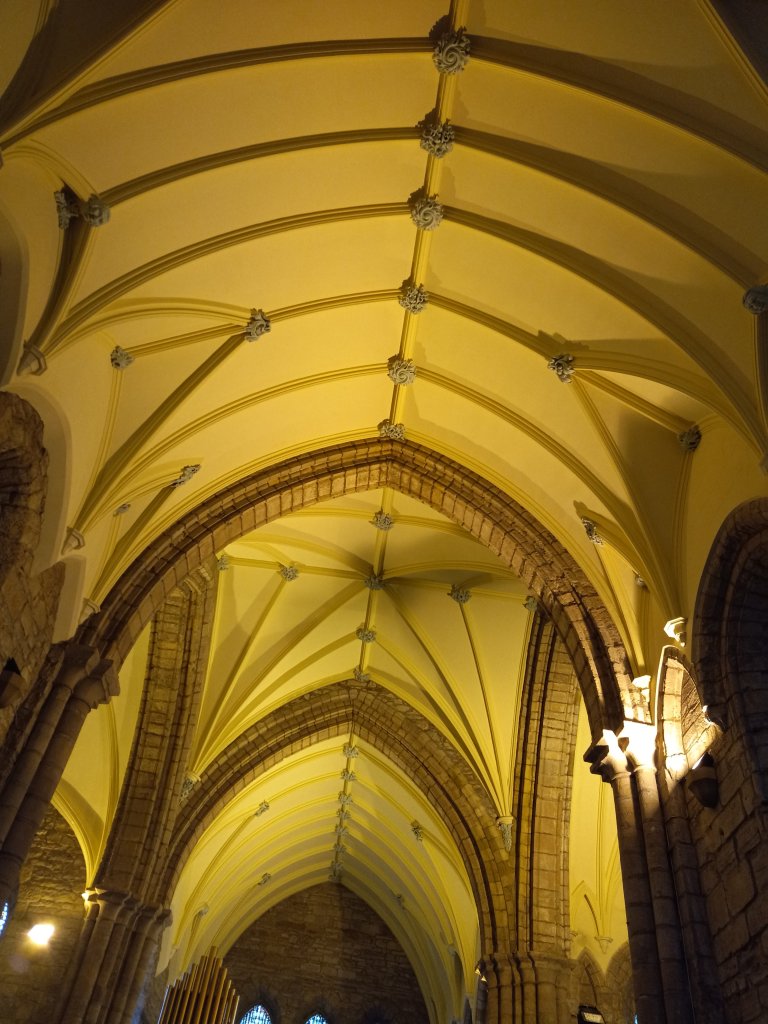
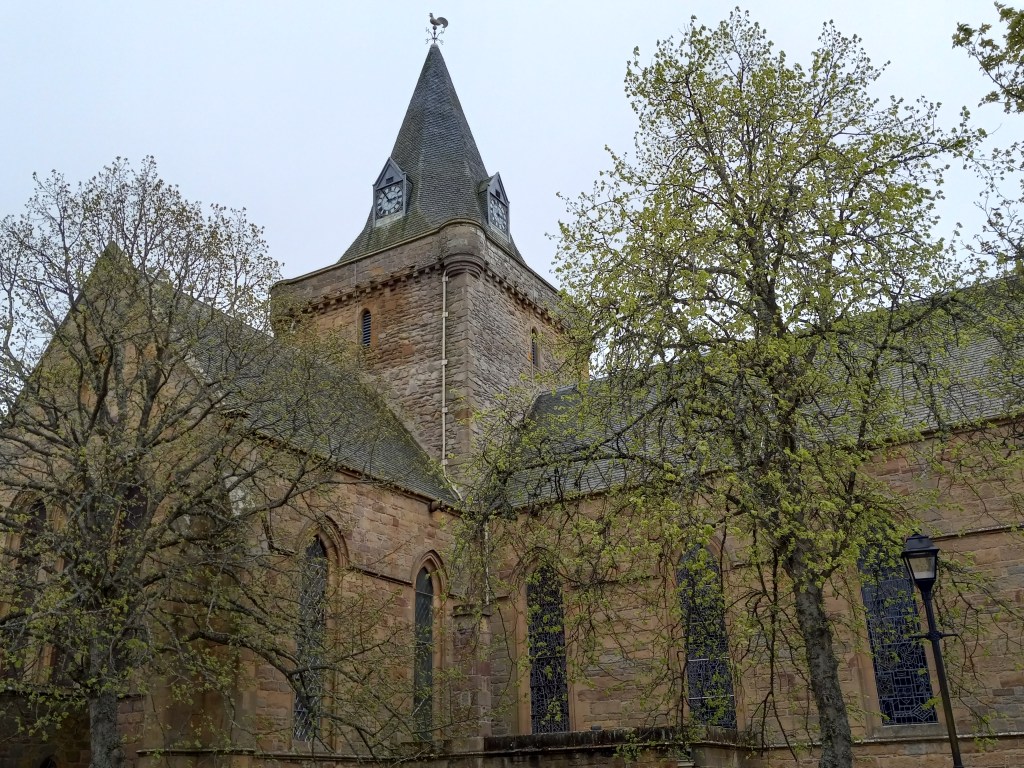
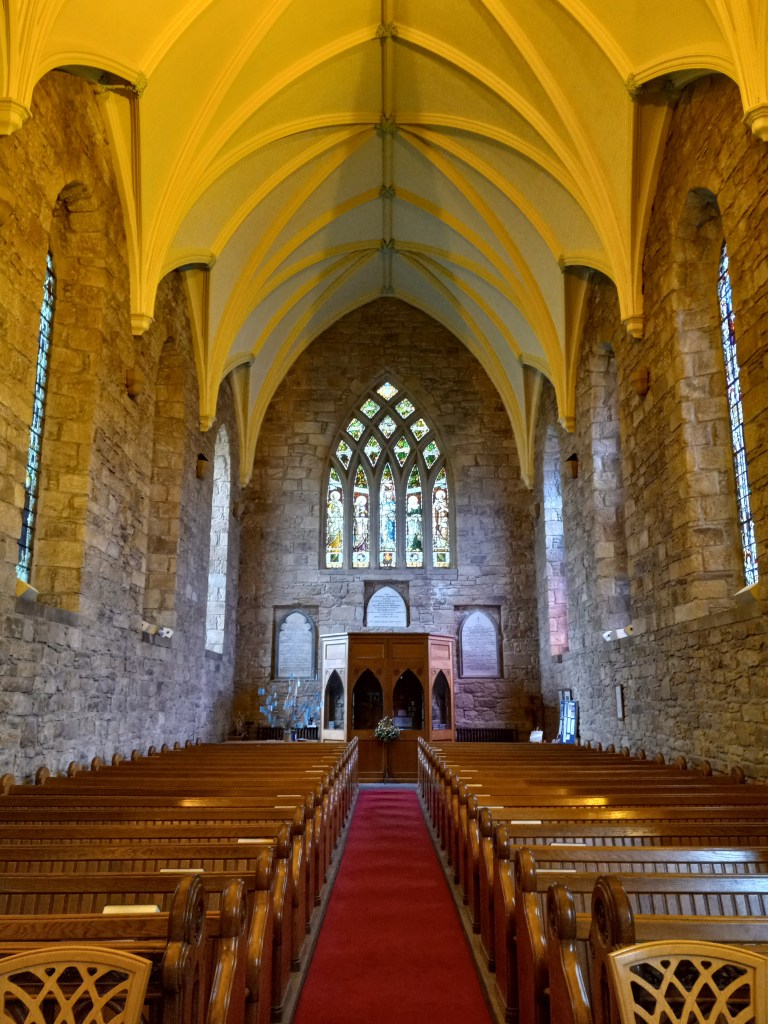
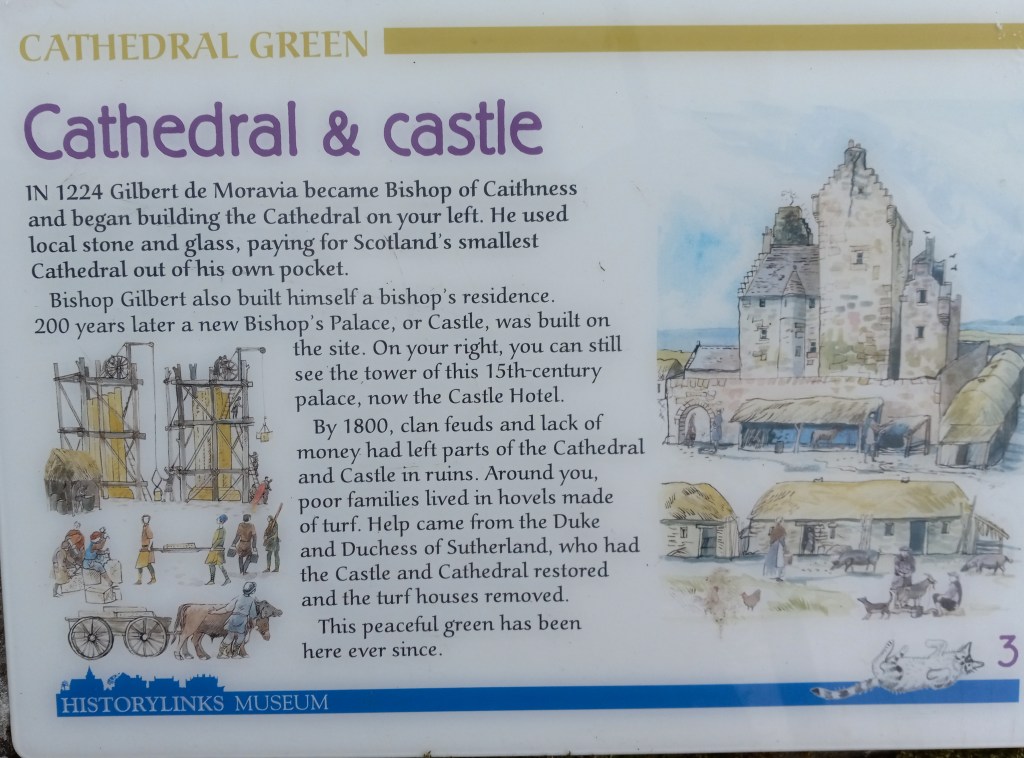
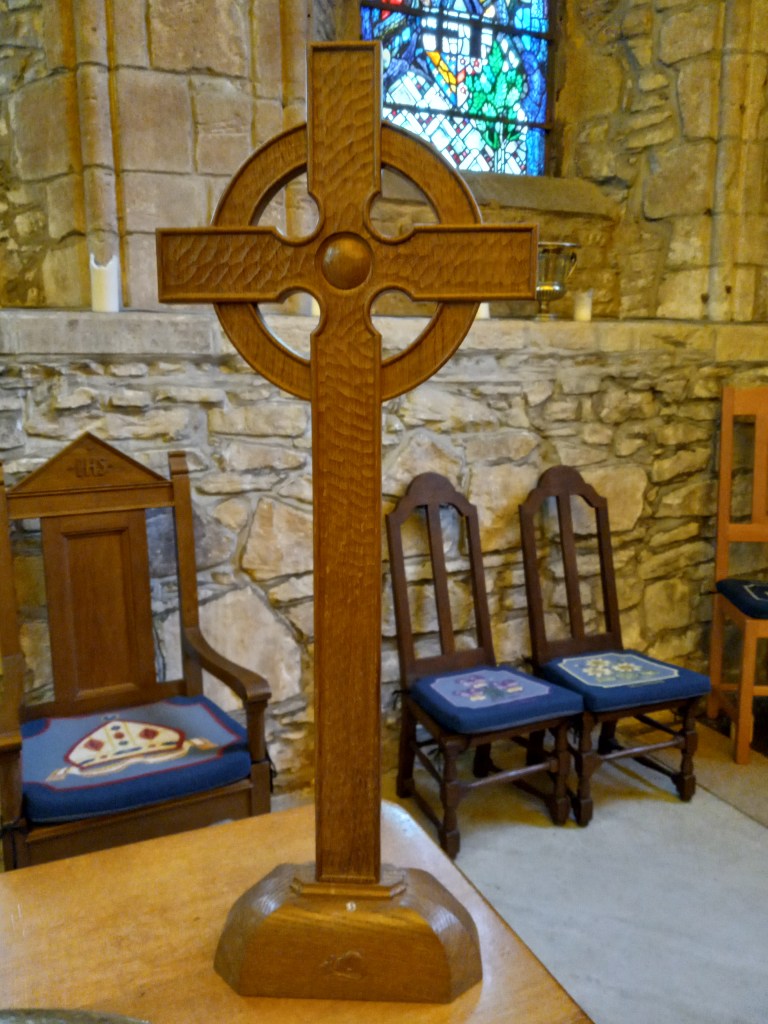
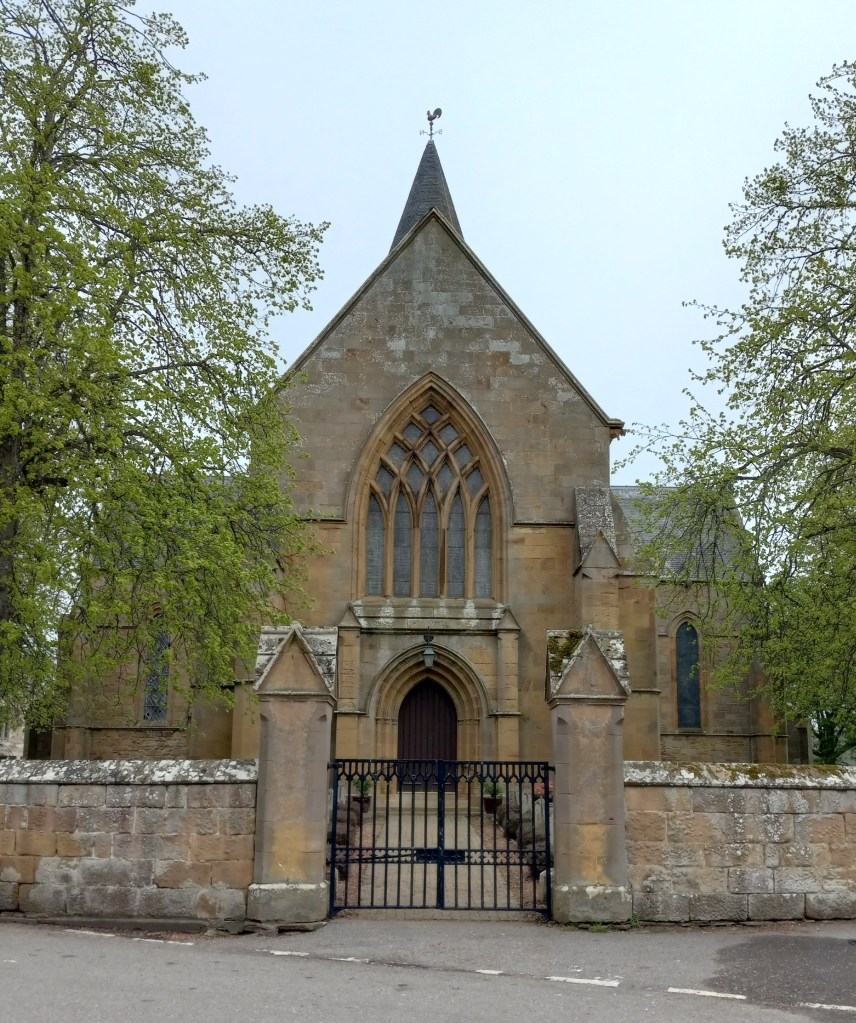
The Cathedral at Dornoch is lovely. (Scots say “lovely” a lot.) It is on a smaller scale than other cathedrals we have visited, but it is beautiful nonetheless.

Our return to Inverness was the completion of the tour. We bid farewell to our new friends and our wonderful driver/guide, then returned to our cozy B&B a bit tired but happy and full of wonderful memories to savor.

The North Coast

Day 2 of our North coast tour was a very long but full day. One thing we love about Rabbie’s is they take roads less traveled and are happy to stop and explore at the whim of the riders. Willie was great about letting our little group out of the bus to admire the wonder of the highlands and take pictures.

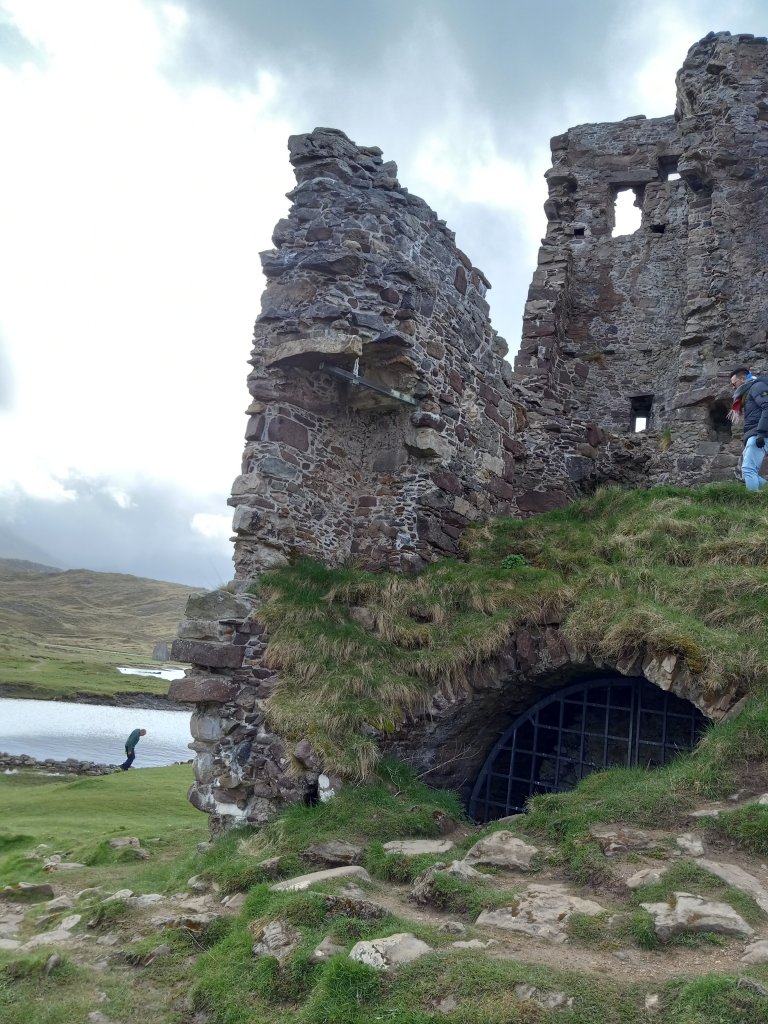
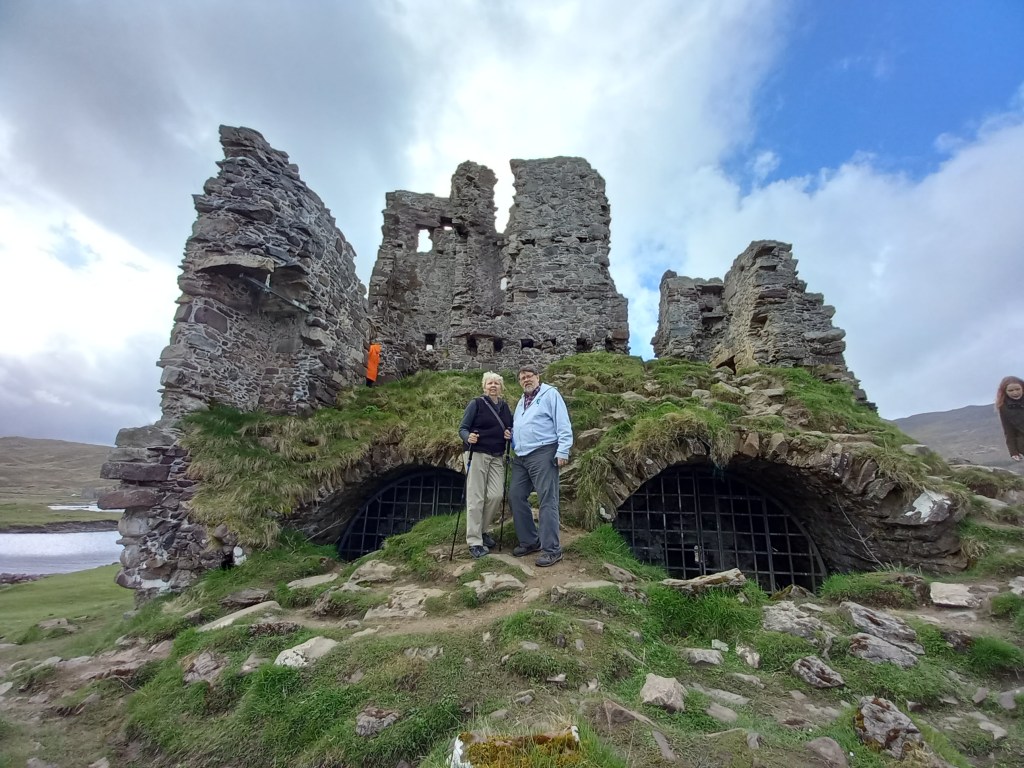
Our first stop got us back in the castle mode near a town called Lochinver, the castle Ardvreck. This ruined castle dates back to 1490 and is associated with the McLeod clan.

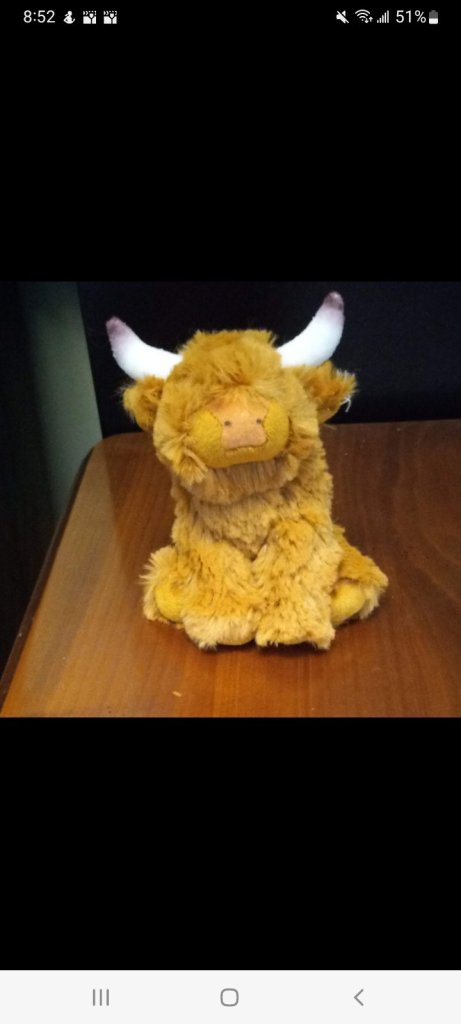
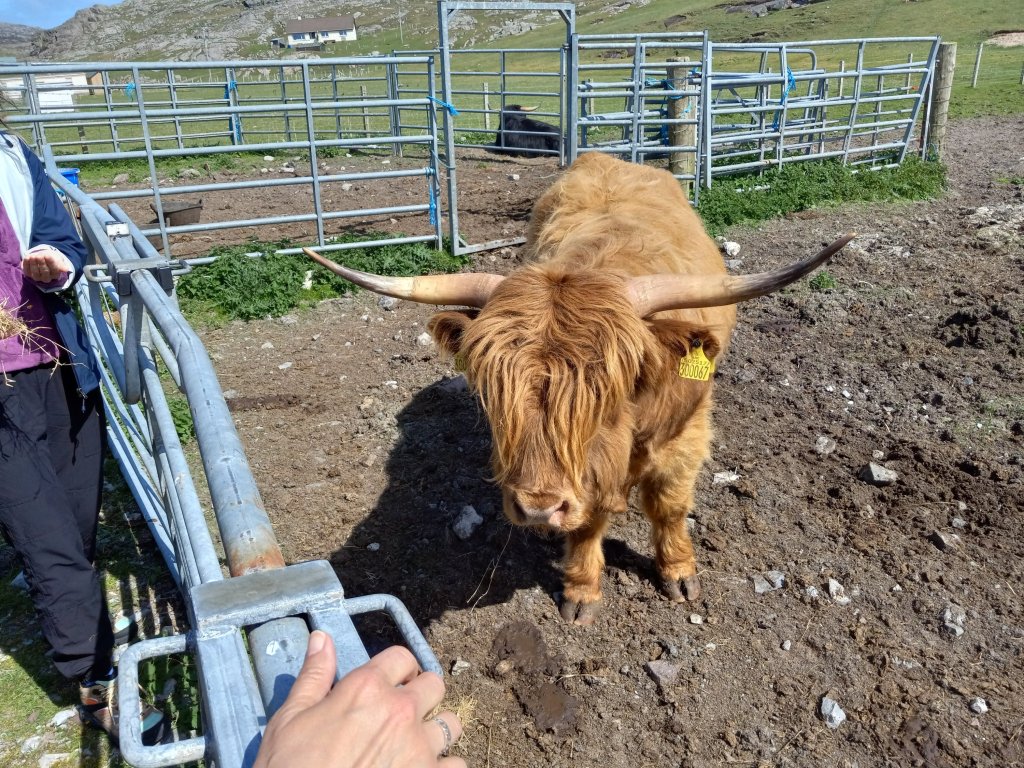
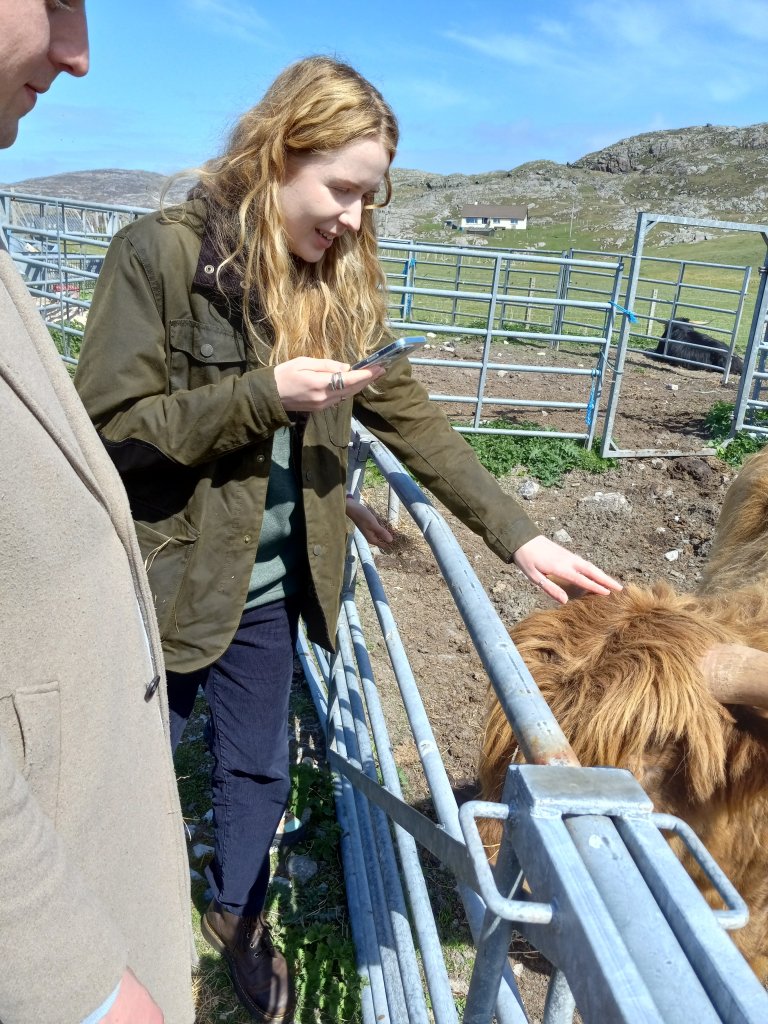
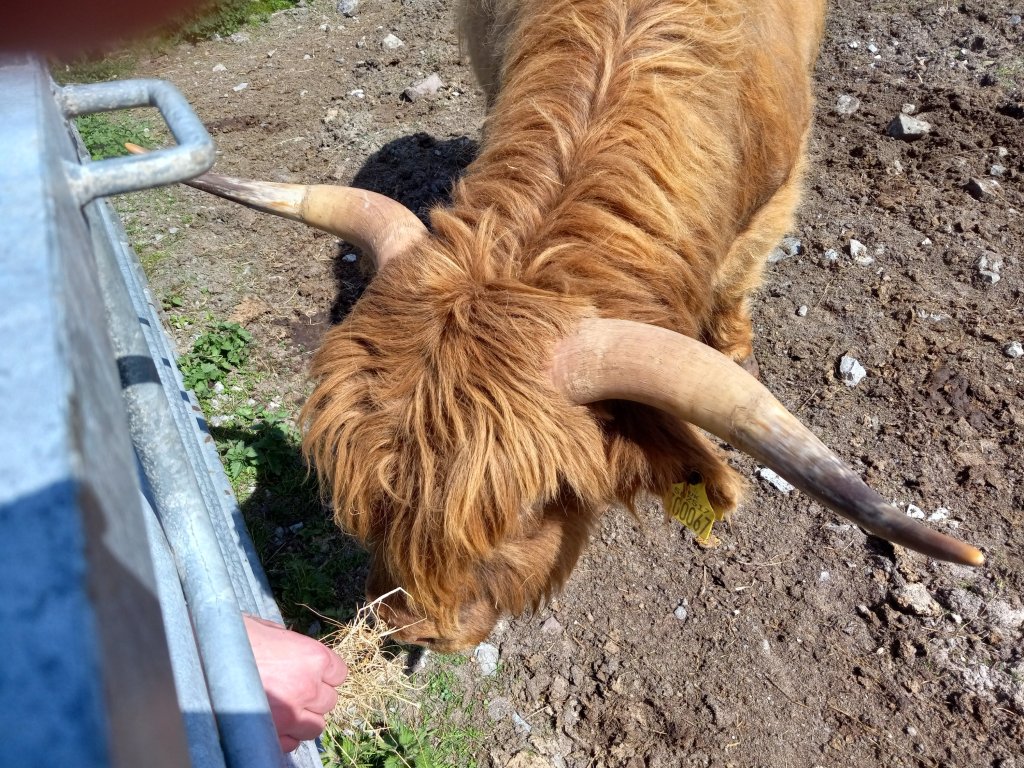
As we traveled to our next stop along the way, Willie saw something he knew we would all enjoy. You may remember on our last trip we did not see any highland coos so I found one and named him George. Willie saw a chance for us to meet the real thing up close.

Everyone on the bus had a fun time petting and feeding the coo. This is the great thing about Willie and Rabbie’s. He had the freedom to treat us to fun surprises like this.

You see different members of our touring party in the pictures. You may be wondering what was this coo’s name. Well, of course, his name is George.

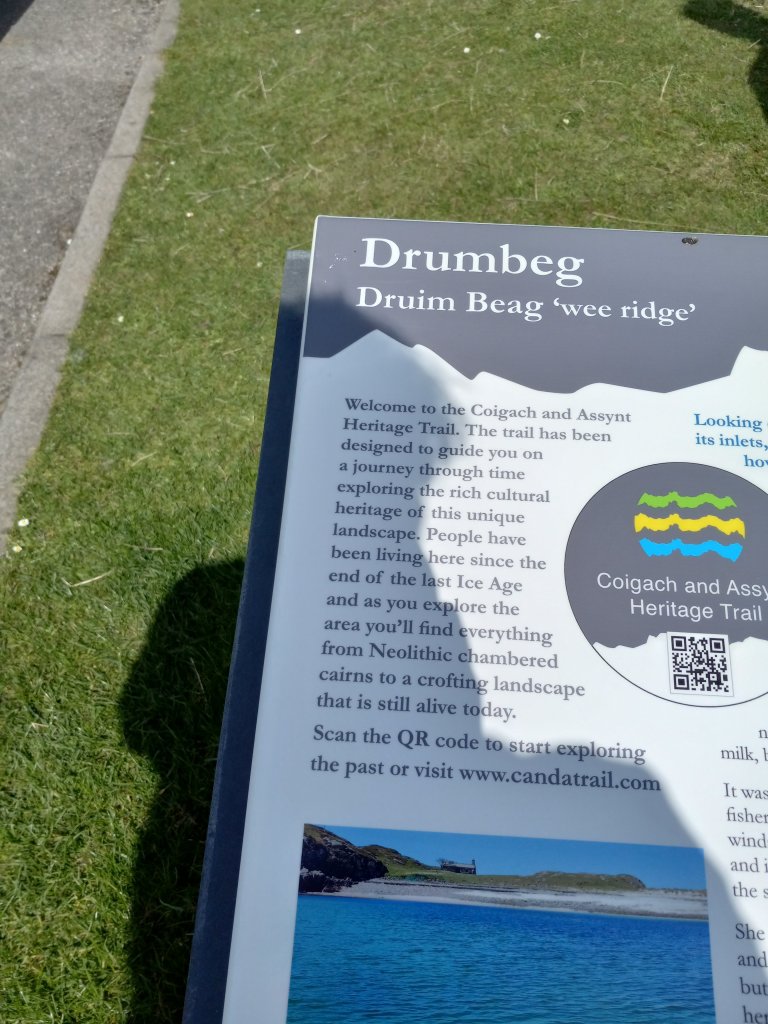
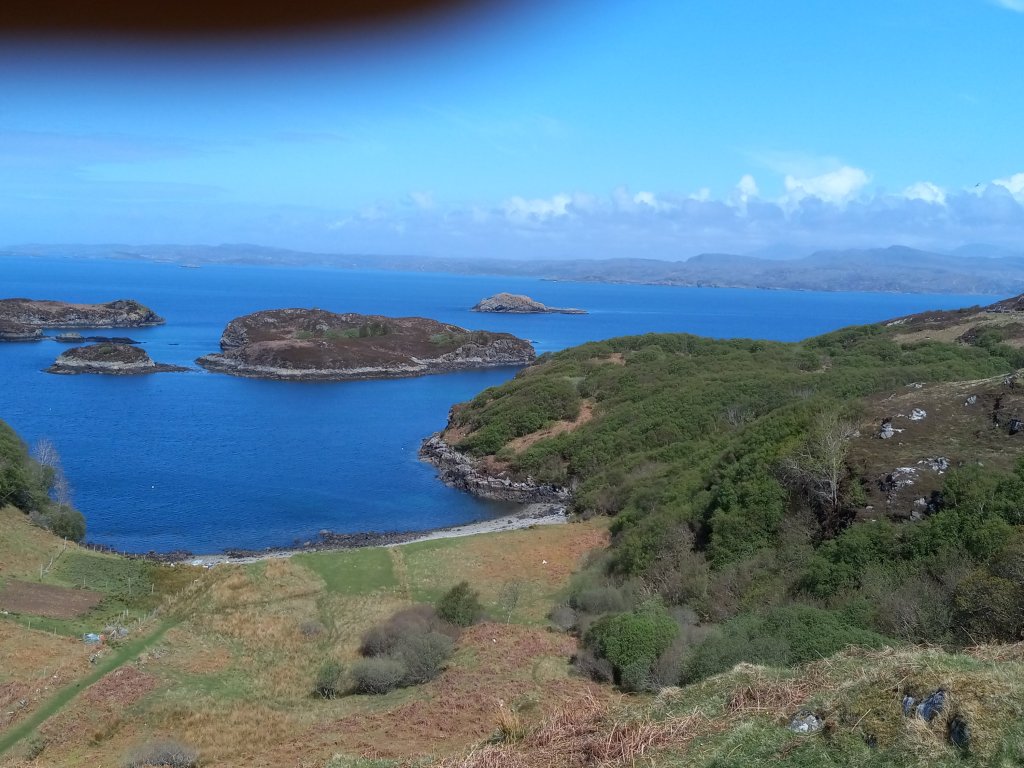
From our nice coo love fest it was back to amazing mountains, islands and beaches. The area near the village of Drumbeg and Kylesku Bridge shows off the beauty of the Scottish highlands well.

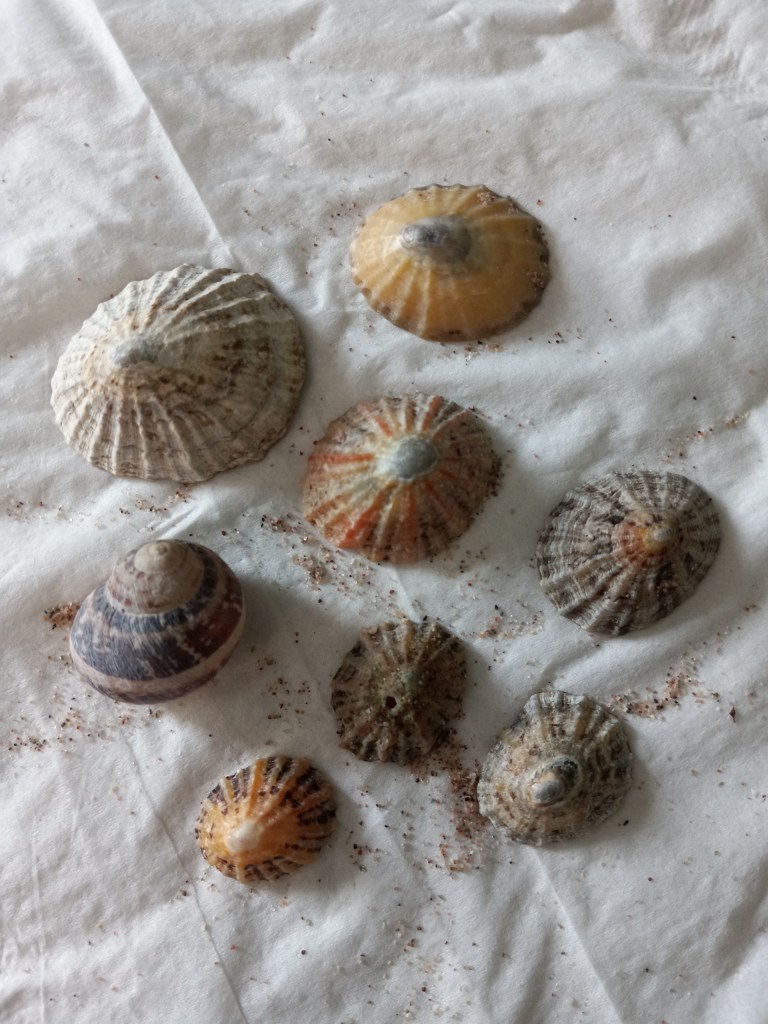
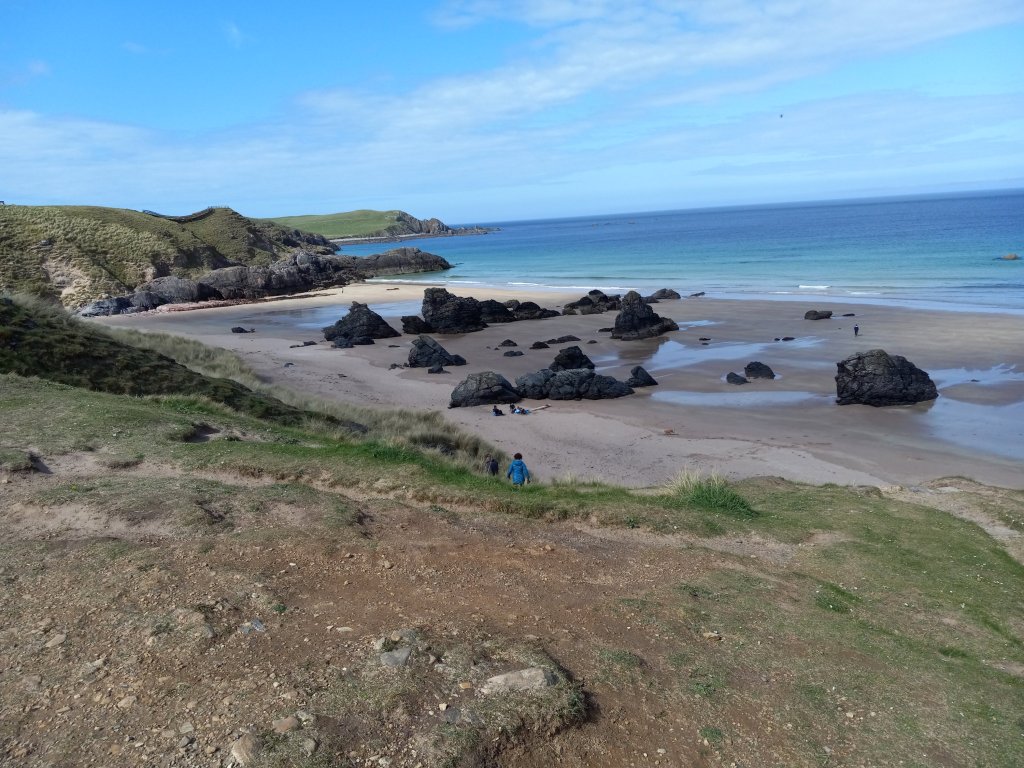
One of the information displays said that there were 35 islands off the coast at Drumbeg. I counted maybe 10 that I could see but I am prepared to believe them. The miles of coastal beach was a nice surprise and some of our young fellow travelers took the chance to frolic a bit. We picked up some lovely shells.

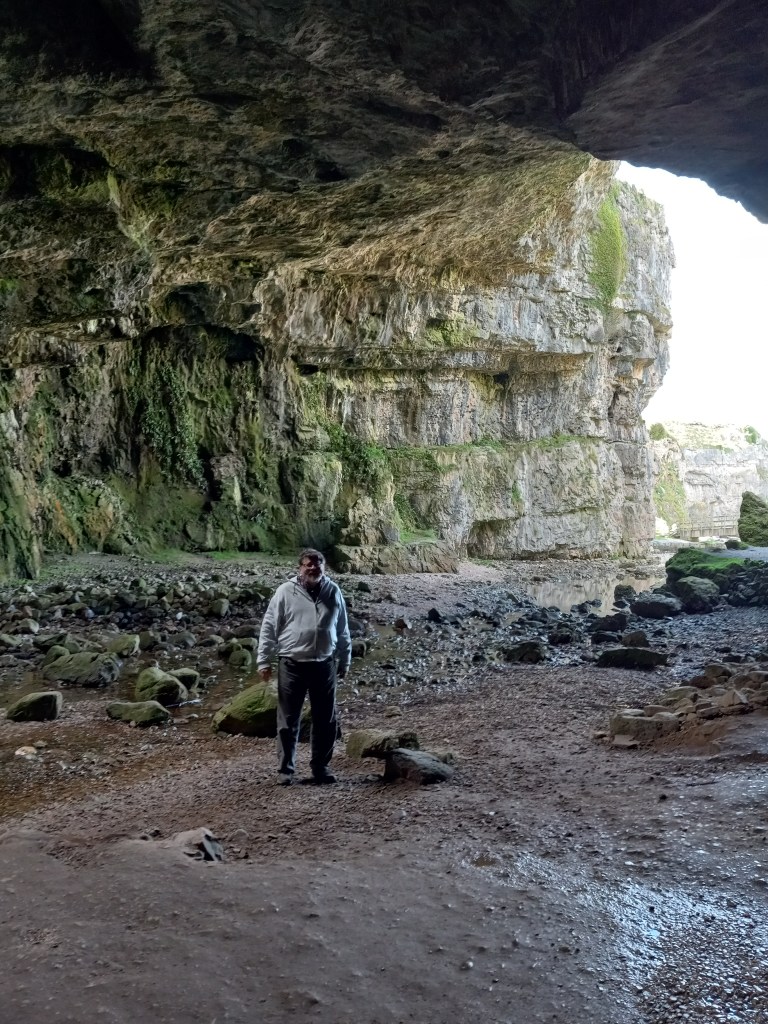
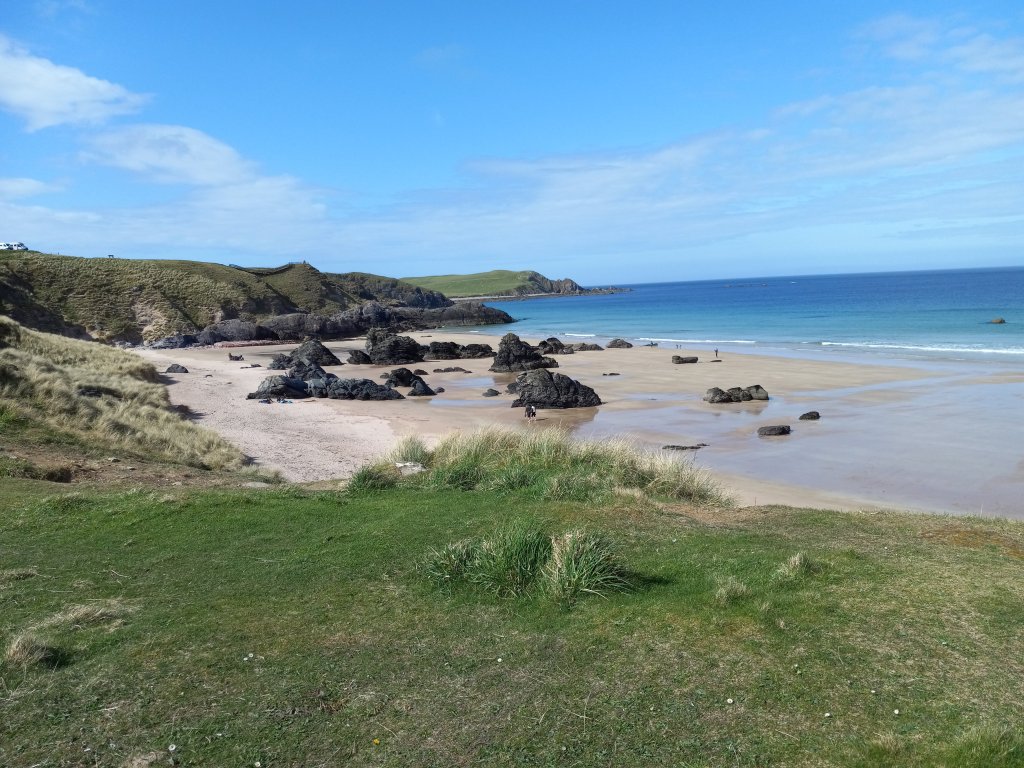
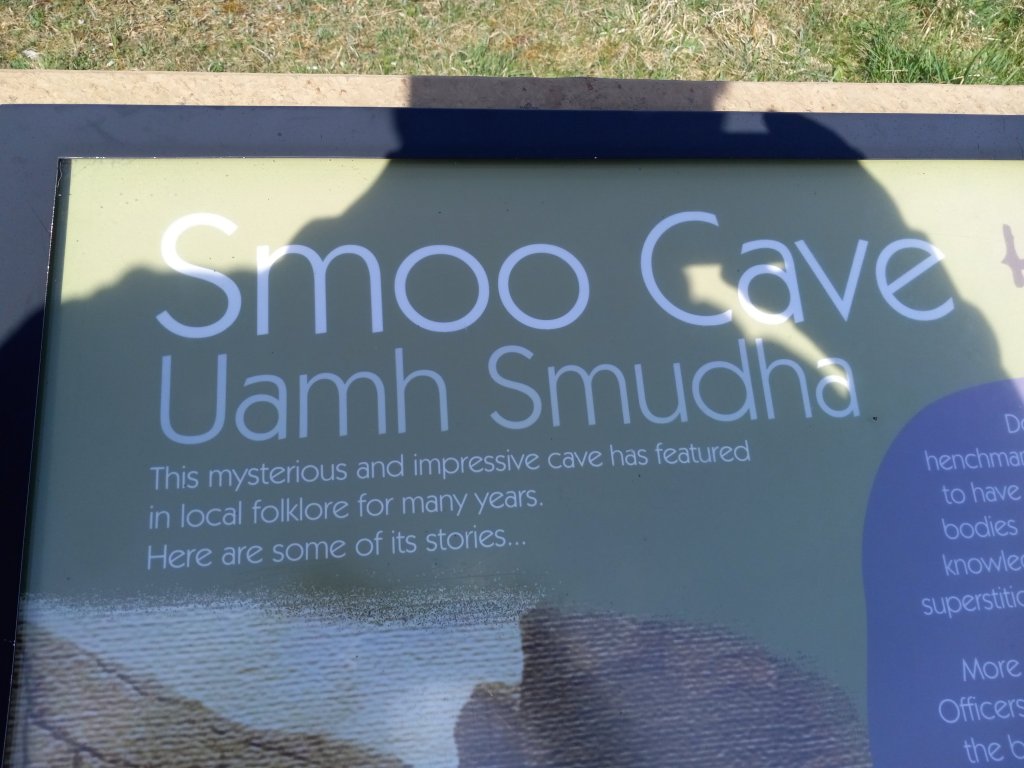
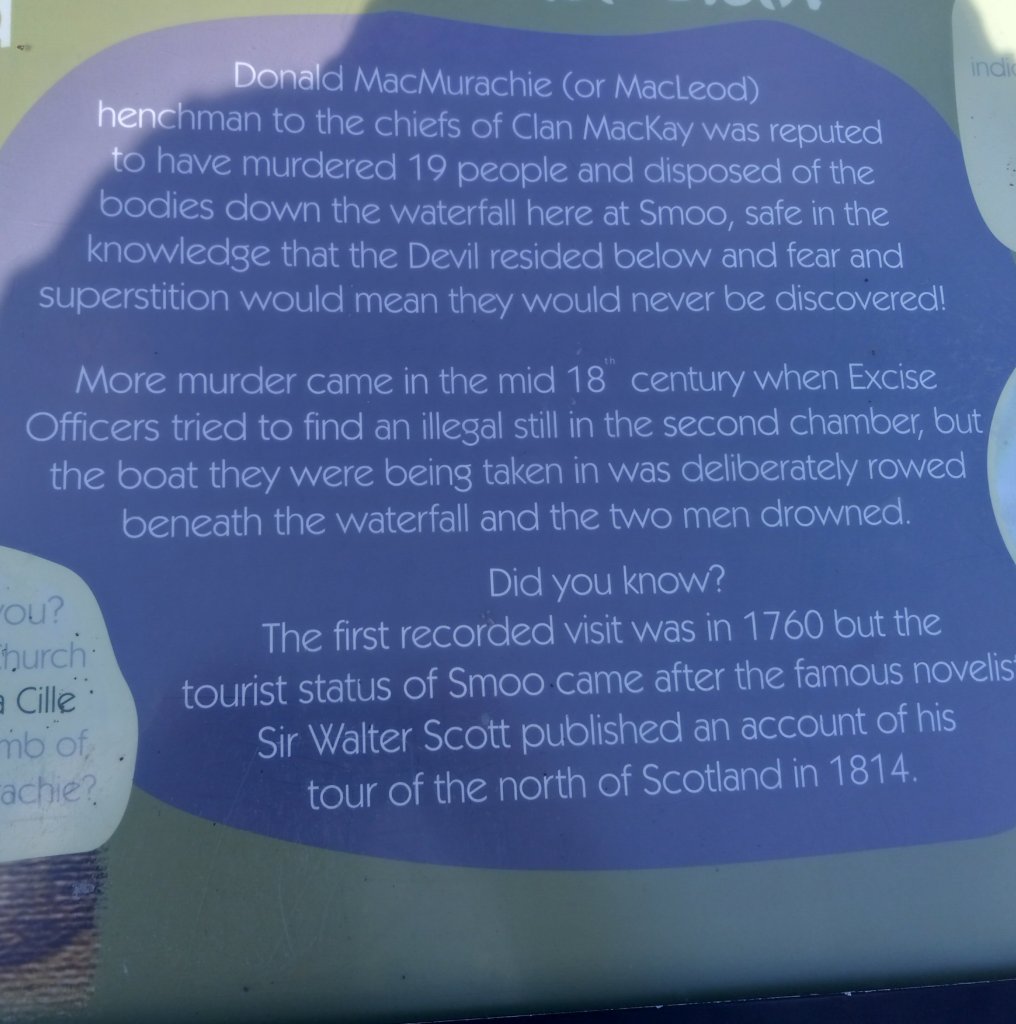
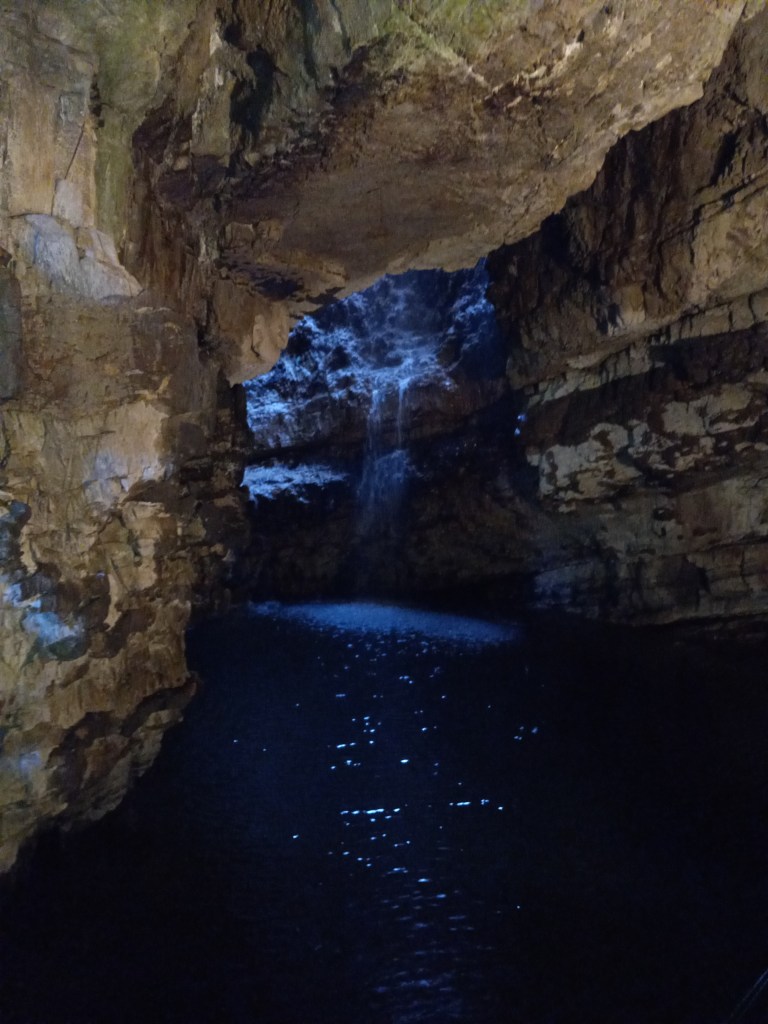
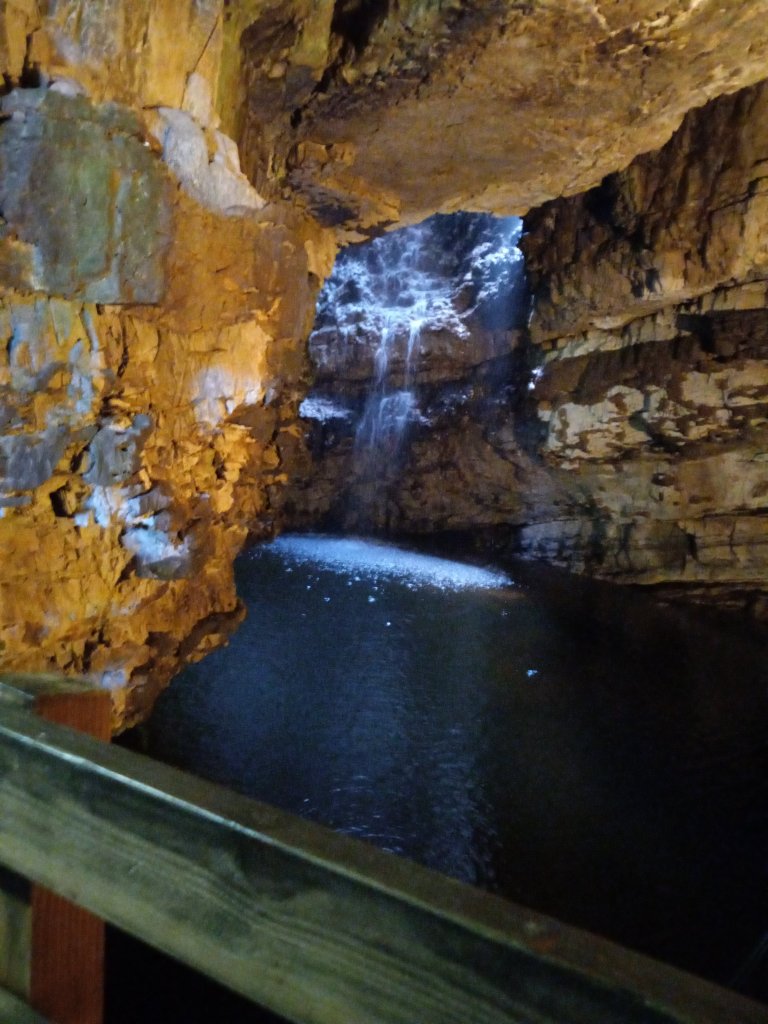
The last stop of the day came with a bit of lore. A little lore on a tour is great. Smoo’s cave was a whopper of lore and here are the details…

The trip to see the cave was long and a bit challenging. We were tired from a long day of climbing in and out of the bus and around the various sites, but a phrase we both use in this situation is, “after all you came all this way.” (The actual phrase is “after all. Dr. Venkman, you came all this way.” We will leave it to those of you who like movie trivia to figure out that movie reference.)

We enjoyed a full and satisfying day exploring the north coast of Scotland. We settled into our next accommodations in a small coastal town called Thurso. It was not as nice as Ullapool but adequate, and we were able to rest up for our last day of the tour coming up the next day.

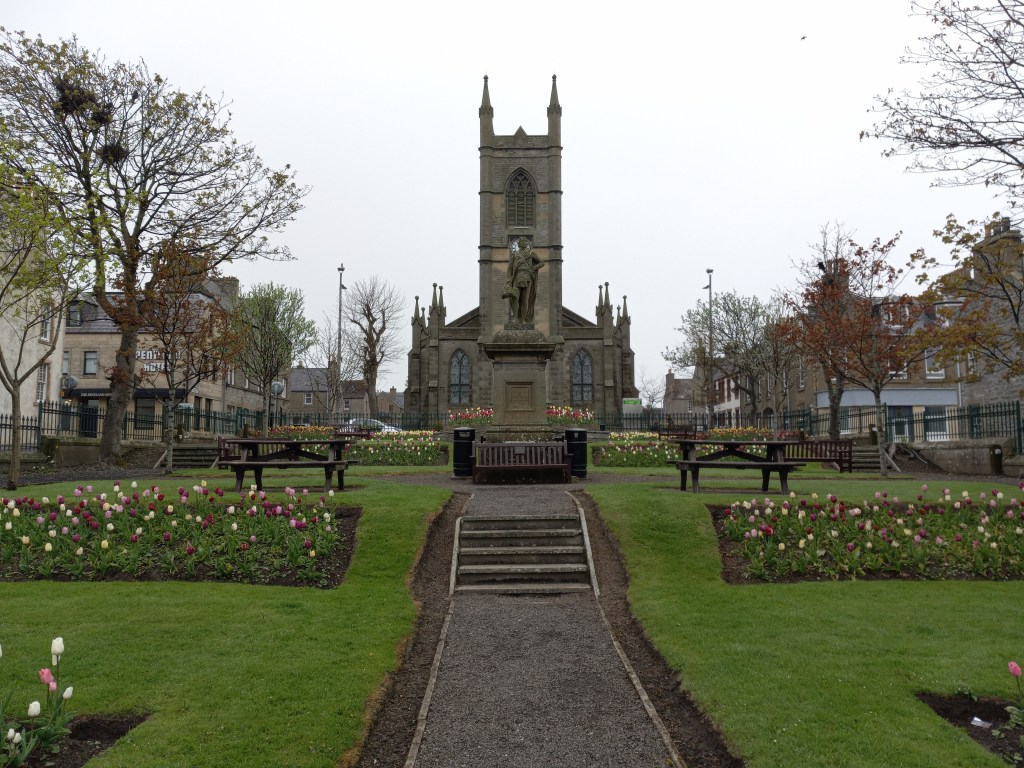
beautiful church in the center of Thurso

The Highlanders

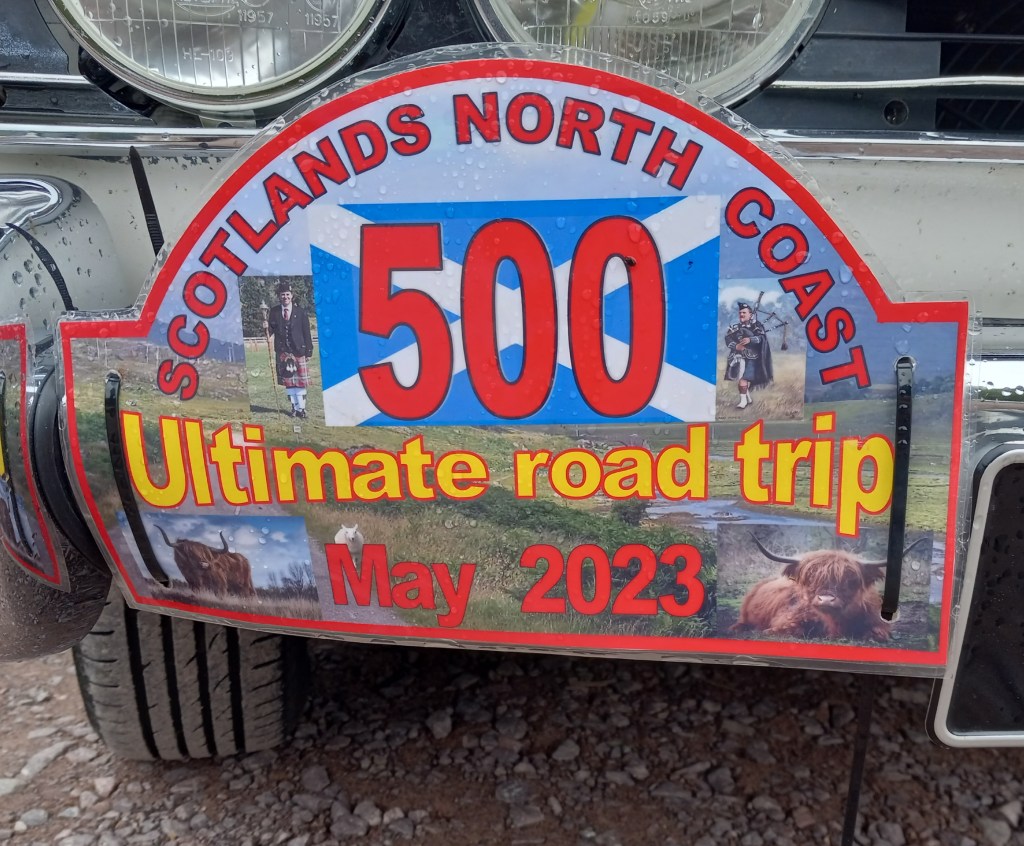
Monday arrived and already we are having a great time.  Today begins the next big adventure of our journey, a 3 day tour of the north coast called the NC500.

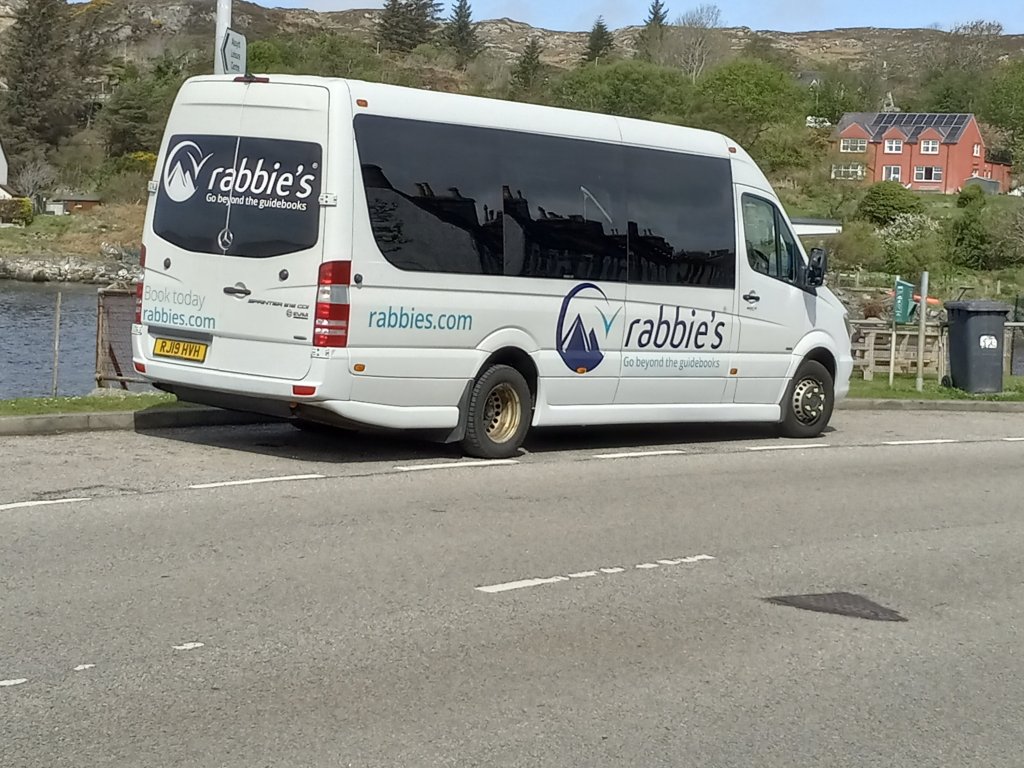
We use a tour service called Rabbie’s who we have used before. On any Scottish discussion board, anytime someone asked for recommendation for a tour service, Rabbie’s is always highly recommended.

The picture is the van we are using. In past tours the 15-passenger van was full, but this time there were only six including us. For this trip our driver is a jovial Scot named Willie. Our fellow travelers are a Russian lady named Olga, a young Canadian woman named Bridget, a young Englishman named Edward, who was traveling with Ekaterina, who is originally from Russia. Since this was a smaller group than usual we had more opportunities to get to know the other members of the group.

Much of the day was driving through the majestic highlands. But as I absorbed those amazing mountains,  I recalled that if we did nothing else but be surrounded highlands with taller highlands behind them and taller still behind them, I was satisfied. But Willie had some very cool things still in store for us.

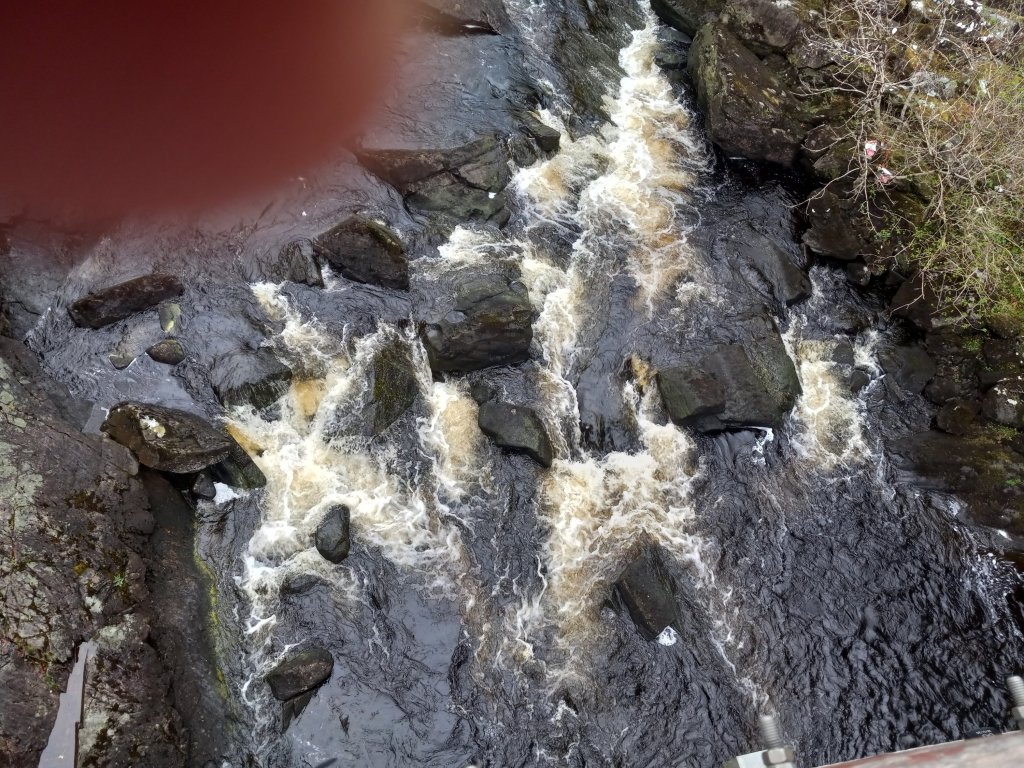
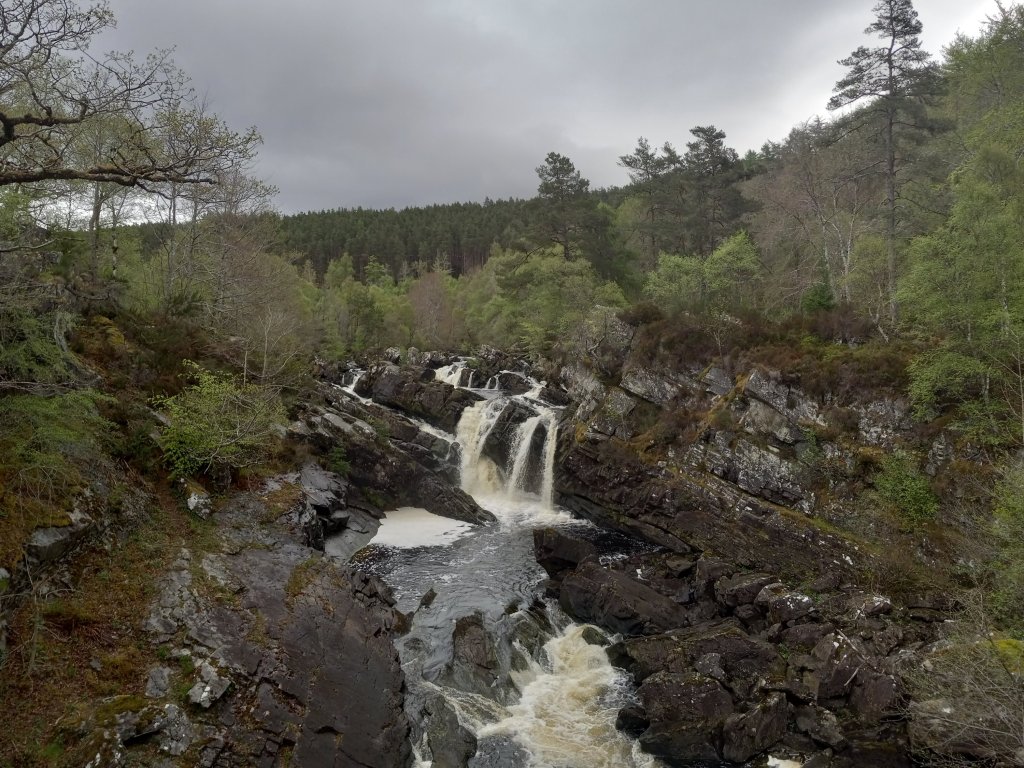
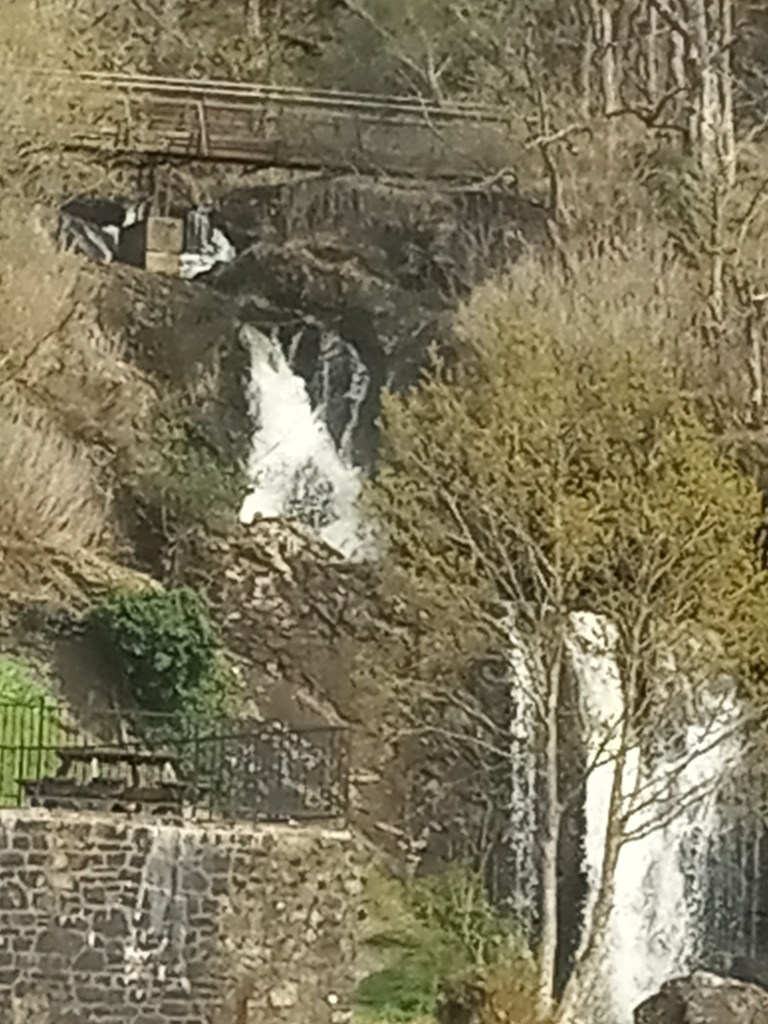
On this first day of the tour we stopped at 8 sites and had plenty of time to explore some amazing waterfalls, forests and mountains.  Rogie Falls was the first of many natural sites that made this highlands tour nice.

As one does, I have certain experiences on my list I want to check off each year. Two of them are castles and highland coos.  I checked both of them off on this tour so I can go home happy.  But not yet.

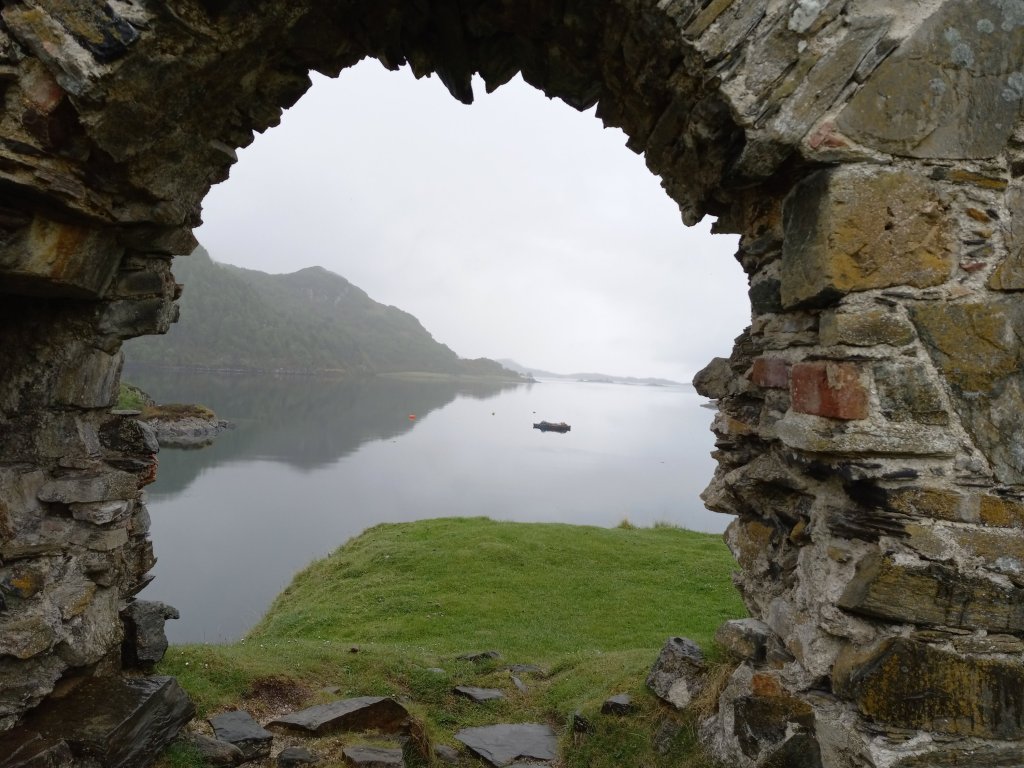
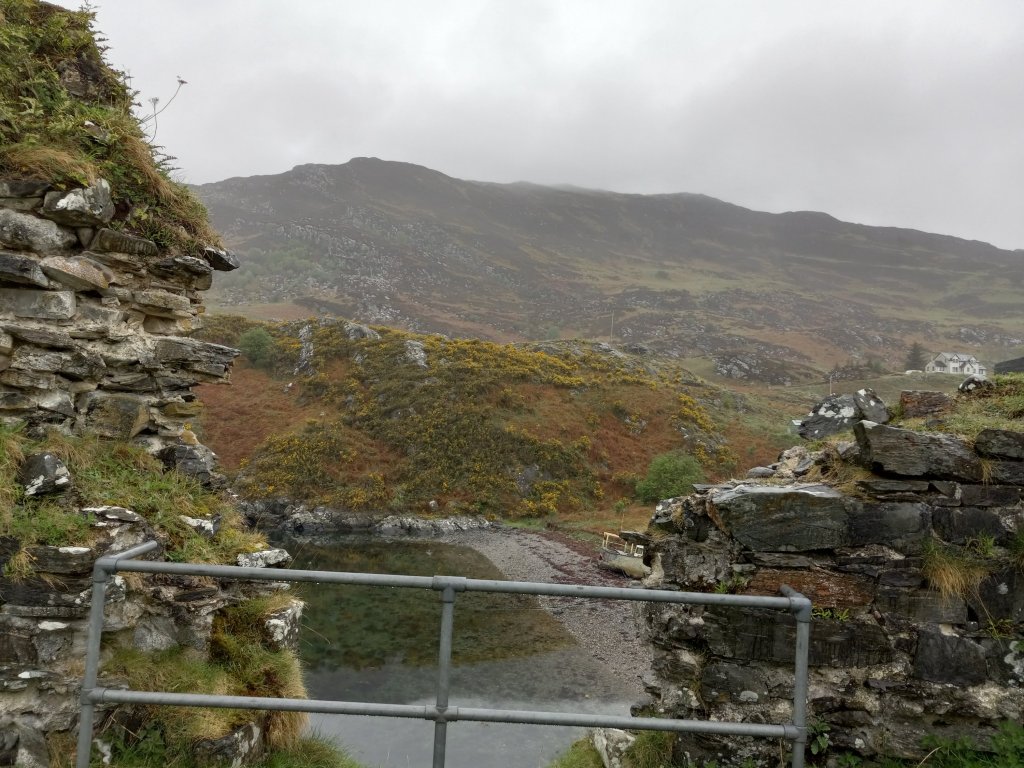
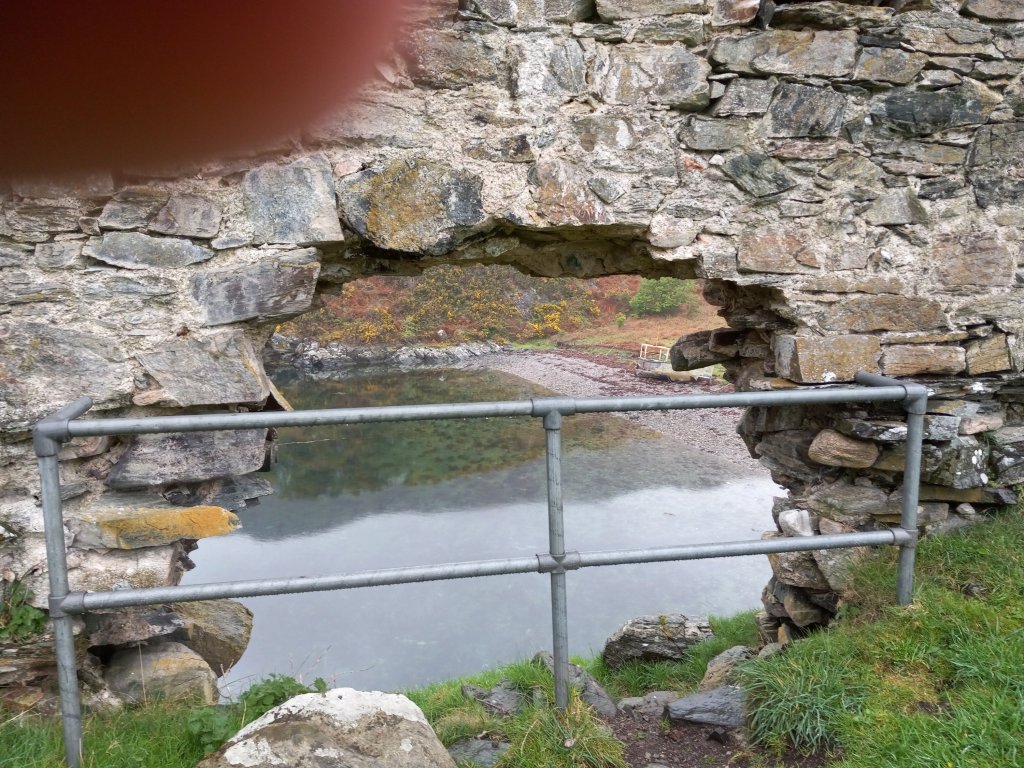
In fact, the next stop was the ancient Strome Castle. Scotland has so many castles, many of them hundreds of years old. Like many, Strome Caastle is in ruins. But there was a certain elegant beauty to those ruins.

The young lady in the picture is Bridget from our tour group. 

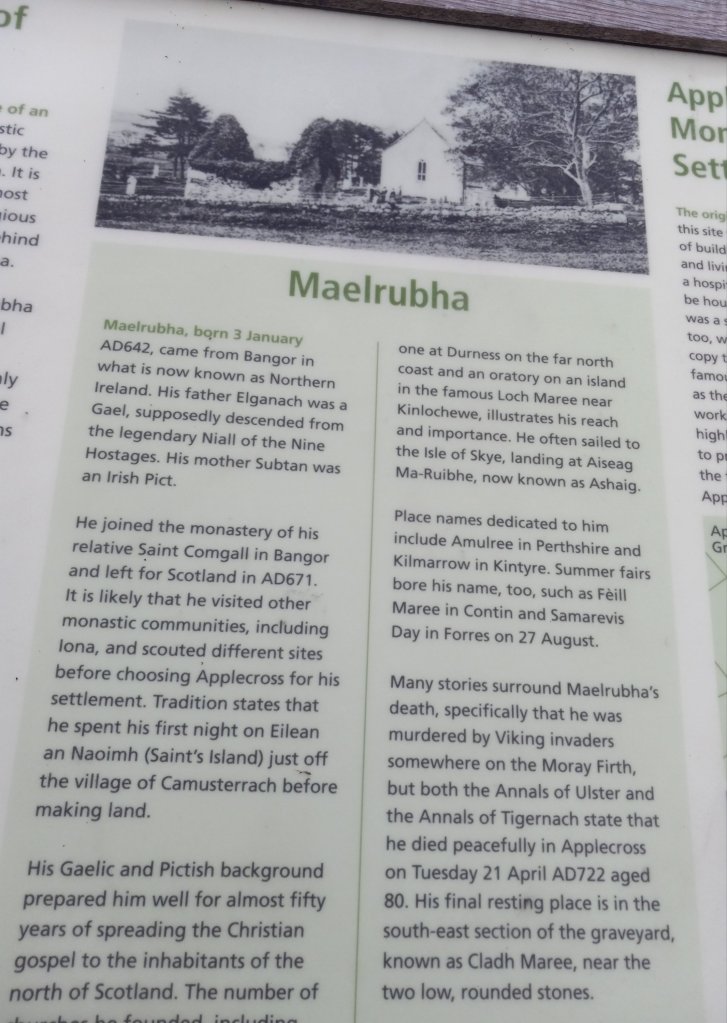
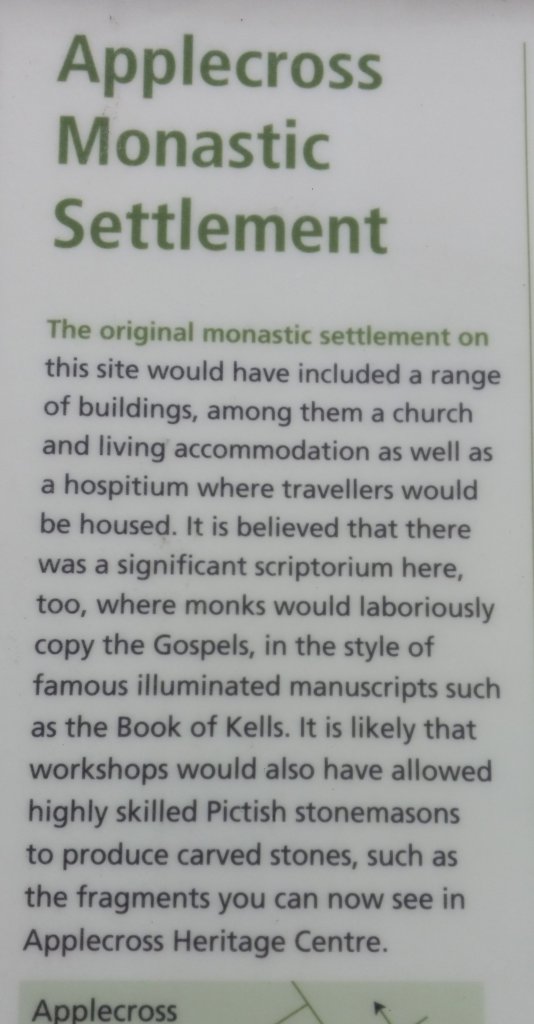
Applecross seems like a routine stop for a tour but there is something very significant here. The Irish monk Columba is credited with bringing Christianity to Scotland. A disciple of Columba named Maelrubha came to eastern Scotland and is credited as the second most influential missionary to Scotland.

He founded a church and monastery here at Applecross.

The church we visited here is built on the site of the monastery, which is believed to be Maelrubha’s final resting place.

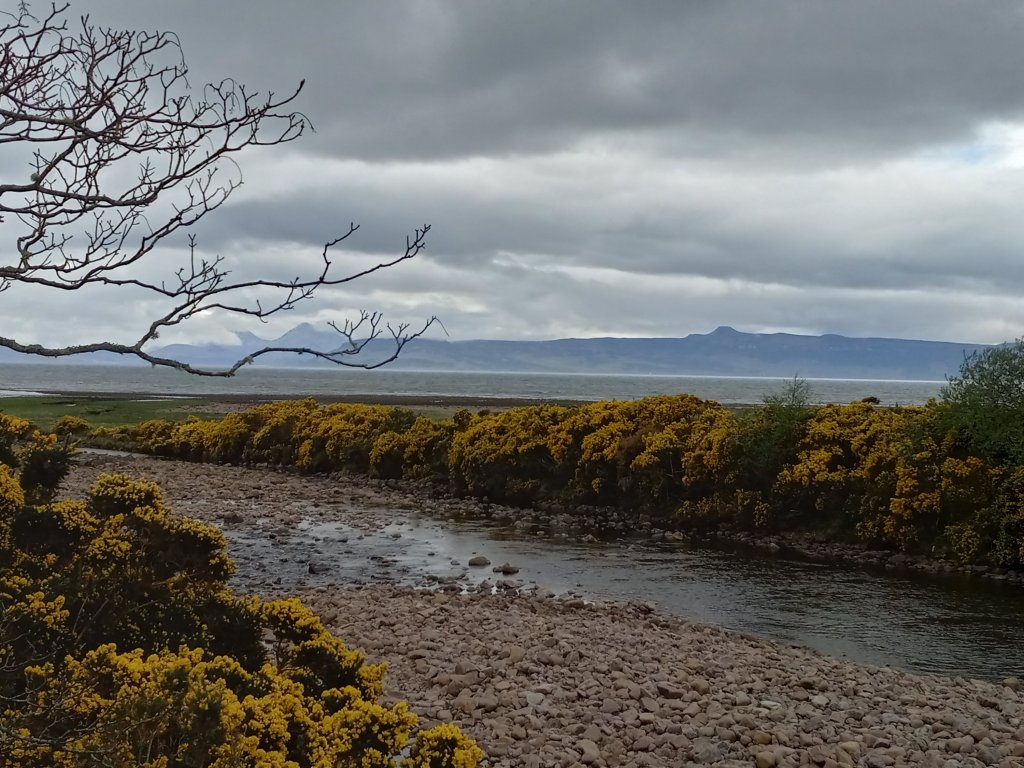
The rest of our highland tour continued to delight us with an explosion of mountains, beaches and waterfalls virtually around every turn.

The day ended as we checked into the Airbnb we had reserved in Ullapool. Just to make a good day great. It was the best room we have ever had with a view of the shore from our window.

Good Moorrrning Inverness!

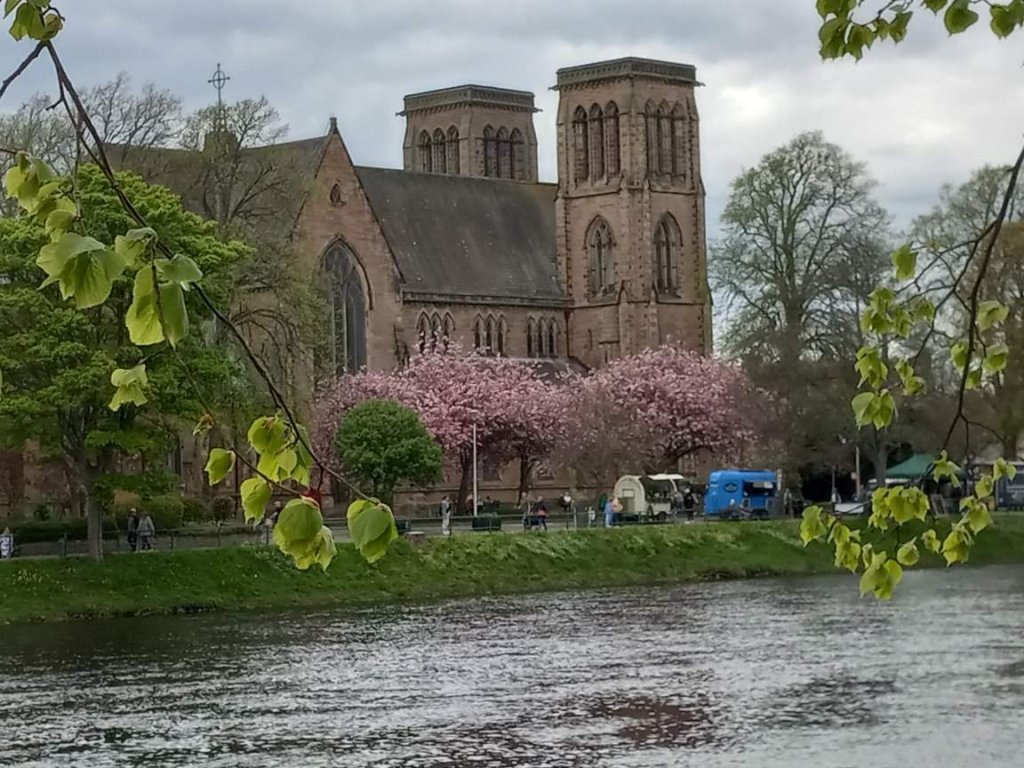
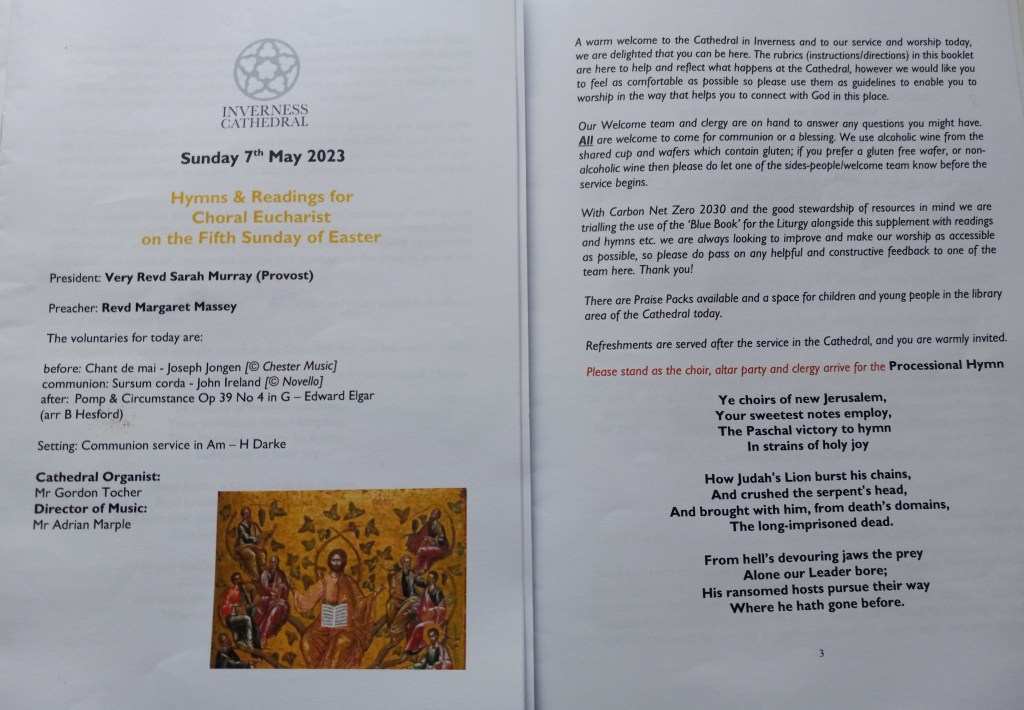
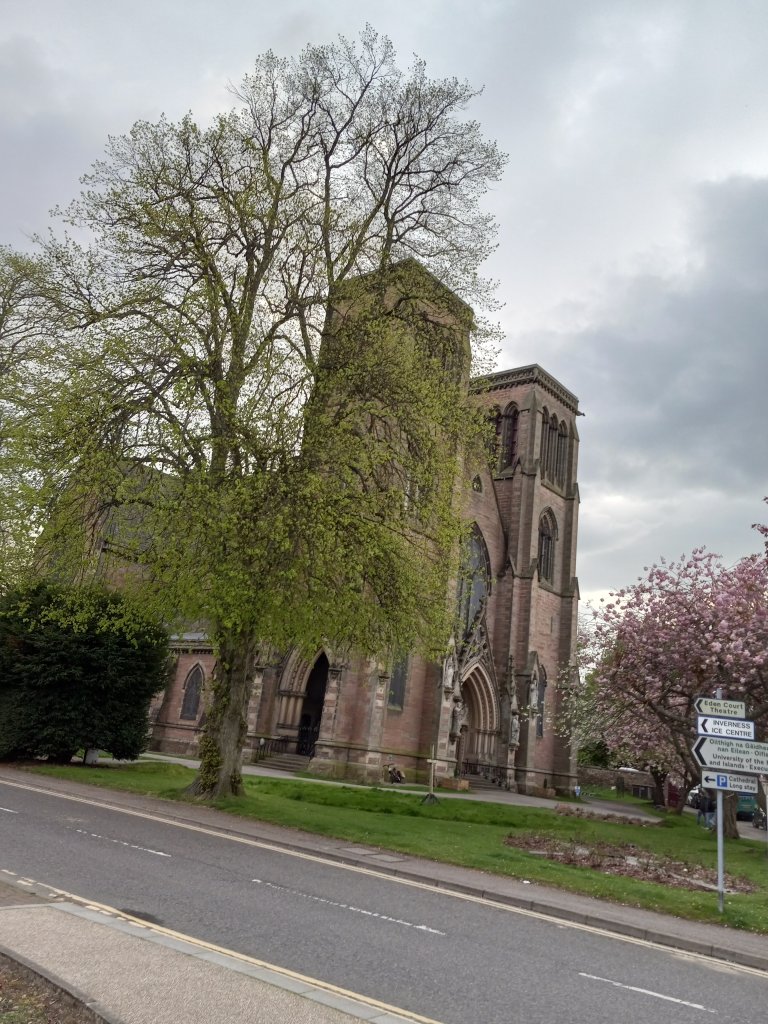
After a rock solid sleep we arose raring to go on Sunday in Inverness. One item our checklist was to attend morning services in Inverness Cathedral. It was right up the street so rose early, enjoyed a cuppa (tea) and off we went.

As we approached the cathedral we were welcomed by pealing bells. This is a British form called change ringing. If you are a fan of Dorothy L. Sayers (as Jane is) you may remember Lord Peter Wimsey’s adventure in The Nine Tailors.

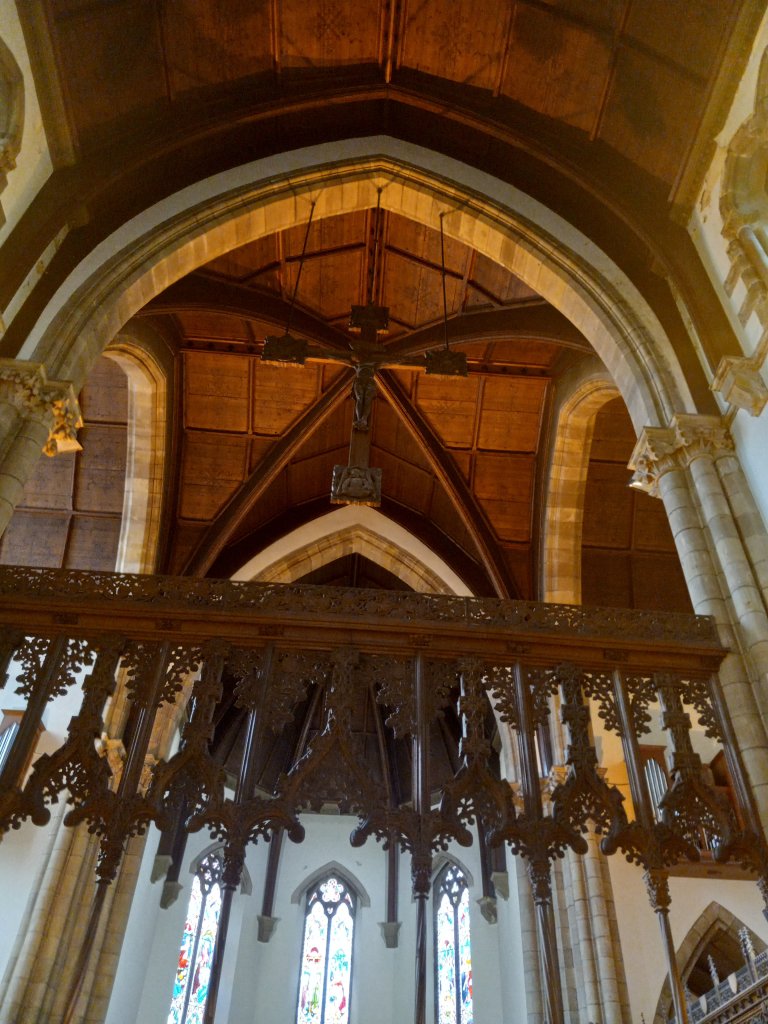
Inverness Cathedral is part of The Scottish Episcopal Church. The service we chose was a choral Eucharist. For obvious reasons, I took no pictures during the service. It was more “high church” than I am used to. But there was deep sense of reverence which combined with a connection to a past far before our time was spirituality meaningful.

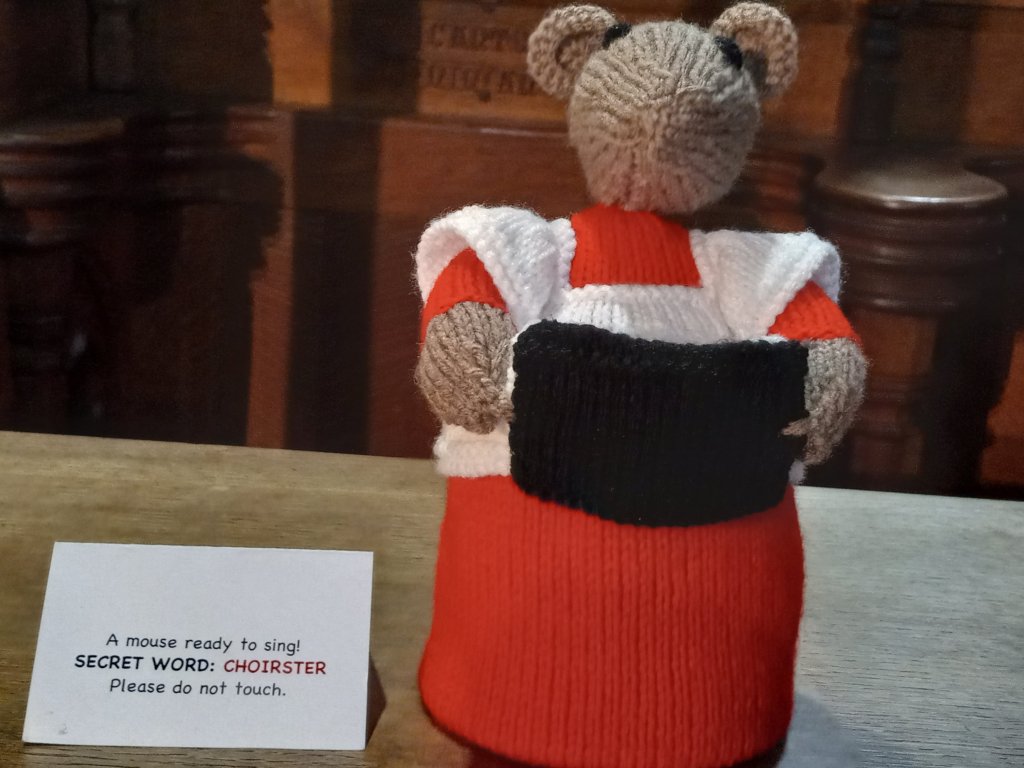
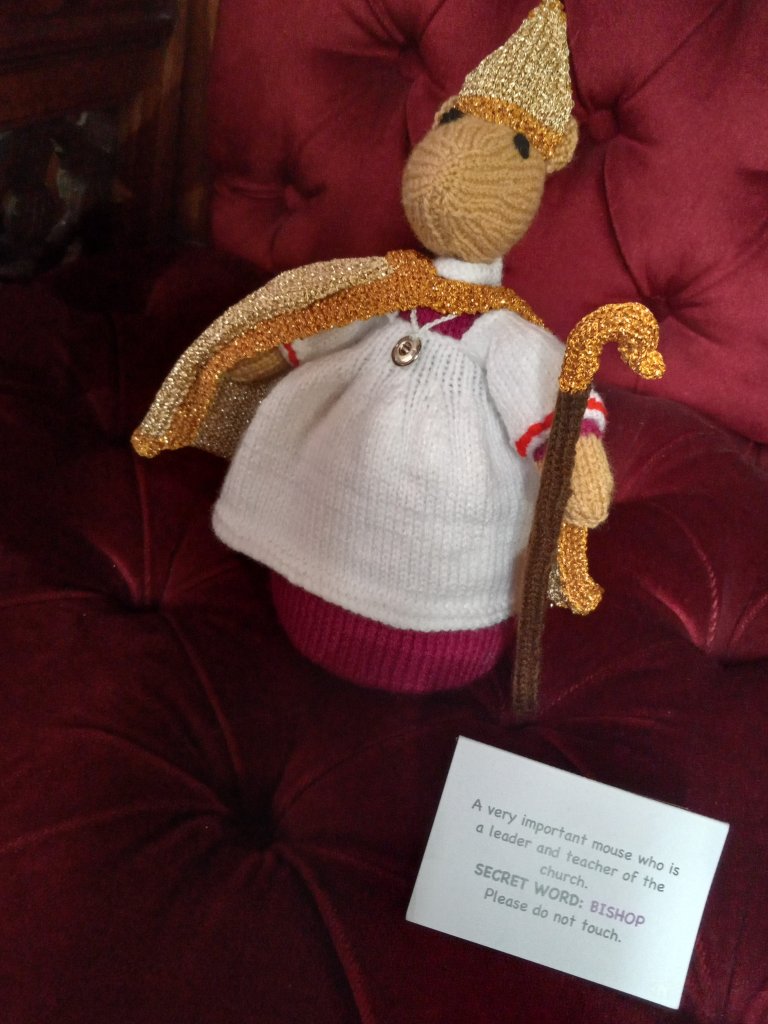
Along with the beautiful architecture and ornamentation, there were some charming details in the Cathedral. The children had created numerous church mice to illustrate significant roles of the church. I set out out to capture them all and almost did. Here are a few.

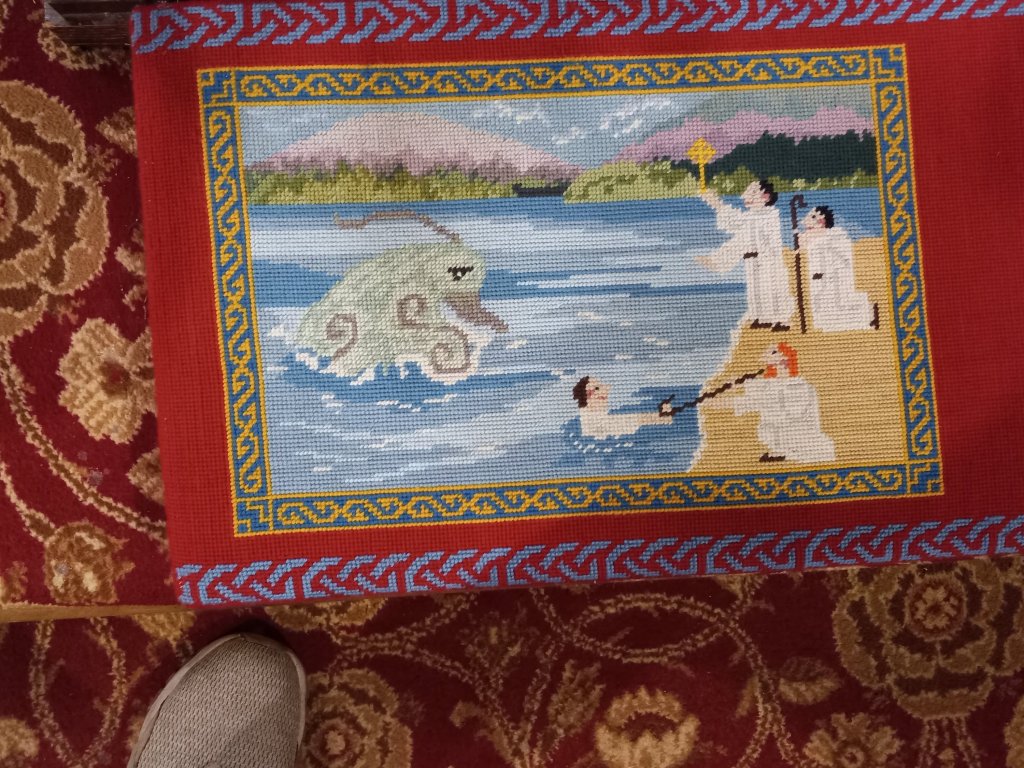
As is true in many liturgical church’s pillows are provided for prayer times during the service. After the service, we found kneeling pillows decorarared with a fanciful series of colorful scenes from the legends of St. Columba. I feel a special connection because my last name, Malcolm means “follower of St. Columba”.

I particularly liked the one depicting the legend of St. Columba dispatching the Loch Ness Monster.

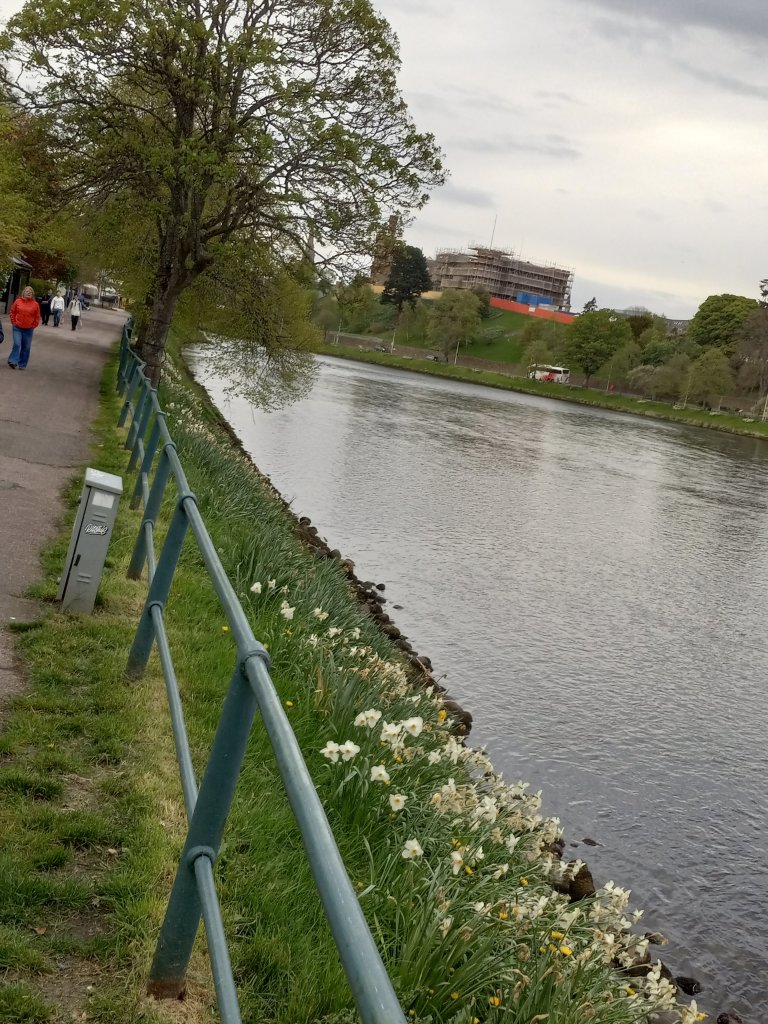
The projected rain did not come to pass so we took a lovely walk along the The Ness River where we too encountered Nessy.

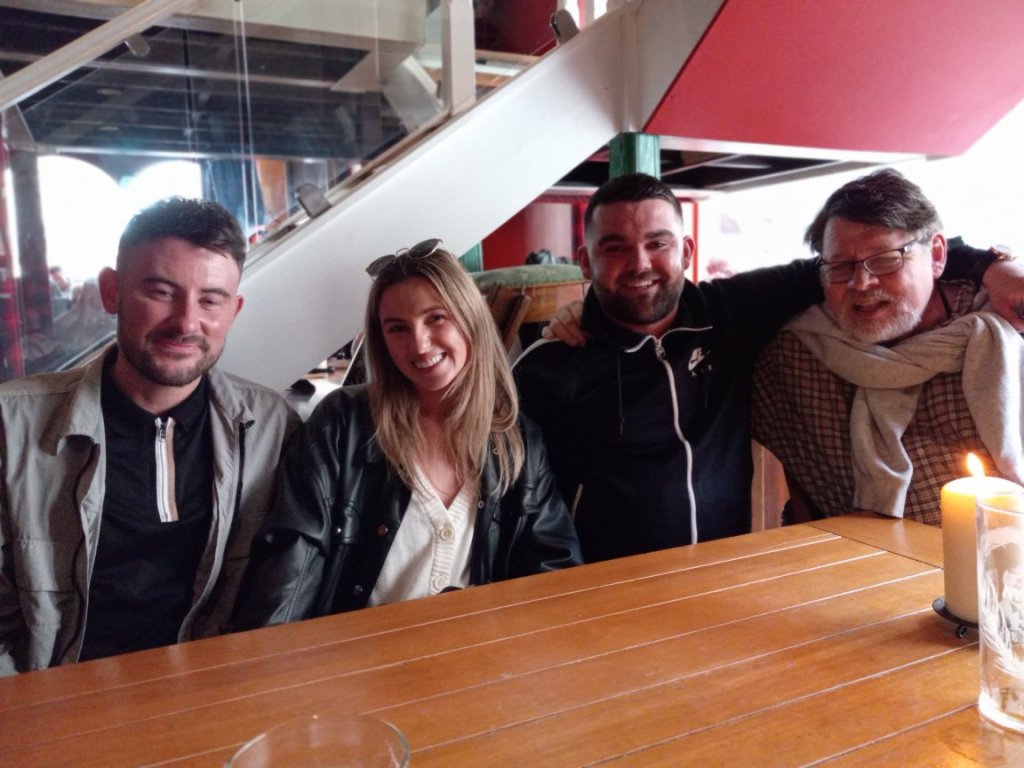
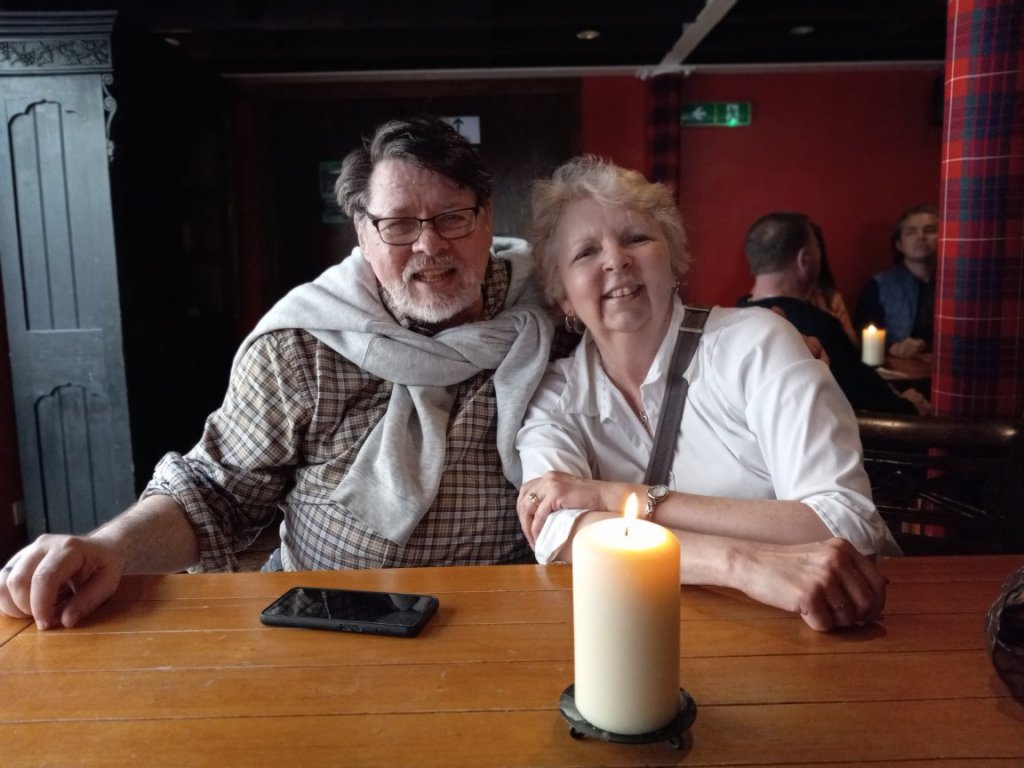
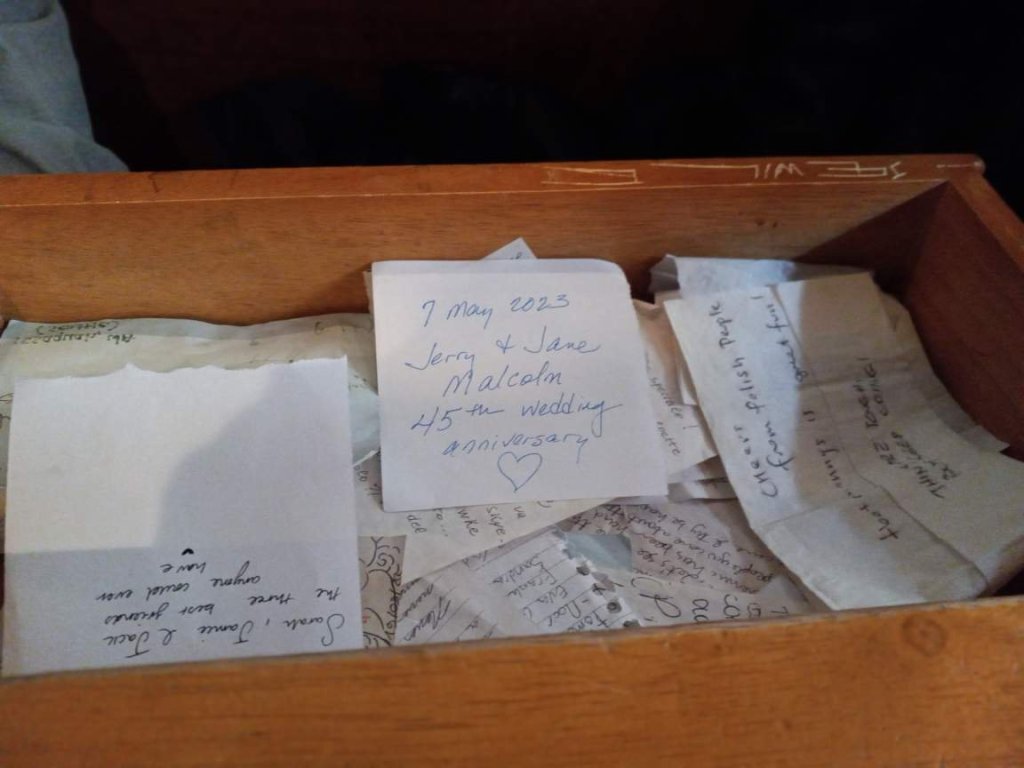
By this time we were ready for a more substantial meal. At a local eatery, in addition to enjoying a wonderful meal, we had a delightful encounter. The place was casual and quite crowded, so when a young couple asked if they could sit with us, we agreed readily. They had recently become engaged and and returned to see if something they left there on their first date was still there. They showed us that the table we shared had a drawer, which was full of small handwritten notes.

They were thrilled to find that the note they wrote on their first date was still in the drawer. Their best man joined us and we had the best time celebrating this moment for these two sweet kids. When we revealed we are celebrating our 45th anniversary this month, the joy multiplied. We blessed their upcoming marriage and they shared their hopes for a long happy marriage like we have been blessed with.

We added our own note to that secret drawer of blessings.

Destination Inverness

Saturday is departure day for Inverness to the north in the highlands. Our train to Inverness was  not until 3 p.m. so we had some time for a wee bit more exploration.  (Scots say “wee” a lot so one must blend in.)

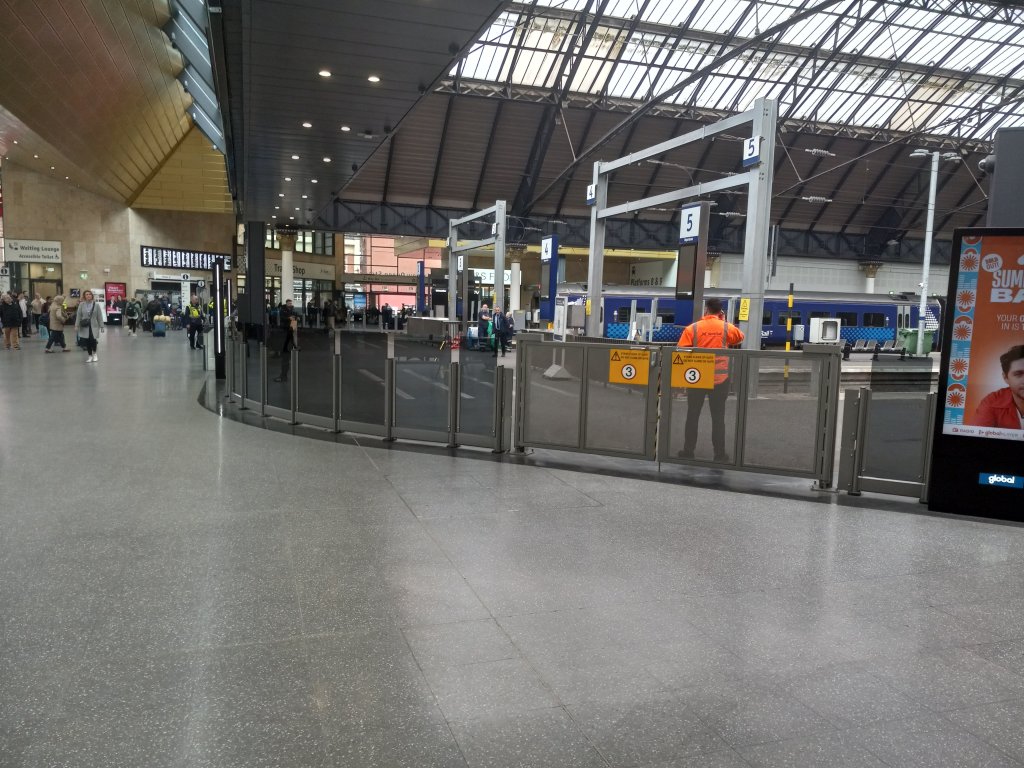
Being we were departing for points north, we checked out of our Airb&b and took our bags to the train station. We found a place to store the bags safely, printed our tickets and set out exploring again.

It rained on us off and on but we did not slow down.  There is an oft used quote from a Scottish comedian, Billy Connally….

“There’s no such thing as bad weather, just the wrong clothing, so get yourself a sexy raincoat and live a little.“ —  Billy Connolly

So we did and we did.  After securing our tickets we set out in search of the Glasgow Modern Art museum. 

What dominated the streets this day were the demonstrators and a parade protesting the coronation of King Charles III. I have no horse in that race but the demonstrations were interesting to see.

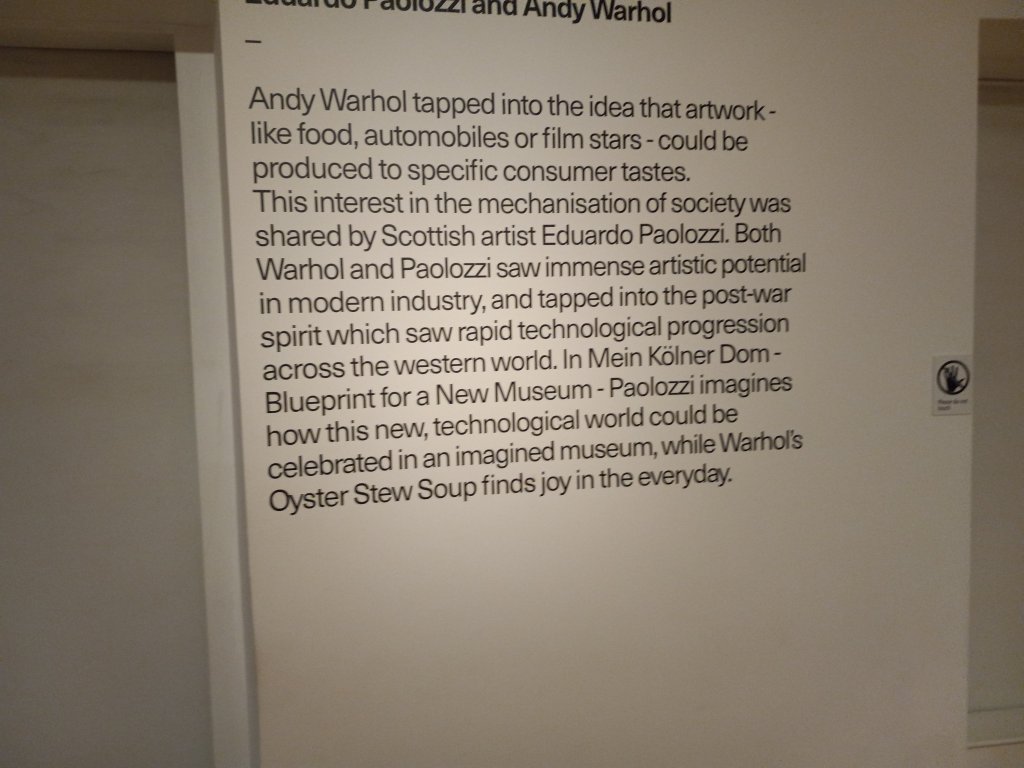
The rain was setting in but raincoats deployed we moved on to the modern art museum.  All art depends alot on the way the viewer responds and modern art even moreso.

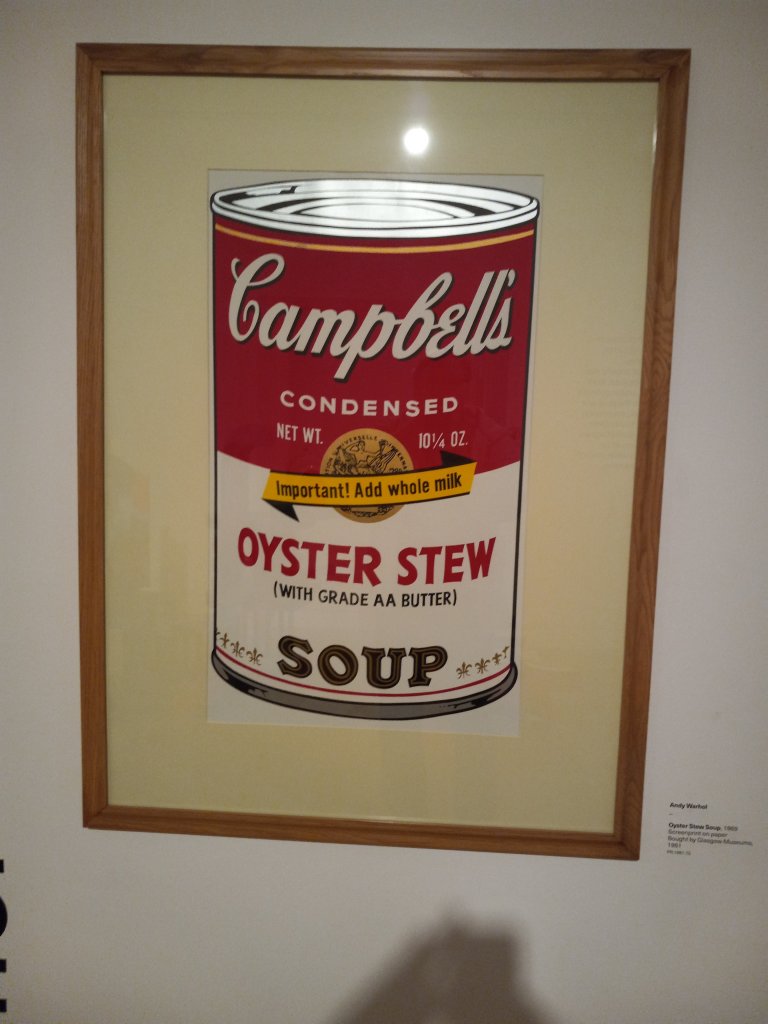
Warhol is interesting and he was prolific. There was a day when I was fascinated by Warhol. This was not that day.

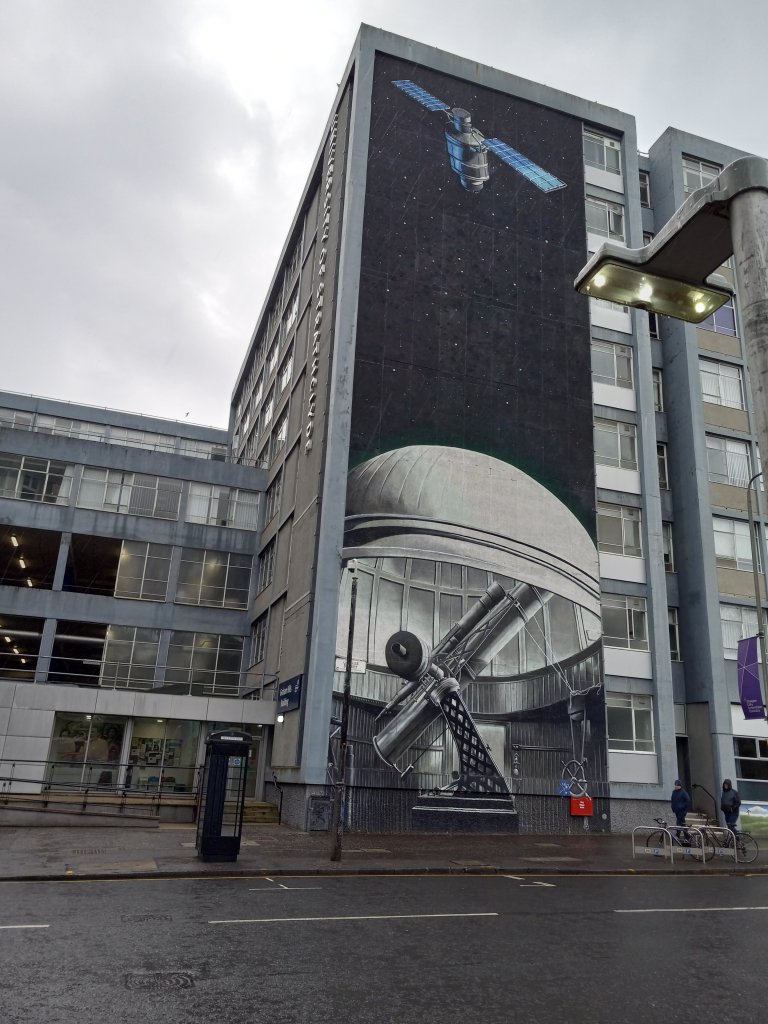
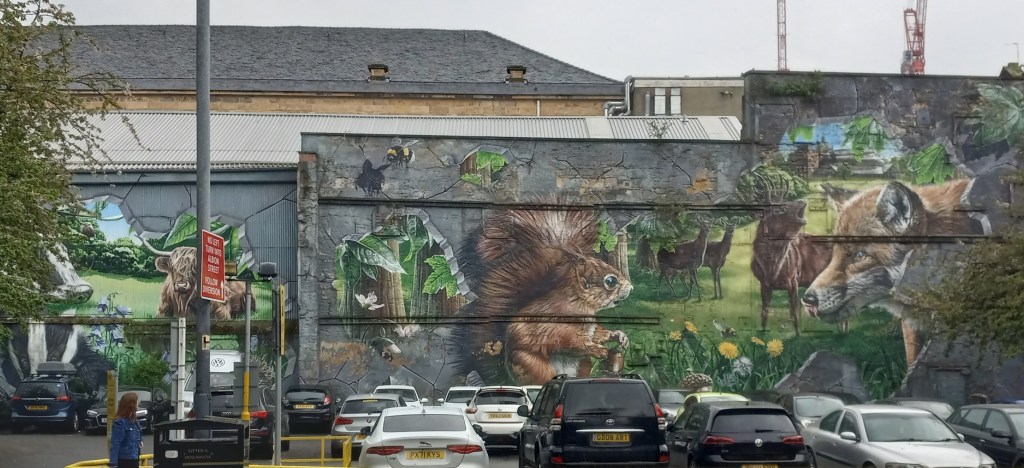
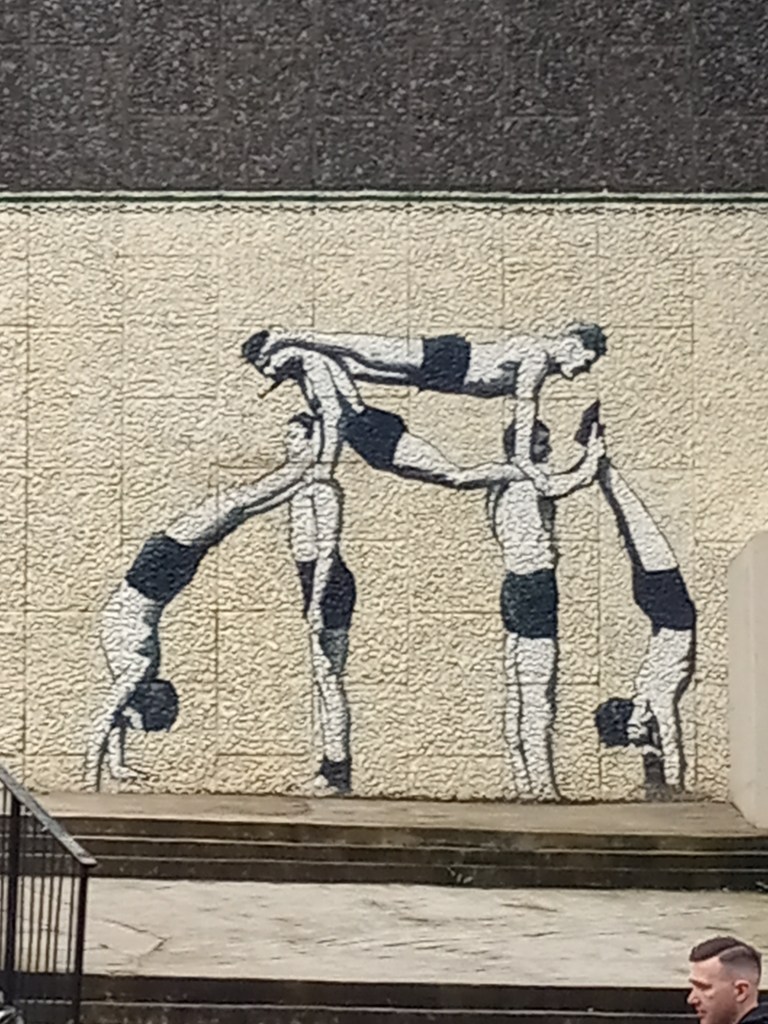
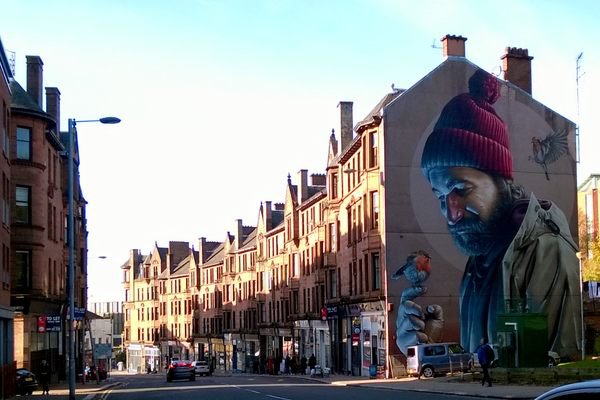
After the museum we had a short time before we needed to be on our train to Inverness.   Then we turned the corner and saw the murals.  All about city center there are these amazing murals that transform a bland urban setting into  massive art exhibit. There are many more but here are the ones we saw.

We made the train and settled in very quiet ride to Inverness.  It was quite comfortable but the cool part was that it cut right through the heart of the highlands. Before long the towering mountains were on both sides. The highlands are central to the many things that make Scotland great and I felt joy that for a week we would be highlanders.

From the moment we stepped off the train I knew Inverness was going to be very cool place.  The beautiful river Ness cuts right through the city.

Our B&B was a short walk to streets bursting with life and fun. We found a great place right away where live Scottish music was being played as people mixed, laughed and danced. Small wonder as I lay down to sleep my assessment of Iverness from first impressions was I LOVE THIS TOWN!

The Art of Glasgow

Our first Friday in Scotland was forecast to be rainy. Glasgow, we understand has some phenomenal museums so we have it in mind to explore them ourselves.

As Thursday wound down, one delightful aspect of the day gives me joy looking back at it. We had a chance to meet and get to know some delightful people from all over. We already knew that Scots are friendly and engaging. The Scottish people are a major reason we love to come here. Jane had a lovely chat with a lady on the bus.

On our boat tour of Loch Lomand, we met a group of British travelers and later met up with them and much comradarie and laughter was exchanged. Waiting for a bus, Jane and I enjoyed getting to know several young people from Sweden. While often the joking is about cultural differences, it is all in good fun. This is a part of our travels to Scotland that I value very much.

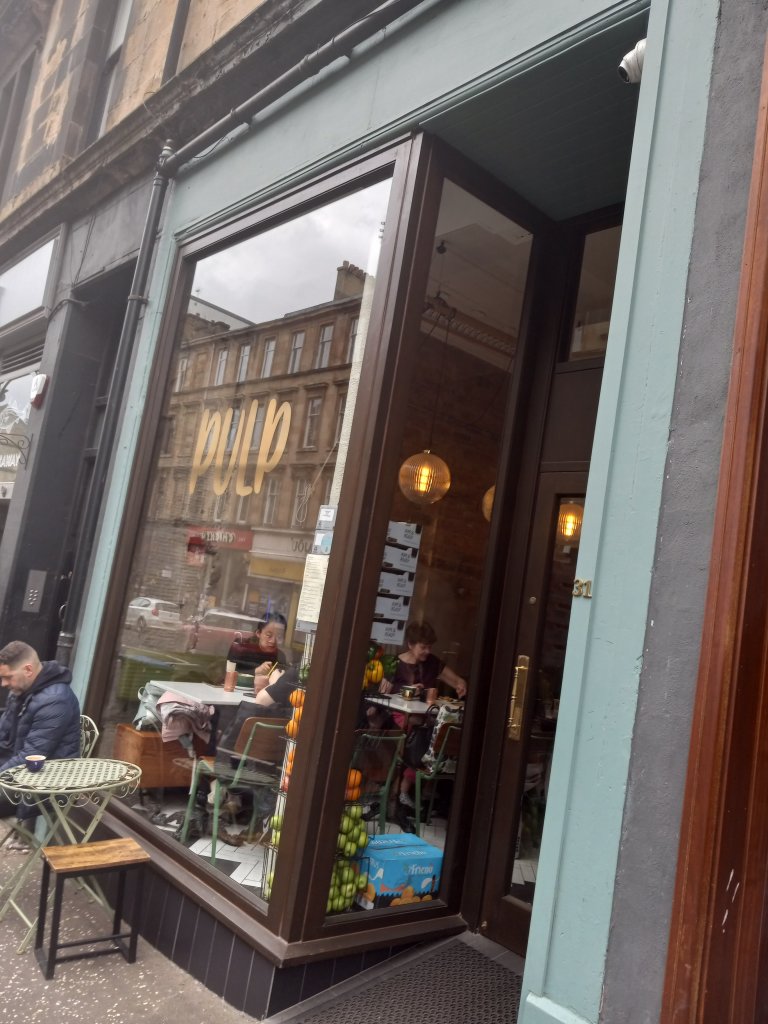
Friday’s goal is Kelvingrove Museum, which is by all accounts a “must see”. We slept well and enjoyed brisk 3 mile hike through Kelvingrove Park and breakfast at a quaint cafe nearby called Pulp.

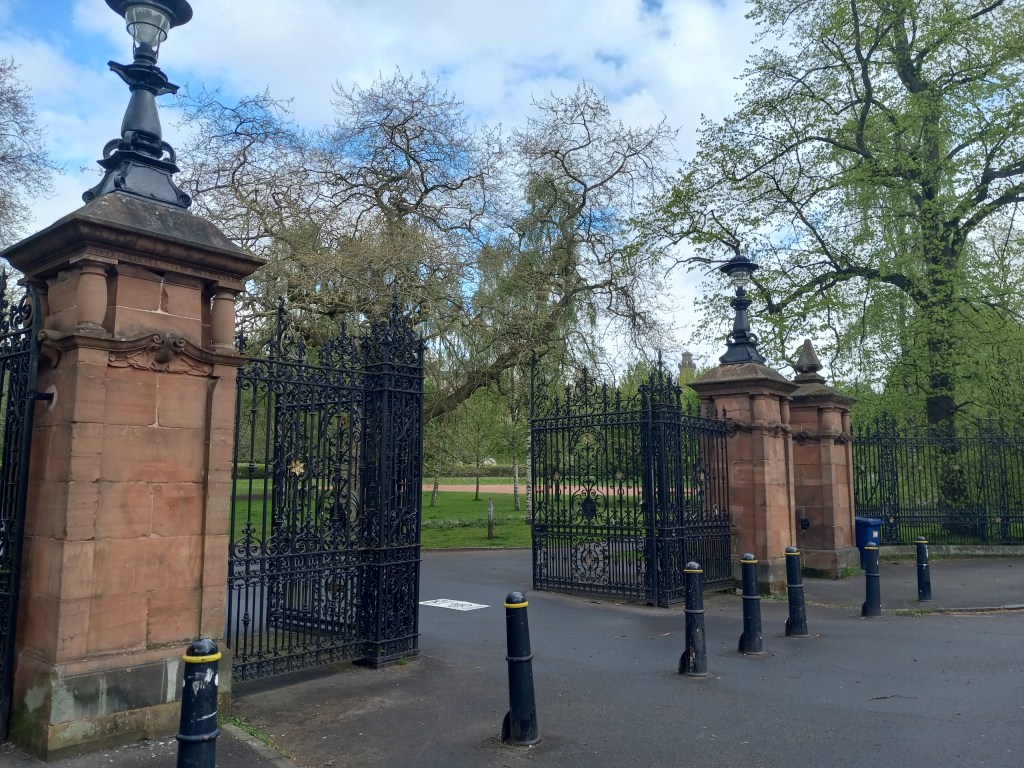
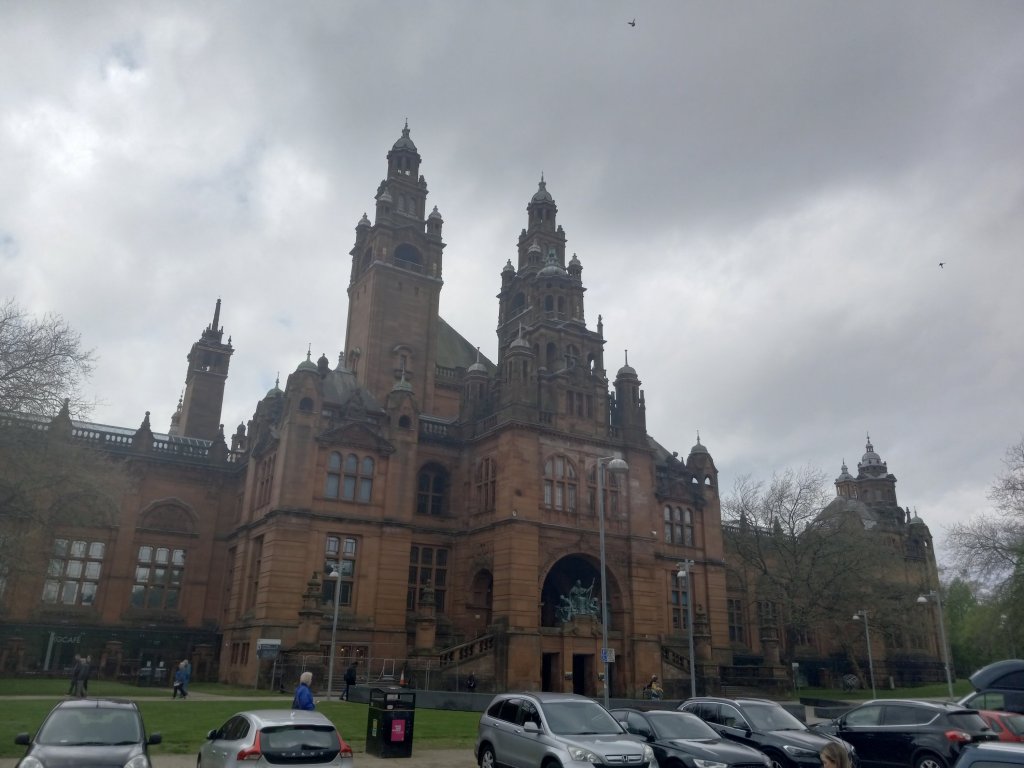
Thus fortified,  it was a short walk again through the vast and beautiful Kelvingrove Park. What a lovely way to start the day. As we approached the museum,  the beauty of the building told us we were in for a great experience.

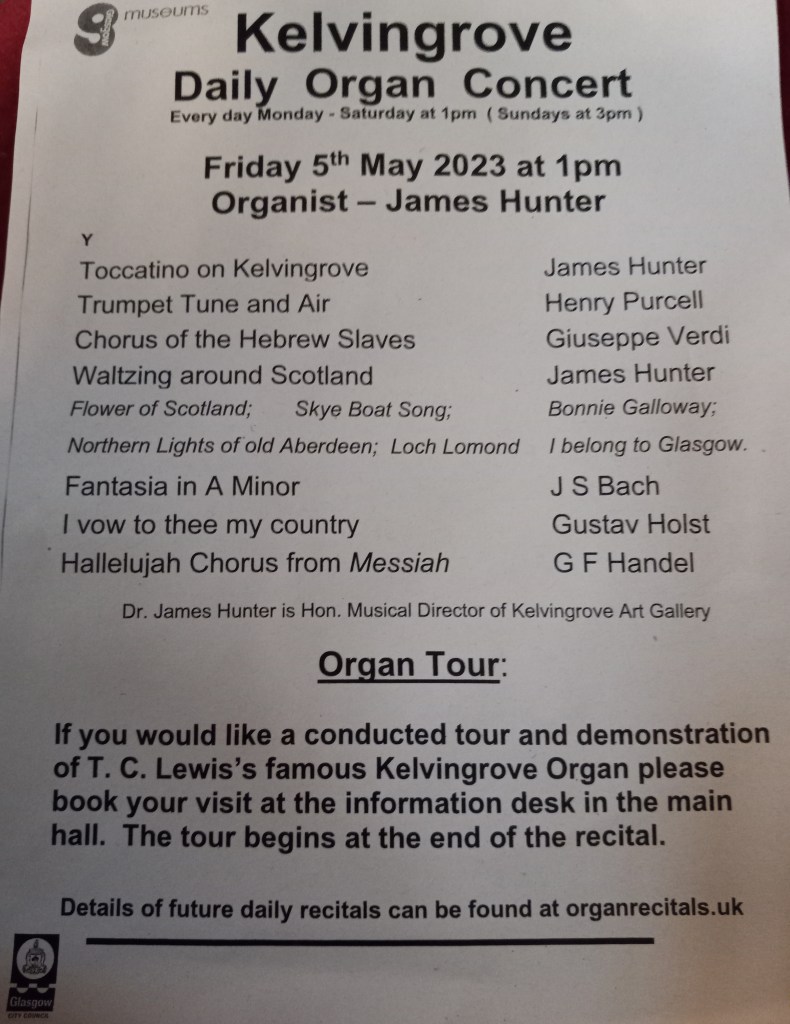
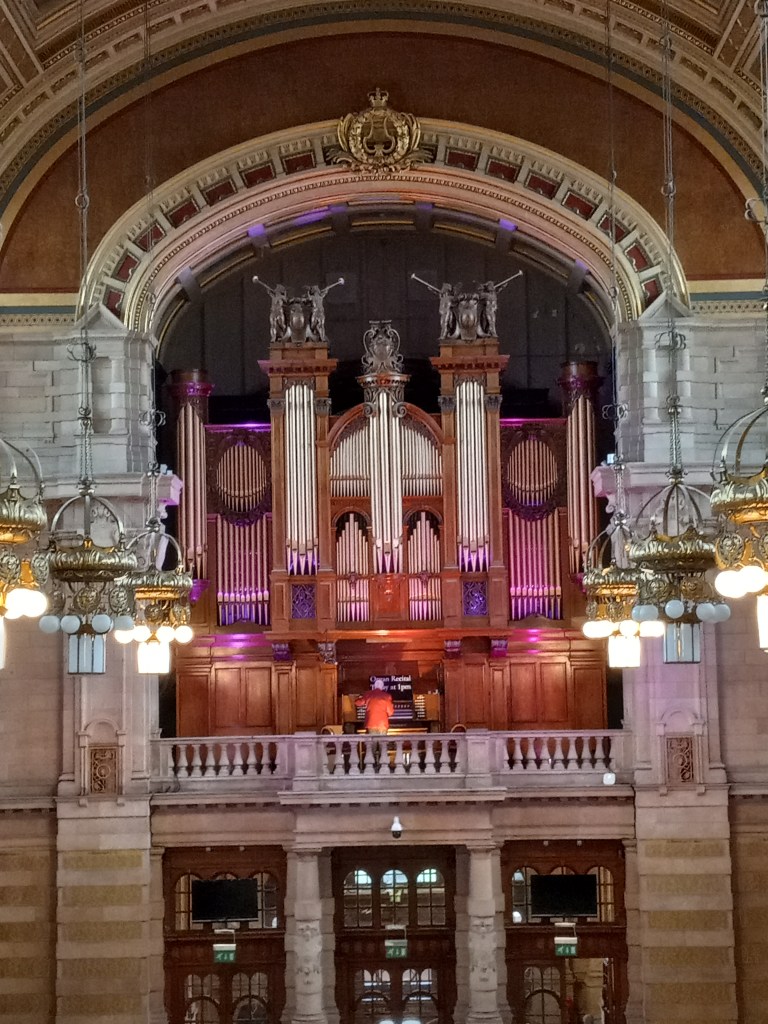
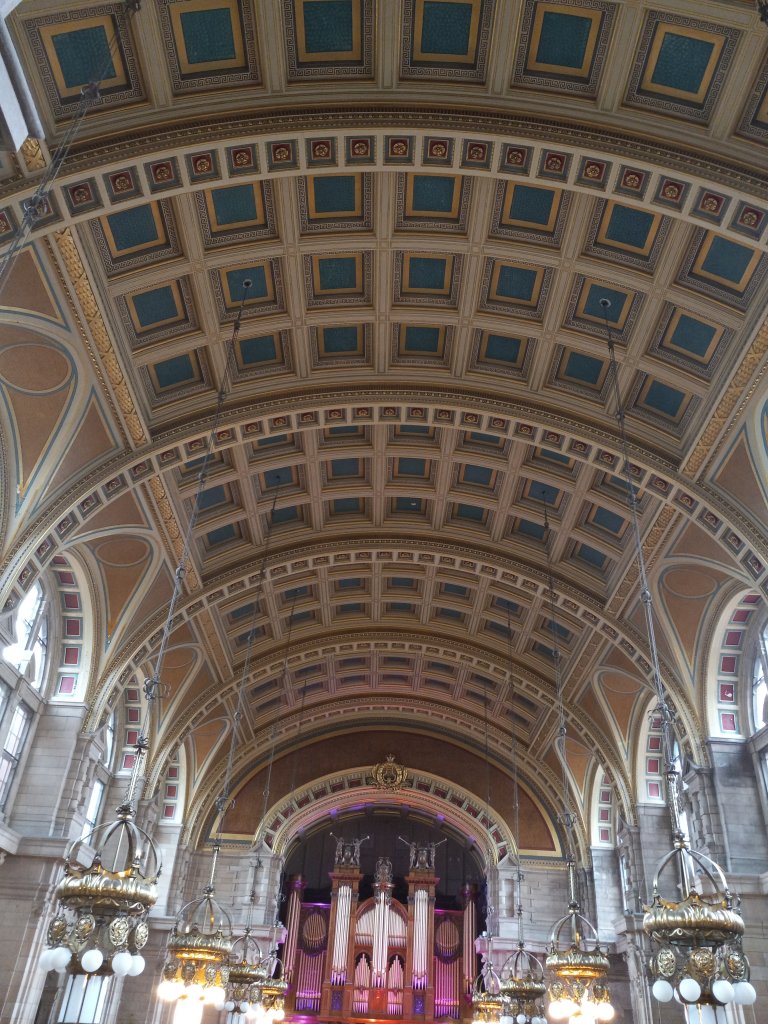
As we entered the Kelvingrove museum, Jane was delighted to discover that we had arrived just in time for an organ recital by James Hunter, musical director of the gallery. It worked out perfectly so that I had ample time to explore the many art exhibits while Jane thoroughly enjoyed a lovely concert. The Kelvingrove organ was built in 1901 for an international exhibition and has been lovingly preserved at the museum ever since.

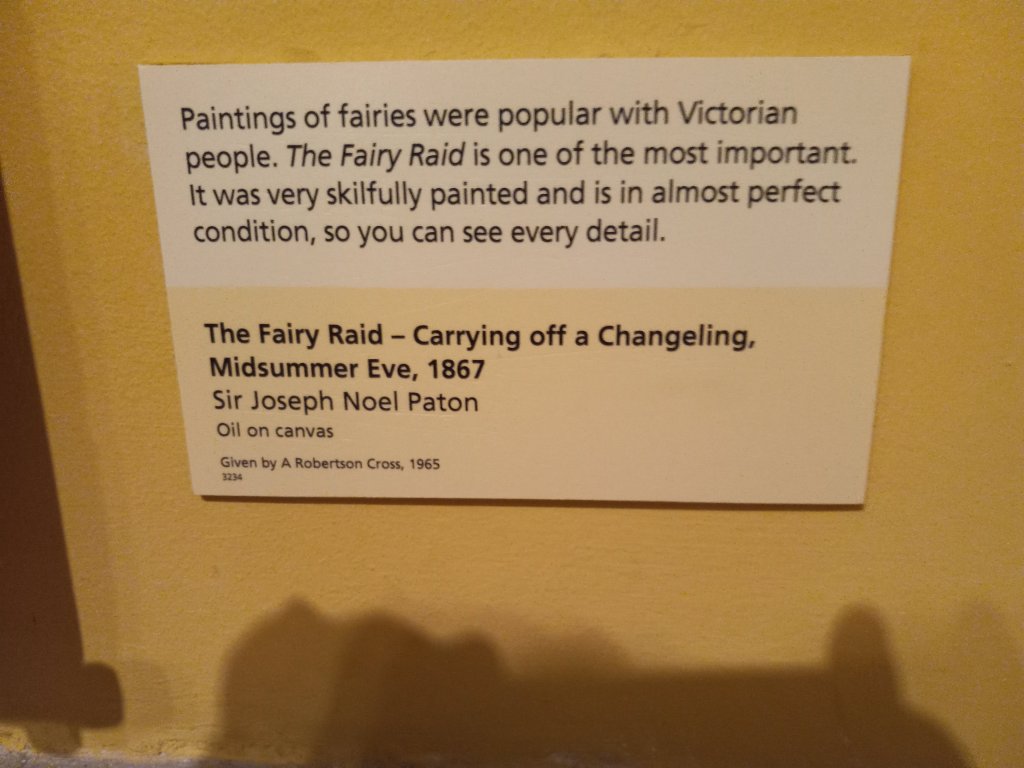
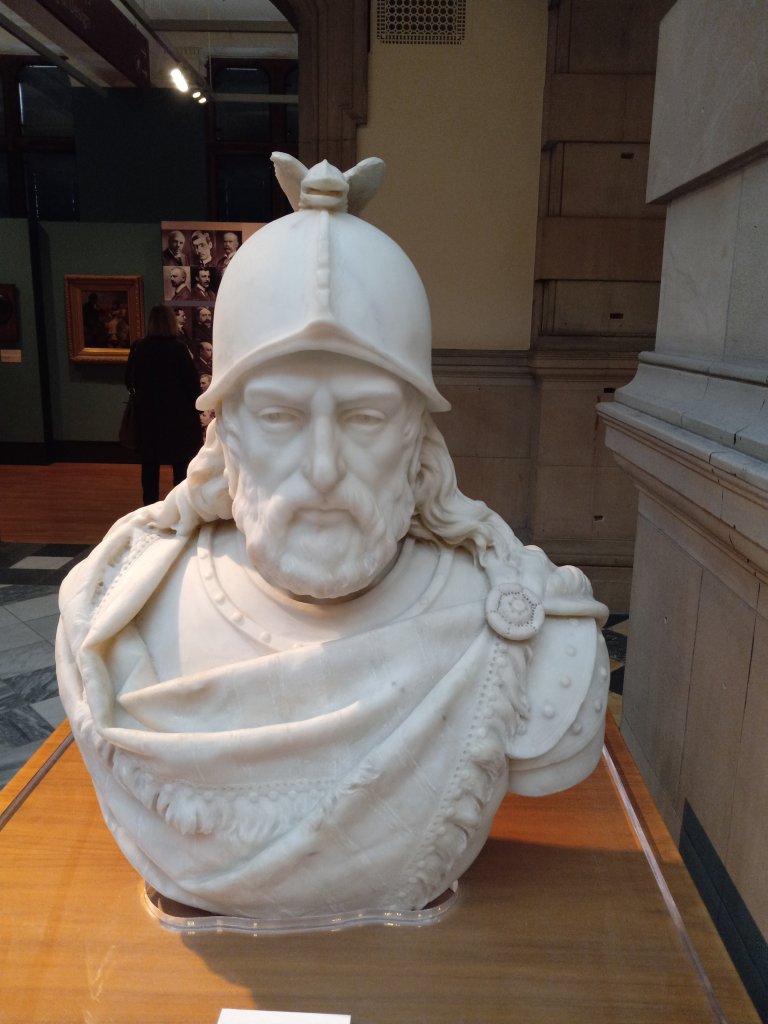
You will thank me I am not uploading every art pic I took. I love a good museum.  The Kelvingrove was superb. As Jane enjoyed the music, I lingered over some of their 8,000 items in their collection, just letting some jump out at me.

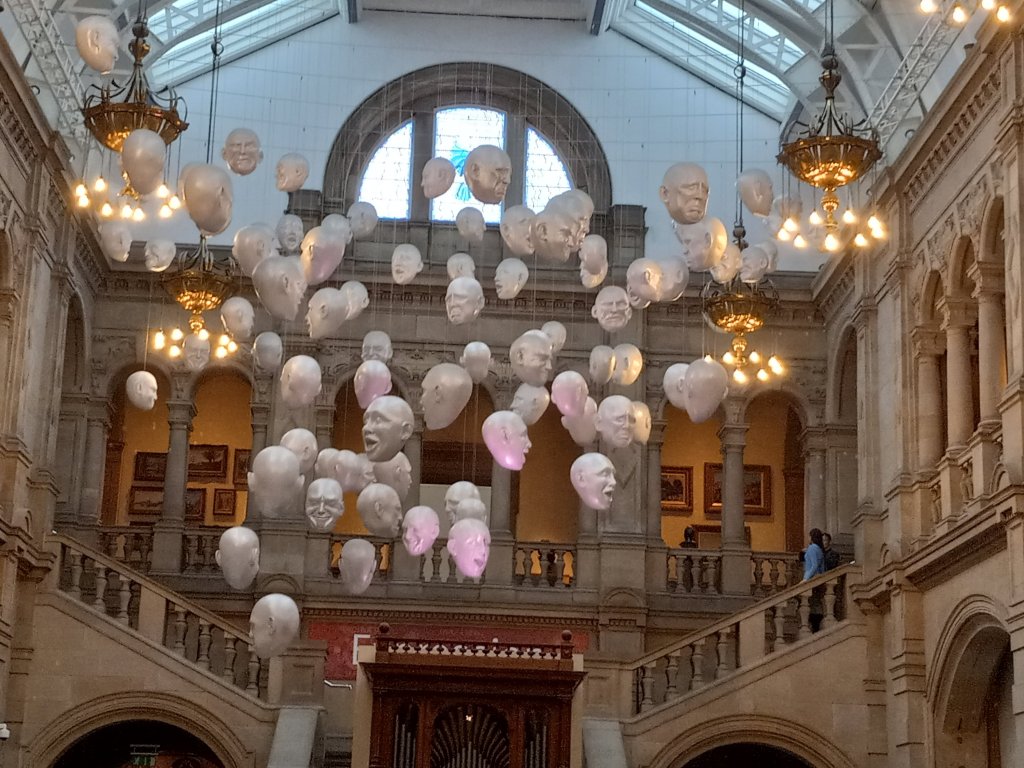
I could hear the organ concert and kept getting drawn back to it. The entrance hall itself was perhaps the most magnificent work of art of the museum.

I joined Jane for the last part of the recital and we both especially enjoyed the final song, The Halleluiah Chrorus.  I captured all but the first few musical phrases to share.

I wondered if the practice of standing for the Halleluiah Chorus would be observed on this setting and decided I would not stand up if the other boys and girls didn’t and they did not. I promised also not to sing along but I did a little bit.

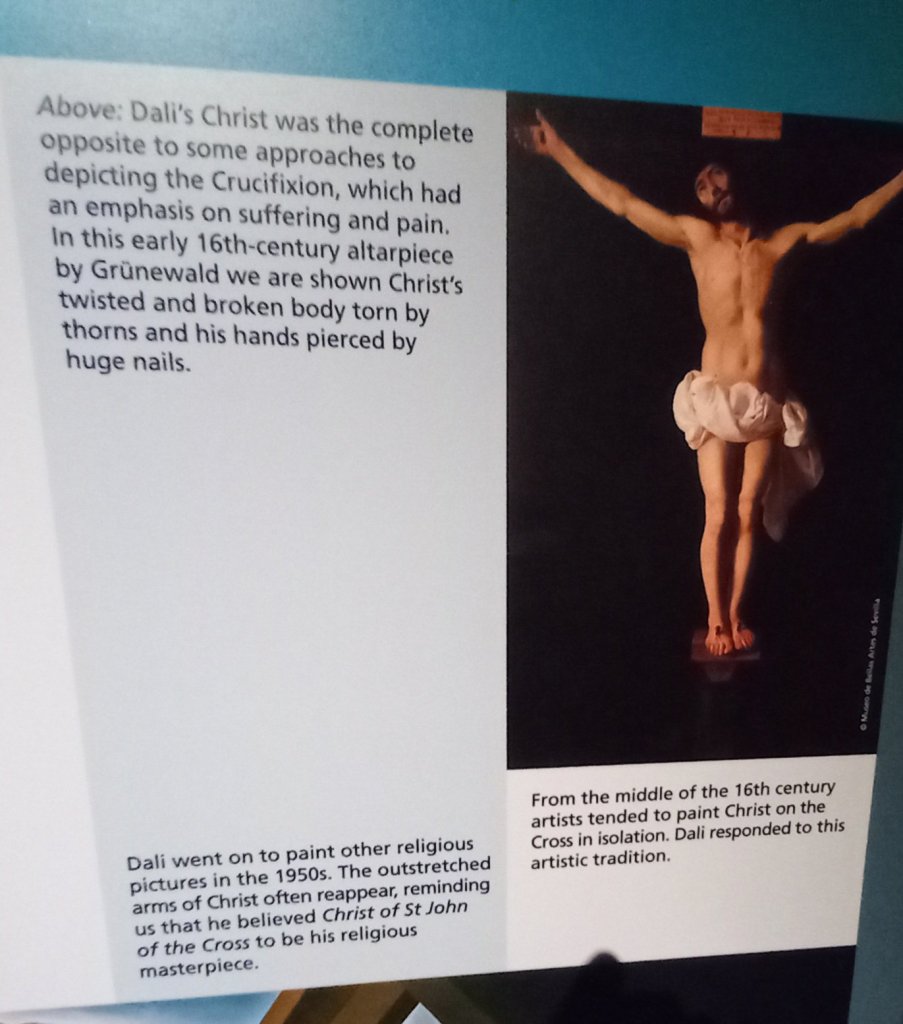
After the concert I was struck in awe at what to me was the premier artwork of the gallery.  The painting was by Salvadore Dali entitled Christ of St. John of the Cross.

Dali is a unique artist to put it mildly. But I did find this piece quite moving. The display had some good background about Dali’s religious journey.

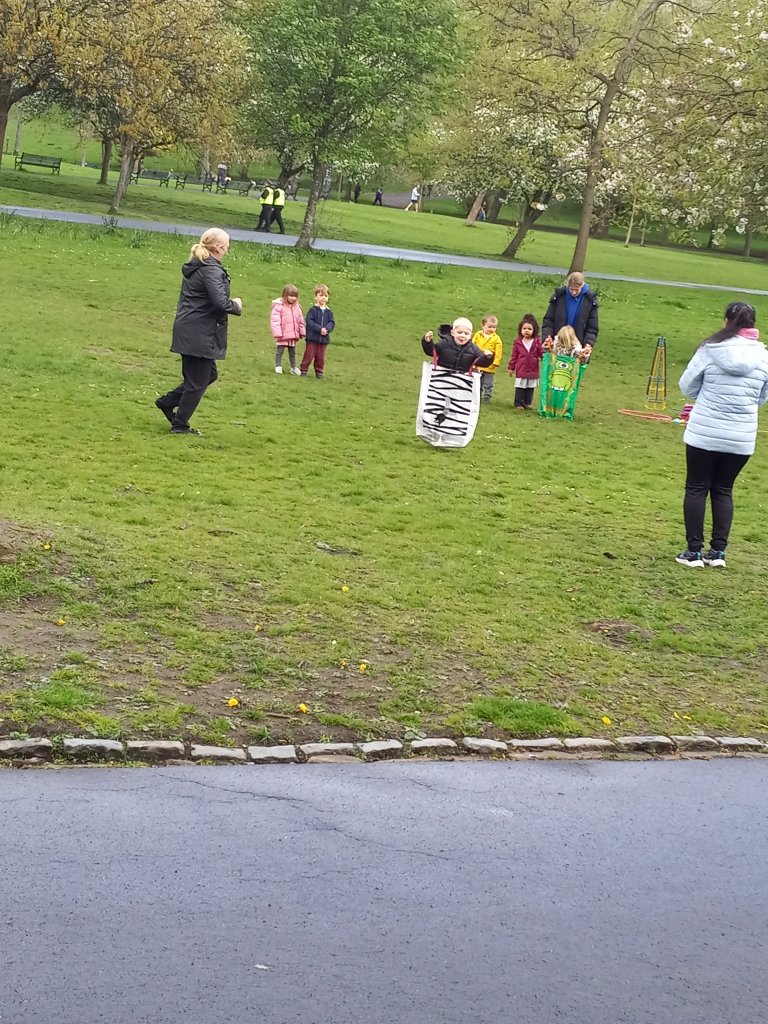
The museum was the main objective of the day but much lay ahead.  We walked leisurely through the big beautiful park and watched some children playing.

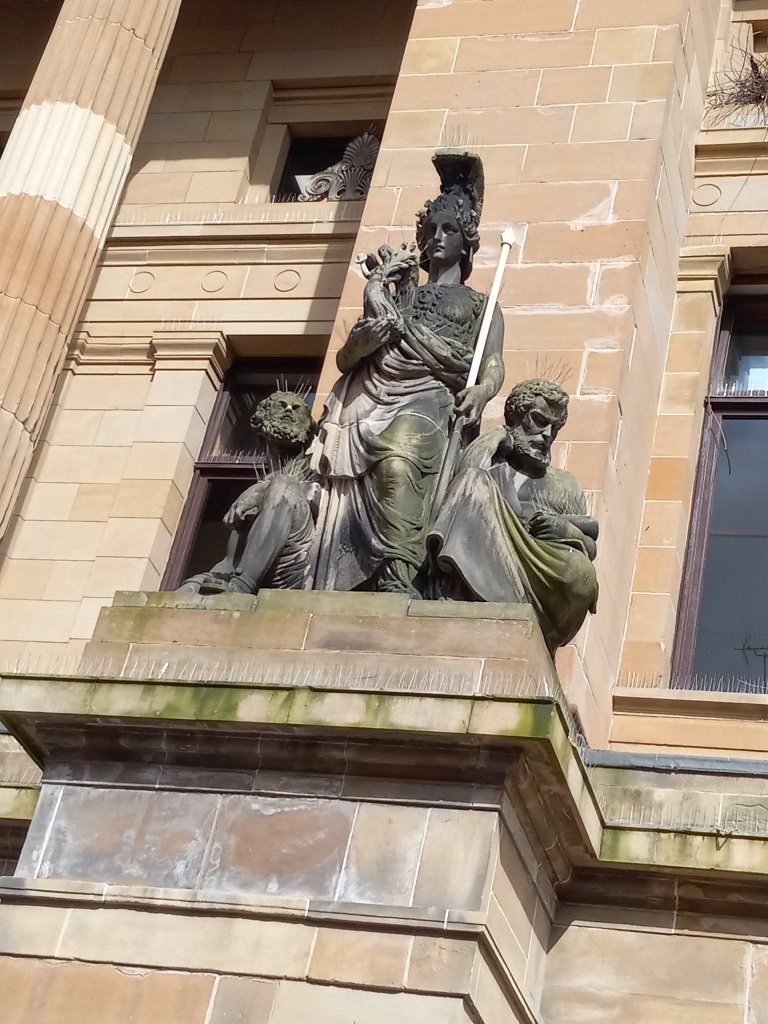
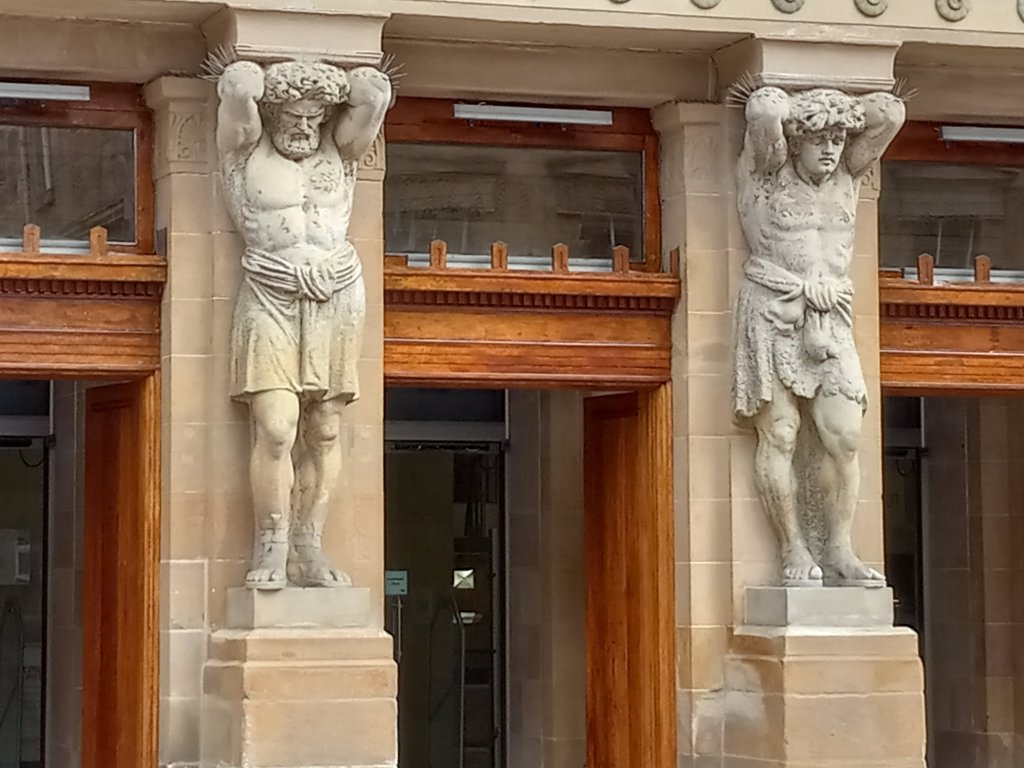
Our last notable stop was a public library – Mitchell Library.  Jane enjoys seeing and sometimes visiting libraries in our travels.  But  like so many notable buildings in Scotland,  this library building were watched over by gargoyles and statues.

The day ended with a lovely meal and an Uber ride “home”.  One aspect of our first week in Scotland is the huge increase in walking every day. We travel by foot between 5 and 9 miles a day. That is a bit tiring  but it is very  good for us, especially in light of the wonderful meals we enjoy. Fish and chips and steak pie are our menu choices nearly every night.

The Bonnie Bonnie Banks of Loch Lomand

We awoke VASTLY refreshed after sleeping 13 hours in our very cosy Airb&b.  The weather today promised to be perfect so we set out with renewed vigor to visit the legendary Loch Lomand.

After rising a bit late, we started back toward the university and found a small local restaurant for breakfast with a very Scottish flair to it.

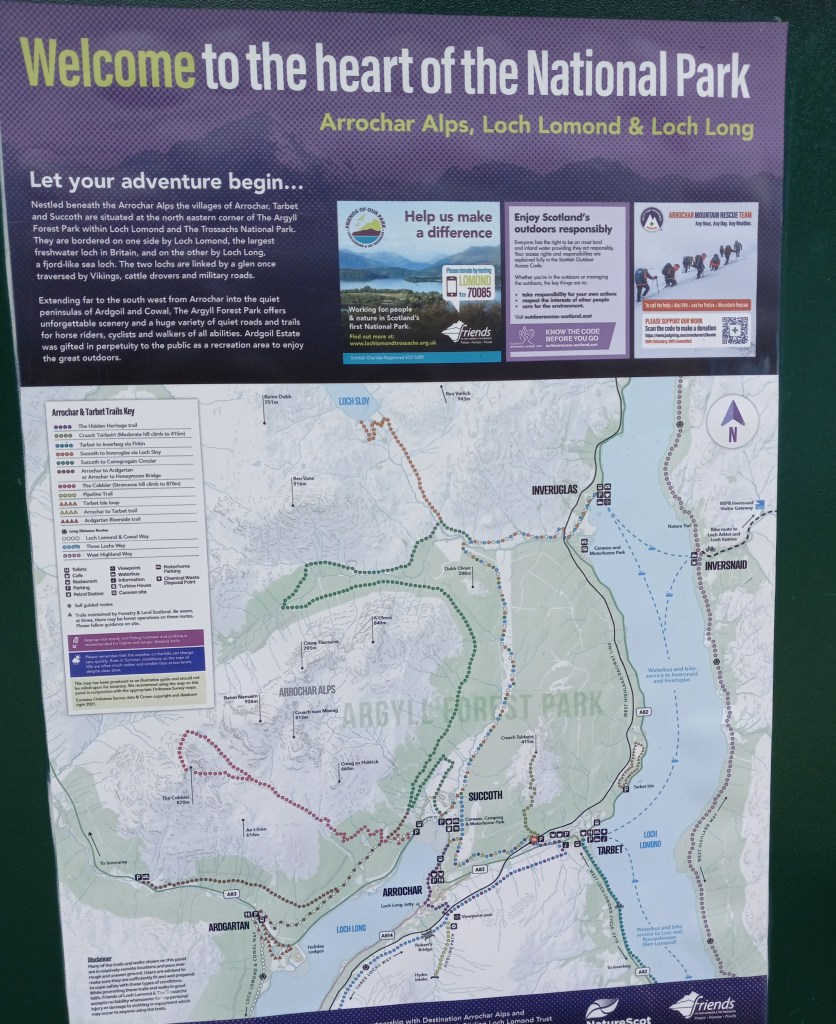
My brilliant navigator wife found an efficient public bus route that took us to Loch Lomand. As you may know this loch is the one referenced in the well known Scottish ballad.

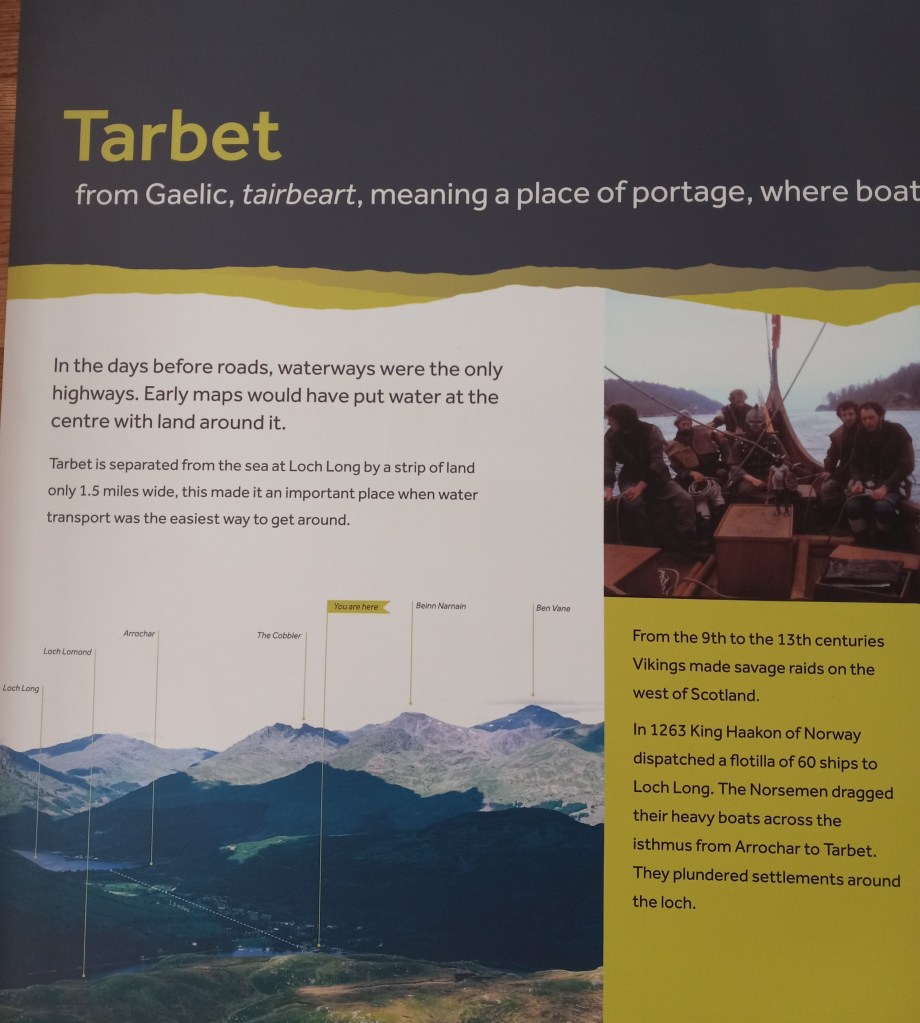
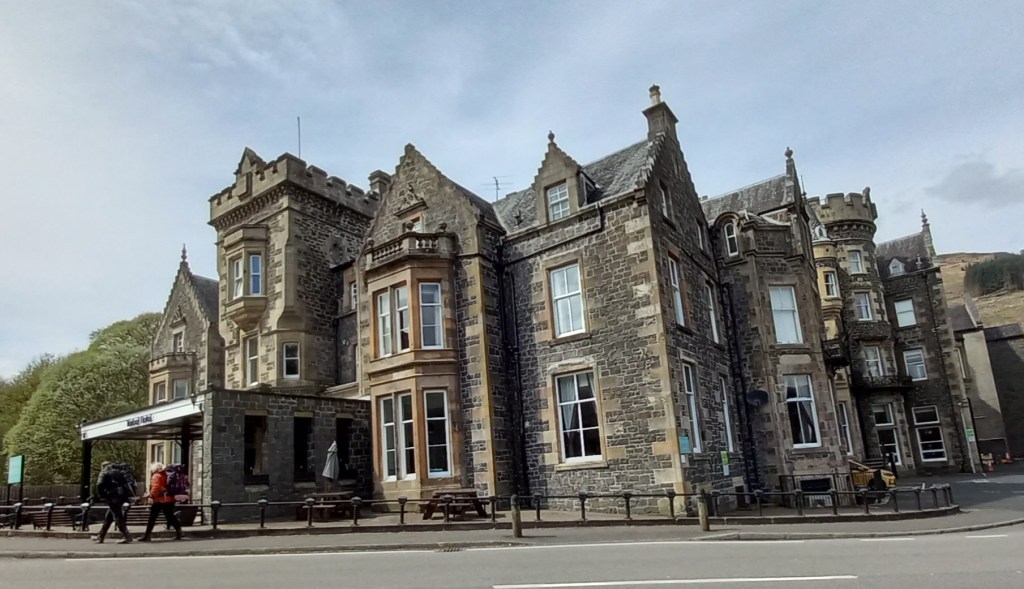
We exited the bus at Tarbet, a small village on the loch. We took a few minutes to appreciate the lovely 19th century Tarbet Hotel near the bus stop.

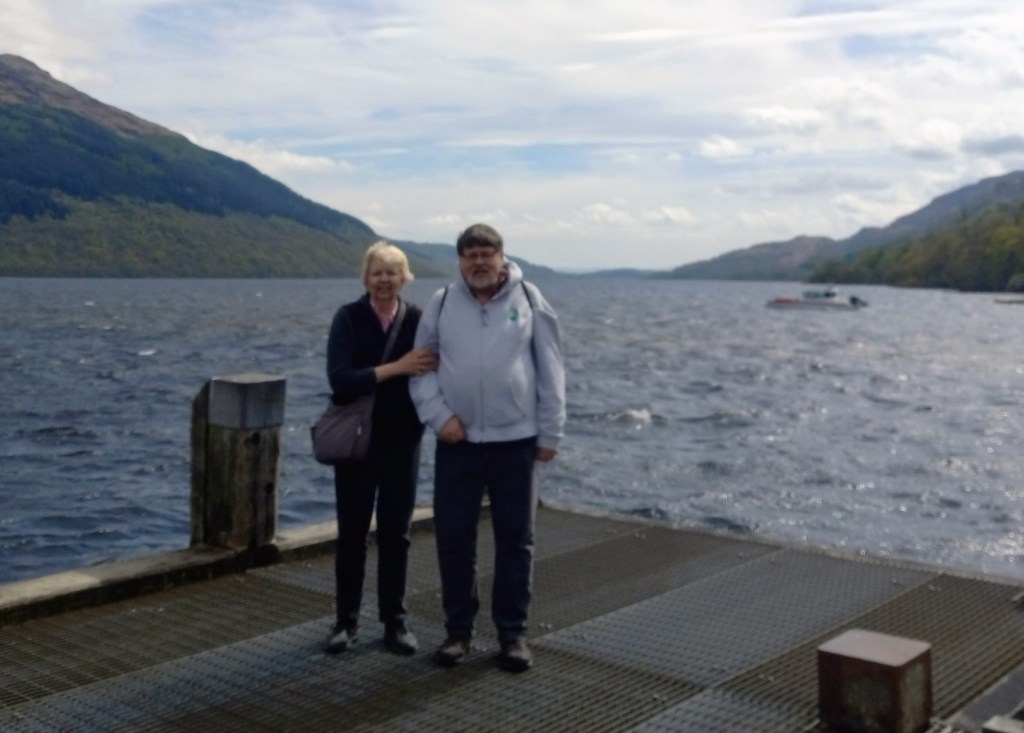
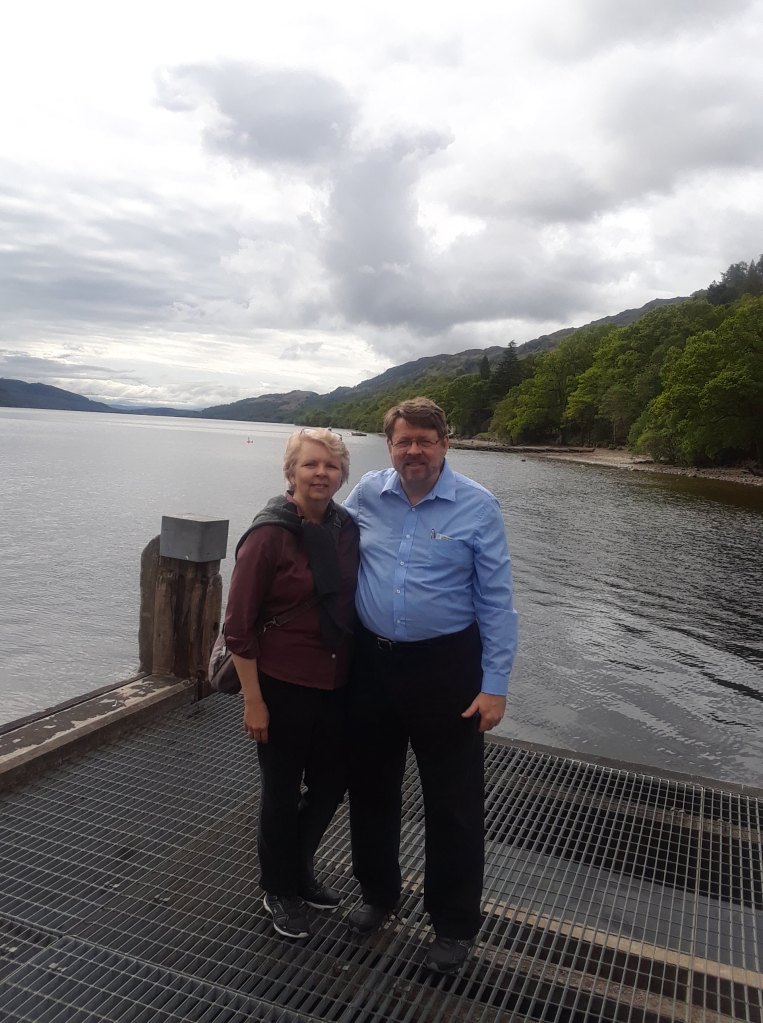
We discovered that we were at the location of a photo taken of us on our 2nd trip to Scotland and couldn’t resist doing an update. Today is much cooler and more windy than it was the last time.

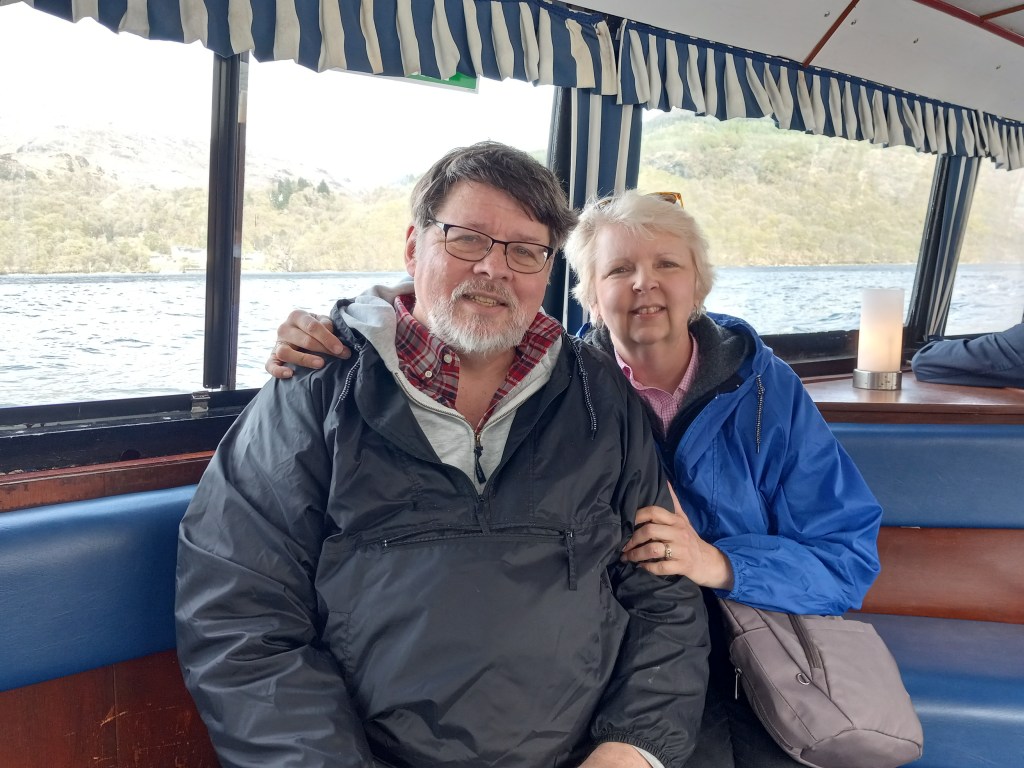
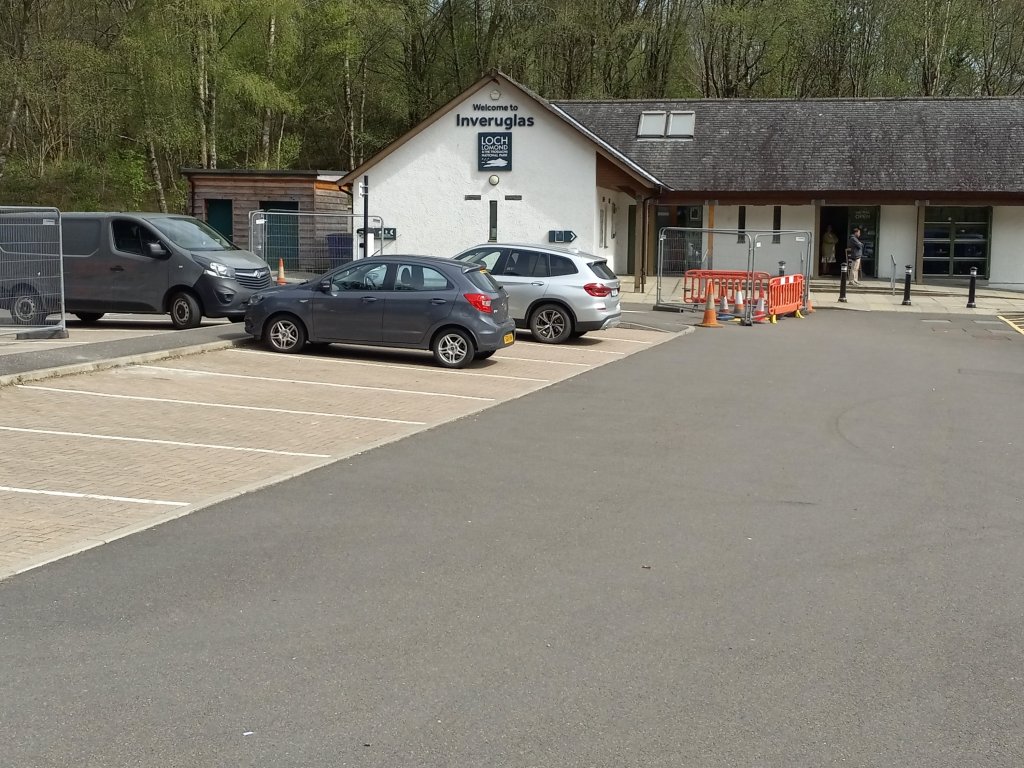
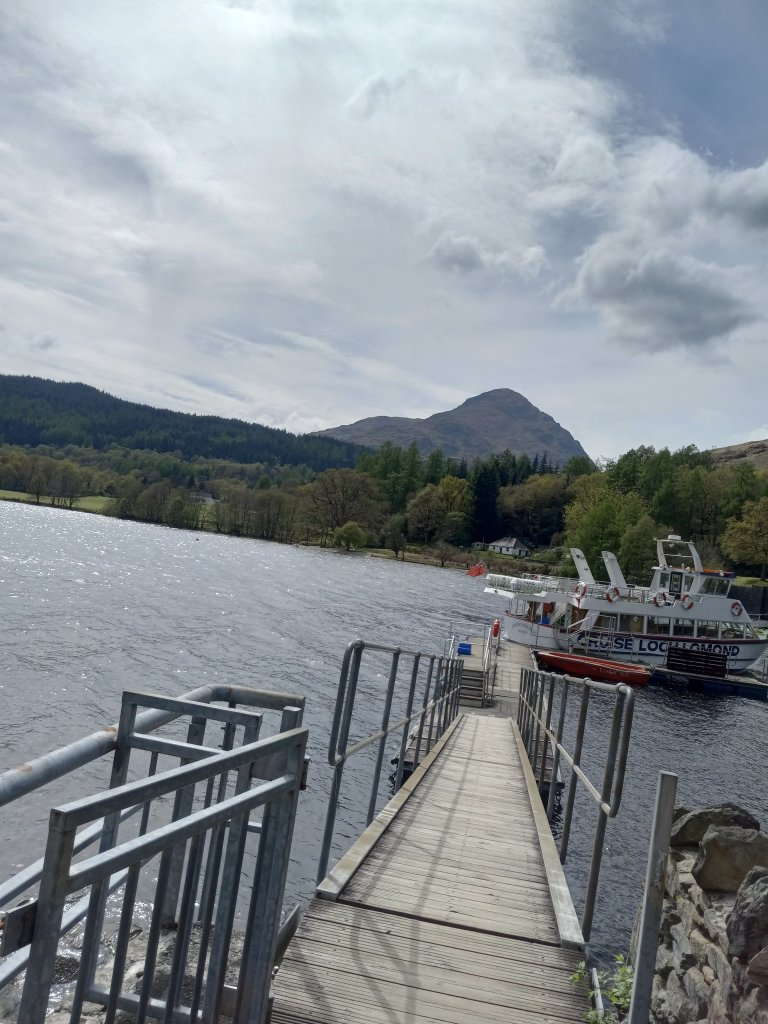
We found the location for a boat tour, a small place called Inveruglus and before long we were touring the loch in comfort.

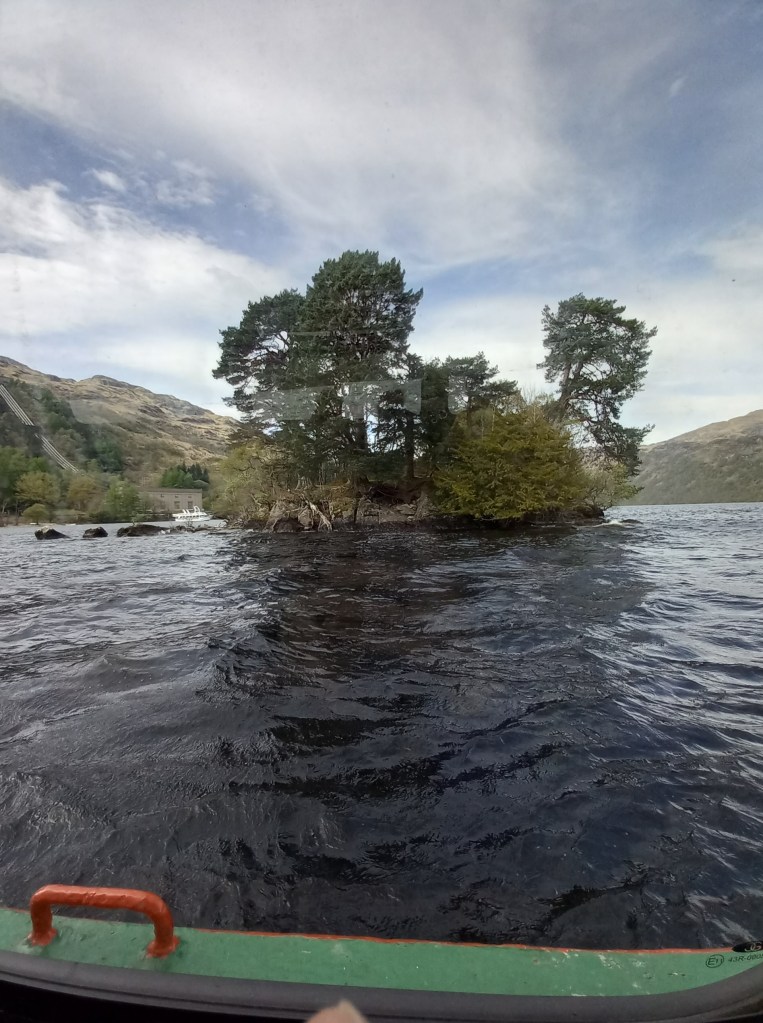
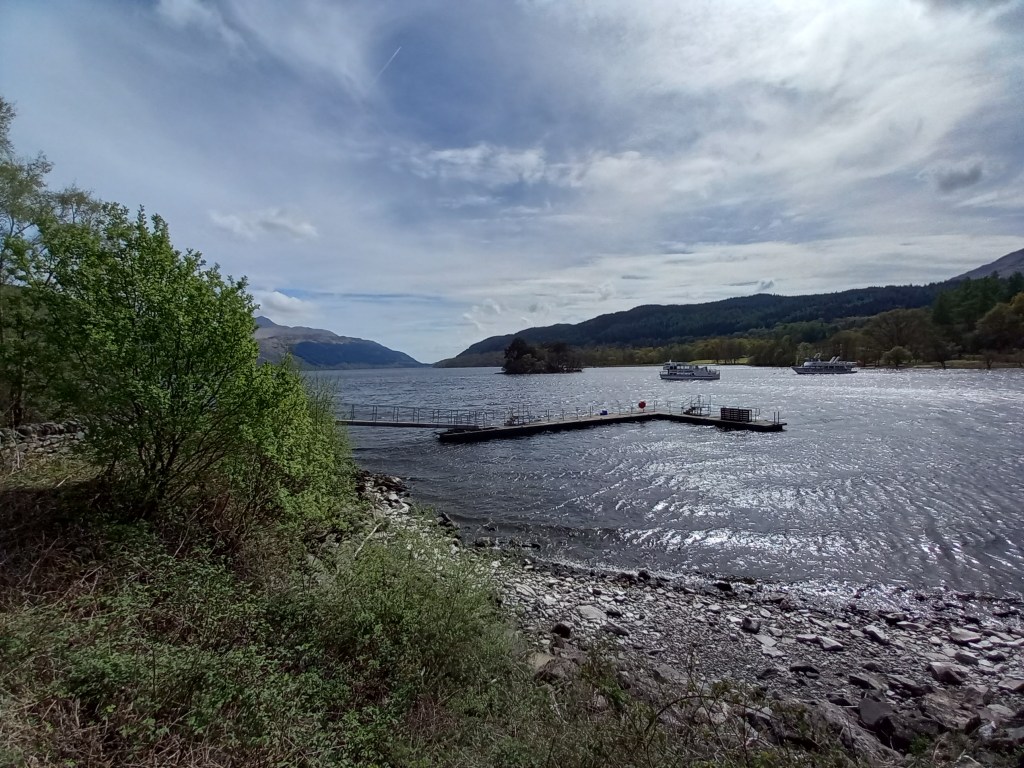
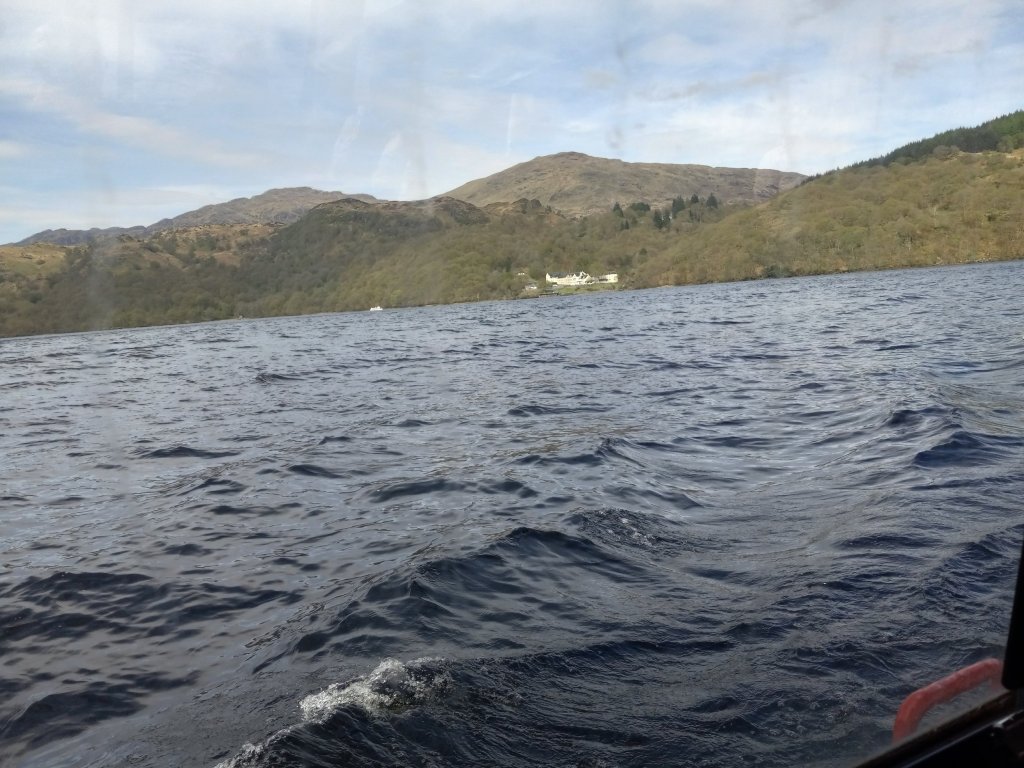
Loch Lomond is the largest freshwater lake in Scotland. We enjoyed tales of Vikings, Highland clans, and the legendary folk hero Rob Roy.

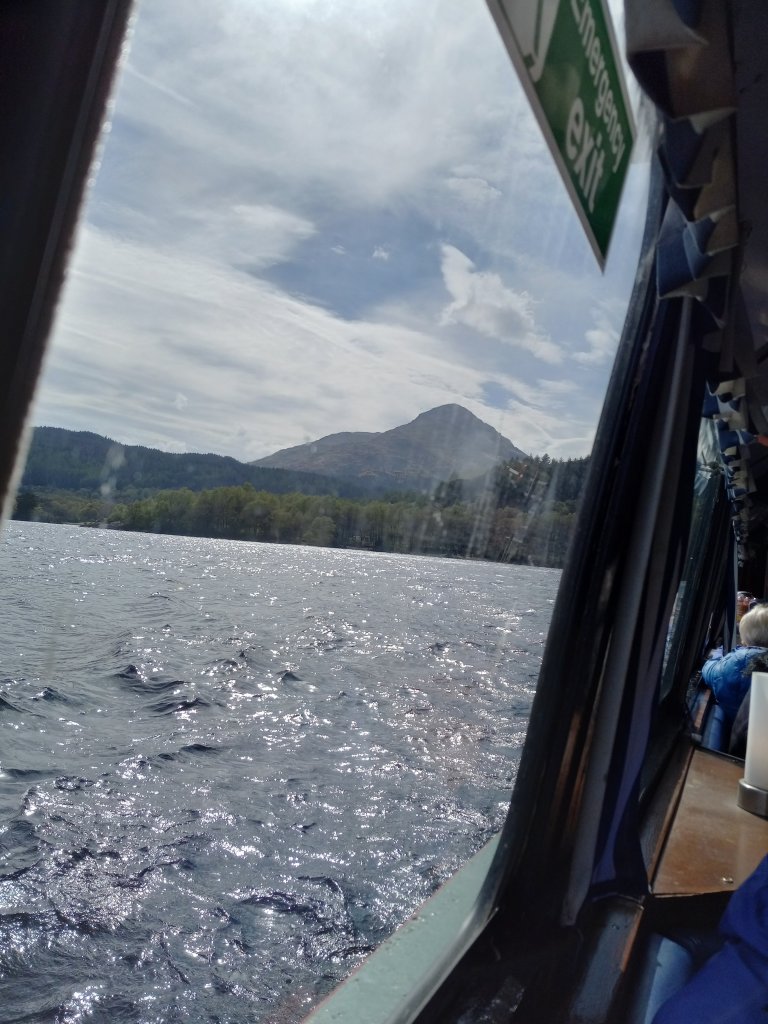
I was taken, as I always am by the majesty of the Highlands so much of my photo eye was on the phenomenal mountains rising high all around us.

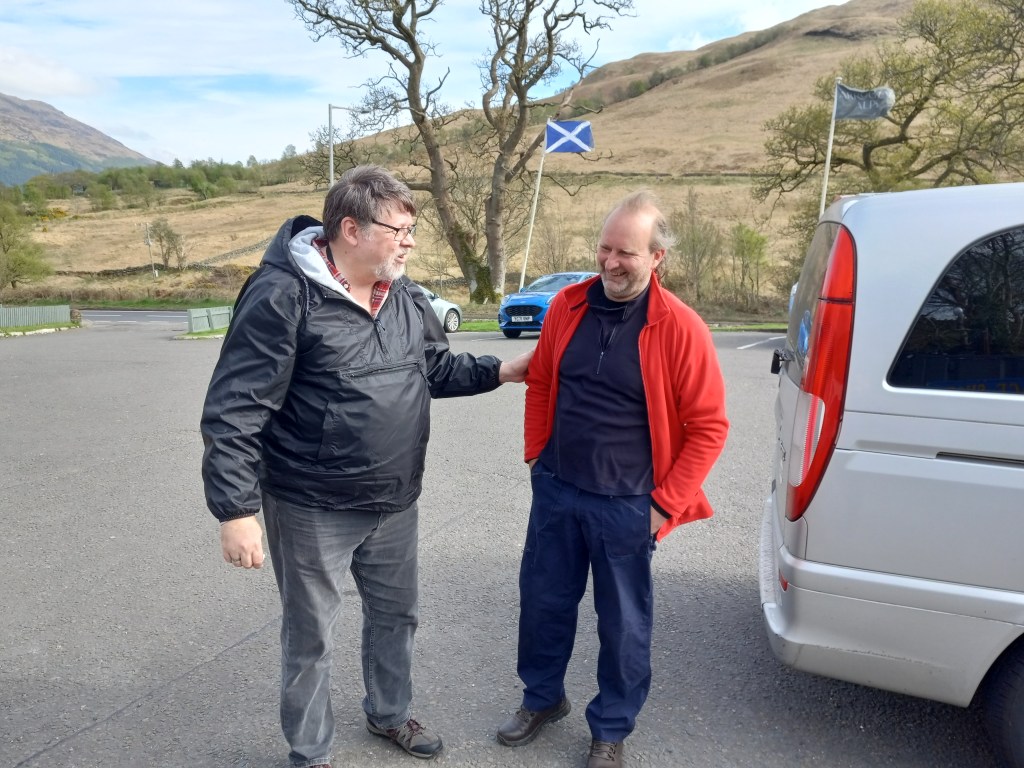
After the tour we discovered to some concern that the bus back to Glasgow did not arrive as scheduled. As we considered our limited options a gentleman who had been hiking in the area offered a ride back to Tarbet to us and some young English hikers we had met.

I was hesitant but we felt safe with a group and accepted. He regailed us with stories along the way, delivered us to Tarbet with good humor and will and declined any thank you money. His name was Donald and he boasted a lineage from Clan Donald which is a clan of no small significance in Scottish history.

There is an important and treasured principle of the Scottish set of values called Highland Hospitality.  To my mind Donald personifies this aspect of what it means to be Scottish beautifully. I was inspired by Donald’s kindness and generosity.

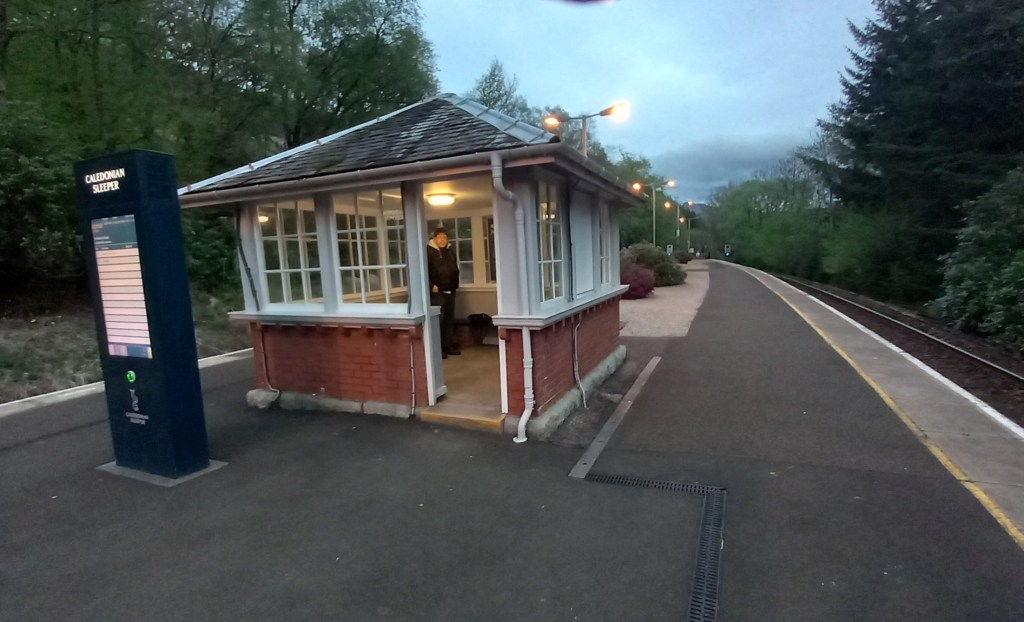
After a lovely meal in a church that had been converted into a restaurant, we walked to a nearby train station and caught a late train back to Glasgow.

Destination Glasgow

The plan today was to complete our travels and start enjoying our first destination, Glasgow Scotland.  I speak of Monday and Tuesday as 2 days like normal people but we slept very little on the long flight overseas.

After landing in Dublin,  the next jump was to Edinburgh. That was a short 1 hour flight over the Irish Sea.  Edinburgh is a terrific city we have enjoyed often in previous adventures but Glasgow is our target this week.

From Edinburgh we traveled by bus to Glasgow after using the Edinberg tram to get to the bus station.  Before we settled in our Airb&b, we will have traveled by air (3 flights), tram, bus, Uber and taxi.

We collected our bags and got a cab to our Airb&b.

  Our cab driver was a salty and delightful  personality so he perked up our day.  After assessing our level of fatigue we decided on one objective for the day. We set out to visit the University of Glasgow.

A few bits of trivia about Glasgow.  The formal royal establishment of the city was 1406 one year before the university was founded in 1407. However there was a settlement at the site as the 500s. That’s one old town. The city sits on the banks of the river Clyde. As it happens, my grandfather, Alexander Malcolm was born in Glasgow in 1899.

Glasgow is a bustling, active city but what jumps out is the mixture of the ancient with the modern. And being in the neighborhoods near the university took us along some beautiful streets.

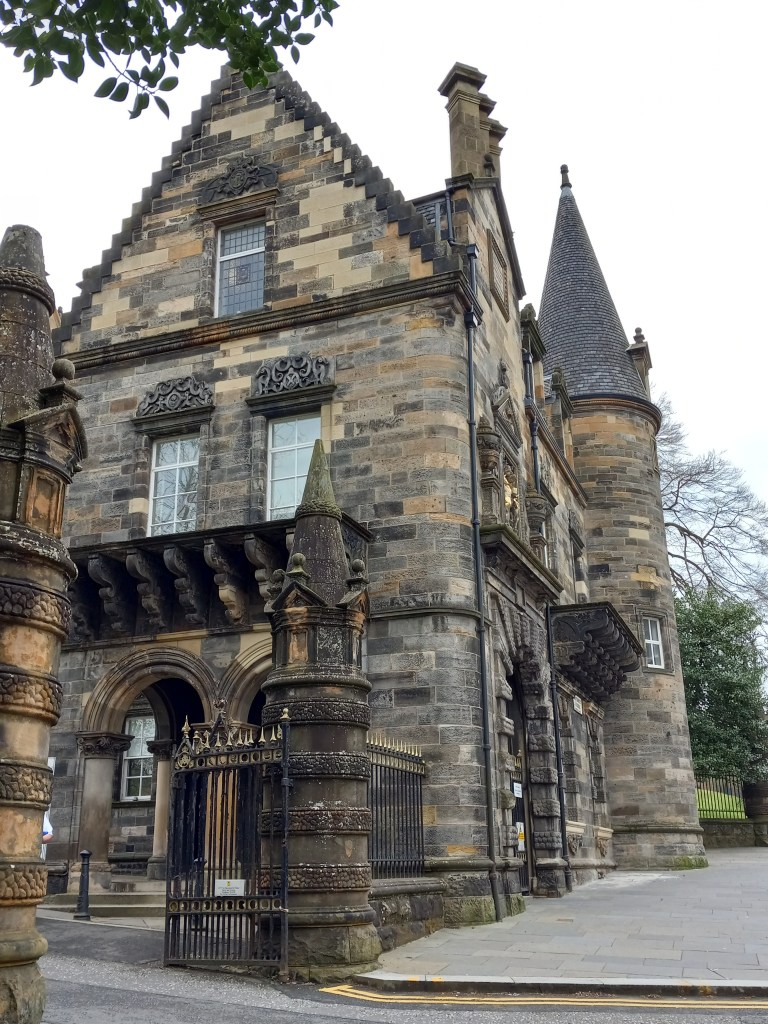
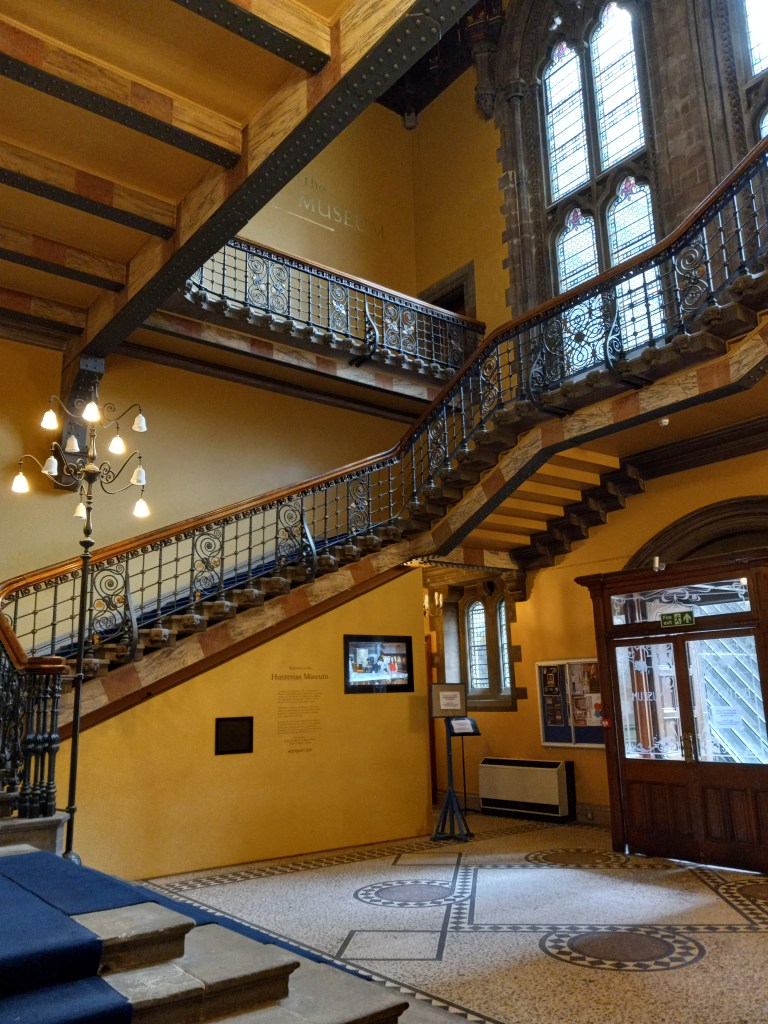
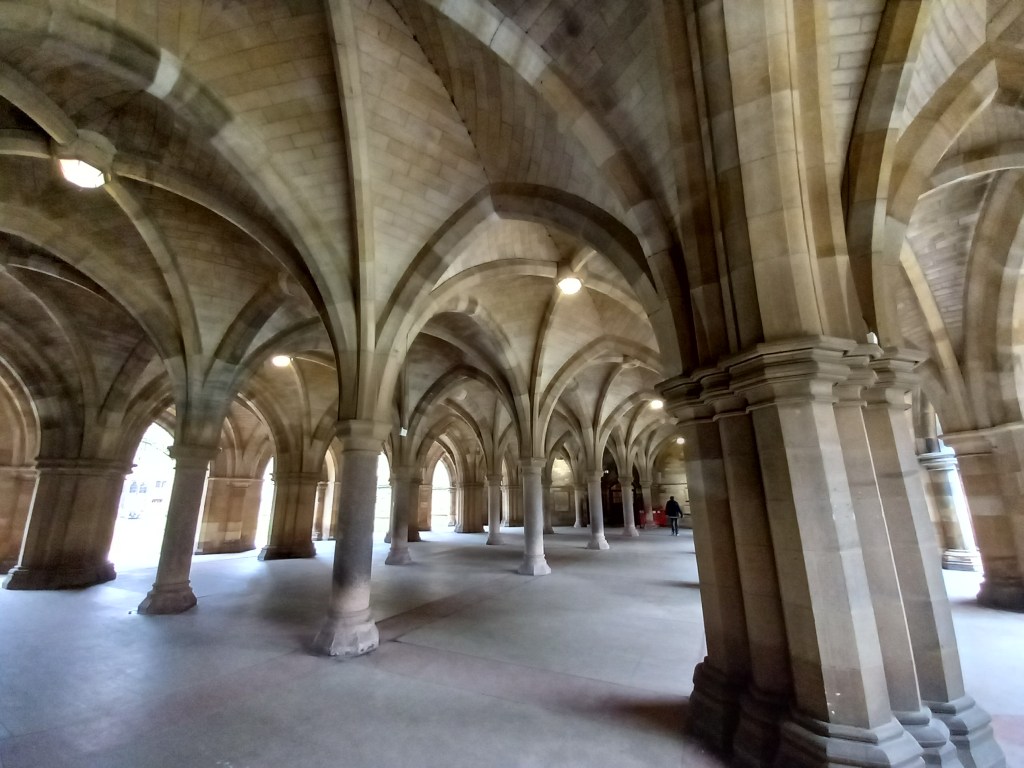
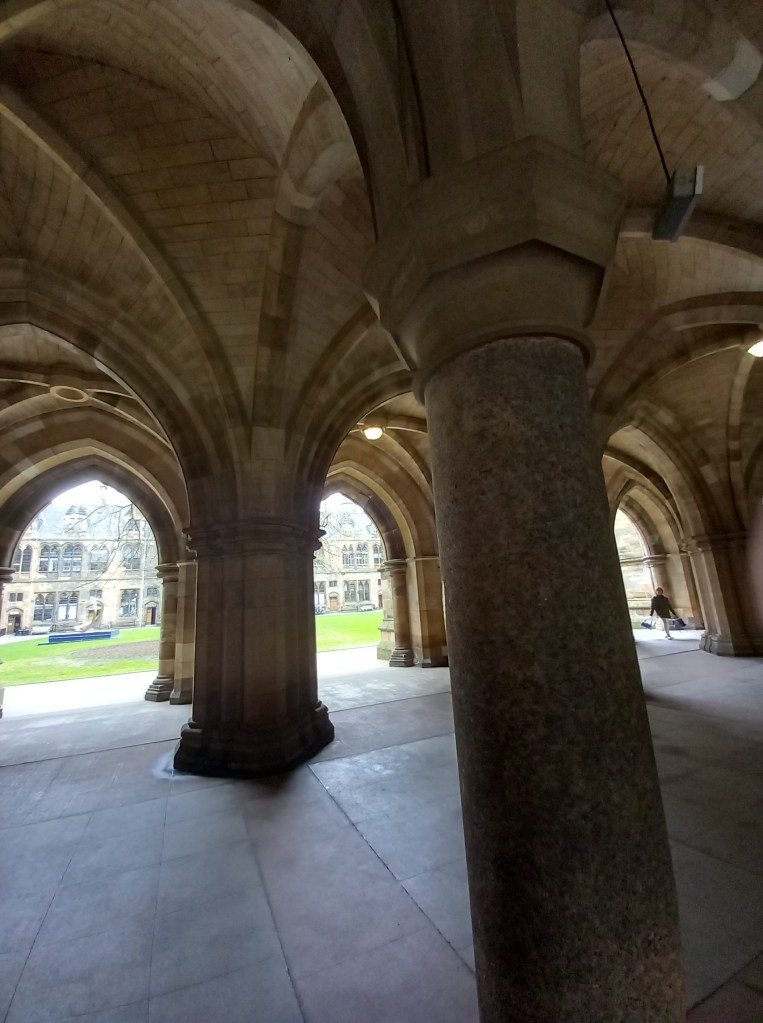
The University of Glasgow is the 4th oldest University in the English-speaking world, founded by the authority of the pope in 1451. Most of the current buildings date to the 19th century. We enjoyed the Gothic architecture and some more recent buildings such as the library.

Next Stop Dublin

Travel day is not that interesting.  We are excited to be on the way but the stuff of boarding passes, flight delays (minor) and airplanes. Not the stuff of good blogging.

Our flight out of Tulsa was at 6 a.m. from Tulsa we went on to Dallas and Dallas to Boston.  Boston was where we did the most stateside processing and our passports entered in.

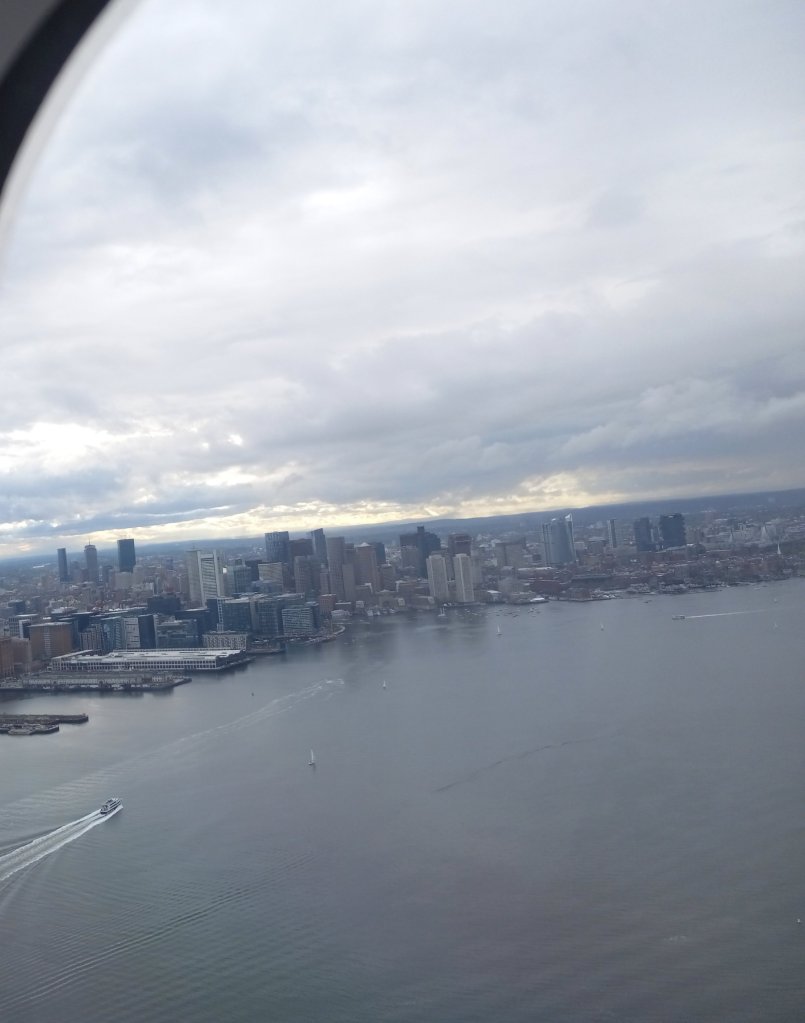
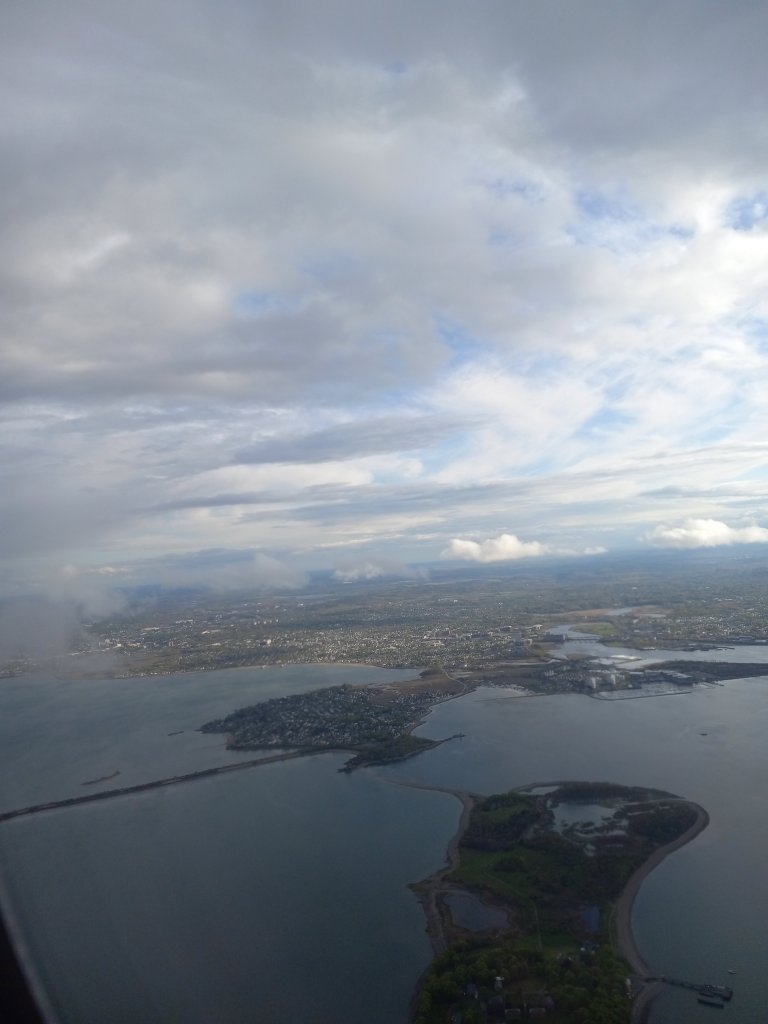
Boston is a beautiful city and we have explored it often. This time it was sufficient to get some photos from the plane as we flew east to Ireland.

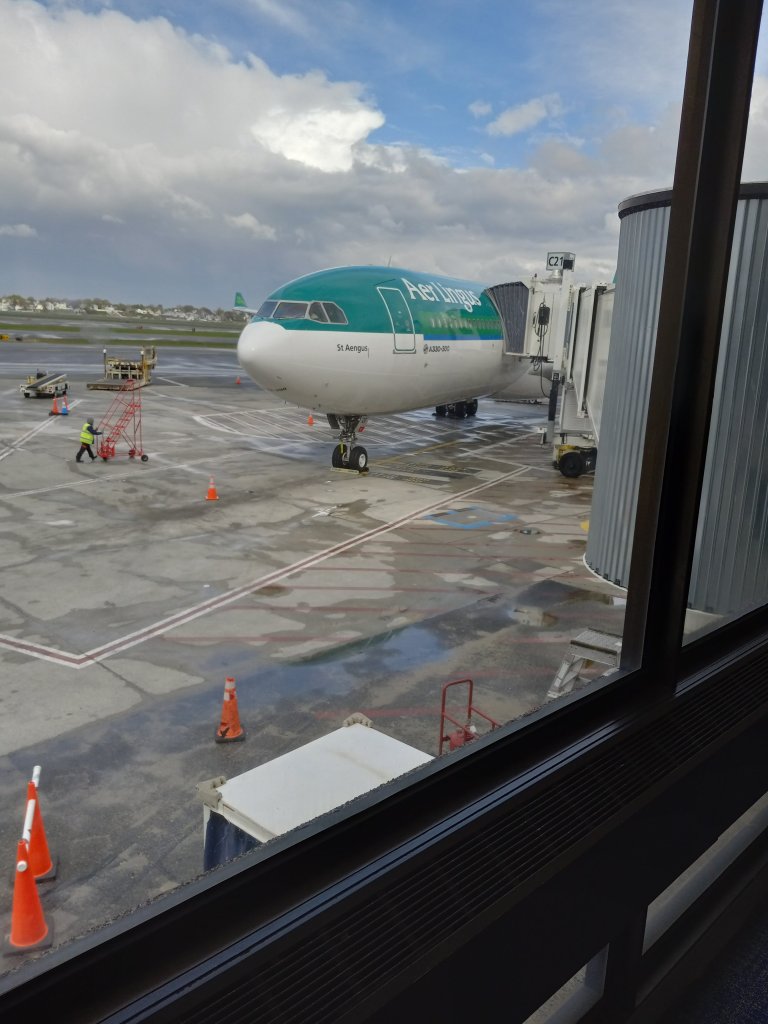
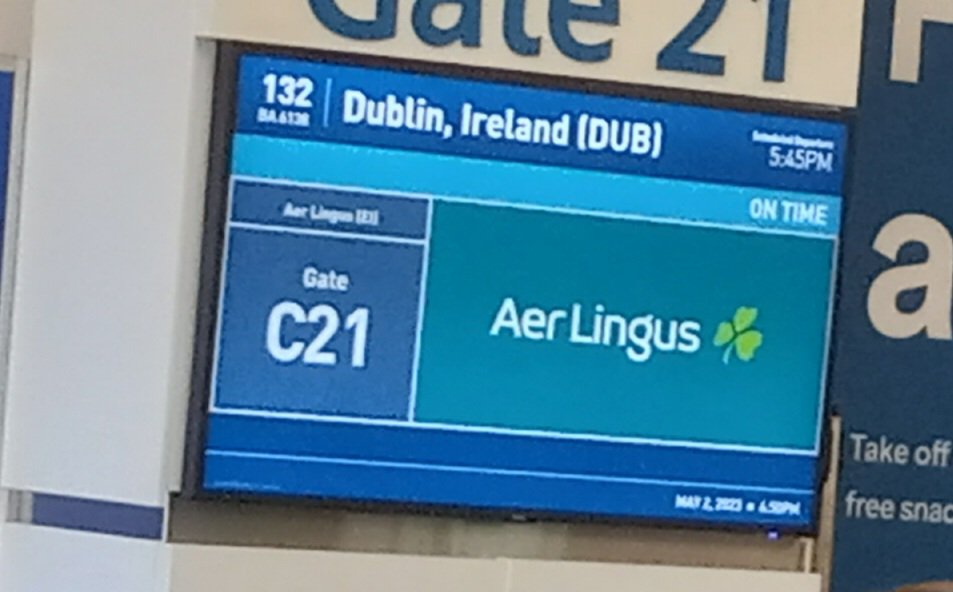
We have flown Aer Lingus for all 3 of our previous Scotland adventures and this year we came right back to them. It was about a 6 hour flight over the big pond and with the 6 hour time difference, we landed at 4:40 a.m local time in Dublin Ireland.

Tired but happy, it is time for the fun to begin. We only have one more short flight (1:10 min.) to Edinburgh, then an hour bus ride to Glasgow.

Here we go again.

The time is upon us for our fourth trip to Scotland.  With it comes our fourth blog given the unimaginative title of Malcolms in Scotland 23.

Our first trip focused mostly on Fife. Malcolminscotland.blogspot.com.

Our second trip took us to Skye and the Oban and the western islands. Malcolmsinscotland2.home.blog.

Our third trip took us to the Fife trail and then Aberdeen. Malcolmsinscotland22.wordpress.com.

This year the focus will be central Scotland and the northern coast. We depart Tuesday May 2nd and fly from Tulsa to Boston. From there we board the Air Lingus flight from Boston to Dublin Ireland. That flight is roughly 6 hours and the 6 hour time difference kicks in. We will arrive in Dublin very early in the morning.

From there it is a short flight to Edinburgh Scotland. We will not linger in Edinburgh this time, but will take a shuttle to Glasgow mid-day. We spent some time in Glasgow on an earlier trip and felt it was time to explore it at our leisure as is our way.

We will explore Glasgow until Saturday and then move our base of operations north to Inverness. The plan will be to travel up through the middle of the highlands by train. This trip will not take us on the picturesque viaduct shown below and it will be a modern train, not the cool Jacobite steam train, but we thought you might enjoy the picture.

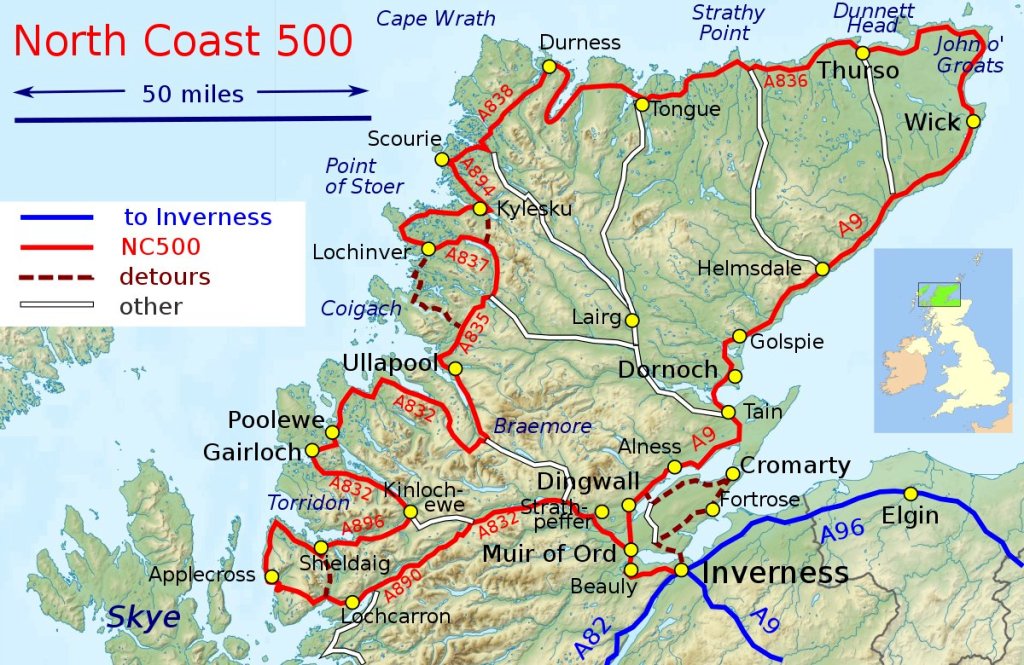
We will spend a week in inverness. The highlight of that stay will be a 3 day tour of the northern coastline which is commonly called the NC 500.

The first real post will be Tuesday as we depart early for Boston then on to Glasgow via Dublin and Edinburgh.