The third morning of our tour began in a dense fog that dominated the drive for a while. This made us especially grateful to be in the care of a skilled tour bus driver to wrestle with that fog and those impossibly narrow roads.
For context, Orkney is one of two large groups of islands north of Scotland. The other is Shetland. These islands have remnants of human life in Scotland that dates back 5,000 years. We have no plans to visit them in the next few years but one never knows.
My curiosity was high about the name John O’Groats. The John in question ran a ferry to Orkney. One must ask, “what’s a groat?” Mustn’t one? Turns out the name meant John the Great but not in the qualitative sense. Willie told us that a better interpretation of the name is John the Massive. Now that is a name I can take ownership of and suggested that from this day forward, I shall be known as Jerry O’Groats.
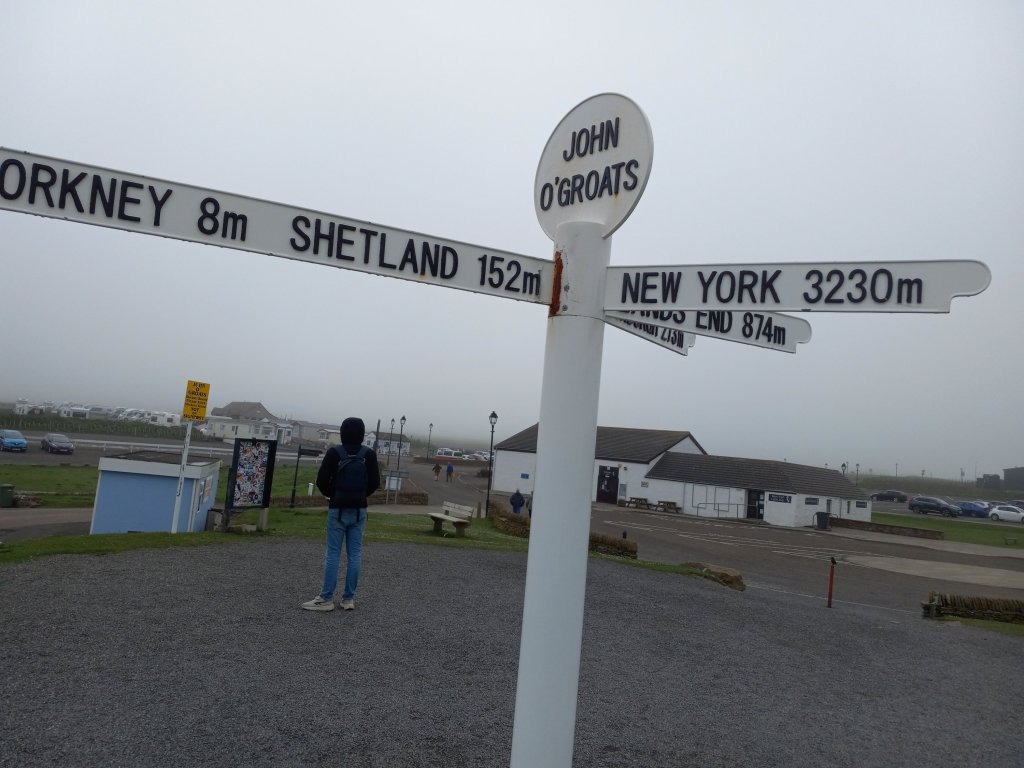
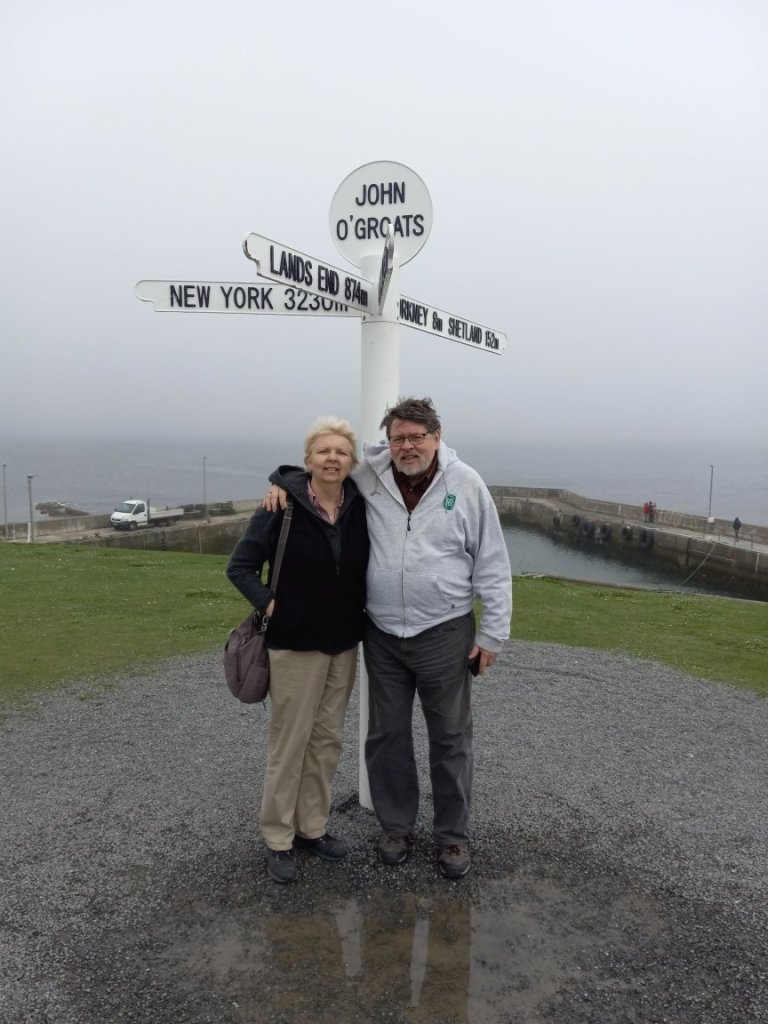
John O’Groats is the most northern inhabited place on the British mainland. The distances from other spots on the globe is significant so there is a signpost with that information. Land’s End is the western-most tip of Cornwall. We would like to visit there some day.

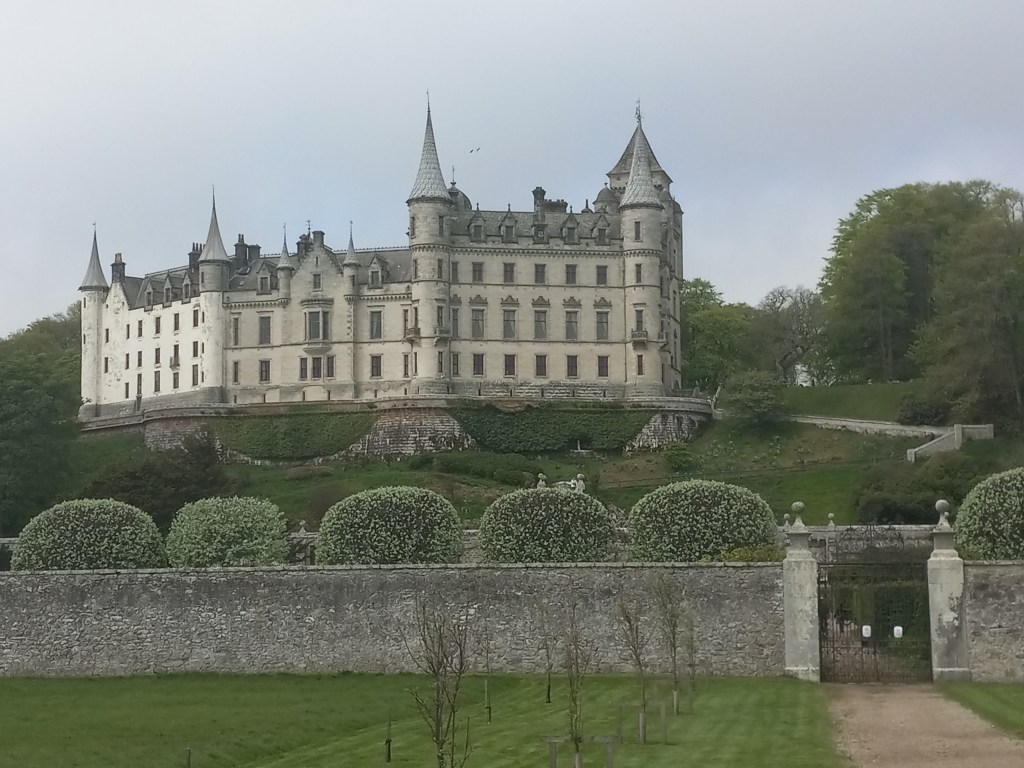
Before our tour of the highlands could end, a few more significant stops remained for us to explore. Dunrobin castle is an elegant castle in the French style, with beautiful formal gardens. Our driver, Willie did not conceal his negative view of Dunrobin because it was part of the vast Sutherland family holdings.
In brief, the Sutherlands were given vast holdings in the Highlands by the English crown. To increase income from these lands, the highlanders whose families had farmed there for centuries were cruelly evicted and their homes and belongings burned. I will include more about that later in a blog post focusing entirely on Scottish history.
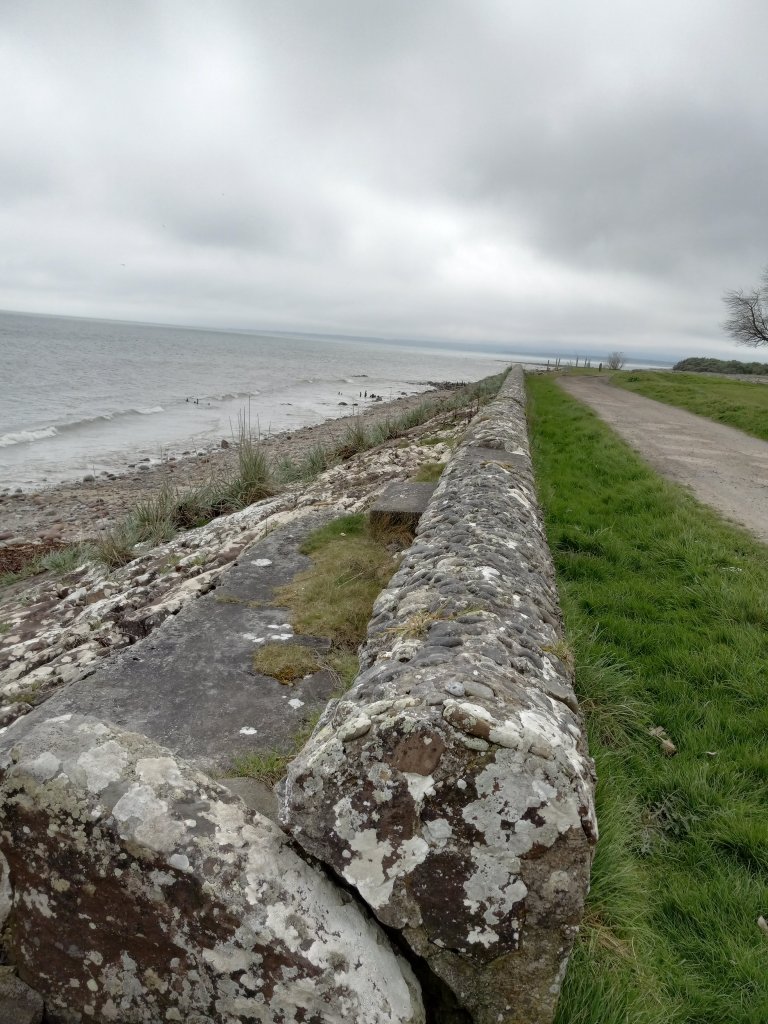
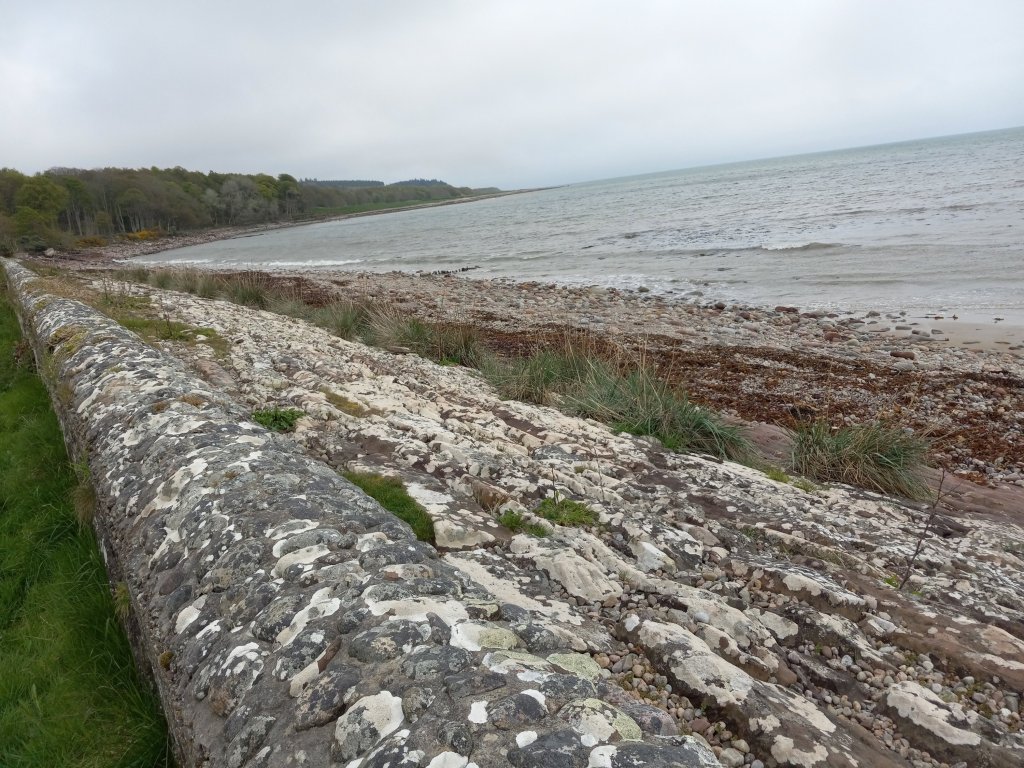
Back to our day on the tour, Willie advised that our next stop at Dornoch was a far richer experience. So we disembarked for a very brief stop at Dunrobin to view the exterior and the garden. I took a few moments to bond with the sea and Jane got pictures of the mansion and gardens from both front and back


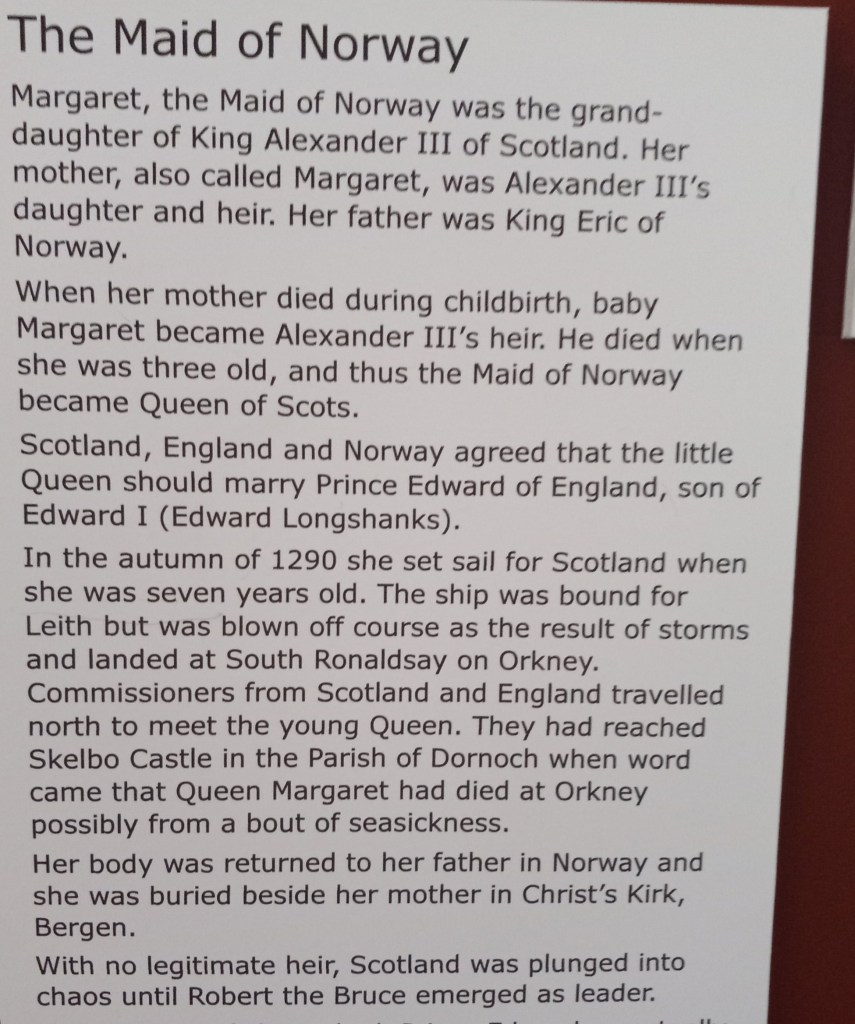
The last stop of the day was the village of Dornoch, which was fun to explore. Willie cut us loose for more than an hour to explore the museum and Cathedral. After finding the Dornoch library for that requisite photo op, we spent some time in the town’s history museum.
This museum was very small and I never seen such an efficient use of space. Every piece in there contributed to the story of the city. This too was also a great source of lore. Apparently Dornoch had the distinction of being the site of the last witch burning.
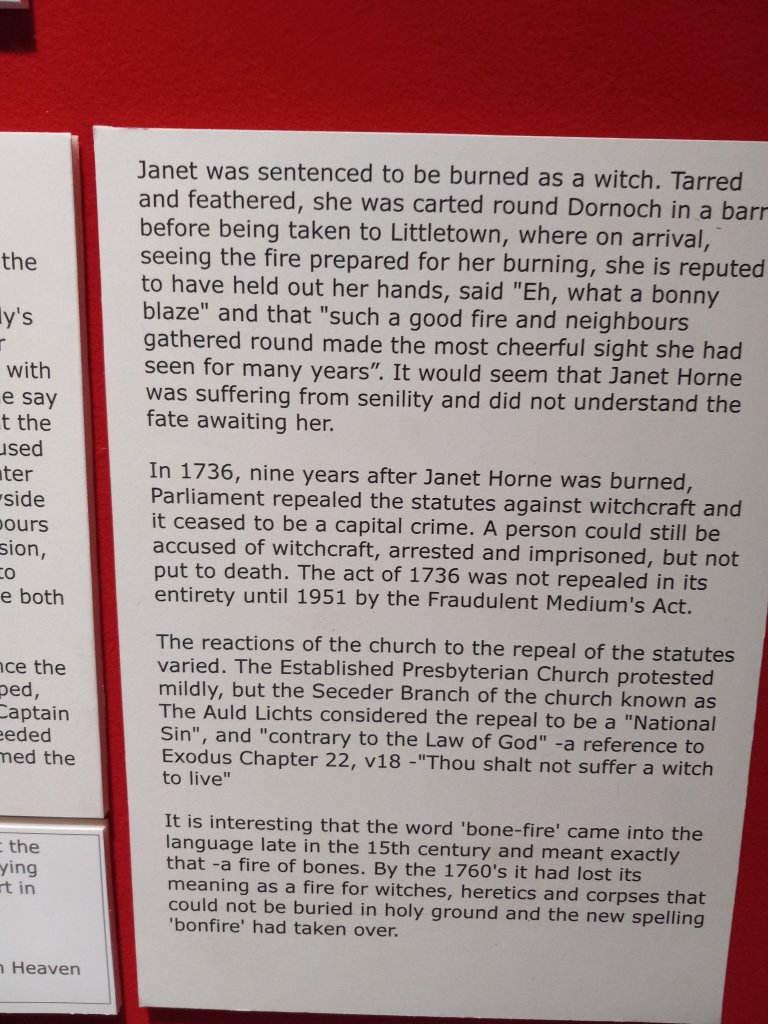
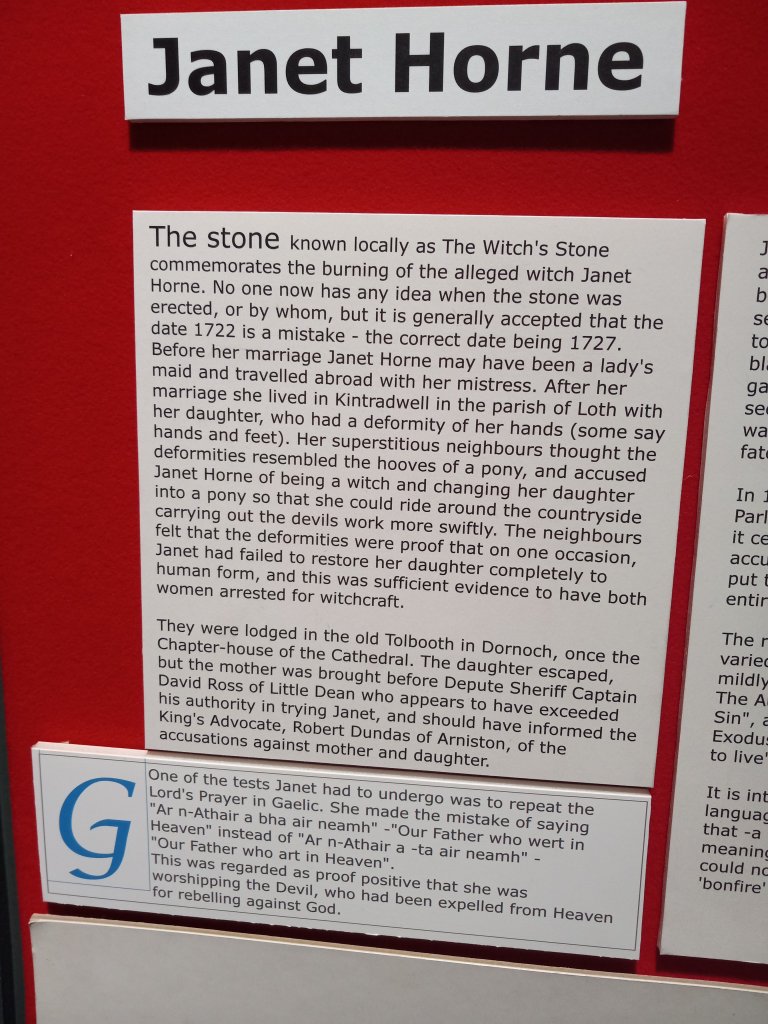
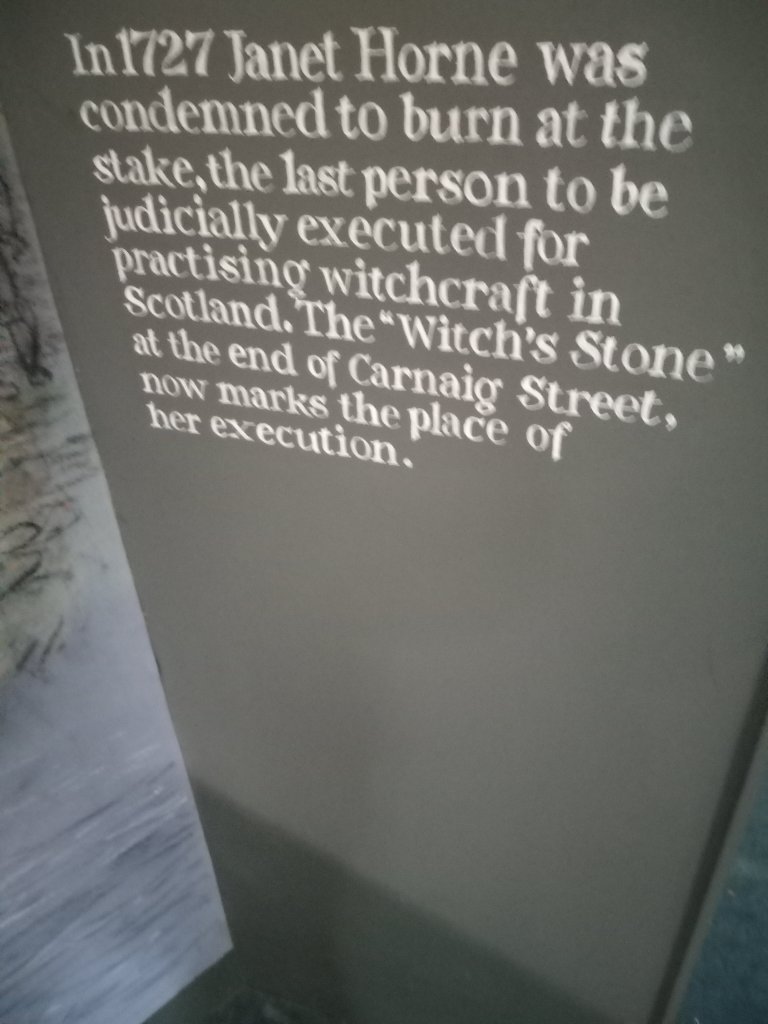
I love to find quirky stories like this. Another story that is of great significance to Scottish history was hard to connect to Dornoch until you read a little closer.
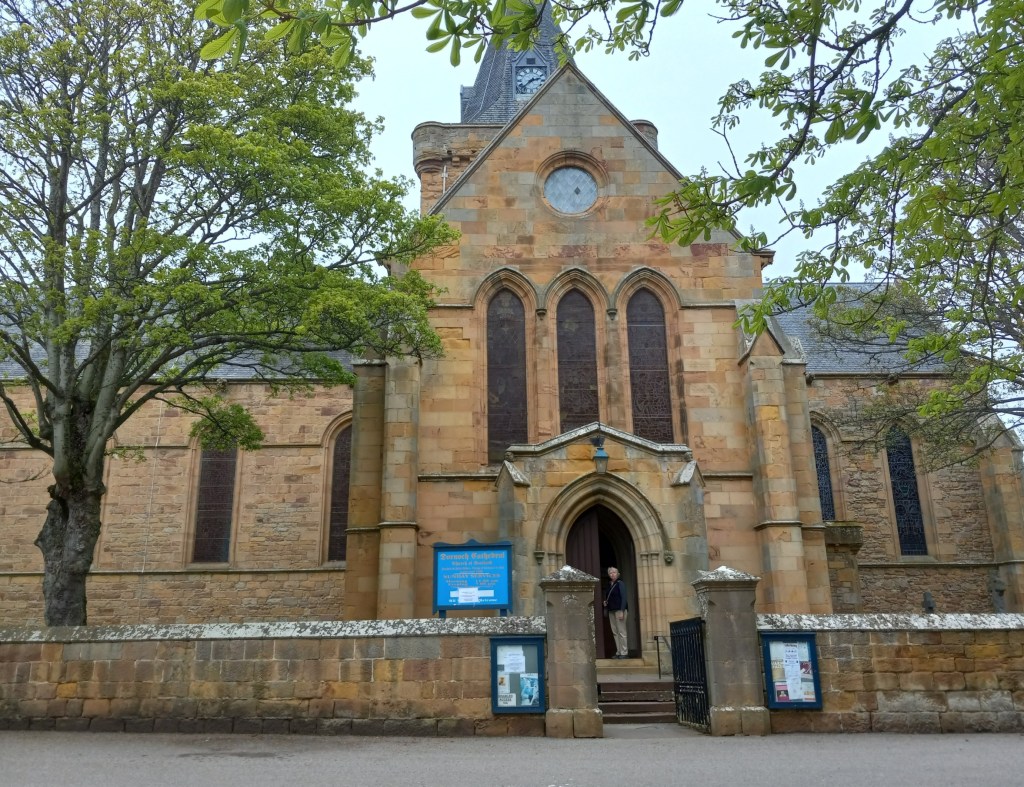
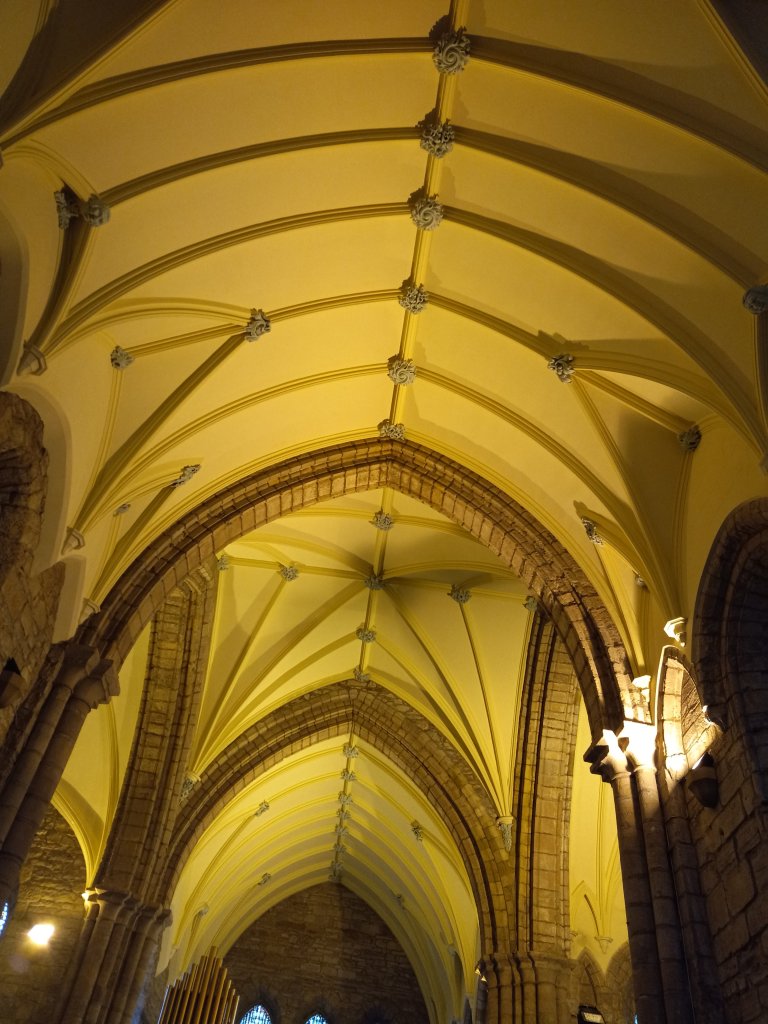
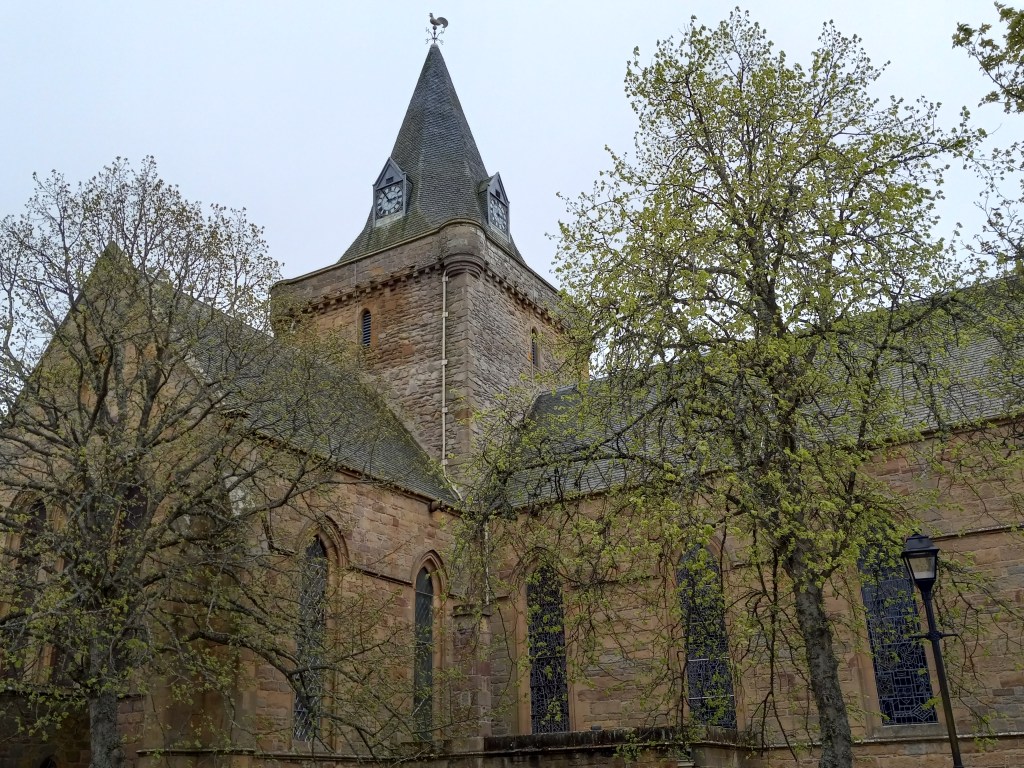
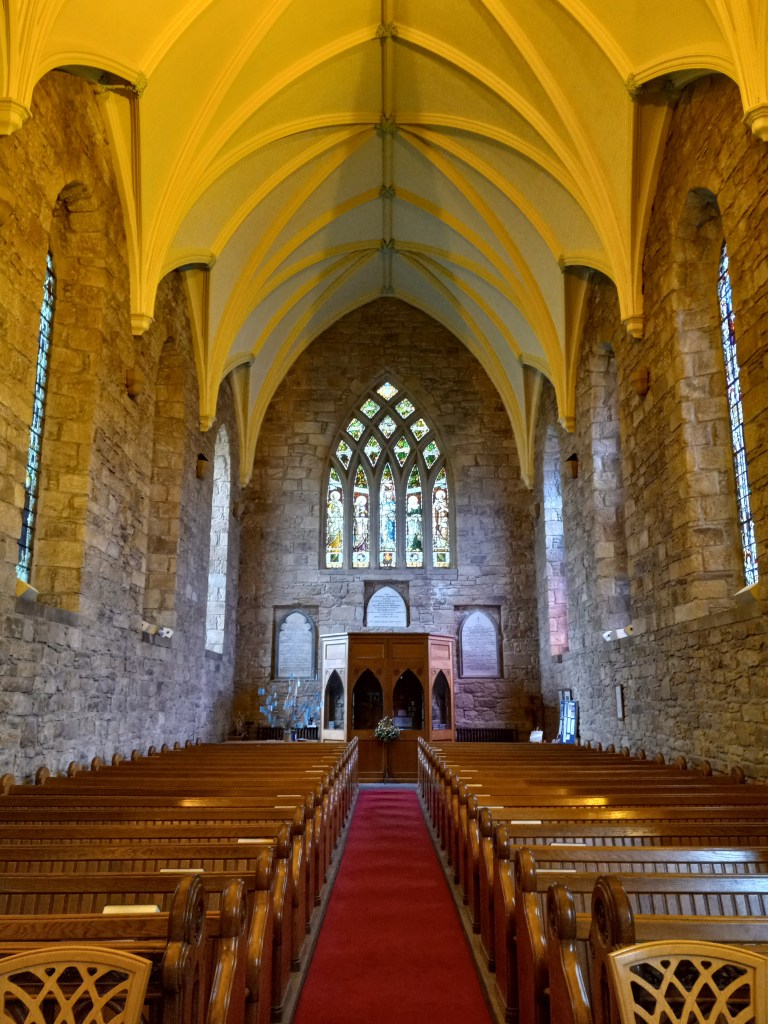
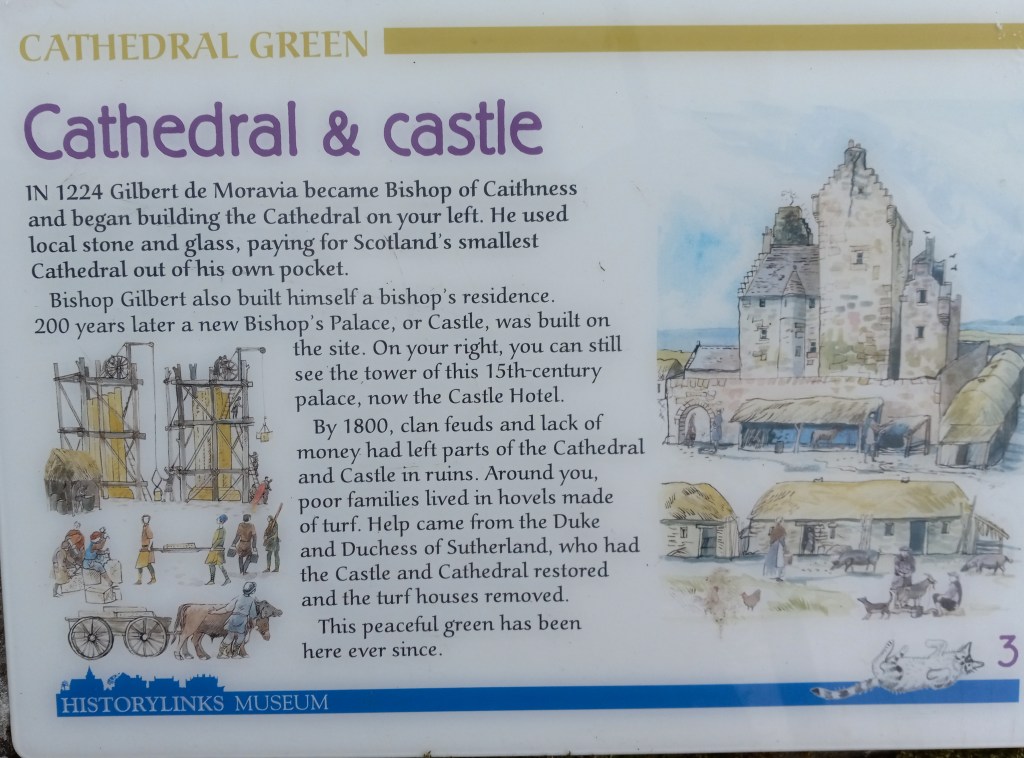
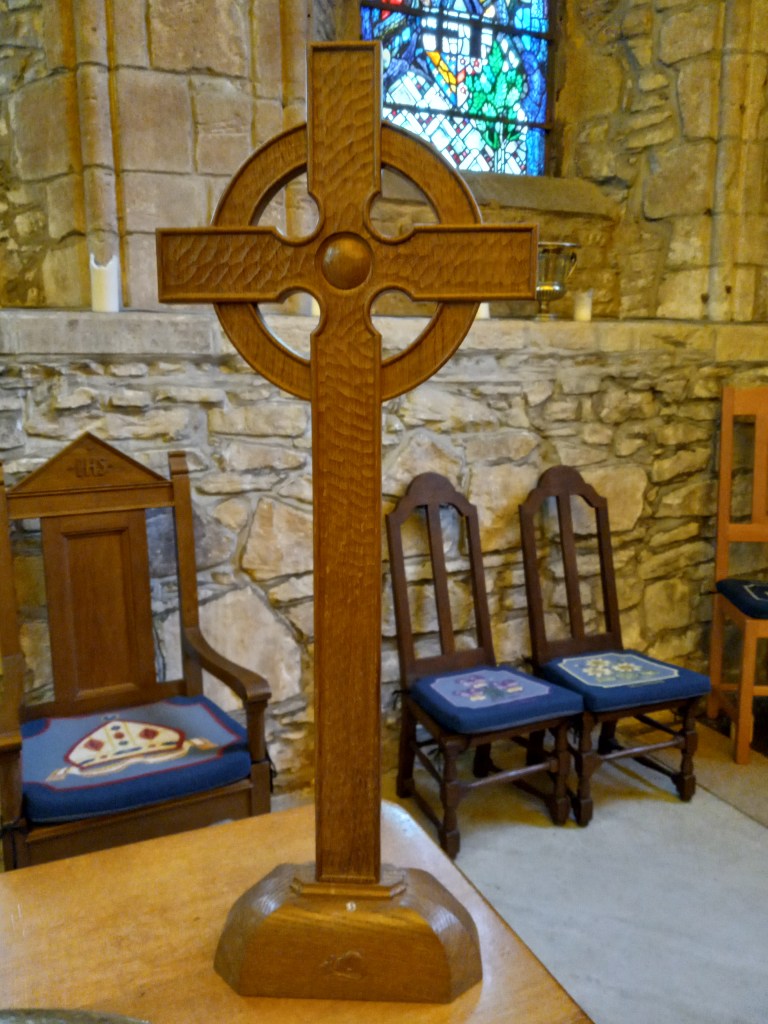
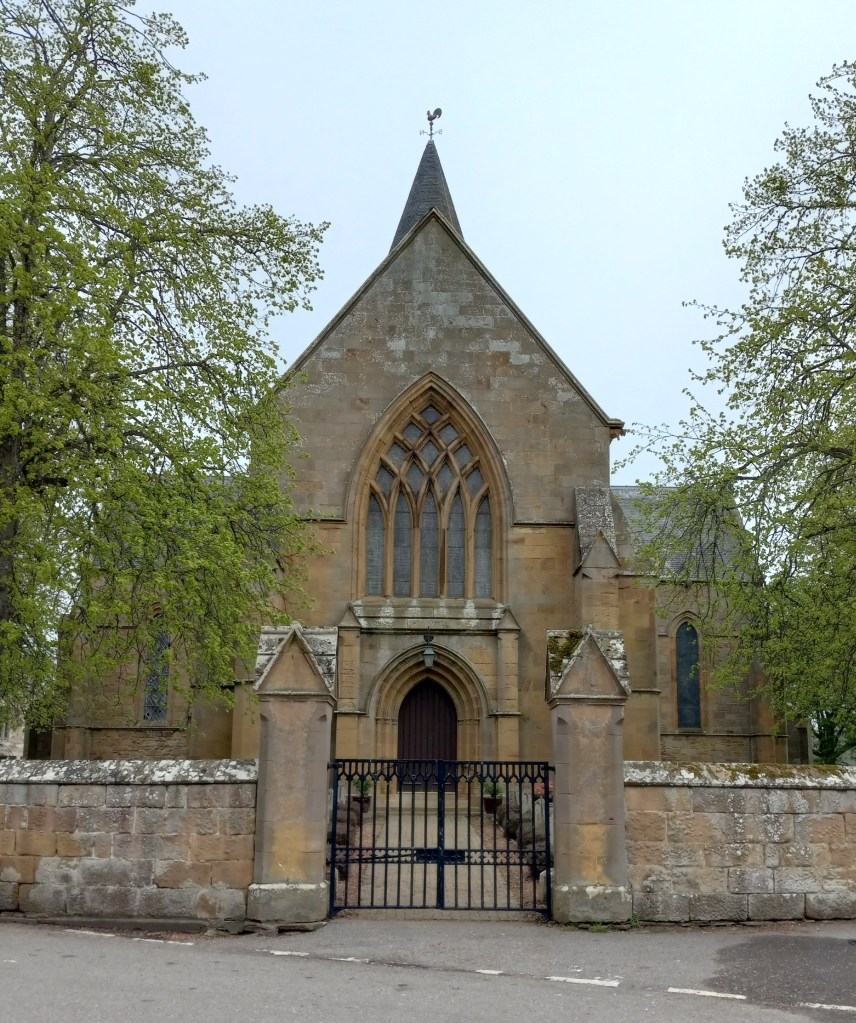
The Cathedral at Dornoch is lovely. (Scots say “lovely” a lot.) It is on a smaller scale than other cathedrals we have visited, but it is beautiful nonetheless.
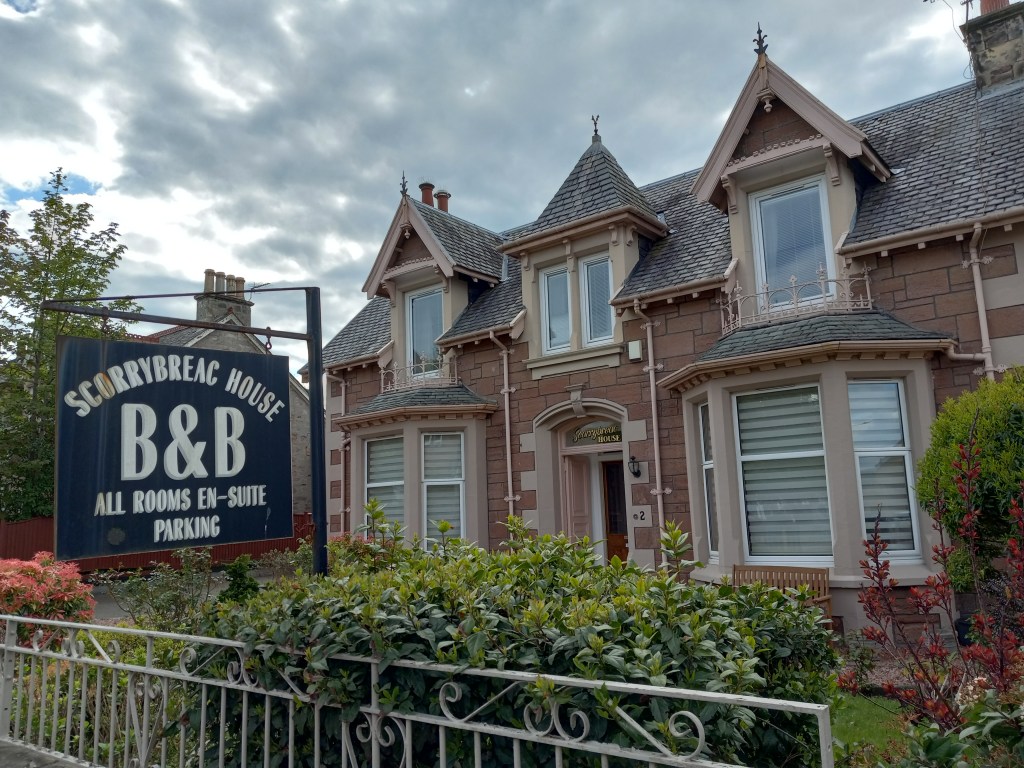
Our return to Inverness was the completion of the tour. We bid farewell to our new friends and our wonderful driver/guide, then returned to our cozy B&B a bit tired but happy and full of wonderful memories to savor.
 Malcolms in Scotland 23
This was one excellent excursion. I have spent a lot of time at the Google with this one.
LikeLike
It looks like you both are having a lovely time! It looks so beautiful there.
LikeLike